
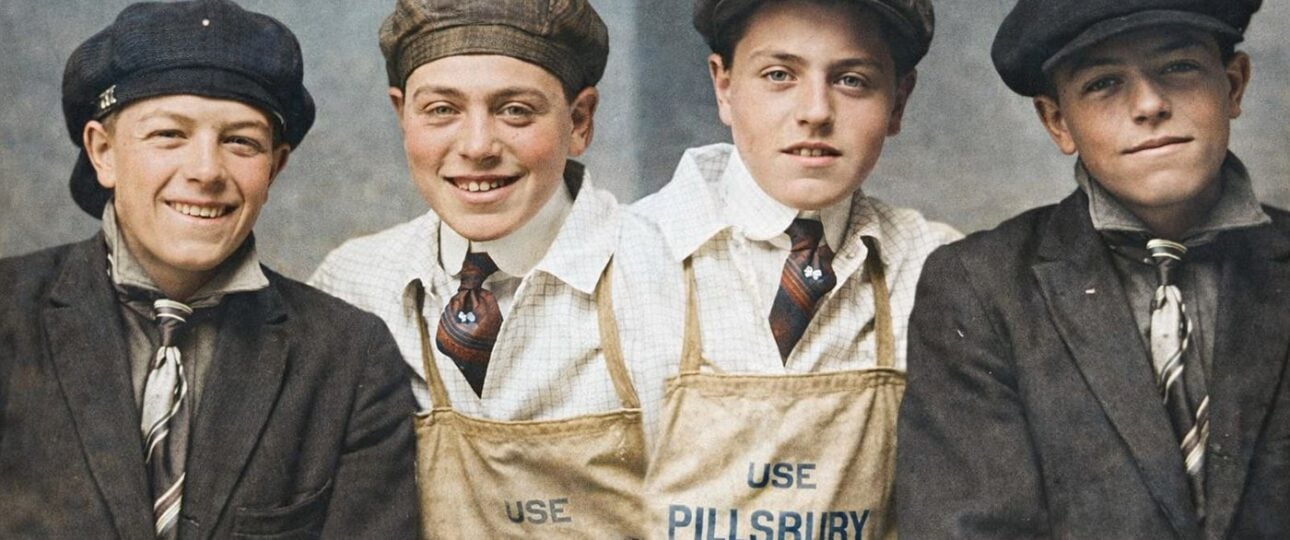
Was Pillsbury Ever a British Company? The 34 Years London Owned the Flour Empire
Ask anyone to name a thoroughly American company and Pillsbury has a fair claim: the Doughboy, the Bake-Off, the sack of flour in every pantry in the land. Which makes the truth all the more delicious. For thirty-four years — from 1889 to 1923 — the greatest flour name in Minneapolis belonged, on paper, to a syndicate of investors in London.
And for those of us who spend our evenings at 100 East 22nd Street, there is a twist worth savoring: when Charles S. Pillsbury completed his English manor in 1916 and filled it with genuine centuries-old English rooms, the family company was still owned by Englishmen. The Pillsburys were buying up England’s history at the very moment England held the deed to theirs.
1889: The Year the English Bought the Mills
In the late 1880s, British capital was sweeping through American industry — breweries in St. Louis, ranches in Texas, railroads nearly everywhere. Minneapolis, by then the flour-milling capital of the world and home to the largest flour mill on earth, was an irresistible target.
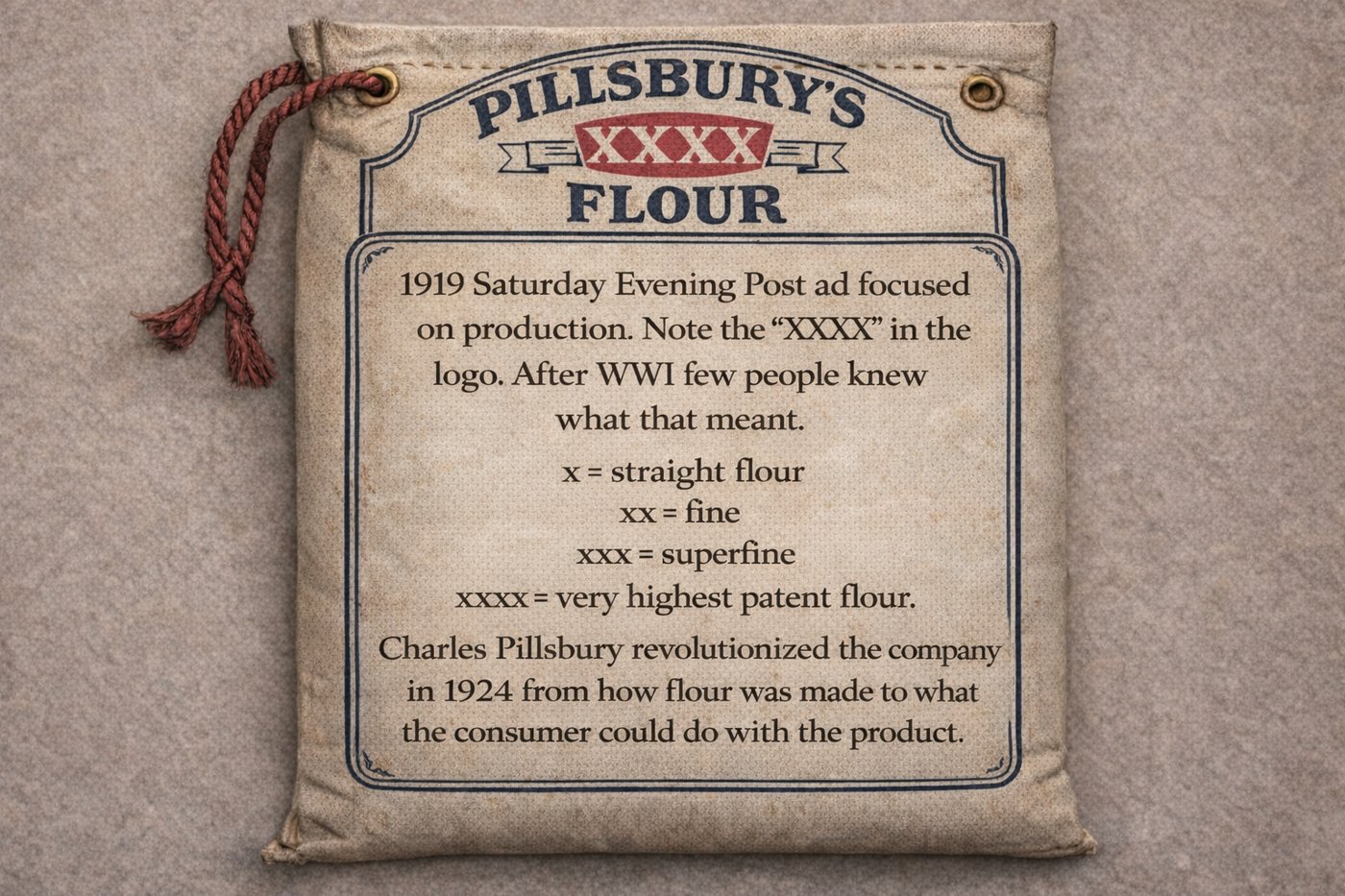
In 1889 an English financial syndicate purchased the mills of C.A. Pillsbury & Co., merged them with the mills of Senator William D. Washburn and valuable water-power rights at St. Anthony Falls, and folded the lot into a new London-registered concern: the Pillsbury-Washburn Flour Mills Company, Ltd. Charles A. Pillsbury, who had founded the company in 1869, stayed on as managing director and one of only three American directors. The English had bought the mills — but they could not run them without the man whose name was on the barrels.
Trouble at the Falls
For a decade the arrangement held. Then the blows came. Charles A. Pillsbury — the miller who had carried the company through the Great Mill Disaster era and out the other side — died in 1899. And after a disastrous 1907 wheat harvest made it impossible to mill profitably, the company’s unmet obligations forced Pillsbury-Washburn into receivership in 1908. The empire at the Falls was suddenly rudderless — and still foreign-owned.
The Sons Win It Back
Enter the next generation. Charles S. Pillsbury — the builder of this mansion, one of the famous Pillsbury twins — was among the three men appointed to reorganize the firm. Their new operating company, the Pillsbury Flour Mills Company, leased the mills back from the English owners, overhauled them top to bottom, and pushed the business into the modern age, even building one of the industry’s first product-research laboratories.
Then, on June 27, 1923, the Pillsbury Flour Mills Company purchased all remaining assets from the shareholders of Pillsbury-Washburn. After thirty-four years, the Pillsbury name came home to Minneapolis — bought back by the family that made it famous.
The Irony Carved in Oak
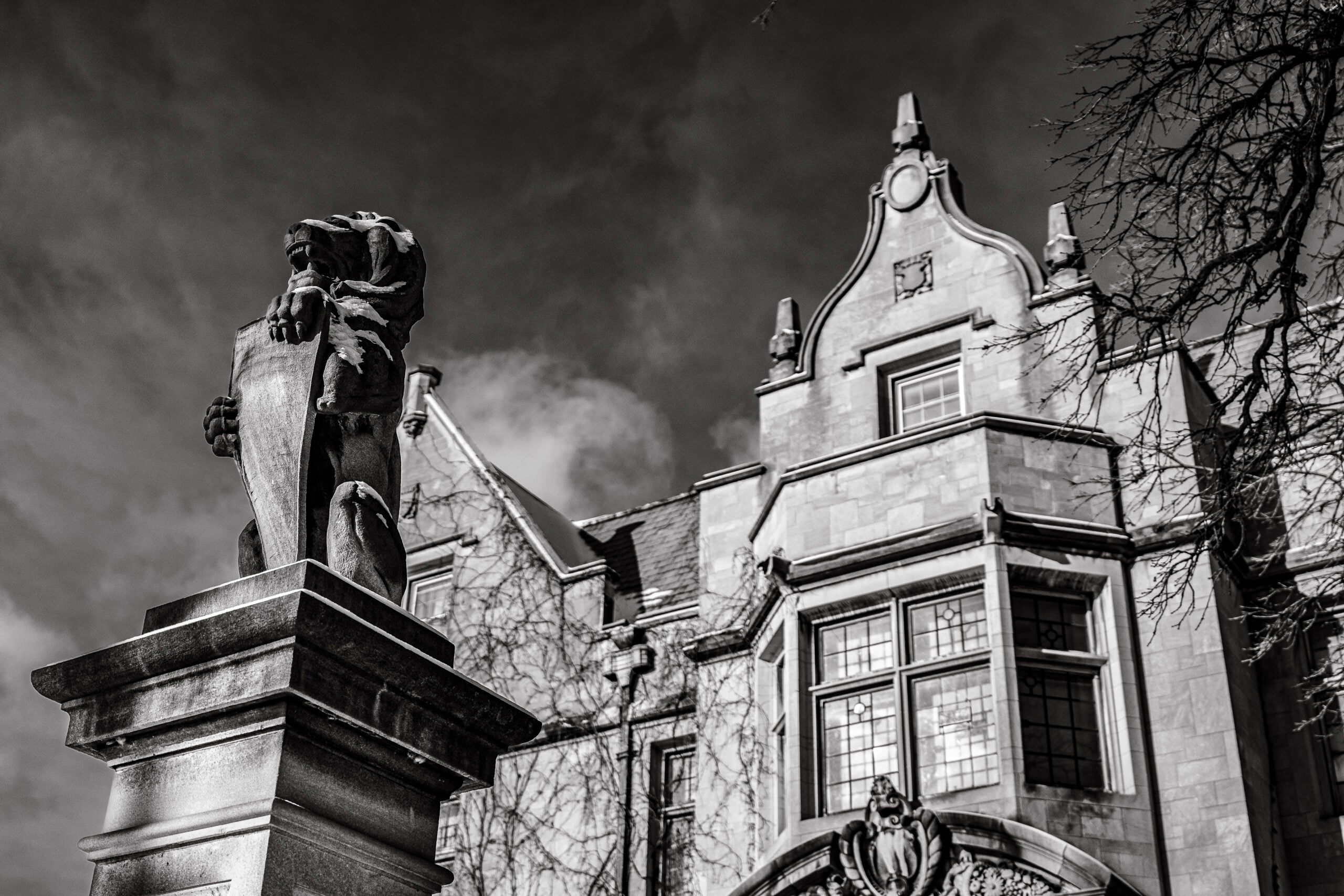
Which brings us back to the house. In 1916 — the receivership behind him, the buyback still seven years away — Charles S. Pillsbury built himself an authentic Elizabethan manor at 100 East 22nd Street, importing four-hundred-year-old carved oak rooms from Rotherwas Court through the London dealer Charles of London, and steering them through U.S. Customs as works of art. Sit with that for a moment: England owned the family’s company, and the family answered by buying England’s past. By 1923 both ledgers had closed — the company was American again, and some of England’s finest rooms were Minneapolitan for good.
A postscript, because history rhymes: in 1989, a century almost to the year after the first sale, Pillsbury was bought by the British conglomerate Grand Metropolitan — and stayed in British hands until General Mills acquired it in 2001. Some companies simply cannot stay away from London.
Walk the Rooms the Flour Bought Back
The best way to feel this story is to stand inside it. The Pillsbury Club opens the mansion for tours and evenings year-round, and Minneapolis Trolley Tours departs right from our door. Making a weekend of it? Our friends at 300 Clifton keep a historic Minneapolis mansion of their own — theirs comes with beds.
Keep reading: prefer your mansion history with a cocktail and a ghost story? Here’s how to spend a haunted night out at the Pillsbury Mansion.