
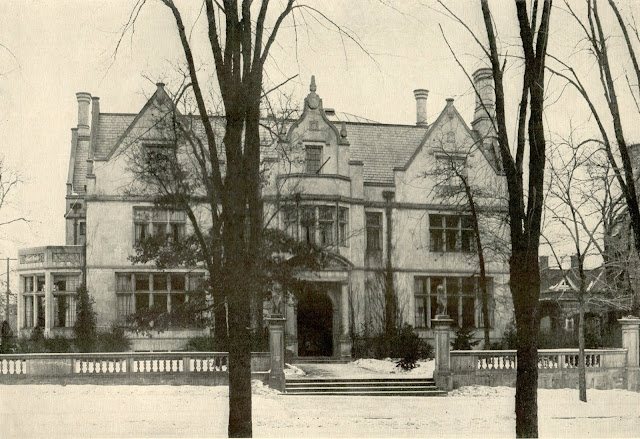
Charles Pillsbury Had a Twin Brother — So Why Does Only One of Their Mansions Survive?
On the sixth of December, 1878 — the same year the Great Mill Disaster shook Minneapolis — the house of Charles Alfred Pillsbury, the miller whose “Pillsbury’s Best” was conquering the world’s flour markets, welcomed not one heir but two. Twin sons: Charles Stinson and John Sargent Pillsbury. They would grow up in lockstep, inherit an empire in crisis together, rescue it together, and, within a few years of each other, each build a mansion worthy of the family name.
One of those mansions you can walk into today. The other was reduced to rubble in a single week in 2018. This is the story of the twin who built the house that vanished — and why the house at 100 East 22nd Street is the one that remains.
Two brothers, two very different houses
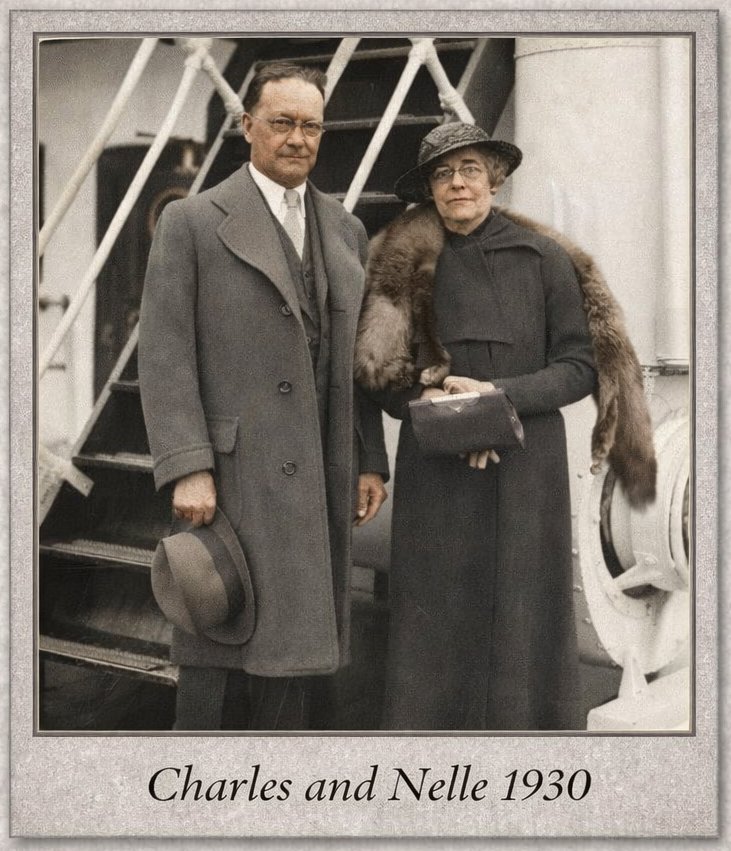
Charles S. Pillsbury built first, and he built inward. Completed in 1916, his city mansion was an authentic Elizabethan manor rising in the heart of Minneapolis — its centuries-old English oak rooms and great staircase shipped across the Atlantic through the London dealer Charles Joel Duveen, “Charles of London”. The splendor was in the interiors: Tudor paneling from Rotherwas Court, a fireplace that survived the Great Fire of London, ancient cathedral glass glowing in the windows.
His twin built outward. In 1918–19, John Sargent Pillsbury raised “Southways” on Brackett’s Point in Orono — a country estate commanding Lake Minnetonka, designed by Harrie T. Lindeberg, the New York architect famed for the great country houses of the East. Where Charles collected the sixteenth century, John commissioned the twentieth at its finest: reclaimed brick and slate blending Georgian and Tudor Revival lines, carved woodwork, wrought iron by the legendary blacksmith Samuel Yellin. The estate spread across thirteen acres with some 1,700 feet of shoreline — arguably the grandest home ever built on Minnesota’s grandest lake.
The rescue the twins staged together
The brothers were more than rival builders — they were partners in the defining act of the family’s business history. Their father had died suddenly in 1899, with the family’s mills under English ownership. In the early 1920s, Charles, John, and their cousin Alfred F. Pillsbury bought the company back, returning it to American — and Pillsbury — hands. Charles poured his energy into modernizing the brand; John went on to serve as chairman of Pillsbury Flour Mills from 1932 to 1952, and sat on the company’s board for a remarkable 58 years, until his death in 1968.
Two twins, one empire reclaimed, two mansions to show for it. For a few decades, the Pillsbury name was stamped on both the finest house in the city and the finest estate on the lake.
August 2018: the week Southways fell
Southways outlived John by fifty years. It passed through the family and stood — increasingly alone — as the last of the great Lake Minnetonka estates of its era. Then, in August 2018, days after the property changed hands, the demolition crews arrived. Preservationists called it one of the most significant architectural losses in recent Minnesota history. The full rise and fall of Brackett’s Point reads like a parable: no landmark protection, a private sale, and a hundred years of craftsmanship gone before the neighbors could object.
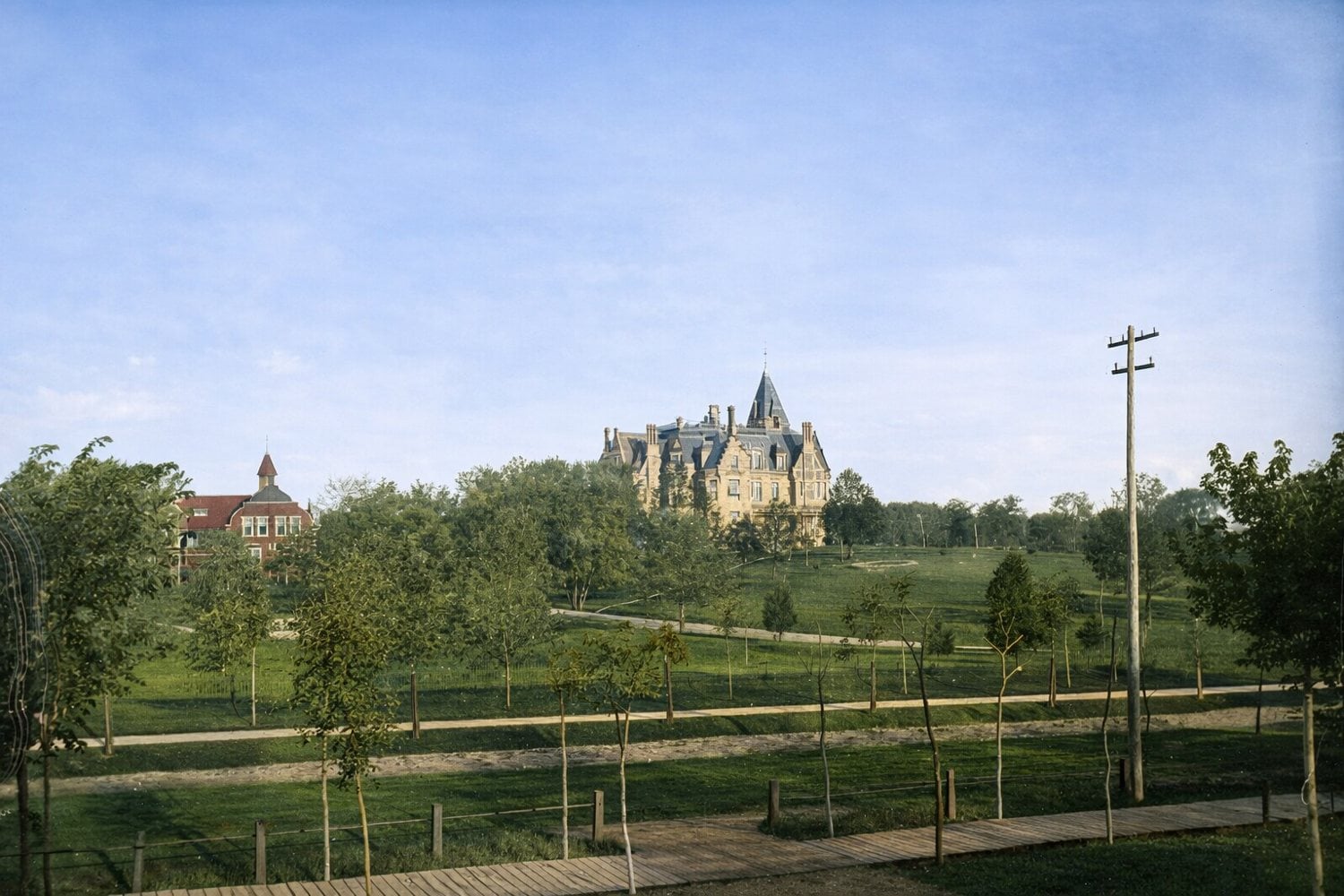
If that story sounds familiar, it should. It is the same fate that claimed nearly every mansion around Charles’s house — the vanished avenue of Washburn–Fair Oaks, where the palaces of the Pillsbury, Washburn, and Lowry dynasties fell one by one to the wrecking ball. We told that story in “The Last Mansion Standing.”
Why Charles’s mansion is the one still standing
The difference was not luck alone — it was rescue. In 1969, an anonymous donor gave the Minneapolis Society of Fine Arts the means to save four threatened mansions around Washburn–Fair Oaks Park, the Pillsbury mansion the largest among them, and in 1974 all four entered the National Register of Historic Places together. Southways, sitting on private lakeshore beyond any such shield, had no anonymous savior when its hour came.
So of the twin brothers’ twin monuments, one survives — and it happens to be the one filled with five centuries of English oak, glass, and stone. The family story that began with twins in 1878 now has a single address left to tell it.
Stand in the survivor
You can’t visit Southways — but you can stand in the house that escaped its fate. The Charles S. Pillsbury Mansion is home to the Pillsbury Club and the launch point for Minneapolis Trolley Tours, and if you’d like to sleep in a Gilded Age survivor of your own, our sister mansion — the 300 Clifton bed & breakfast in Loring Park — keeps its lamps lit. Come see what the wrecking ball missed.
Keep reading: the twins’ kinsman down the block collected a different world entirely — meet Alfred Pillsbury, the other collector on East 22nd Street.