
Charles Joel Duveen · 1871–1940
Charles of
London
The dealer who made old England fashionable in America — and whose hands every treasure in this house passed through.
The Man Behind the Treasures
A Name of His Own
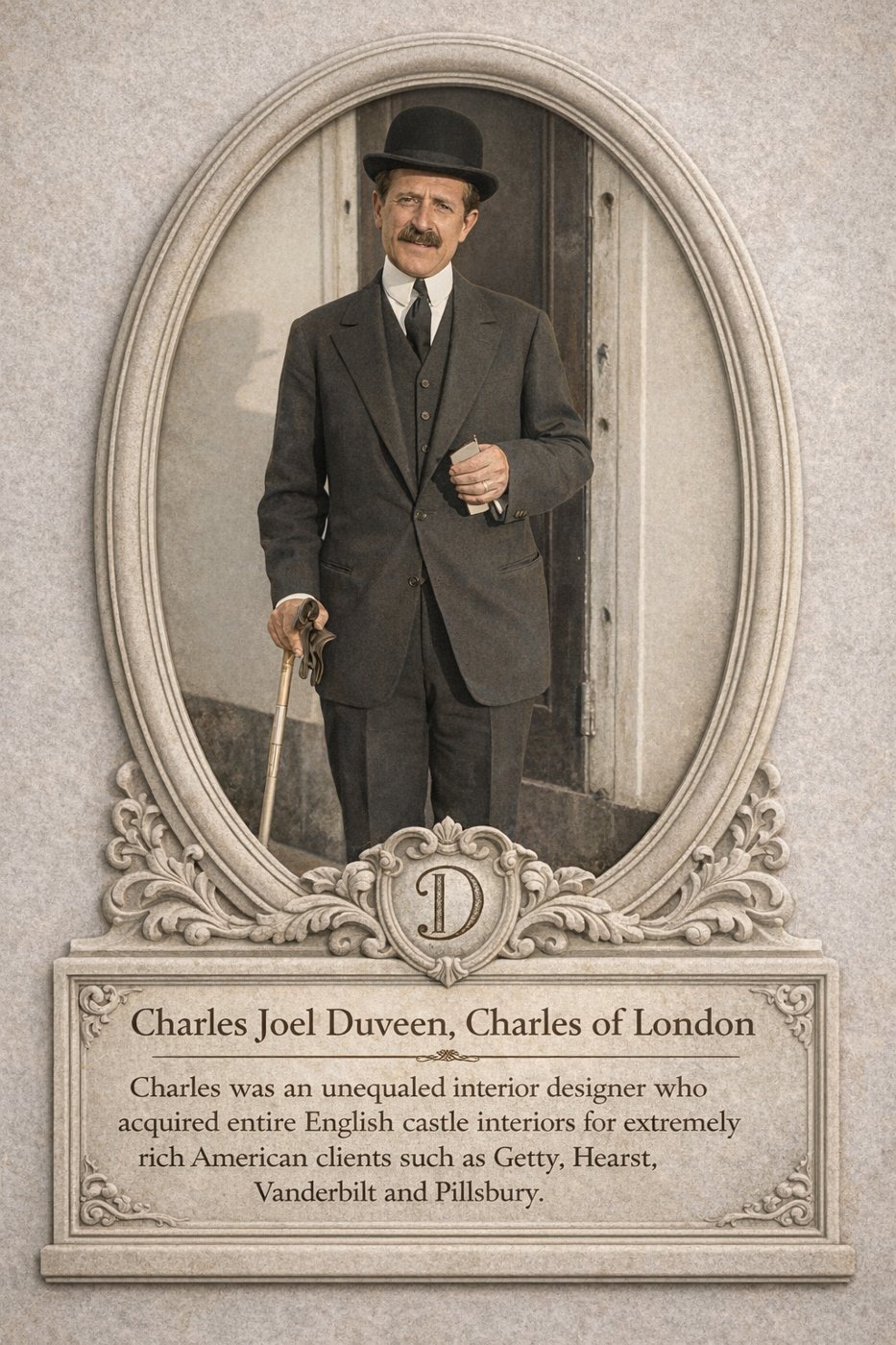
Charles Joel Duveen was born in 1871 into the most powerful art-dealing family of the age. But where his celebrated brother, Lord Duveen, sold Old Master paintings to Frick and Mellon, Charles loved the fabric of old houses themselves — their carved oak, their plaster ceilings, their ancient glass. In 1908 he left the family firm and set out under a name that connoisseurs would soon know on both sides of the Atlantic: Charles of London.
He is credited, almost single-handedly, with making Tudor and Elizabethan interiors fashionable in the United States — and his masterpiece of salesmanship was the furnishing of a great house in Minneapolis.
Fifth Avenue, New York
“The Charm of Old English Interiors”
By 1913, Charles had been established in New York for some seven years — first at Fifth Avenue and Twenty-eighth Street, then in extensive galleries further up the avenue — and was widely known to connoisseurs as the foremost expert in old English woodwork. He literally wrote the book on it: a tall, handsome folio titled Elizabethan Interiors, quickly regarded as the standard work on old English wood carving.
Years earlier, he had begun buying up old paneled rooms when almost no one wanted them. By the time American taste caught up, he held an unrivalled collection — and a contemporary critic could write that such carving was to woodwork what the Old Masters were to painting.
“Years ago he began buying up old panelled rooms, then not appreciated, but now considered to wood carving what the old masters are to painting. The result is his unrivalled collection of old English interiors.”
The Lotus Magazine — “The Charm of Old English Interiors,” 19131913
The Rotherwas Coup
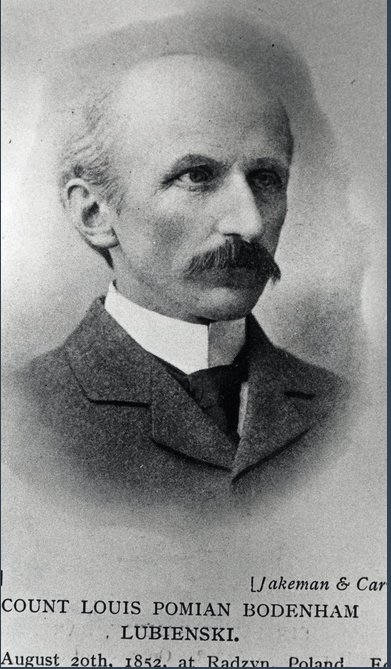
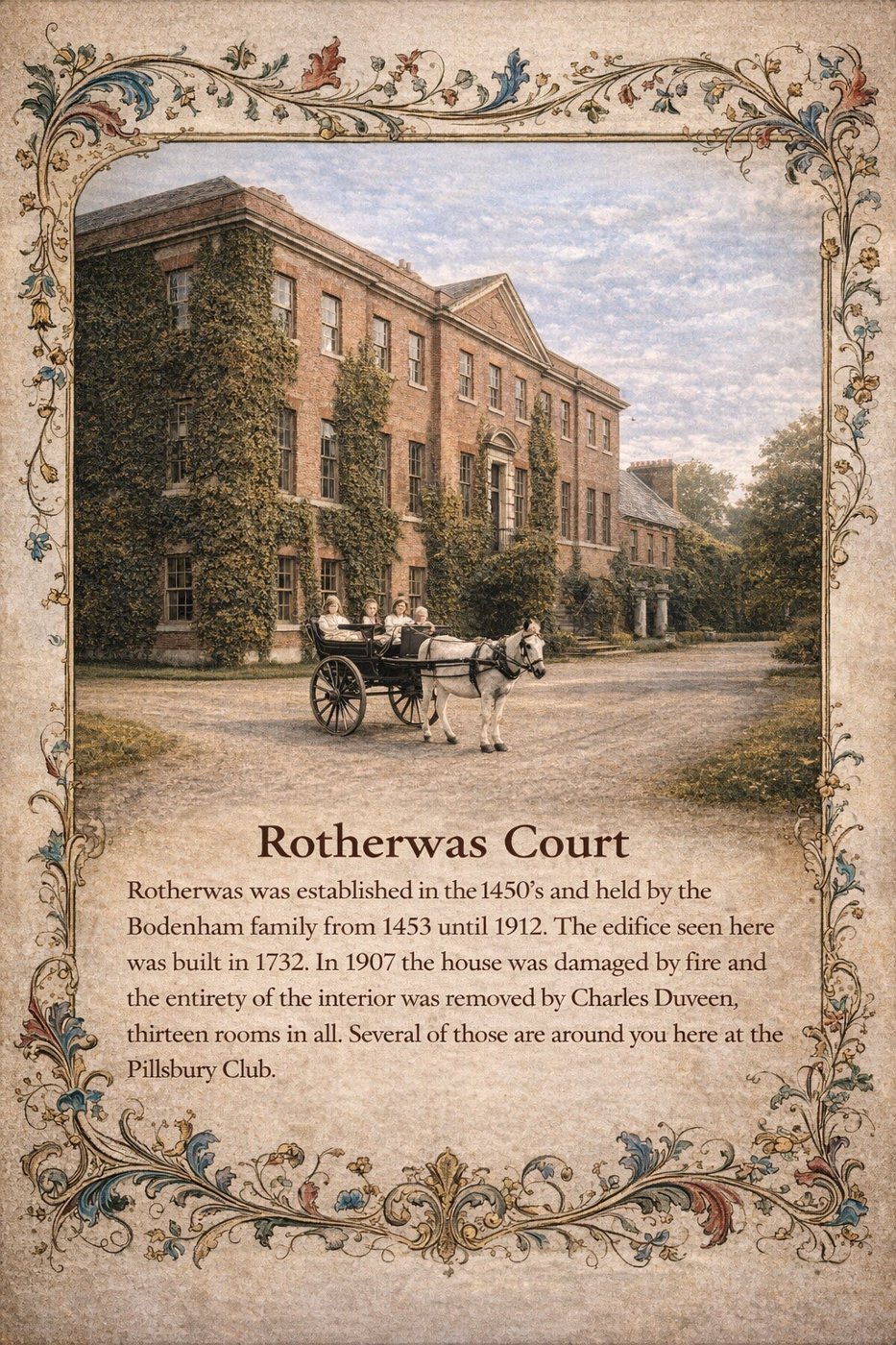
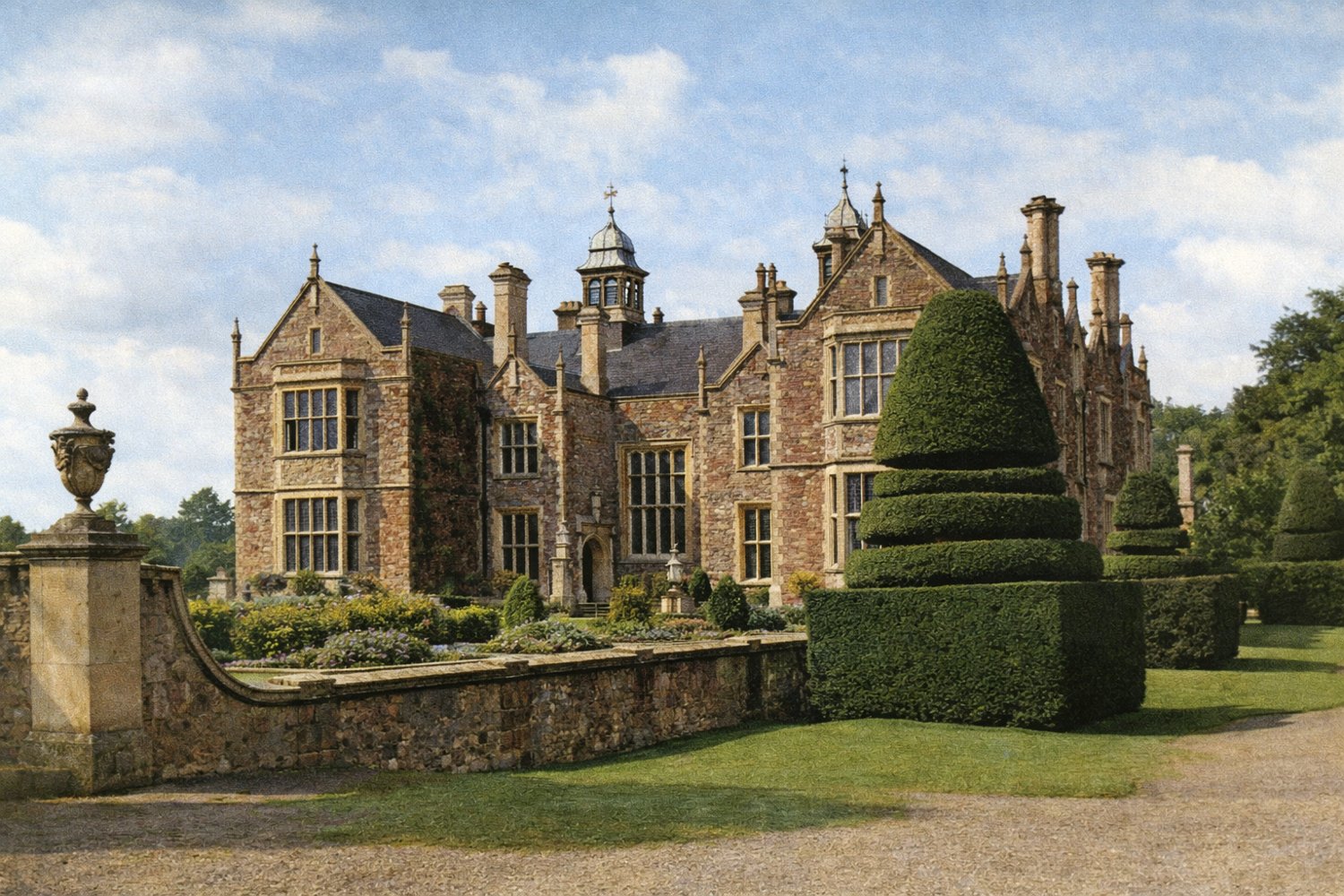
His greatest acquisition was the superb interiors of Rotherwas, the ancient seat of the Bodenham family near Hereford — a house recorded in the Domesday Book and held by one family for nearly a thousand years. The purchase was considered so momentous that the Pall Mall Gazette issued a placard devoted to it, and the news was cabled across the Atlantic to the New York papers. In England, there was an angry public protest at the loss.
It included a noble banquet hall with an oak mantel of the purest Elizabethan type, its carvings so fine that they had been praised as early as the seventeenth century by the historian Blount. Charles dismantled the staircase, the paneling, the ceilings, and the front door — and, with some modifications, had them reinstalled in a brand-new mansion rising in Minneapolis.
“Rotherwas house, one of the finest old mansions in England with a history dating back to the time of William the Conqueror, has been bought by an art dealer… when it was said that the purchaser intended to strip the house of the treasures and send them to America, there was an angry protest.”
Brooklyn Eagle, June 1913His Gift to Minneapolis
Everything You See Here
The Rotherwas oak and staircase. The Tudor plaster ceilings. The Tallow Chandlers fireplace that survived the Great Fire of London. The Walrond marriage fireplace from Bovey House. The ancient cathedral glass from the Grosvenor Thomas collection. Each of these treasures reached this house through Charles of London — sold to Charles S. Pillsbury, sometimes in fierce competition with William Randolph Hearst.
Charles closed his London branch in 1933 and, in failing health, retired in 1938. He died in 1940 — the same year as his brother, Lord Duveen. But the rooms he assembled endure, an ocean from where they were born.
He was the lesser-known Duveen in his own lifetime — but for this house, he was the most important man of all.