
Chapter IV
The Splendors
Run your hand along the oak and you are touching the year 1600. Seven treasures, each older than the nation that houses them.
The Man Who Sold England
An Elizabethan Craze
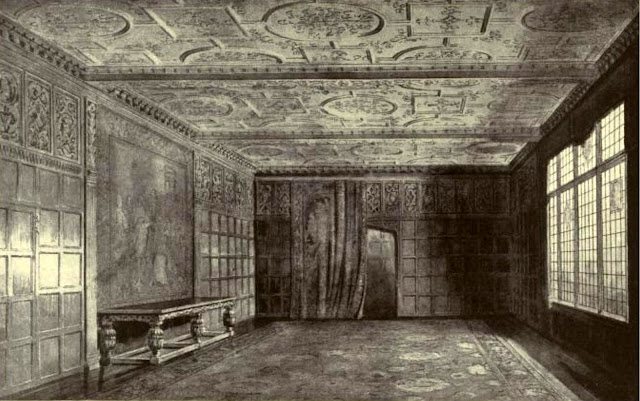
By the 1800s England’s old fortunes had waned, and her grand houses fell into neglect as aristocratic families faded. Enter Charles Duveen — “Charles of London” — the visionary dealer who single-handedly ignited an American craze for Elizabethan interiors. He snapped up entire paneled rooms, and sometimes whole houses, from decaying English estates, then marketed them to America’s wealthiest tycoons: Getty, Hearst, Vanderbilt, Guggenheim — and Pillsbury.
Millions, in today’s dollars, changed hands for a single room in this transatlantic status showdown. Charles Pillsbury acquired several of the thirteen paneled rooms from the storied Rotherwas Court — and that ancient woodwork surrounds you still, here at the Pillsbury Club. Meet the dealer who made it possible →
“Charles has removed the marvelous oak rooms, which have been the wonder of centuries, from the famous home of the Bodenhams at Rotherwas… The Rotherwas oak rooms are something quite unique and contain the richest treasures of carving.”
Manchester Courier & Lancashire General, May 1913Seven Splendors — Choose Your Path
Woodwork the Wonder of Centuries
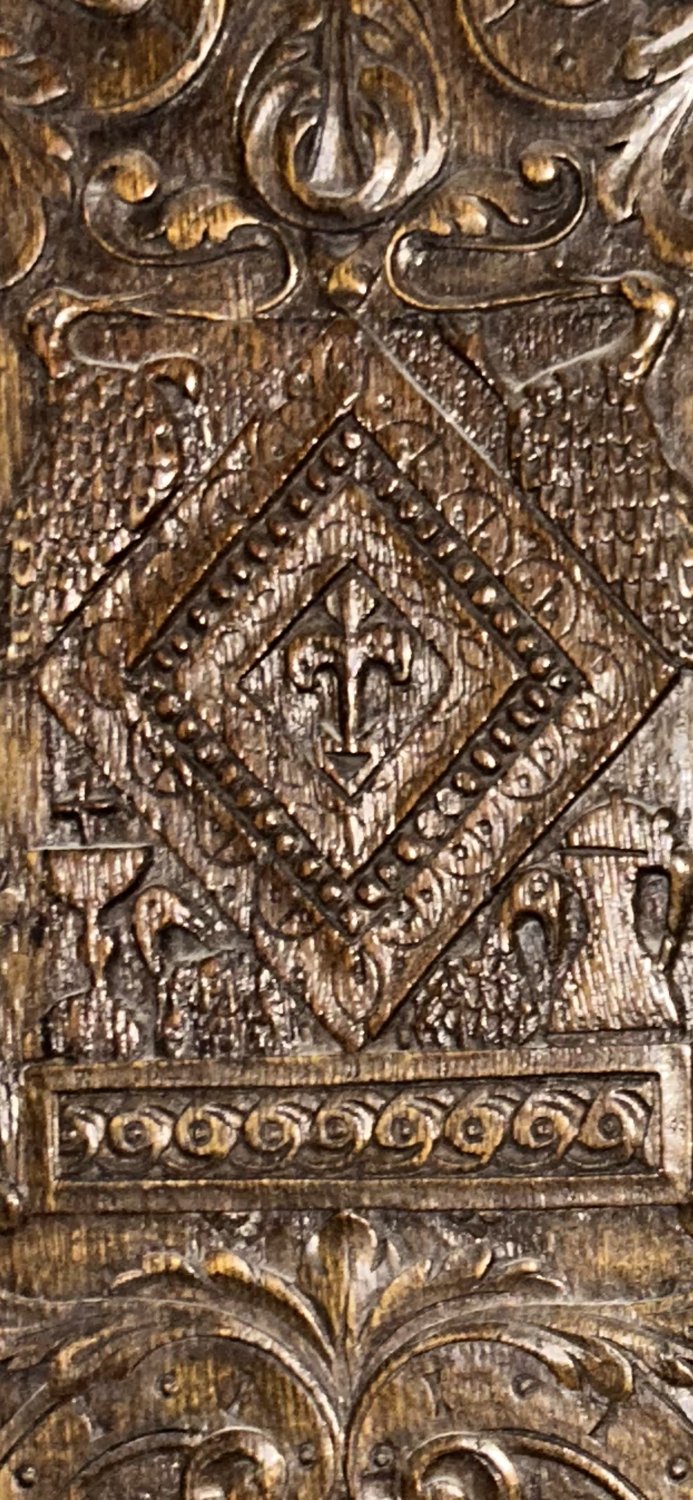
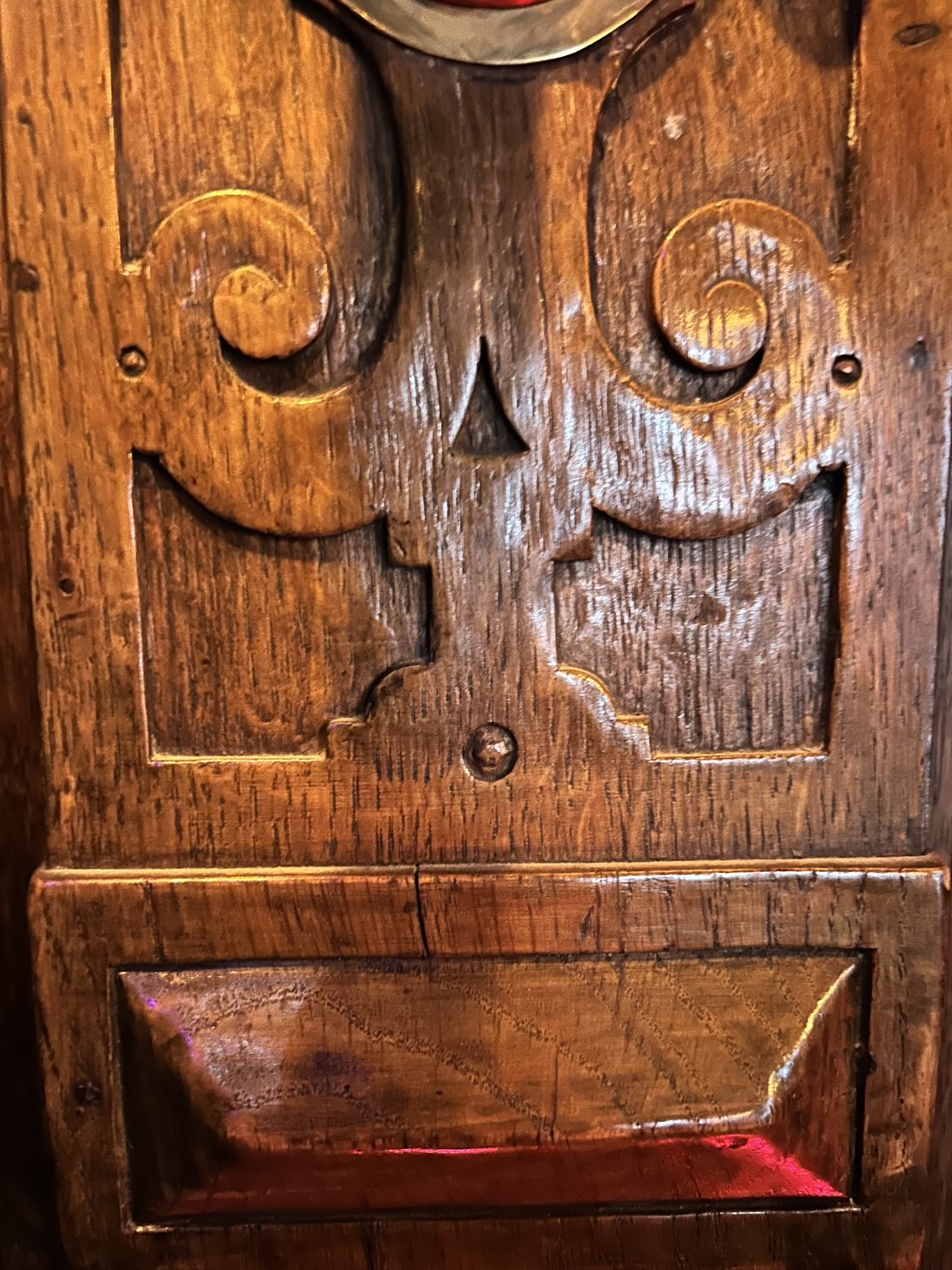
The oak panels around you were split — not sawn — from English timber, in an age when no machinery could slice wood so large. Craftsmen cleaved the oak like shingles, then hand-rubbed it smooth, perpendicular to the grain, to reveal the luminous “tiger’s eye” figuring that still gleams today.
Run your hand across it. There are no saw marks. There never were.
Rotherwas Court stood for nearly a thousand years. The Bodenham family held its lands from before the Domesday Book of 1086 until 1912, and hidden throughout the carving are the family’s three chess rooks — a punning heraldic signature. When the estate was broken up, Charles Duveen carried its richest rooms across the Atlantic, to the dismay of a nation.
“The work of taking down the paneling of Rotherwas is now being carried out; but the task is no little one. The mansion is one of the oldest in England.”
Minneapolis Journal, April 1913Admitted to America free of duty — as art
A Stair a Monarch Walked
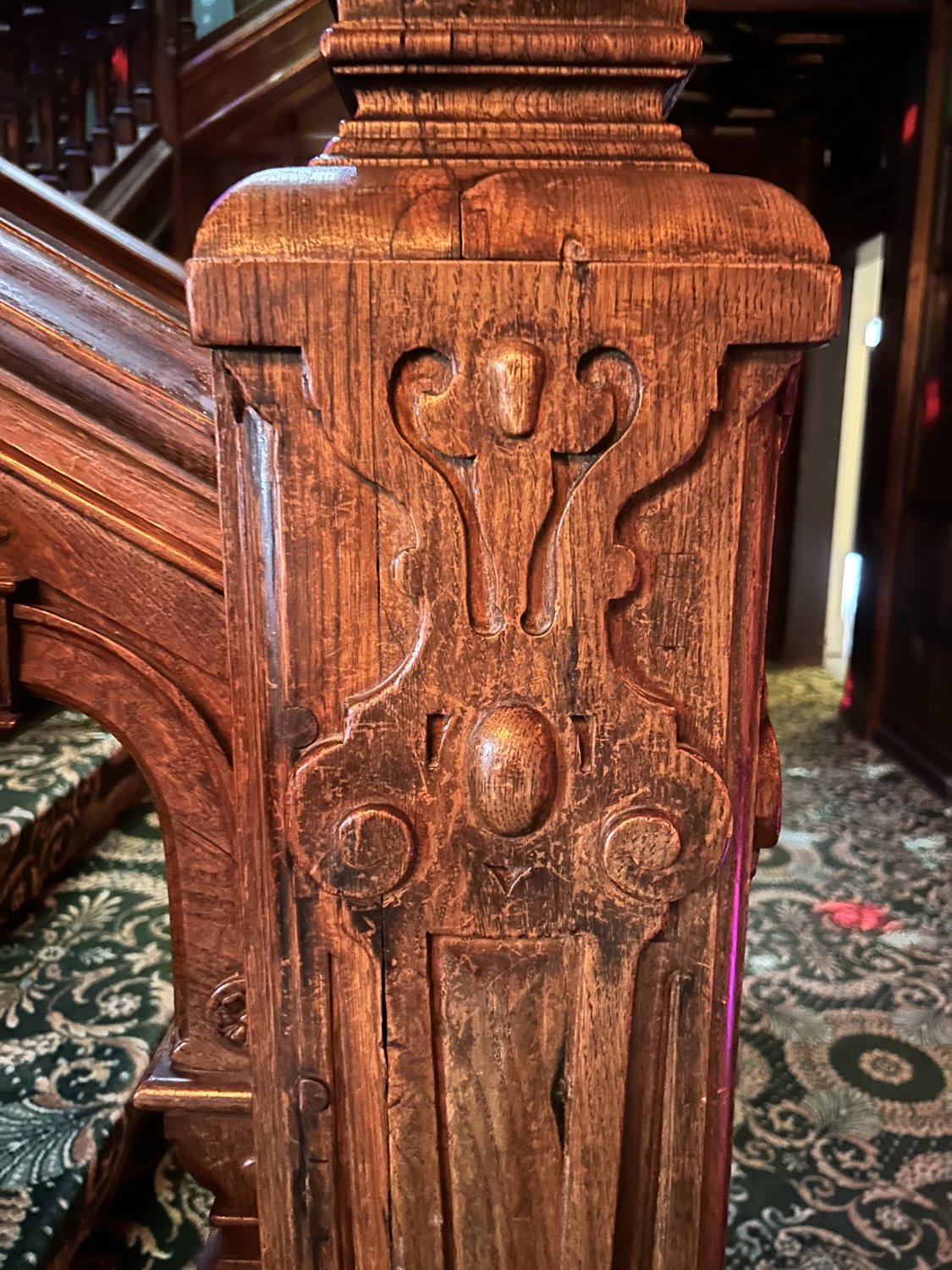
The hand-carved English oak staircase here once graced Rotherwas Court, seat of the Bodenhams for nearly a thousand years. King James I of England (1566–1625) descended it and declared, “Non datur cuivis adire Rotherwas” — “Not everyone can come to Rotherwas” — playing on the old proverb about the exclusivity of Corinth, and nodding slyly to Shakespeare’s troupe, the King’s Men, who by law could perform only at certain houses, and were performing at Rotherwas that very night.
After a fire, the Bodenhams abandoned the manor. The newel posts — still strong after nearly five hundred years — carry the charred scars of that blaze.
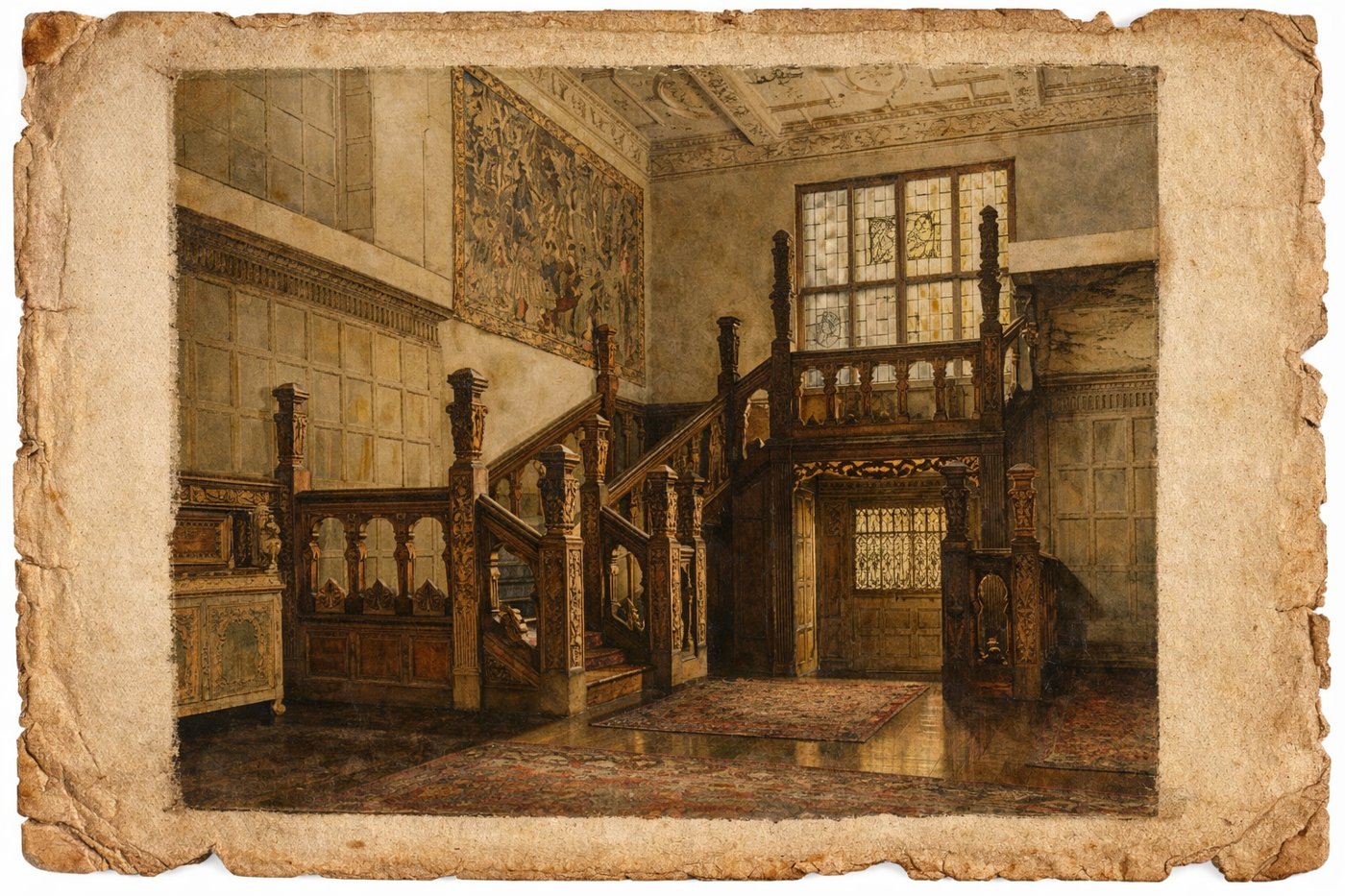
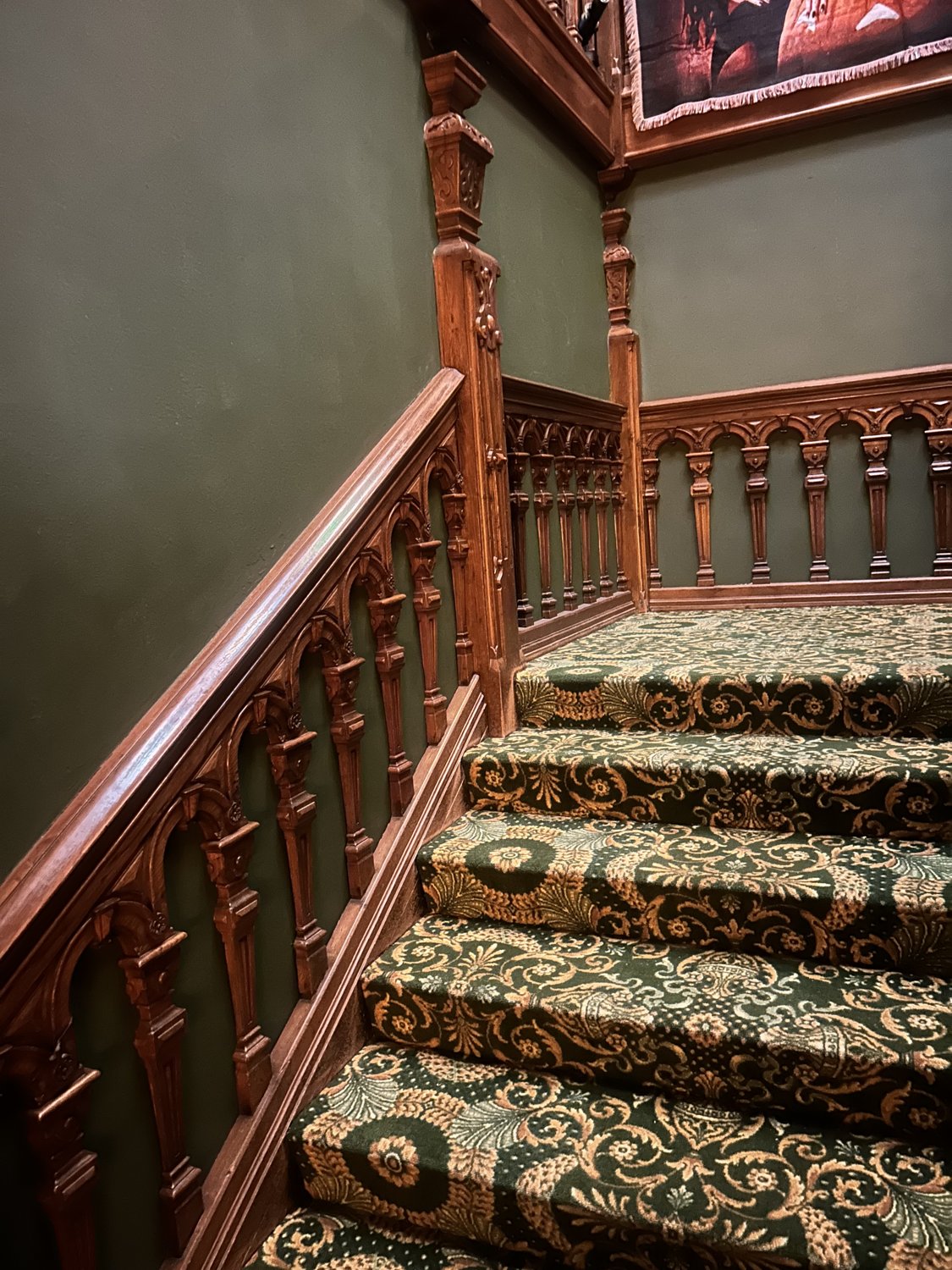
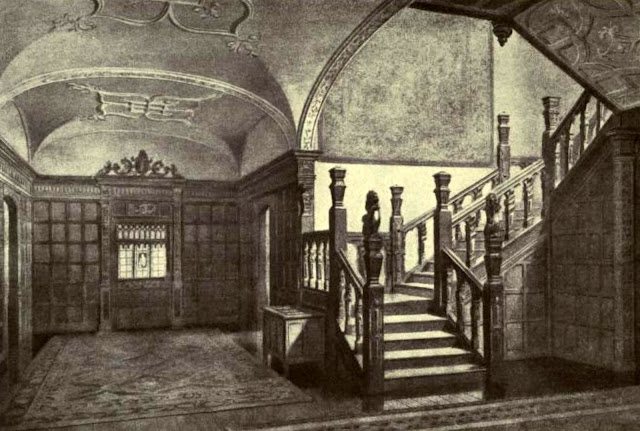
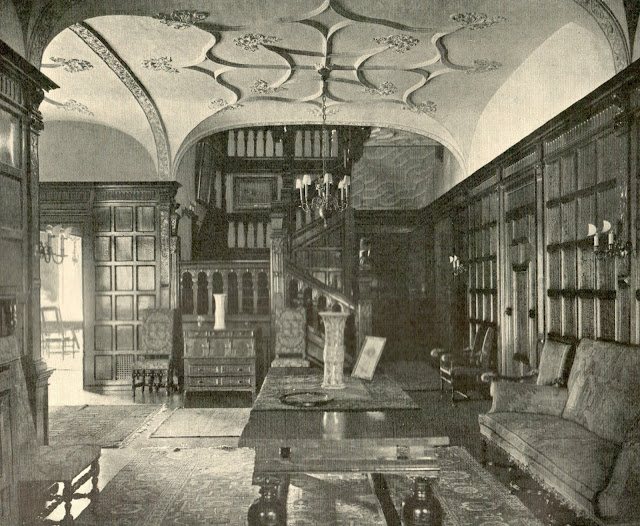
Note how Duveen relocated the carved dogs from the upper landing to the bottom posts — the scorch marks travelled with them.
III · The Stone Fireplace
A Survivor of the Great Fire of London
In 1476 the wealthy Tallow Chandlers built their grand Guild Hall on Dowgate Hill in London and carved into it a stone chimneypiece bearing arms granted to their guild in 1456 — decades before most heraldic records even begin. Across all of England’s long history, only 113 such patents were ever issued to a guild.
Then, in 1666, the Great Fire of London devoured the city and gutted the hall — yet the massive chimneypiece somehow stood defiant amid the flames. Shipped north to Chester, it warmed another guildhall for 250 years. In 1913 it caught the eye of William Randolph Hearst, bound for his castle at San Simeon — but through luck or trickery, Pillsbury ended up with the prize. A legal tussle followed. The fireplace stayed put.
For more than 550 years since its carving, this battle-scarred masterpiece has graced the library. Its patron saint, John the Baptist, presides still — his carved head held by the Archangel Gabriel above the hearth.
A miracle of survival: the 1456 patent papers
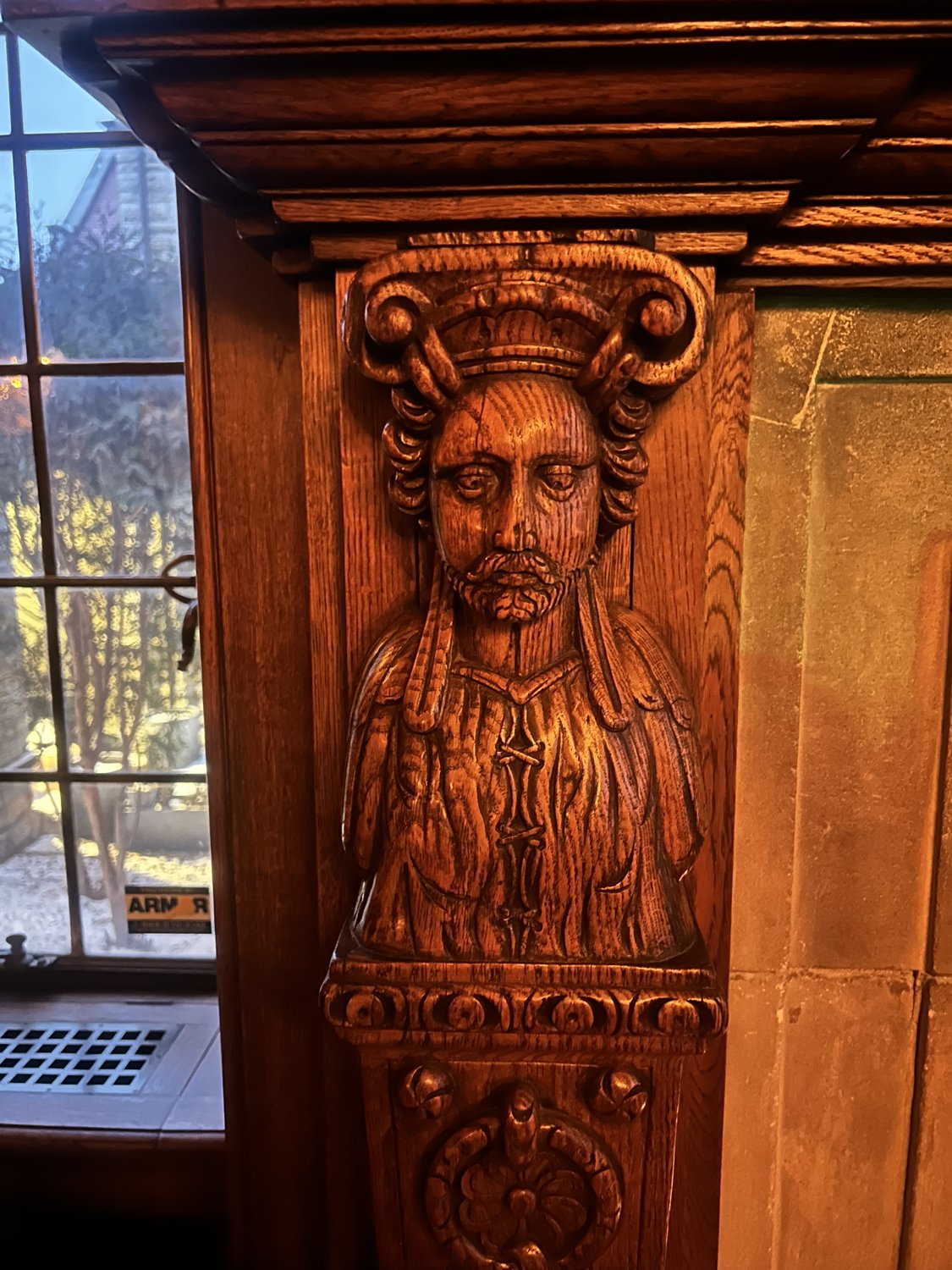
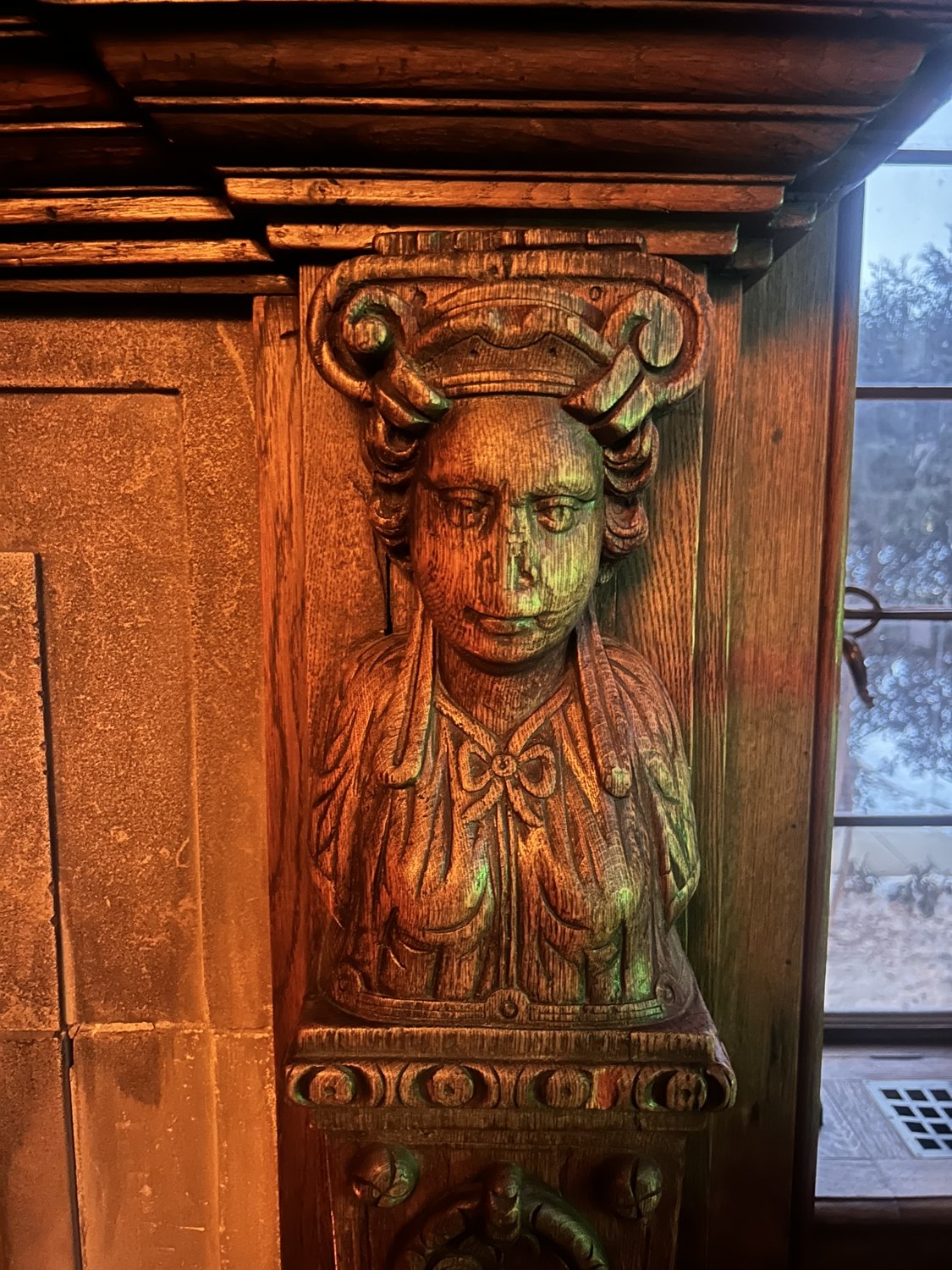
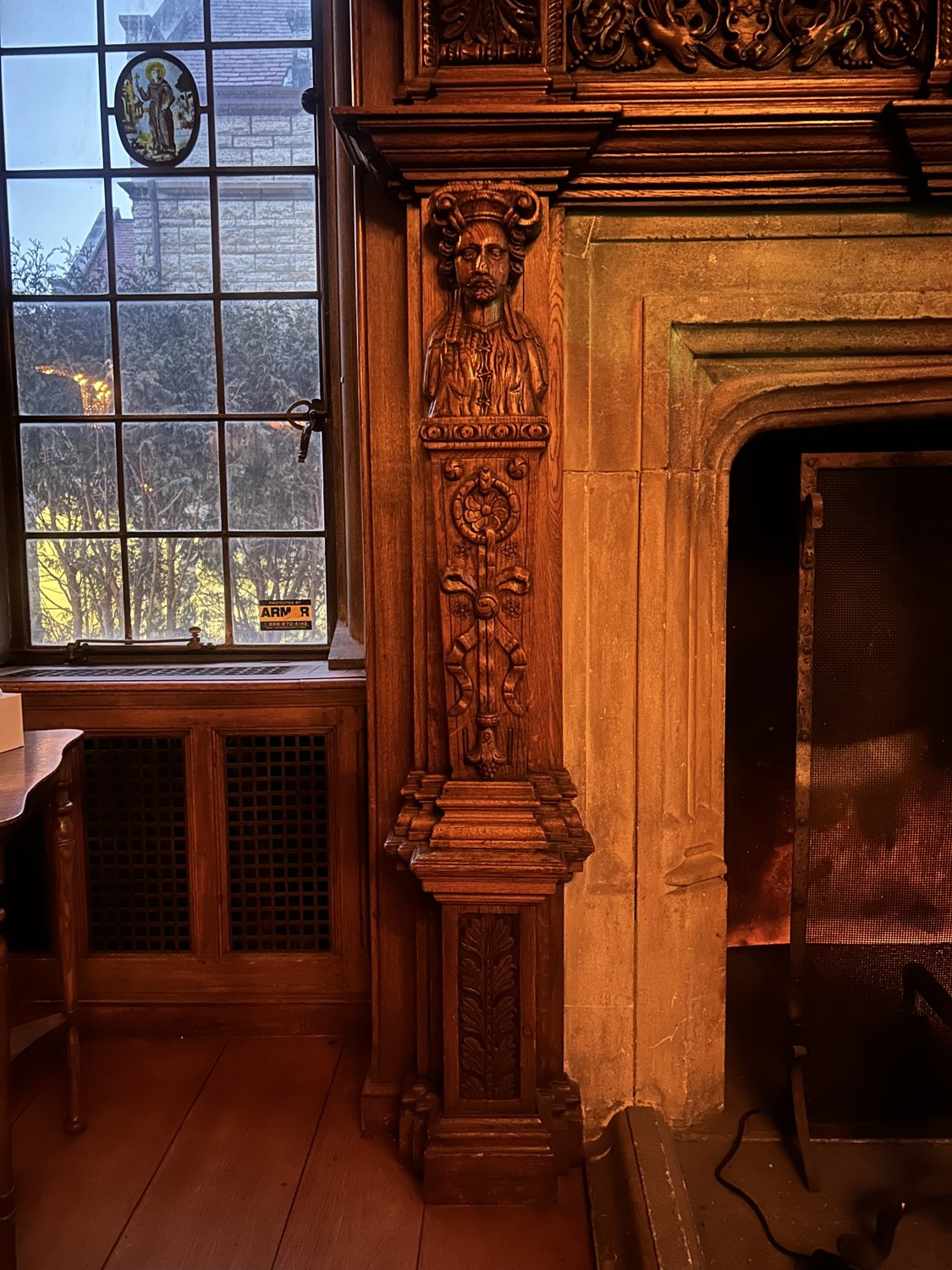

IV · The Walrond Fireplace
A Marriage Carved in Oak
The year is 1592, and England buzzes with Tudor confidence. John Walrond is a thirty-six-year-old gentleman of Devon, of a powerful landholding family. To consolidate power he marries sixteen-year-old Jane Hatch — uniting two Devon clans in a thirty-one-year marriage that produced fourteen children. One of them, Mary Walrond, would wed William Pole, sail to the New World, and help establish Taunton, Massachusetts — back when lost colonies like Roanoke still vanished without a whisper.
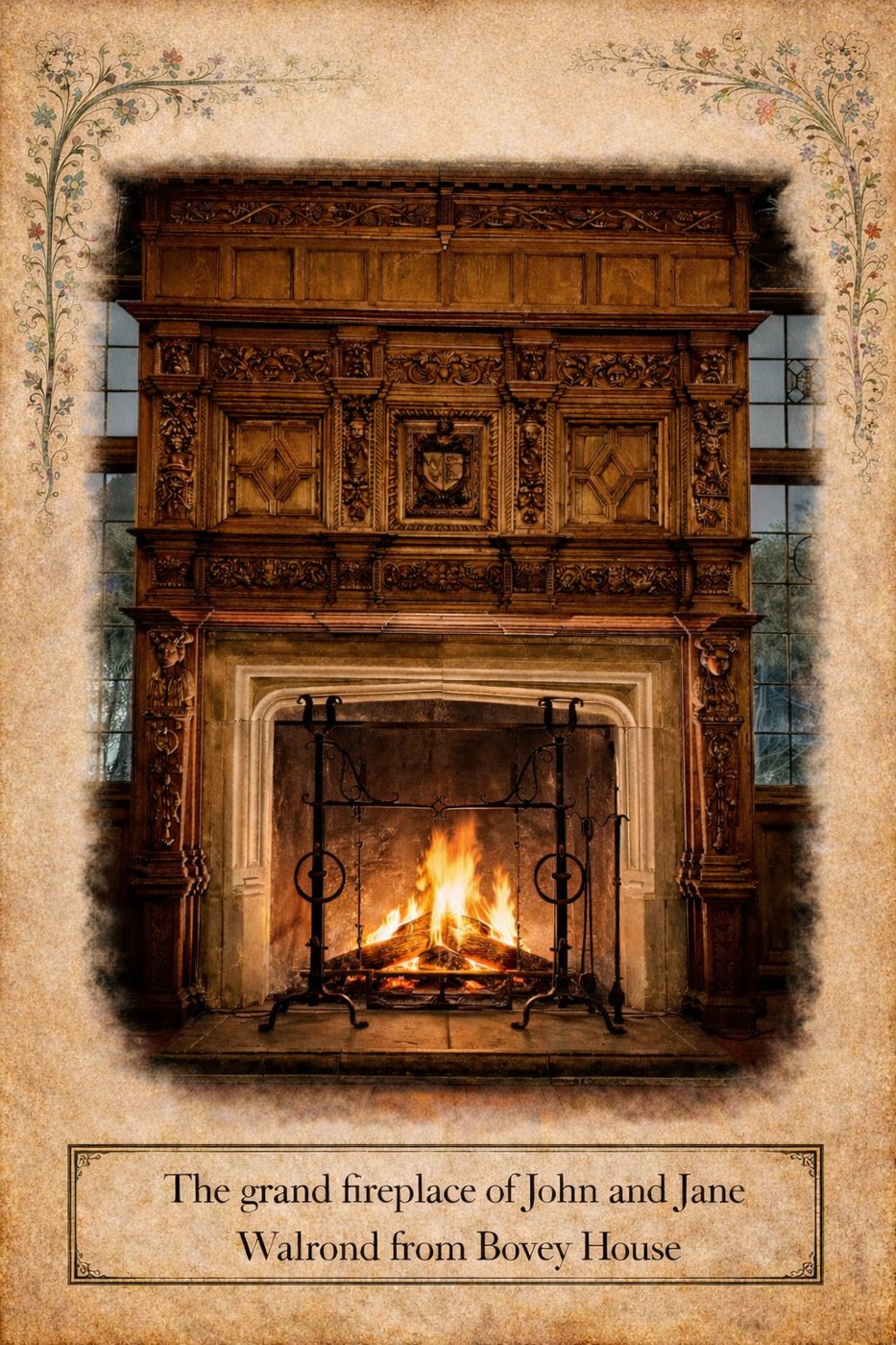
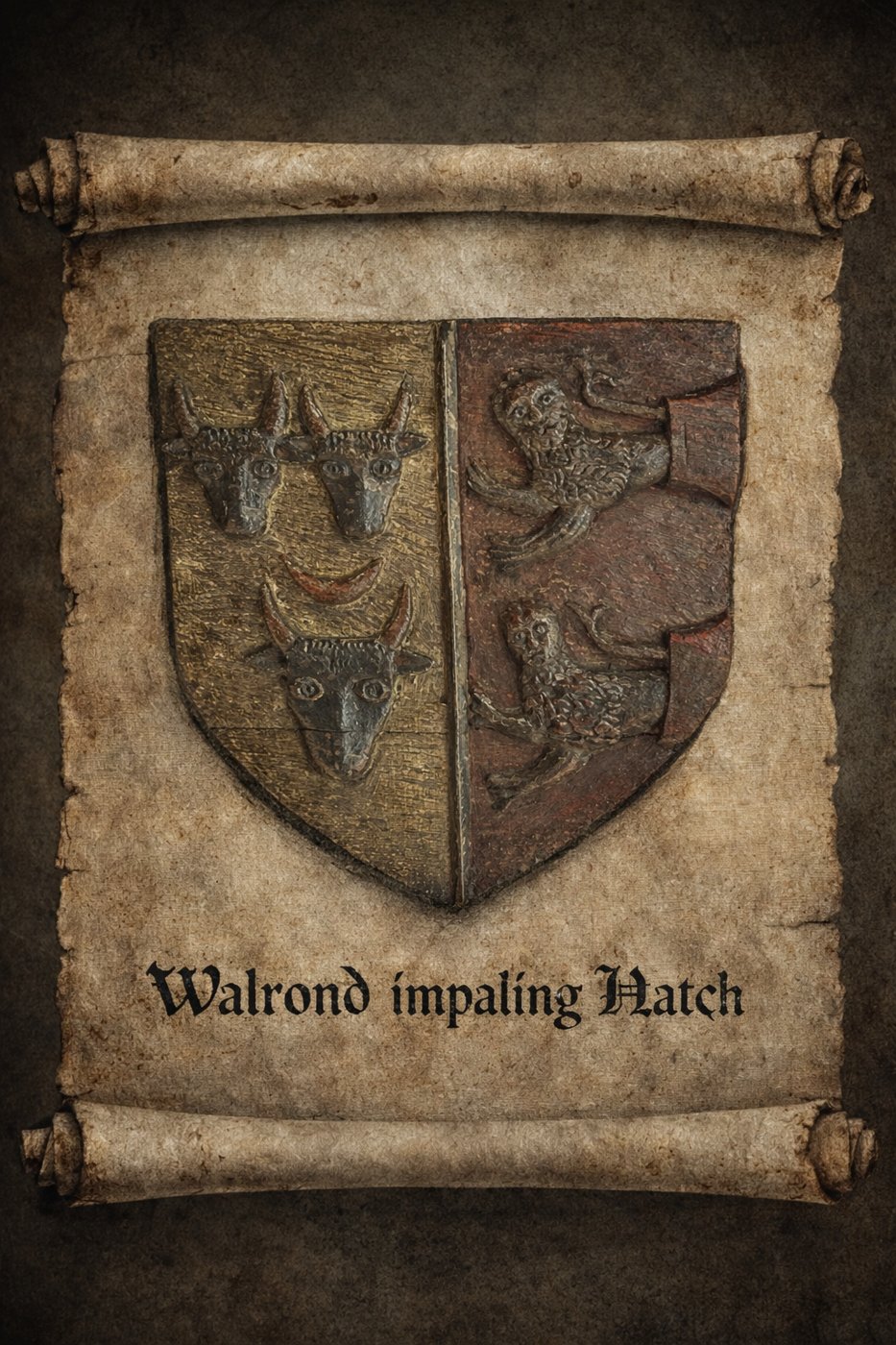
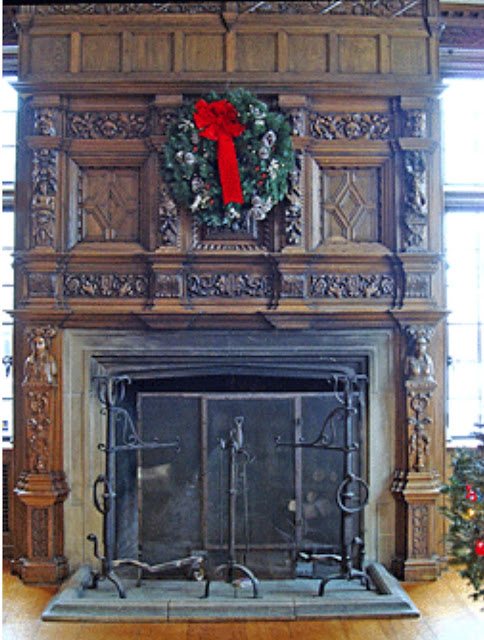
Flush with fortune, John and Jane lavished a remodel on Bovey House, their ancient fortress-like manor at Beer, turning a rugged castle into a true Elizabethan gem. At its heart, John commissioned a stunning carved-oak fireplace topped by an impaled crest celebrating their union: on the right, Jane’s family crest of two lions, like Richard the Lionheart; on the left, three charging bulls’ heads, the Walrond signature. A sly half-crescent moon winks among them — the mark of a “cadet” branch, descendants of a second son.
When the Walronds tracked Duveen down to buy their crest back, he only smirked: “It’s a thousand miles west of New York.” Practically the moon, in those days.
The Walrond marriage fireplace · Bovey House, Beer, DevonThat “love crest” still blazes above the lounge fireplace here — carved in English oak, over a century strong on this side of the ocean. A cheeky Tudor survivor of love, lineage, and wild transatlantic fate.

V · The Ancient Glass
Light from a Lost World
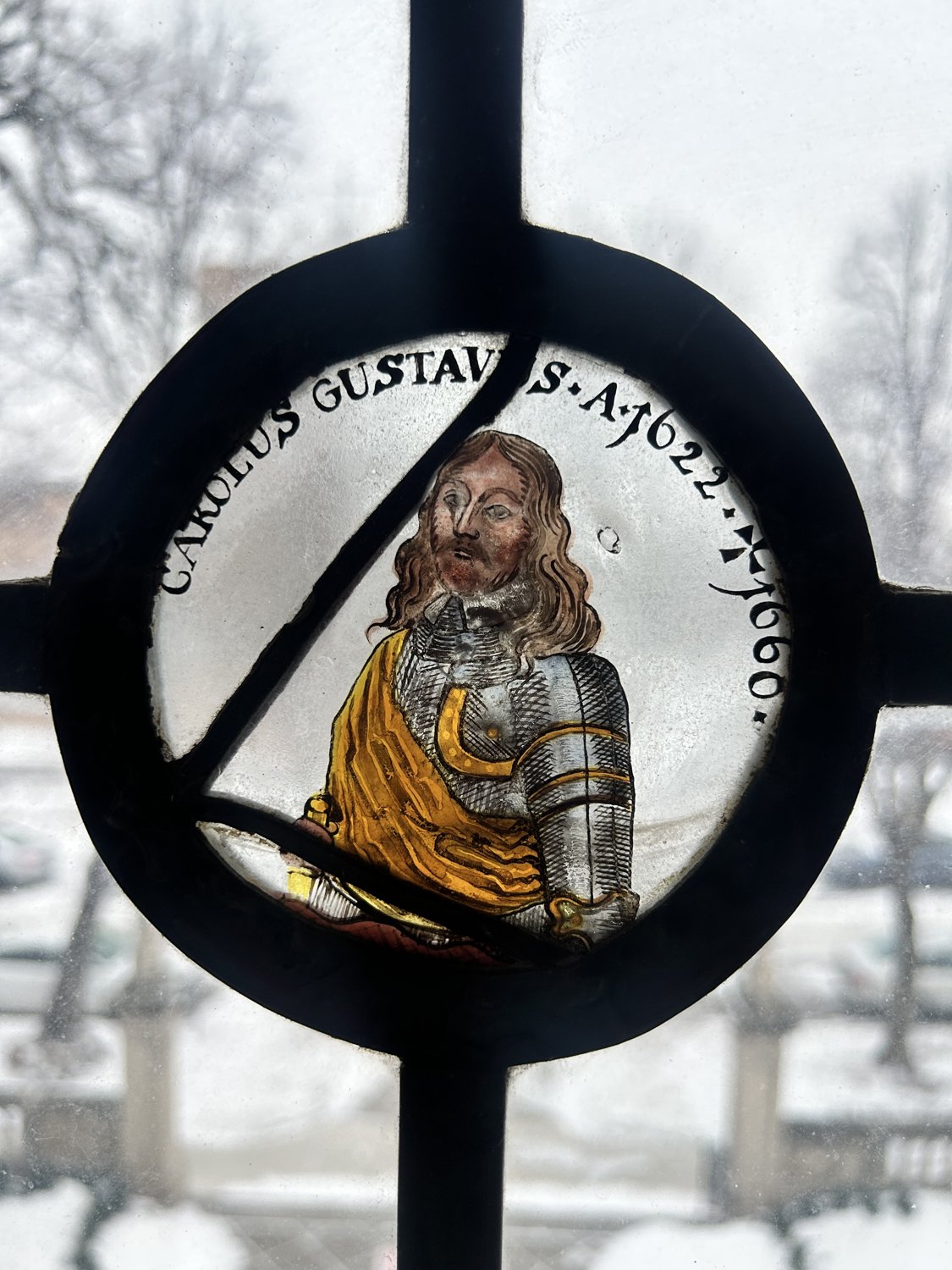
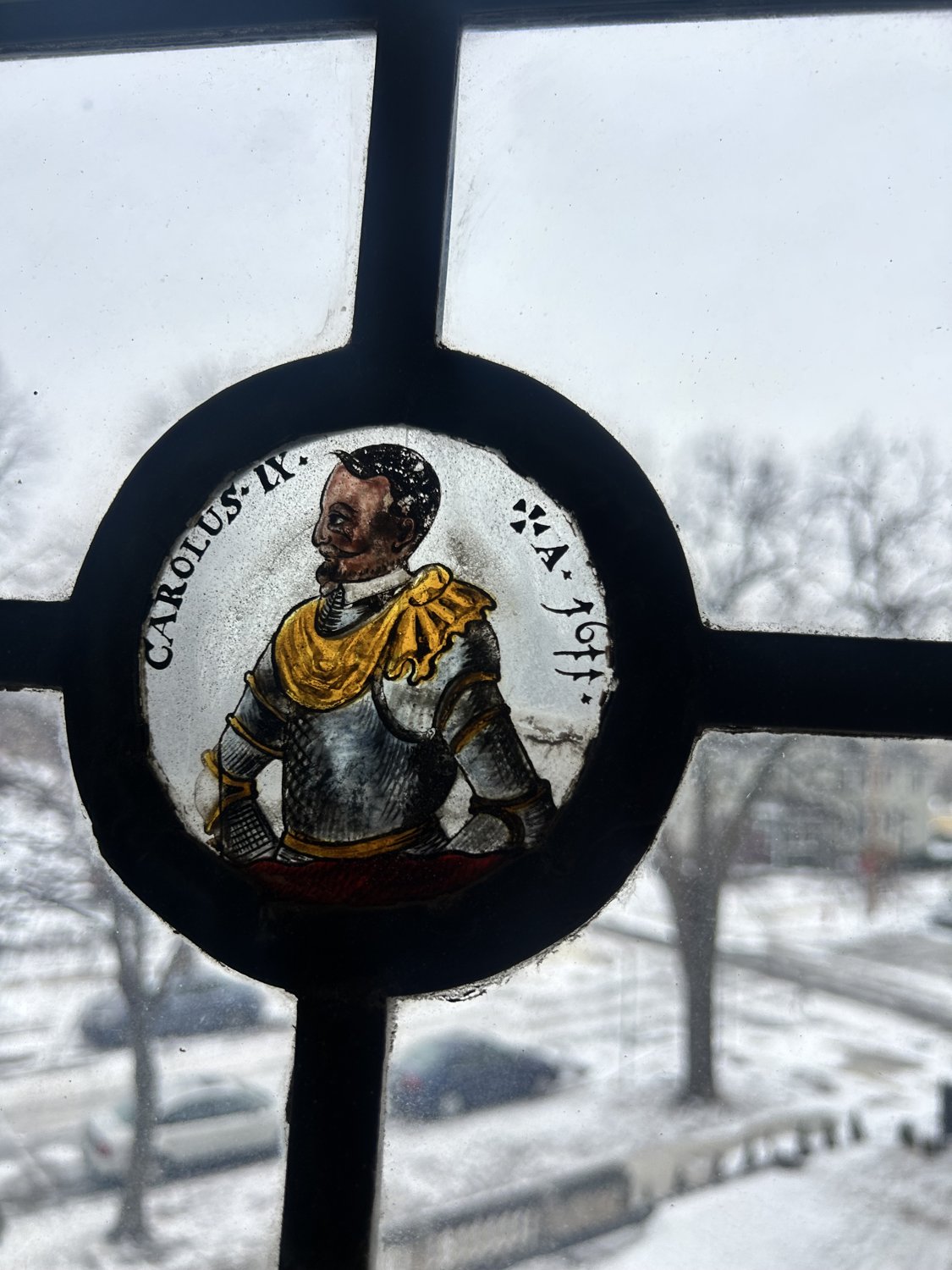
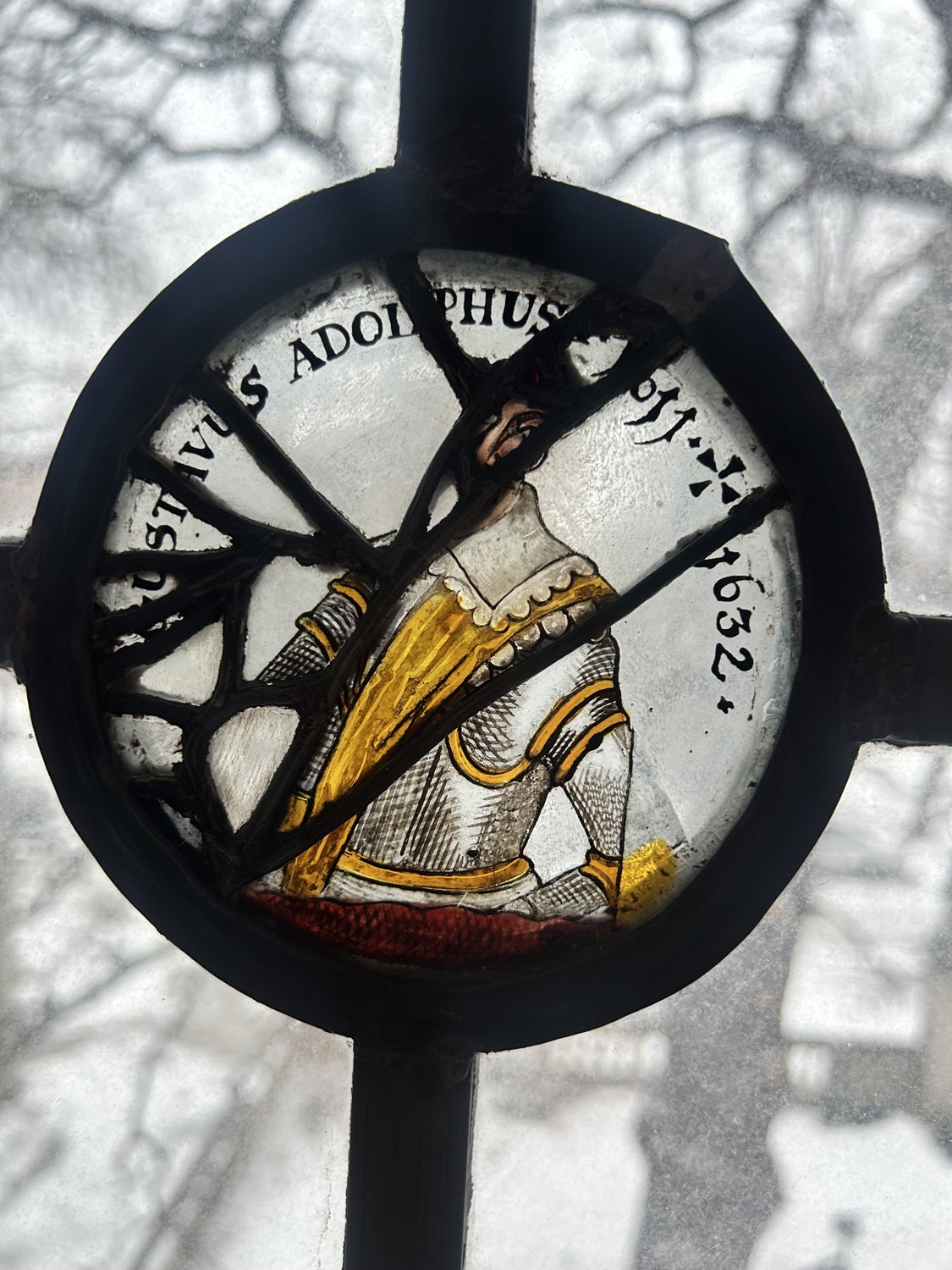
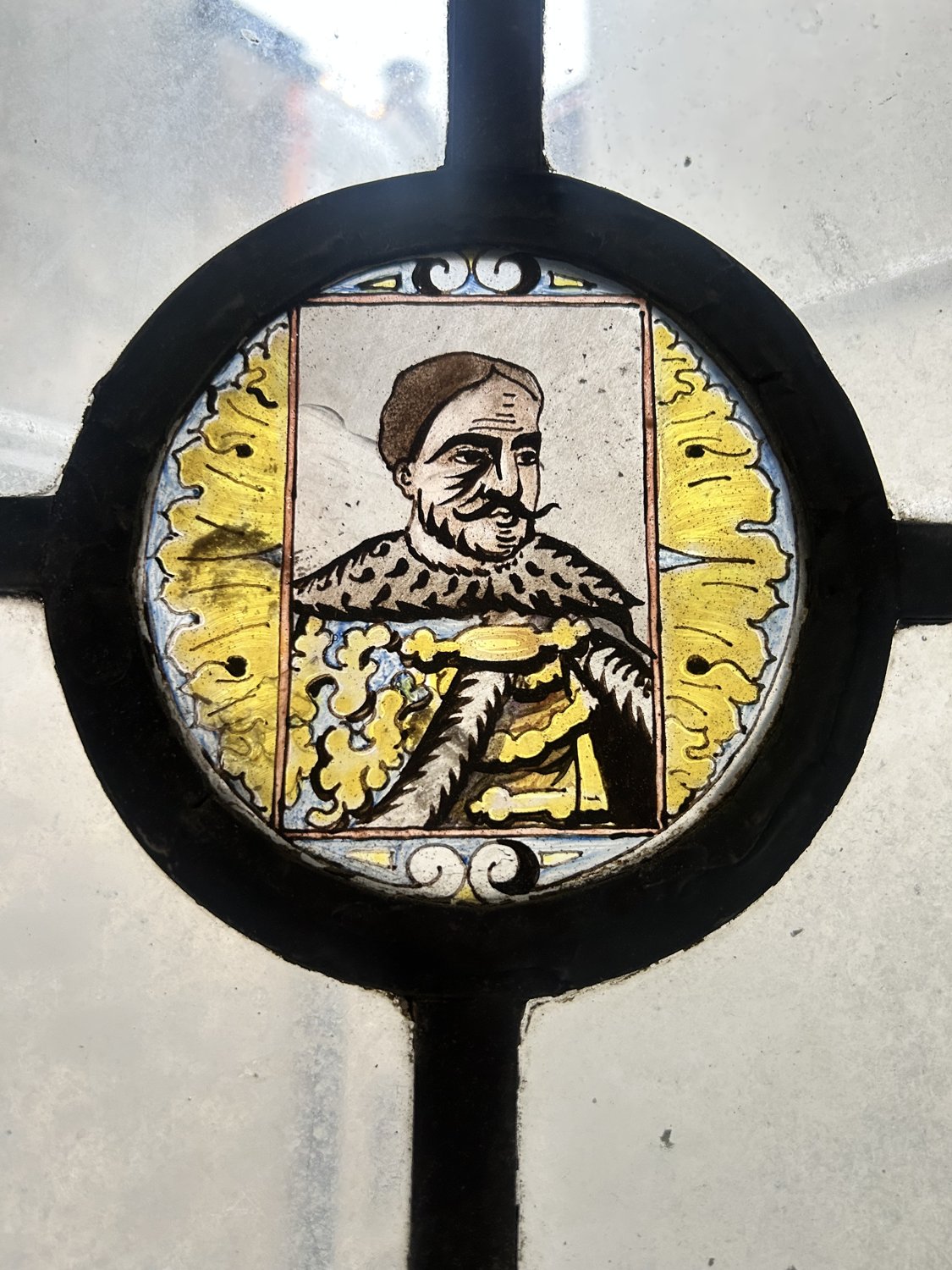
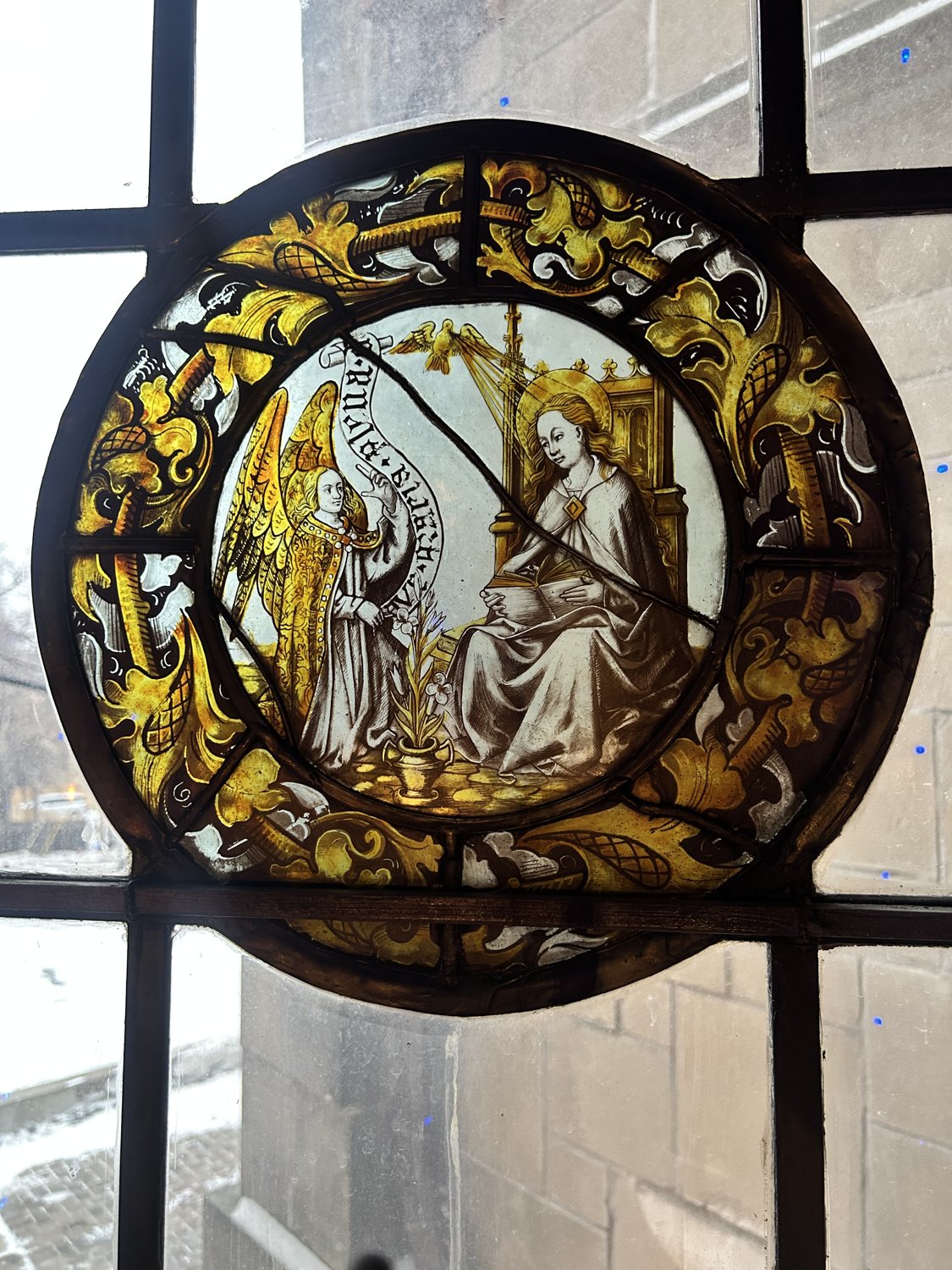
For some six hundred years, Salisbury Cathedral was a great repository for shards of ancient stained glass — survivors of Europe’s most destructive religious wars. In the late 1800s the savvy London dealer Grosvenor Thomas acquired the entire collection. Word reached Charles Duveen, who lured Thomas to New York; in 1913, at Duveen’s Fifth Avenue showroom, the shards went on dazzling display.
America’s titans — Vanderbilt, Hearst, Guggenheim, Getty — and Pillsbury snapped up every piece. Today scores of these vivid, centuries-old scenes glow in the first- and second-floor windows here: biblical figures, heraldic emblems, and glimpses of lost castles and churches.
Look closer — some panels are missing.From 1939 to 1969, when the mansion housed a seminary, the priests deemed certain images too worldly for the boys, and quietly removed them.
How the glass was made
The Feast of Esther
From Salisbury to Brussels to Minneapolis
Treasures Overhead
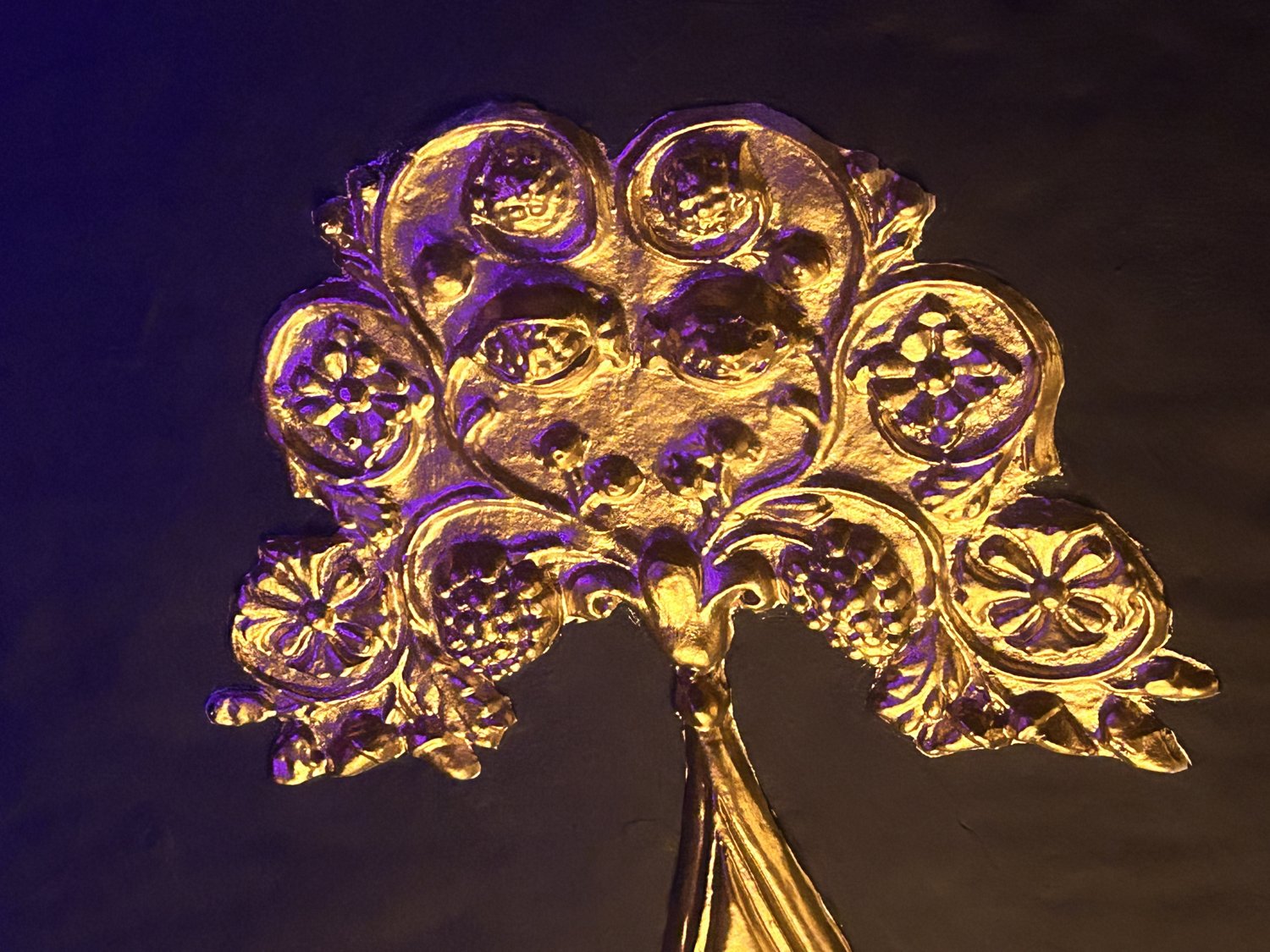
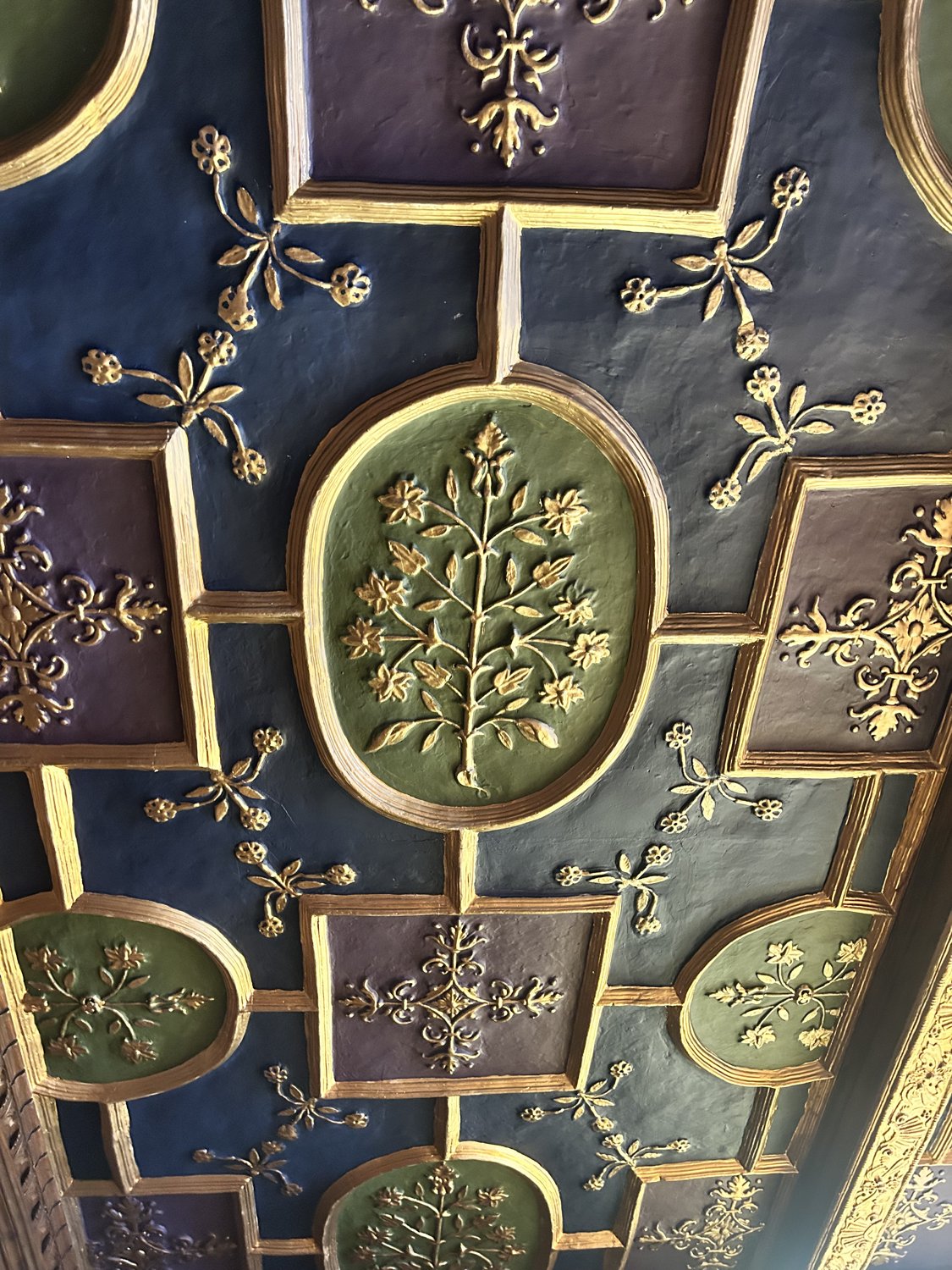
The paneling endures — yet the ceilings steal the scene. Their vast scale and seamless bond to ancient manors make their journey extraordinary: they crossed the Atlantic by ship, then trekked halfway across a continent by train and buggy before skilled hands pieced them together once more, overhead.
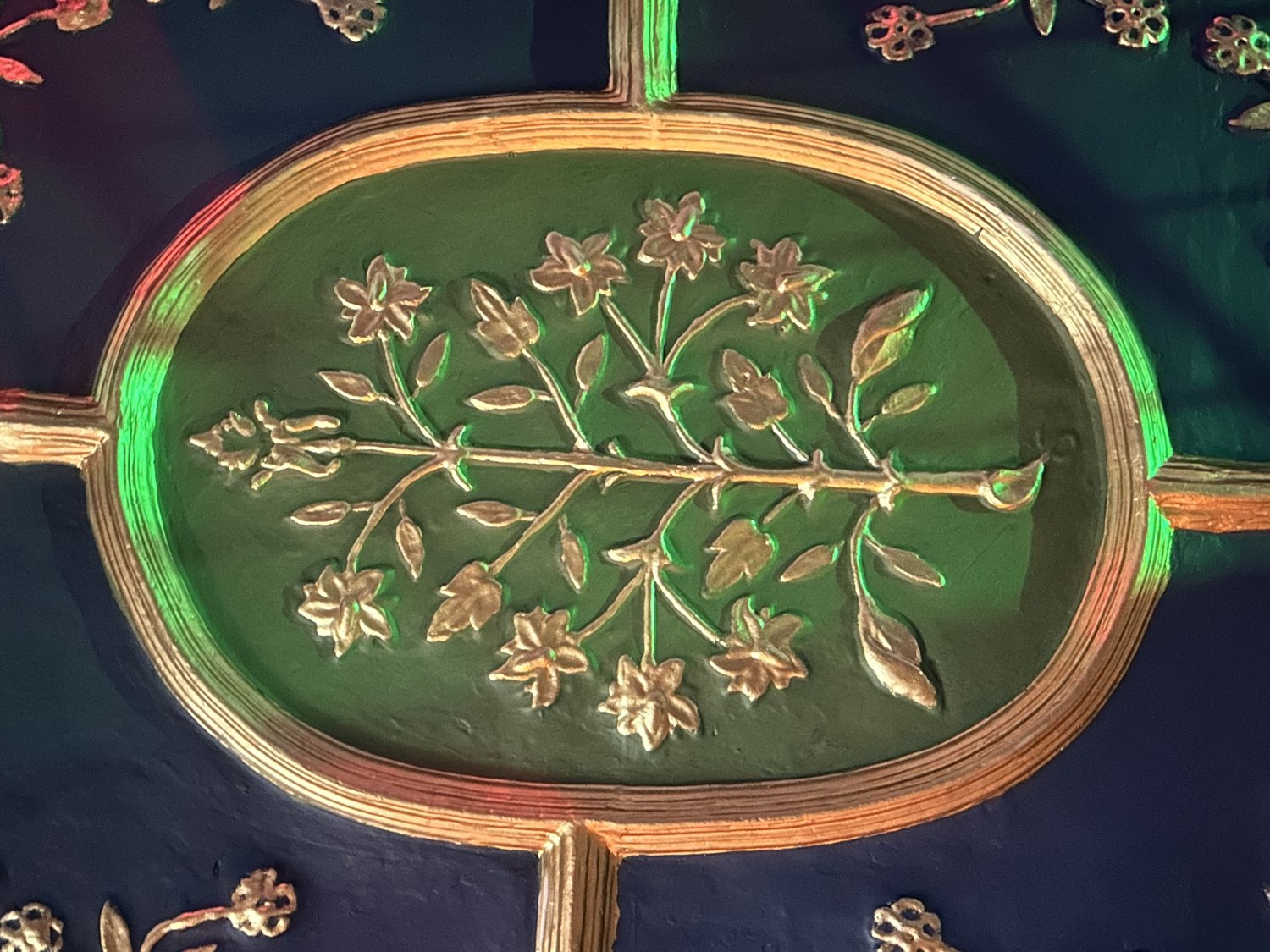
In England’s finest manors, craftsmen first pressed a sturdy basecoat of lime, animal hair, and sand into sprawling lattices of lath, then a smooth pure-lime finish. Working upside down on scaffolds, artisans shaped every rib, boss, and motif directly in place — no prefabrication, only simple templates to guide the symmetry. Pause and gaze upward: faint seams still cross the ceilings like scars, reminders of their origin and their voyage.
Look for the Tudor rose at the apex, and the white daisies of Queen Elizabeth I — the “Virgin Queen,” whose purity they symbolized. A flowering Tree of Life spreads across the plaster, an emblem of fertility and lineage. Newly returned to gold leaf, the restored ceilings now glow as they would have in an Elizabethan great house.
VII · The Henry VIII Panels
A Dynasty in Oak
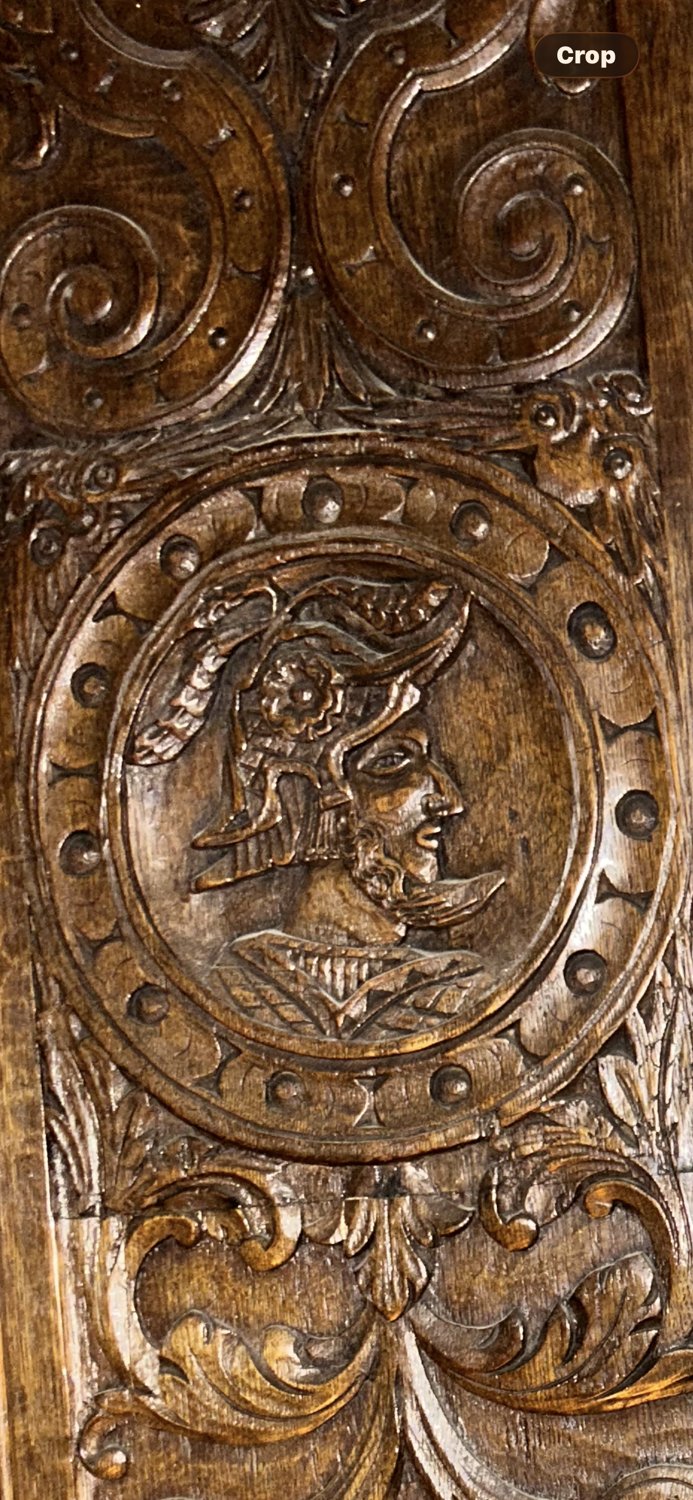
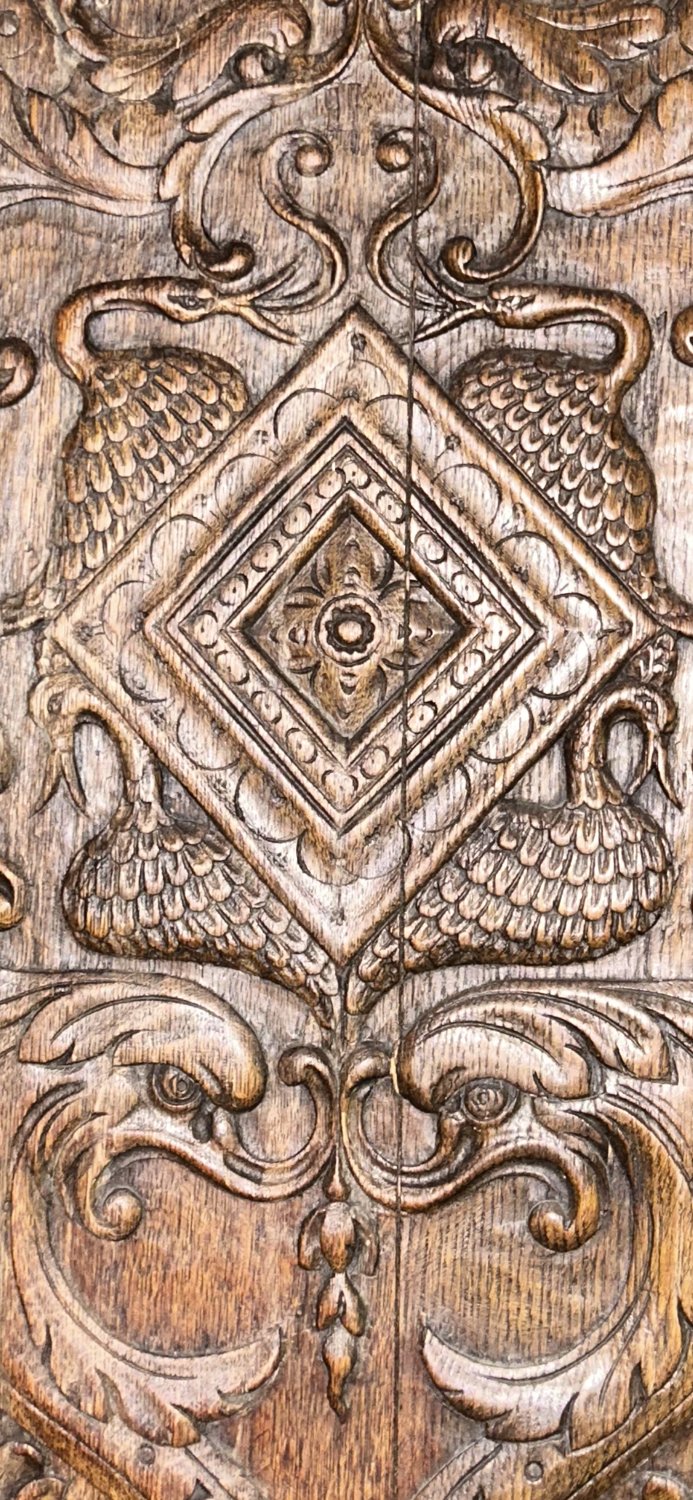
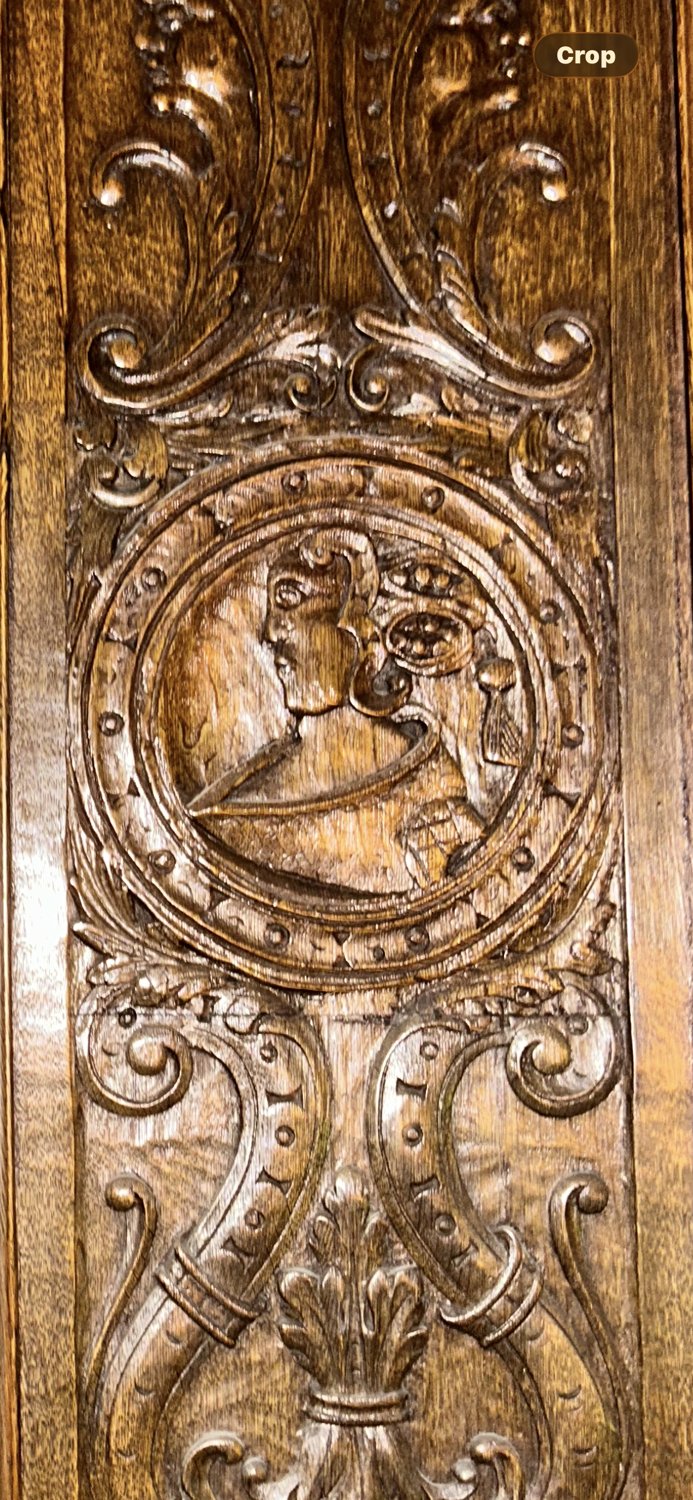
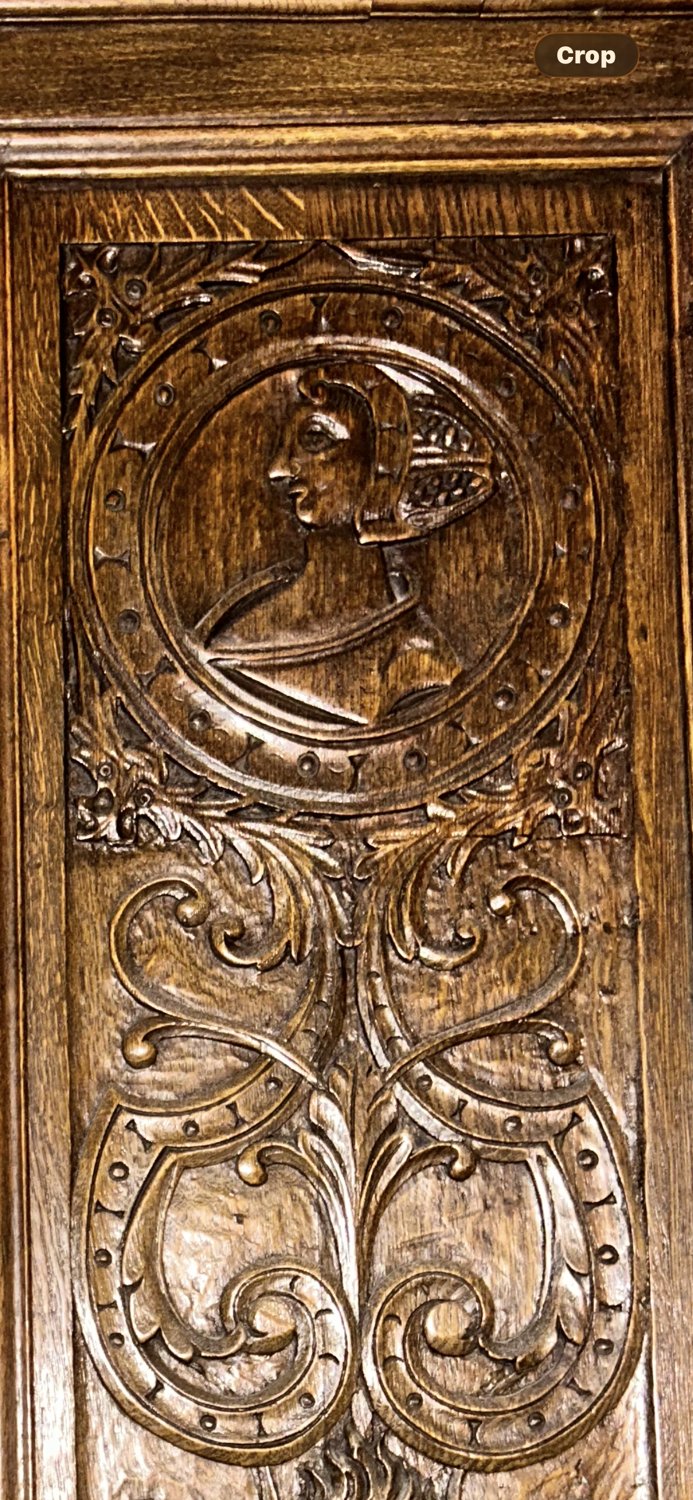
These dining-room panels date from the time of Henry VIII (reigned 1509–1547), from the country estate of a royal courtier. At the center, a Tudor rose is ringed by plumed court birds — a sign of noble status, court attendance, and honor granted by authority. Around the room, allegorical medallions: male figures in plumed Roman helmets representing the Fourteen Exemplars of Rule, and women in traditional English bonnets representing the Nine Female Worthies.
The War of the Roses ended with a marriage between the warring houses of York and Lancaster, and from that union the Tudor dynasty was born. All around the Pillsbury Club are relics of the Golden Age of England that followed — the peace after the civil war.
Henry famously quipped that his words were “written on water.”Yet these deeply carved panels endure through the centuries. Nearly 400 years later, Pillsbury hung them here to send the very same message: a dynasty, with a pedigree, endures.
Seven treasures. Seven journeys across an ocean and a continent. Together beneath one Minneapolis roof — the only place on earth where they may all be seen at once.