
Chapter I
Building the
Mansion
Modern steel bones wrapped in five-hundred-year-old skin — and the dealer who made it possible.
The Bones of a Giant
Construction
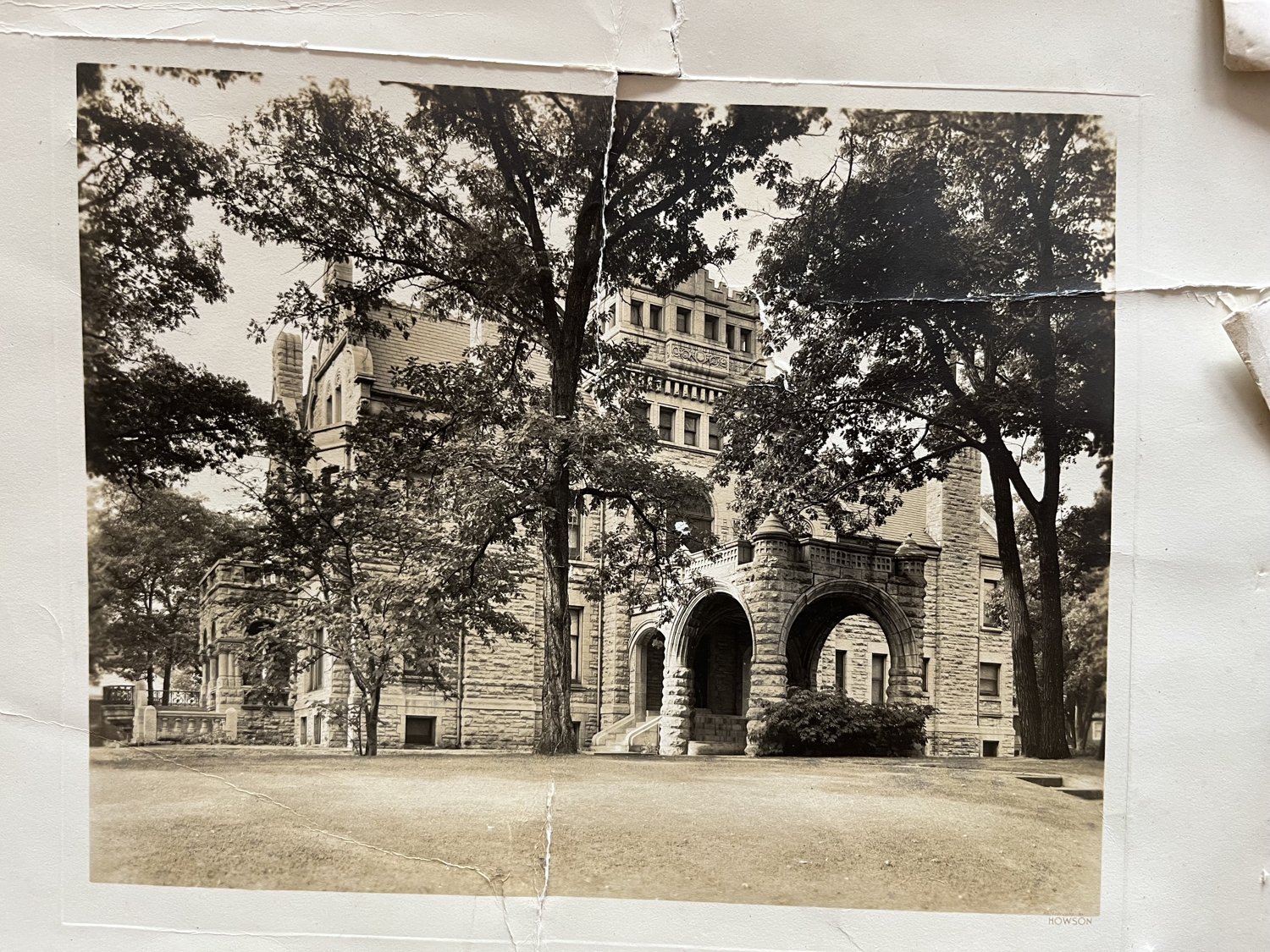
The Pillsbury Mansion was built on a structural steel frame set upon gigantic concrete caissons. Every interior and exterior wall, and every floor, is reinforced concrete, masonry, or structural tile. It is that revolutionary technique — modern for its day — that makes the high ceilings, the gigantic windows, and the massive unsupported spans across rooms possible at all.
At 24,186 square feet, it remains the largest single building ever raised as a private residence in Minneapolis.
“Charles S. Pillsbury will resume construction begun four years ago.”
Minneapolis Journal, January 1912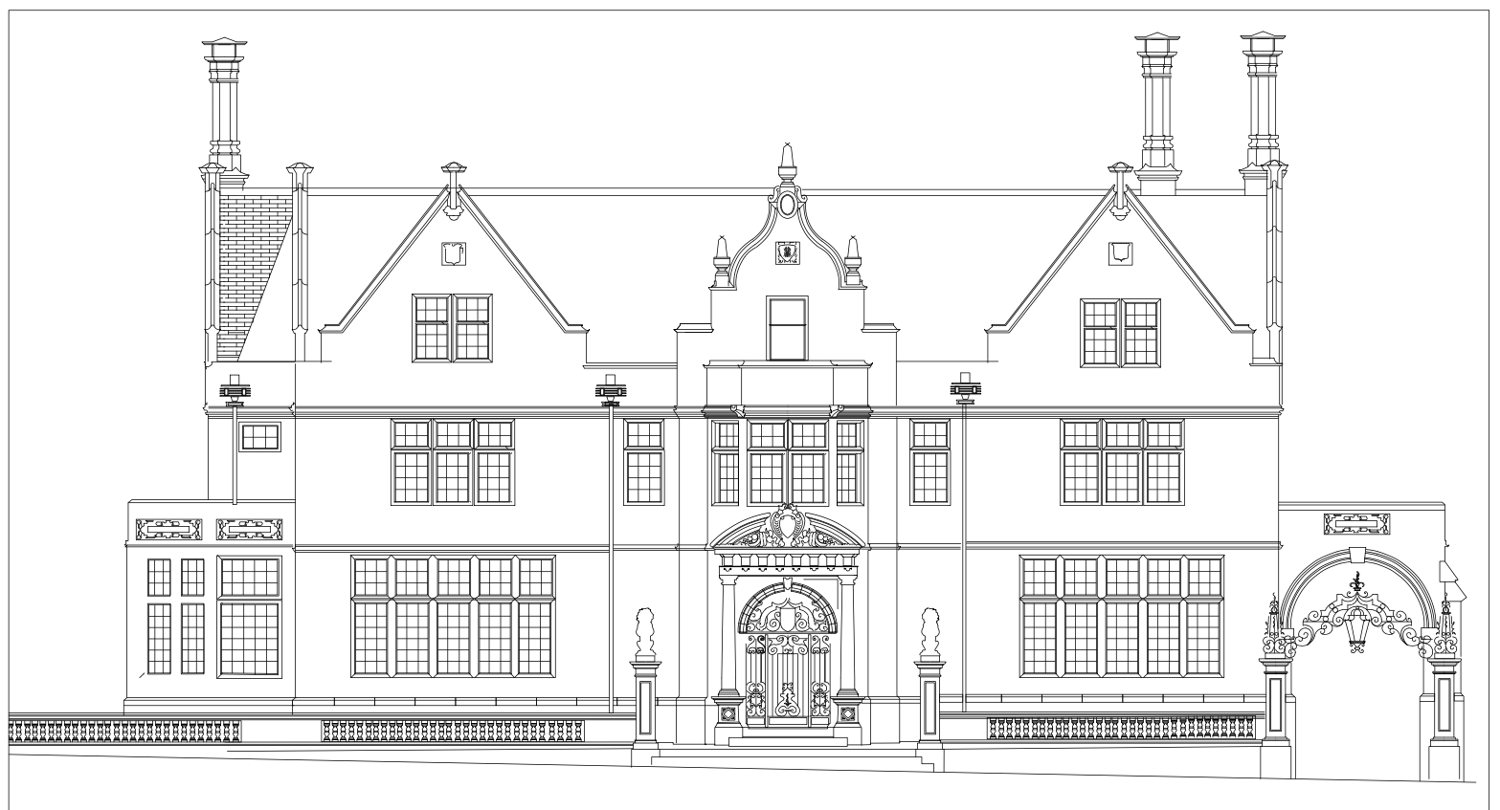
Edwin Hewitt & the City Beautiful
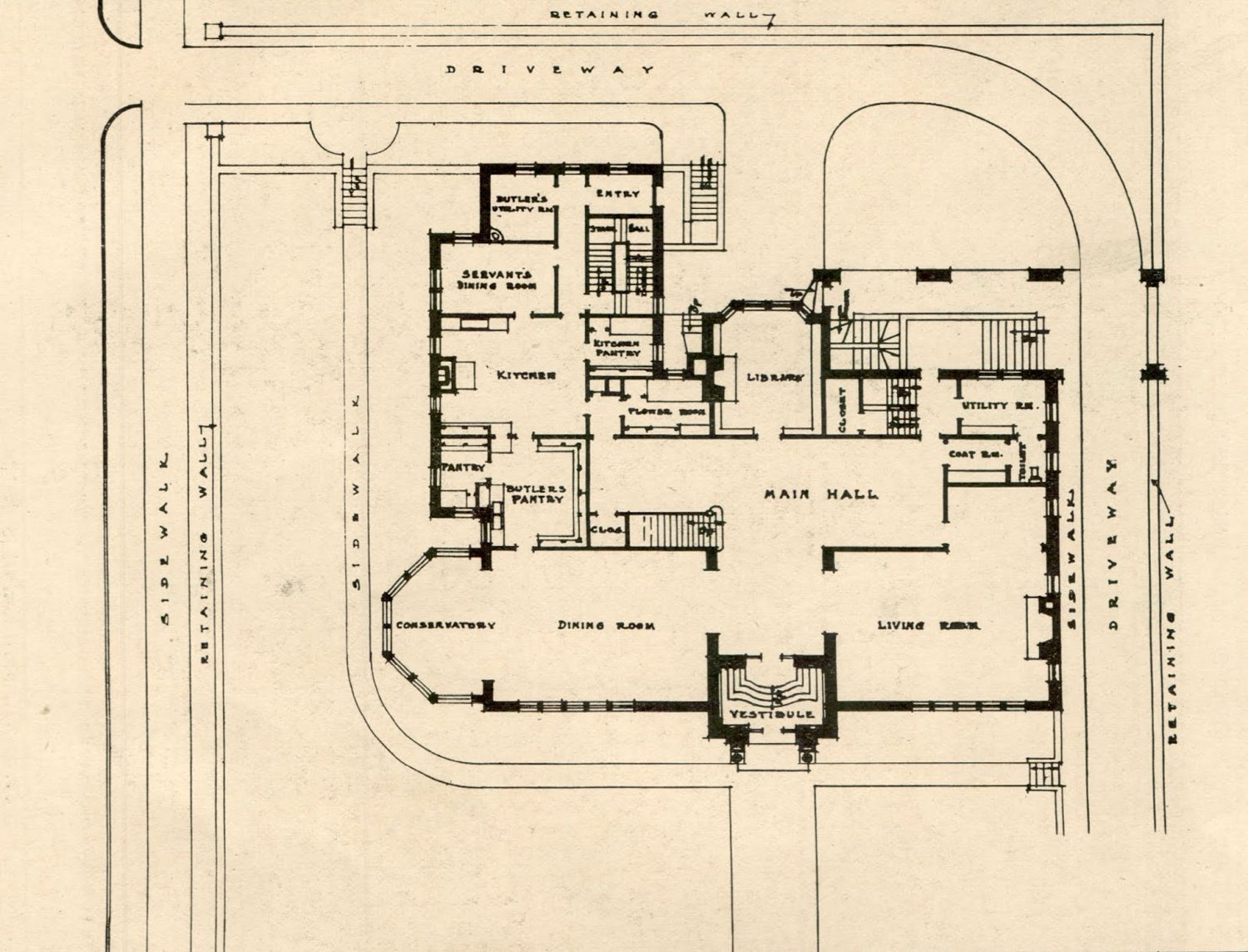
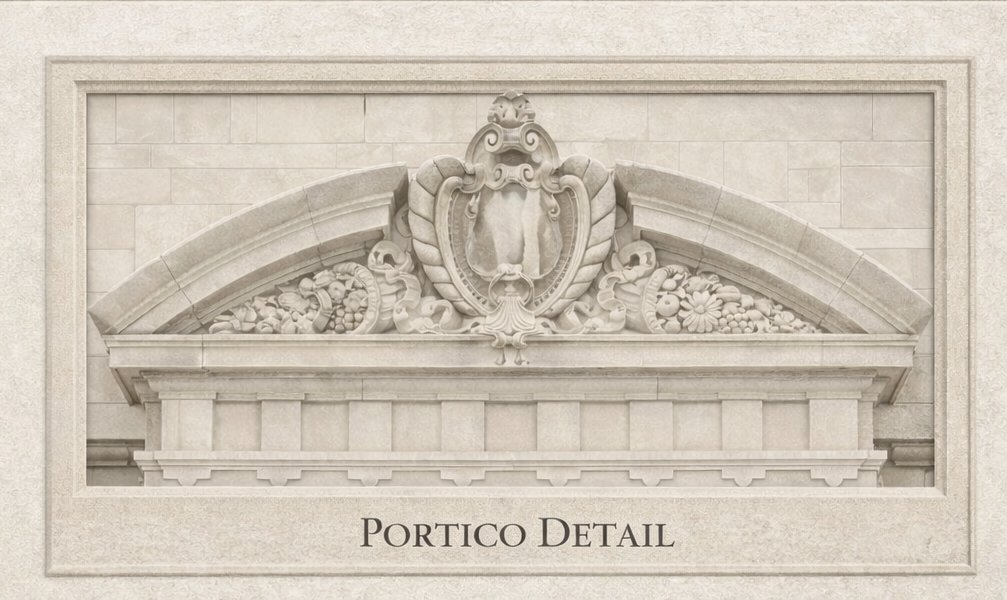
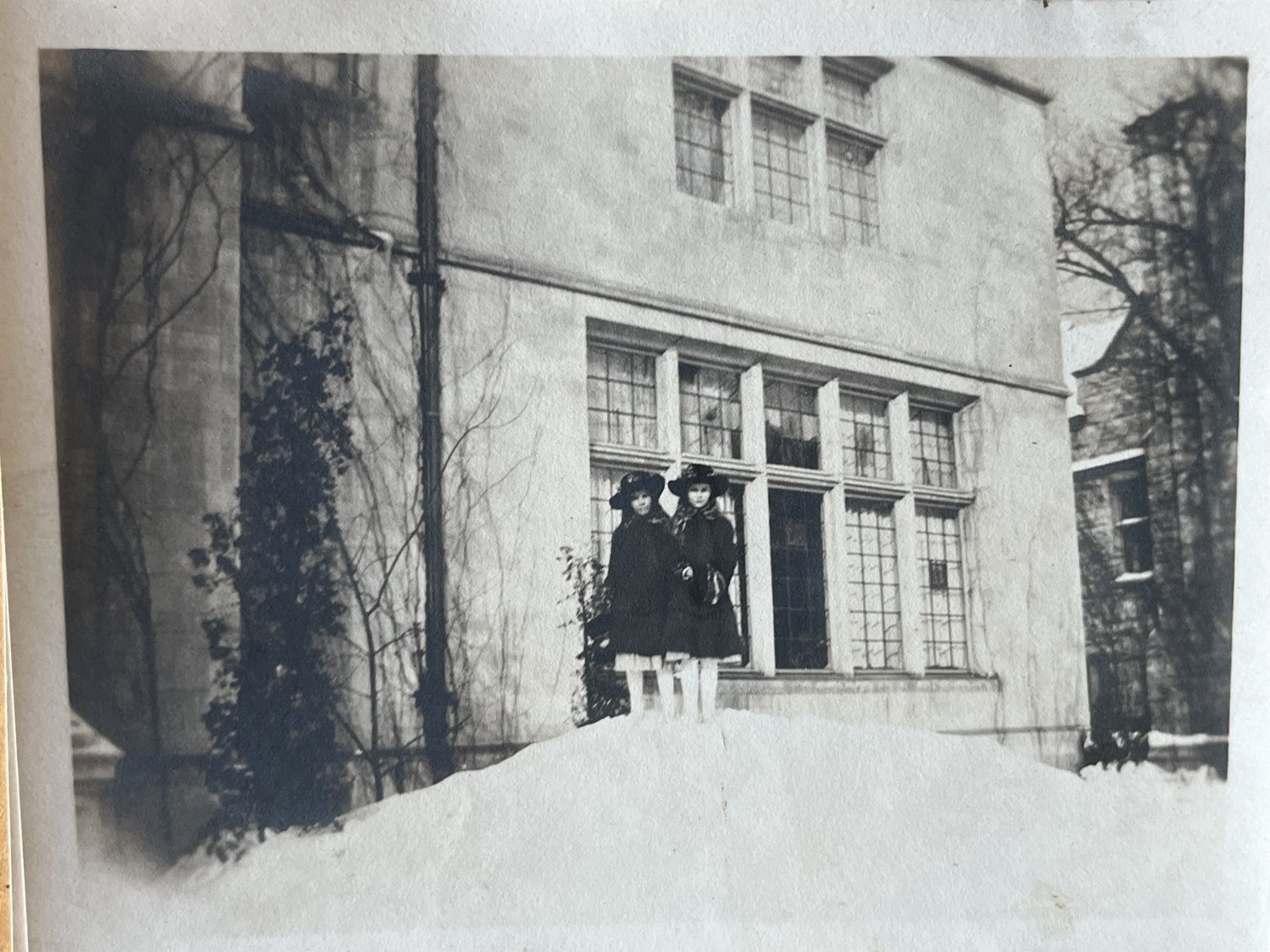
Through his firm Hewitt & Brown, Edwin Hewitt was the architect for ultra-affluent Minneapolis. His monumental design gave the Pillsbury mansion its presence on the park. The carved stone portico, the parapet friezes, and the armorial crest above the door were all part of his composition — a Tudor-Gothic envelope built to receive the English rooms that would fill it. The sculptor Charles Wells carved the Bedford-stone lions for the entry pillars, along with the portico and the parapet friezes (Star Tribune, September 1913).


The Interiors
Charles Duveen, “Charles of London”
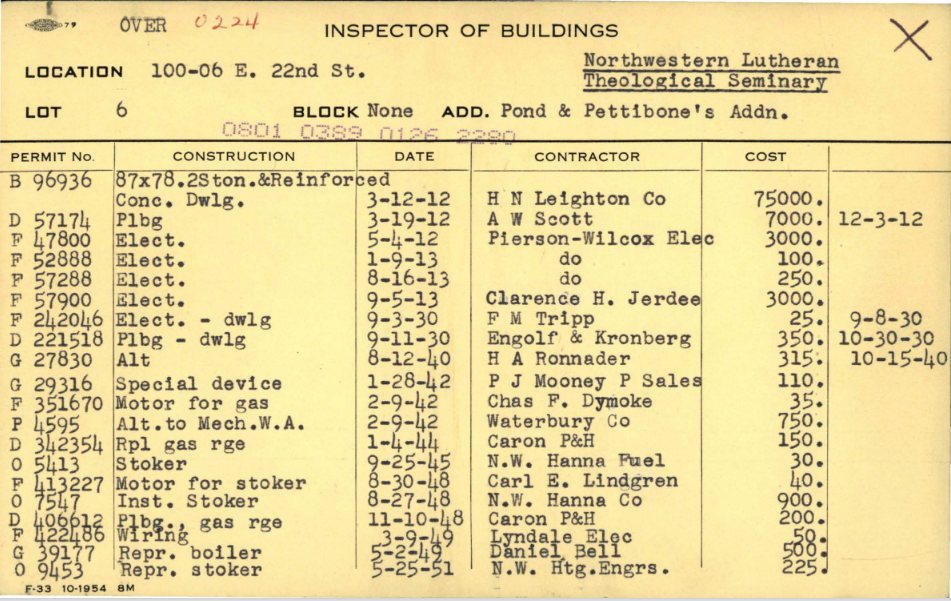
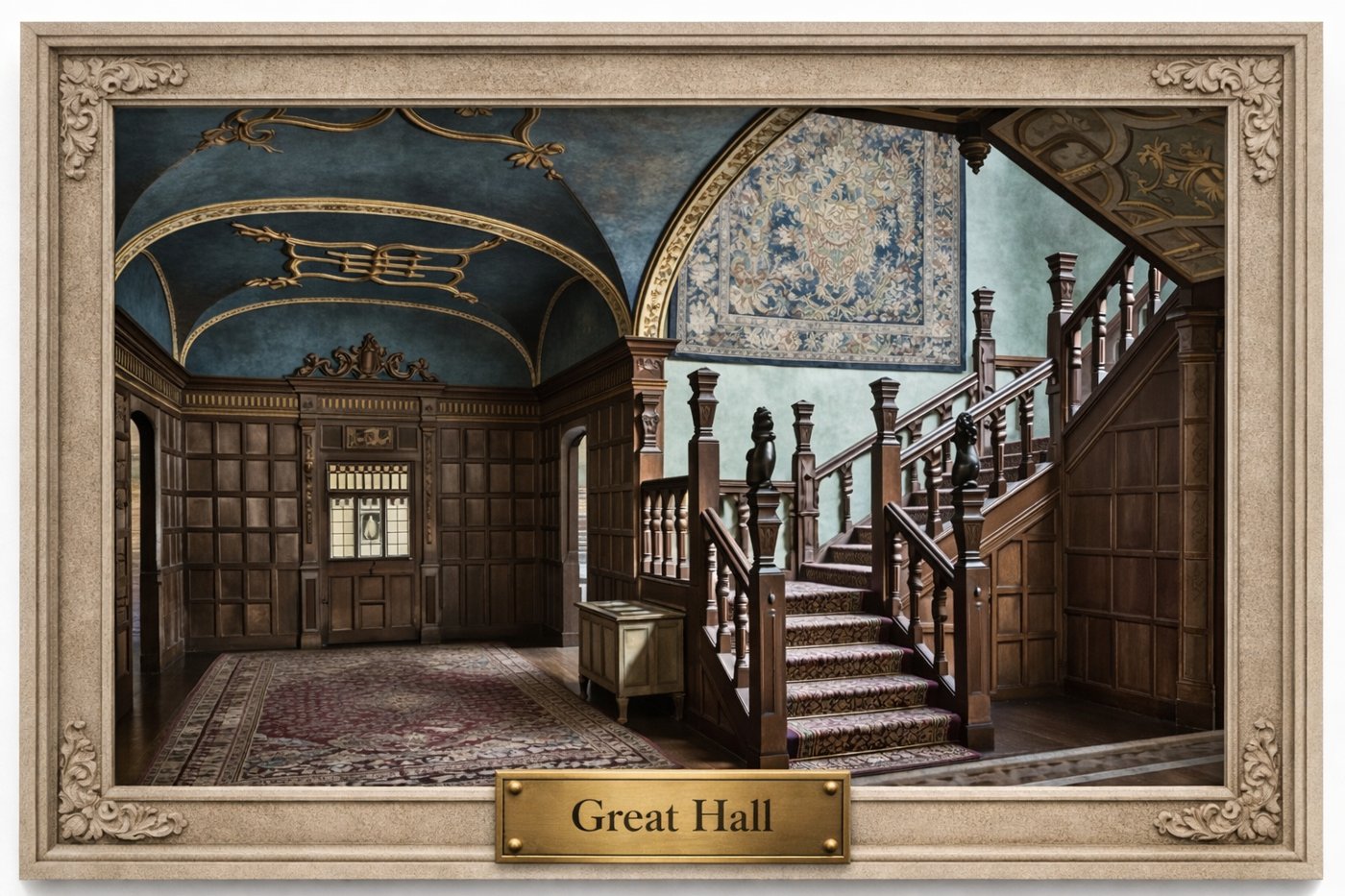
Charles Joel Duveen was an unequalled dealer and interior designer who acquired entire English castle interiors — rooms, staircases, ceilings, whole estates — and reconstructed them for America’s richest clients: Getty, Hearst, Vanderbilt, and Pillsbury. He presented his clients with detailed renderings of how the Elizabethan rooms could be rebuilt within their new American homes.
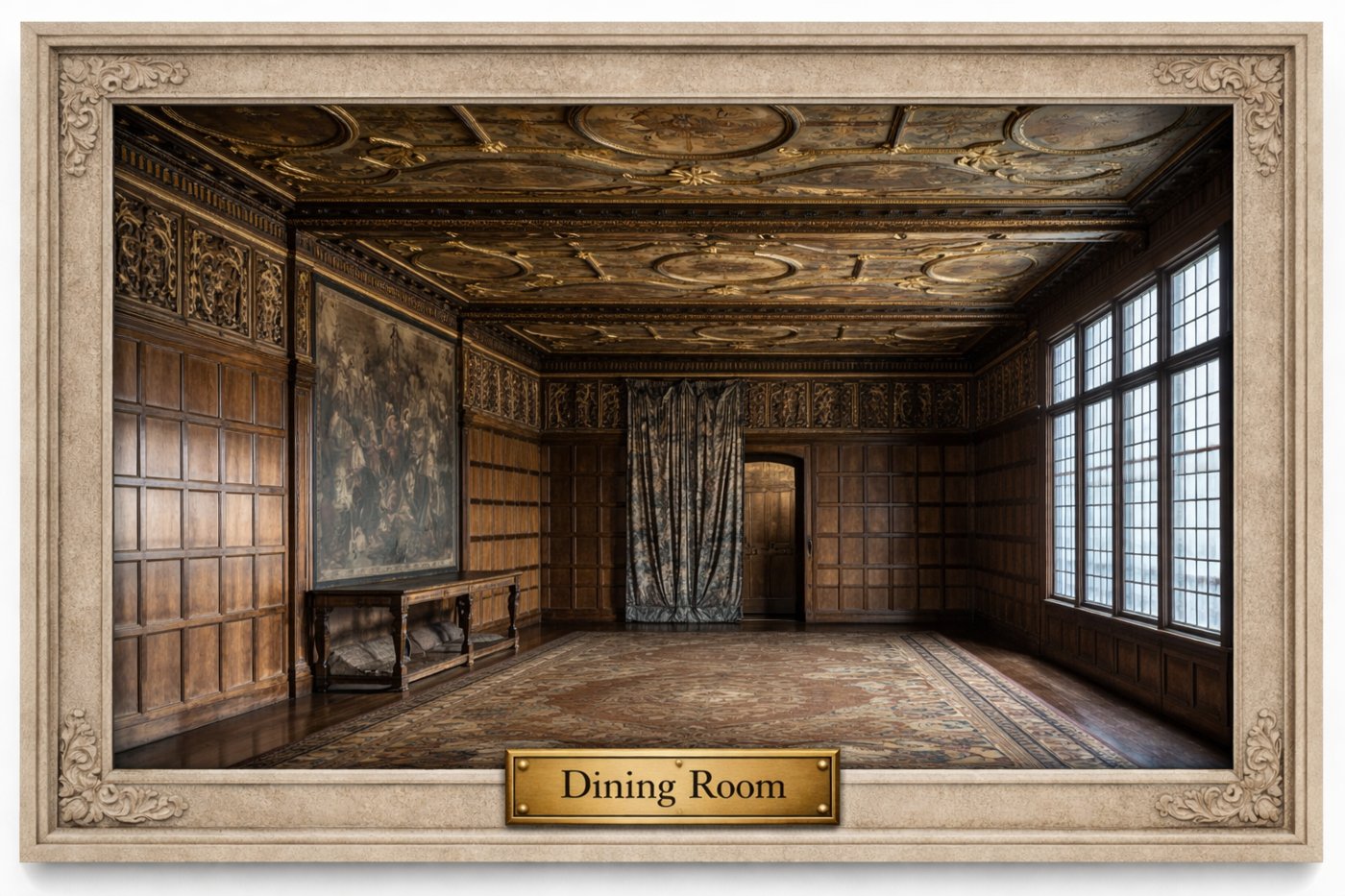
For the Pillsbury mansion he dismantled the staircase, paneling, front door, and ceiling of Rotherwas Court, and — with some modifications — reinstalled them in Minneapolis. The entry ceiling shown in his original rendering ended up over the dining room. The hunting dogs once on the upper landing now stand at the foot of the stair.
The story of Charles of London →
The Scandal: the $50,000 fireplace
The Perfect Pantry & the Flower Room
The Book Lovers’ Nook


A Customs Curiosity
Aged English Oak, Admitted Free as Art
When the ancient woodwork reached American shores, it arrived not as lumber but as masterpiece. The English oak — “not a piece of it less than 200 years of age,” with paneling “almost priceless… of the Elizabethan period” — entered the United States without paying a cent of duty, classed as art.
“The dining room panels are of the time of Henry VIII. Each panel differs from the others… The flooring is teak wood laid in broad planks.”
Minneapolis Journal, August 1913And in the parapets high above the street, carved friezes and an armorial crest announced to all of Minneapolis that something extraordinary had risen at 100 East 22nd Street — a building that began as the rescue of an old idea: that beauty, once made, deserves to endure.