Chapter II
The Pillsbury
Family
A flour fortune, a colonial bloodline, and four children who carried the name from a Minneapolis mill to the United Nations.
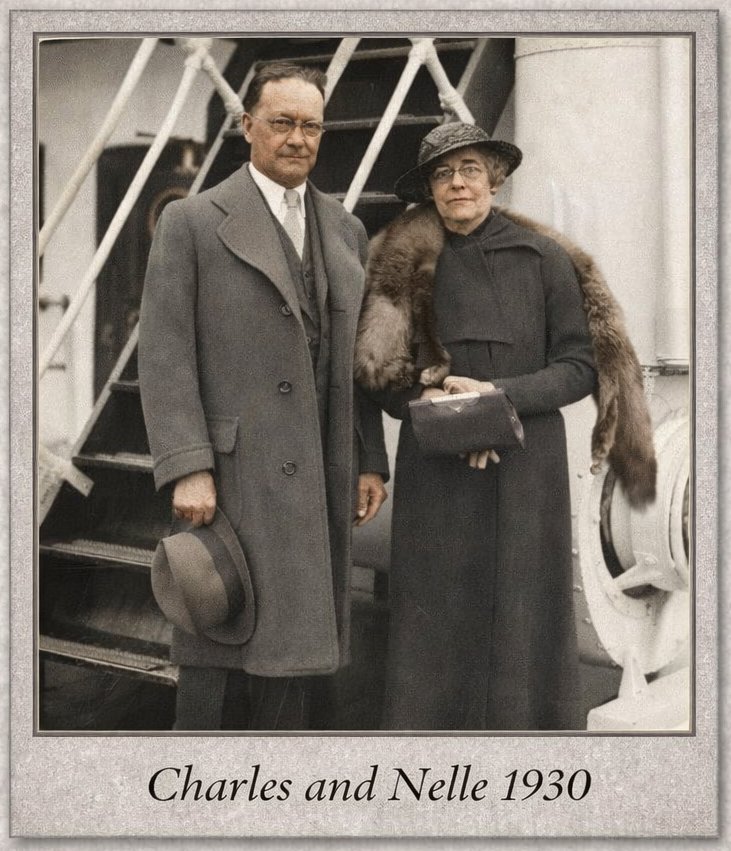
Charles Stinson Pillsbury
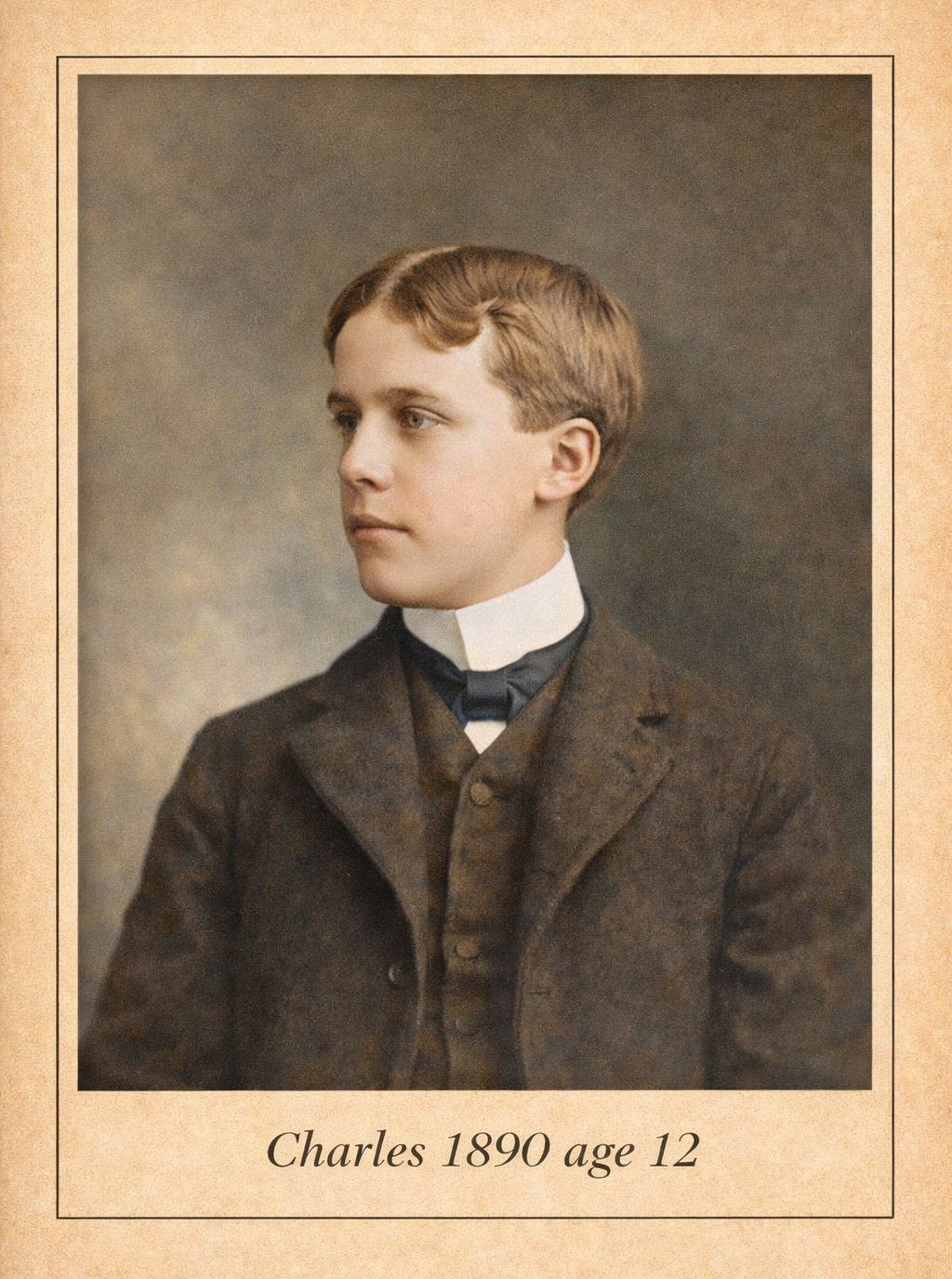
Charles built this house, and he built something larger still: he saved the family company. In 1924, with the Pillsbury firm on the brink of bankruptcy under English ownership, Charles repurchased it with his own capital and transformed it — introducing Betty Crocker’s rivals, national bake-offs, radio cooking shows, and a global brand identity that redefined how food was sold.
His mansion was the private mirror of that ambition: a dynasty with a pedigree, meant to endure.
The Lady of the House
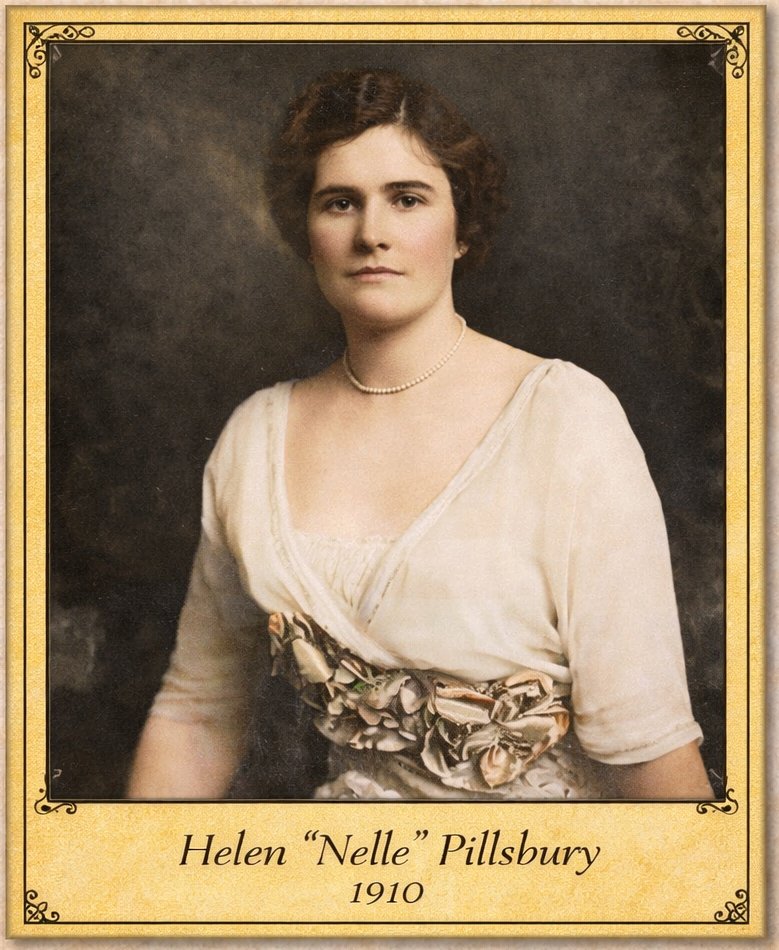
Helen “Nelle” Pillsbury
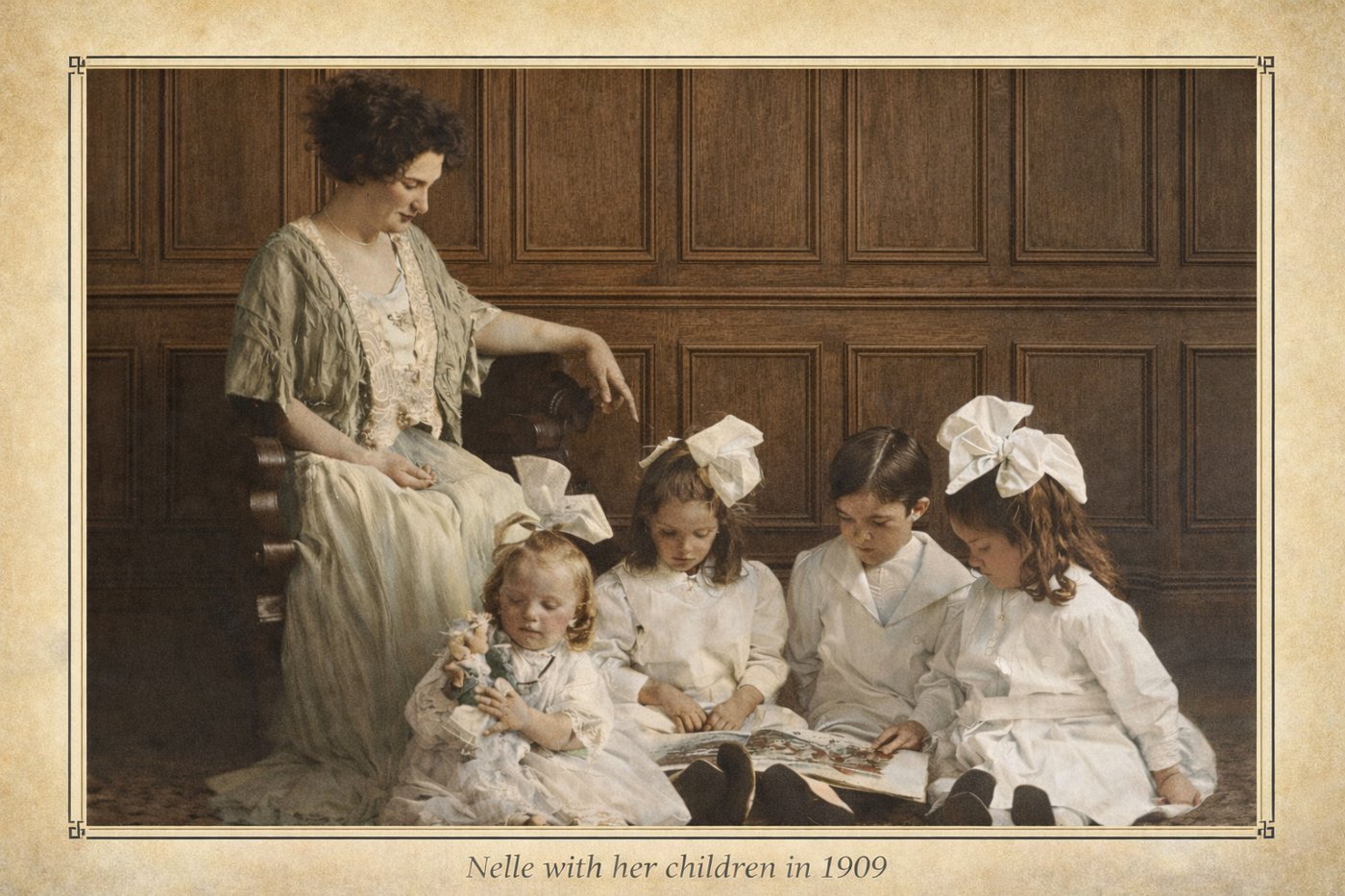
If Charles brought England to Minneapolis, Nelle was already Minneapolis itself. She descended from early colonial families dating to the 1600s, and her grandfather, Colonel John Harrington Stevens, is revered as the Father of Minneapolis. In his first wood-frame house — the city’s very first — Minneapolis was named, Hennepin County was organized, the school district was founded, and the Minnesota State Fair was born.
In January 1916, Nelle earned the honor of the title page of Town & Country magazine. Its owner happened to be William Randolph Hearst — Charles’s rival in the hunt for antiquities — who slipped a little dig into the caption, noting that “much of the Pillsbury mansion was authentic.” He meant the fireplace, the one he had let Charles copy. Hearst would soon learn that, after a quiet switcheroo, the Pillsburys held the genuine article all along.
The Next Generation
Four Remarkable Children
They grew up among the oak and the stained glass — and then went out to leave marks of their own, from the executive floor of the Pillsbury Company to the floor of the United Nations General Assembly.
Philip Winston Pillsbury
A creative, hands-on leader, Philip began on the mill floor as a laborer and learned the business from the ground up. When he took the helm, he charged ahead — snapping up mills, launching products, and pushing Pillsbury onto kitchen shelves across America and beyond.
It was on his watch that the company introduced premade dough and unleashed an icon on the world: the Pillsbury Doughboy, Poppin’ Fresh — the marketing genius that made the family name a kitchen friend in millions of homes.
The Stateswoman
Mary Stinson Pillsbury Lord
1904 – 1978
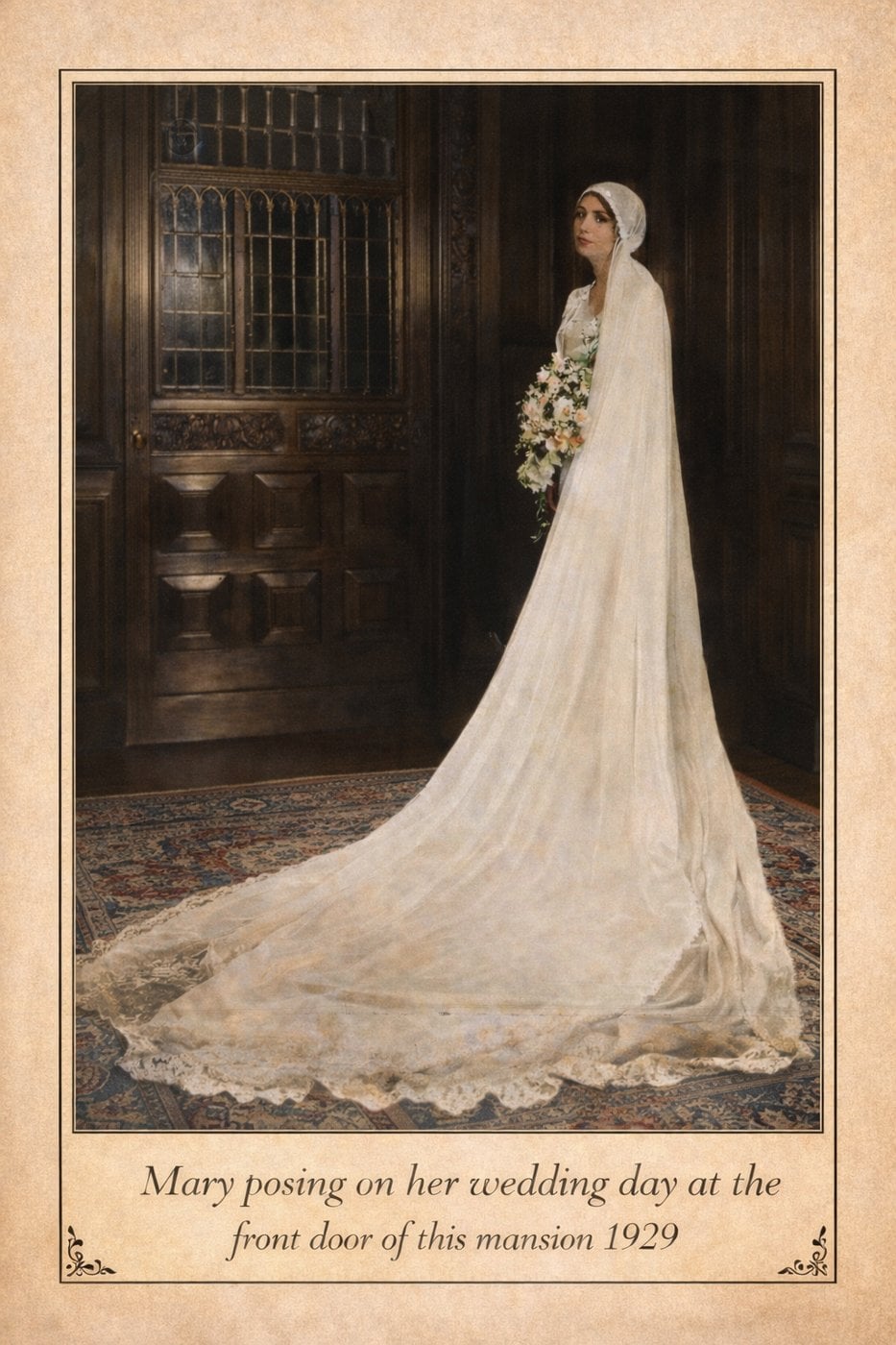
Mary was a fearless pioneer who broke barriers for women in war, welfare, and world diplomacy. She led wartime efforts including the Women’s Army Corps, touring WWII combat-support installations across the globe to inspire and recruit. She founded the U.S. Committee for UNICEF, worked alongside Eleanor Roosevelt on the United Nations Human Rights Commission, and became a full member of the UN General Assembly.
She championed peace, refugees, and human rights amid the gravest Cold War crises. Unbreakable resolve defined her legacy: she survived a shipwreck, traveled to one hundred countries, and raised a son, Winston Lord, who became a distinguished diplomat and ambassador.
From the oak-paneled rooms of a Minneapolis mansion to a seat at the United Nations.Mary Pillsbury Lord
The Daughters
Katherine & Helen
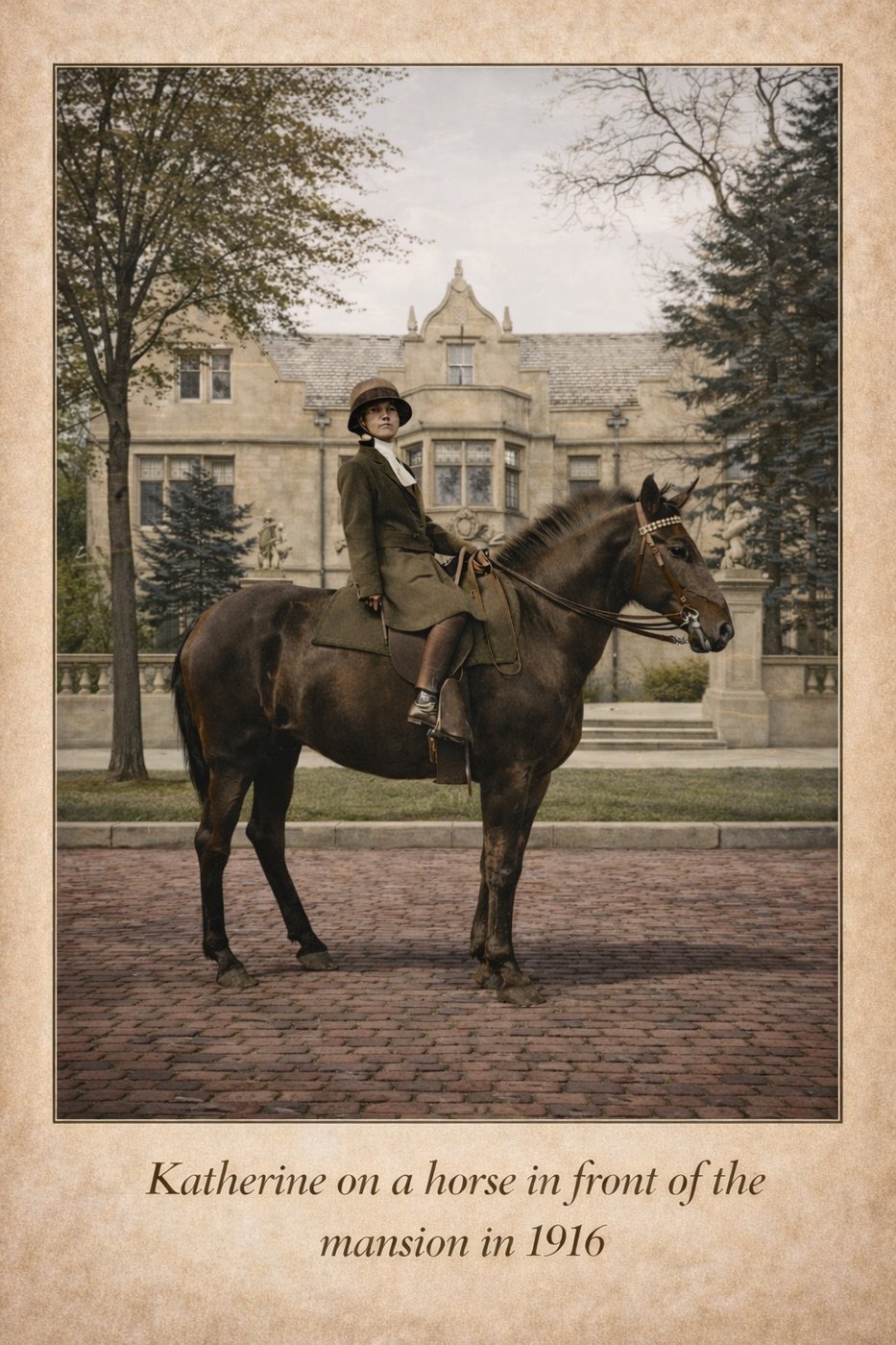
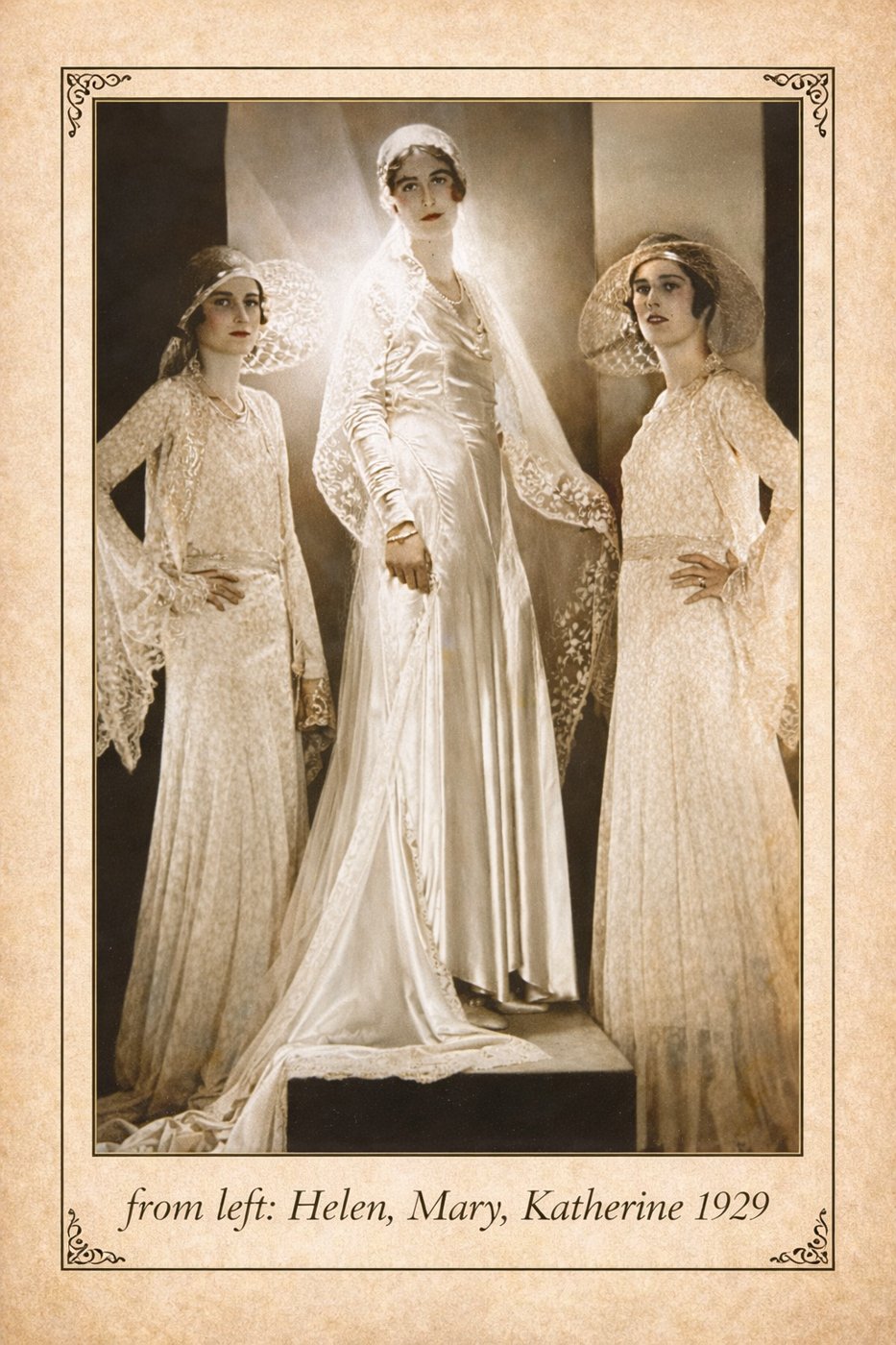
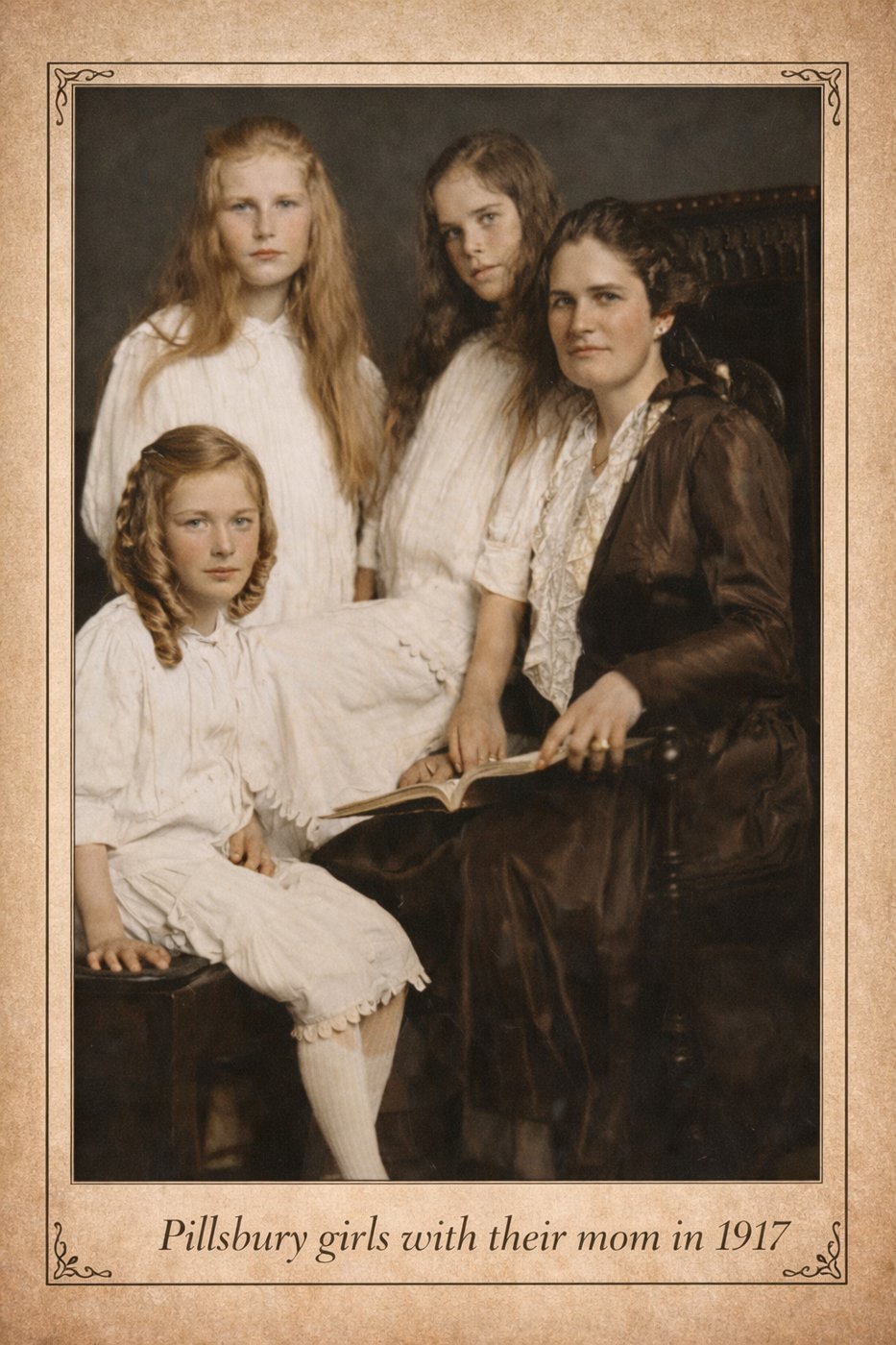
Katherine Pillsbury McKee (1905–1978) and Helen Winston Pillsbury Becker grew up alongside Mary in the great house — riding, marrying, and carrying the family into a new century. Their childhood is captured in the photographs that survive: girls on horseback, daughters in wedding gowns, children gathered on a garden bench beneath the gables.