
How Did 400-Year-Old English Rooms Get Through U.S. Customs — Duty-Free?
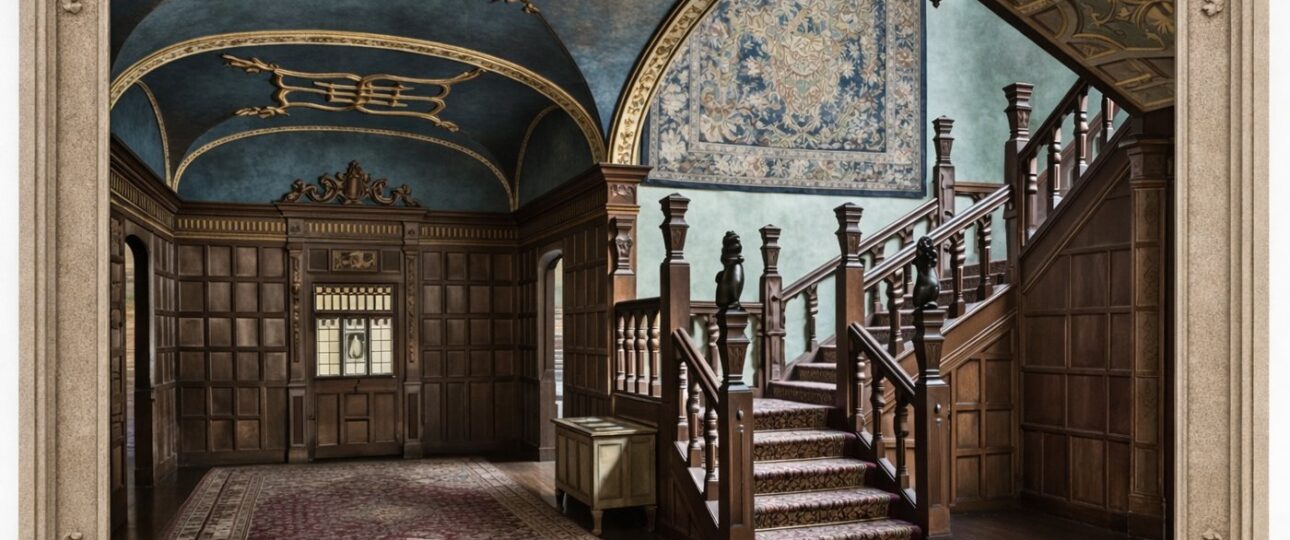
In the summer of 1913, freight crates began arriving at a construction site on East 22nd Street in Minneapolis. Inside them: a carved oak staircase, paneled walls, doors, and ceilings that had lined an English manor since the days of the Tudors. Had it been ordinary lumber, the shipment would have owed the United States government a healthy import duty at the dock. It paid nothing at all. As the Minneapolis Journal reported that August, the ancient English oak — “not a piece of it less than 200 years of age” — entered the country without a cent of duty, classed as art.
How does a houseful of woodwork become, in the eyes of a customs inspector, a masterpiece? The answer is a story of tariff politics, a family scandal, and impeccable timing.
A house waiting for its rooms
The Charles S. Pillsbury Mansion was designed from the start as a modern steel-framed shell built to receive old English interiors. The dealer who supplied them, Charles Joel Duveen — trading as “Charles of London” — had acquired rooms from Rotherwas Court in Herefordshire when its contents were dispersed in 1913, and reassembled the staircase, paneling, front door, and ceiling inside the new Minneapolis house. (Where the rest of Rotherwas’s rooms landed is a story of its own.)
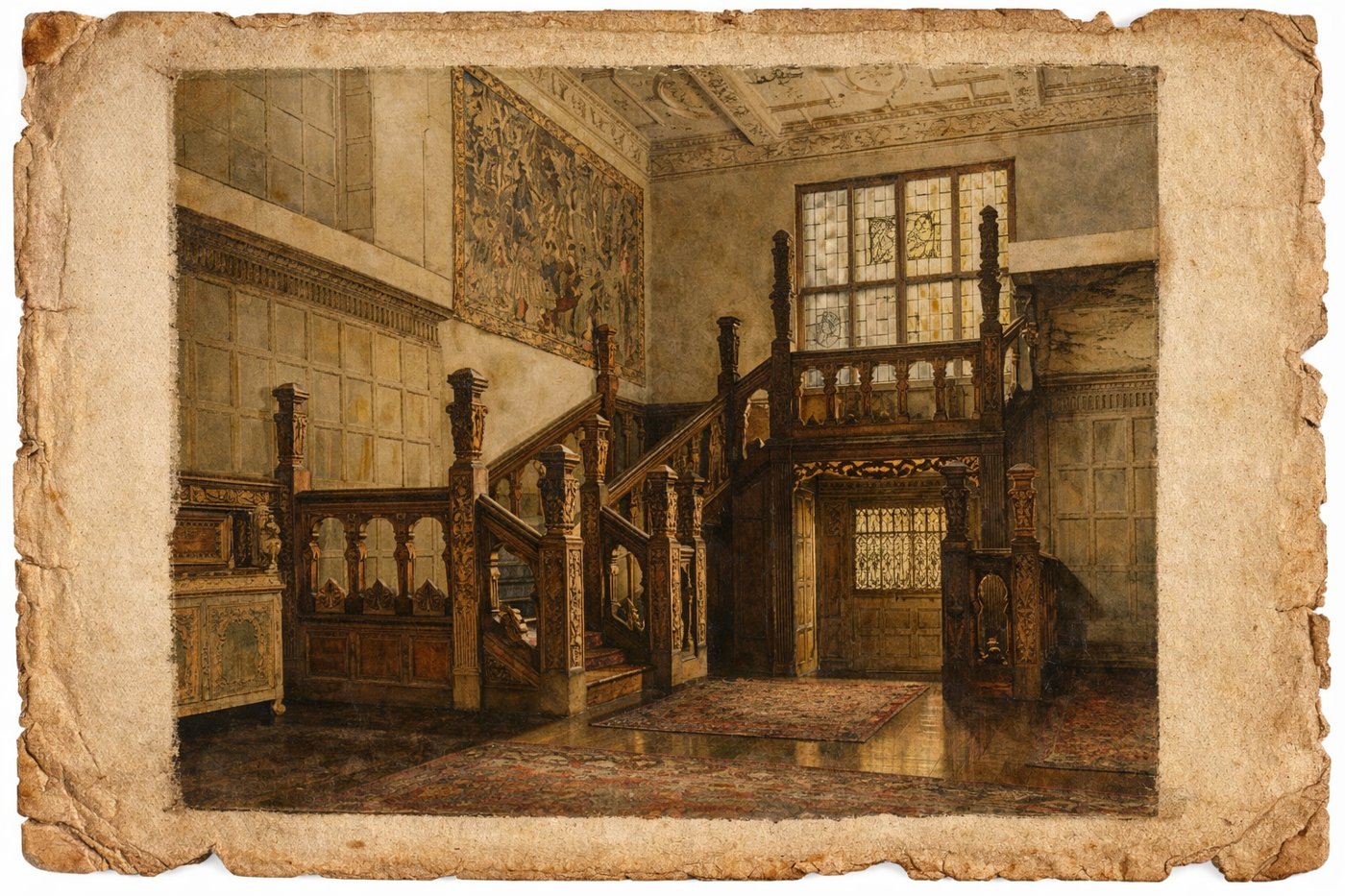
But between an English manor and a Minneapolis park stood a formidable obstacle: the American tariff wall.
The taxman and the Old Masters
For most of the Gilded Age, the United States taxed imports heavily — under the Dingley Act of 1897, average rates ran near 47 percent, and even fine art paid its way at the dock. The Payne–Aldrich Tariff of 1909 softened this for collectors in one crucial respect: works of art more than twenty years old could enter free, while newer works still paid duty. For America’s mansion-builders, that single line of tariff law was an invitation. Ancient paneling, carved fireplaces, and stained glass were no longer taxable building material — properly declared, they were antiquities, and antiquities were art.
The scandal that shook the Duveens
“Properly declared” was the catch. In 1910, federal agents descended on the New York gallery of Duveen Brothers — the famous firm founded by Charles Duveen’s own family — over years of undervalued art imports. Several Duveens were indicted, and the firm ultimately paid a settlement reported at well over a million dollars, an almost unimaginable sum at the time. The records of that episode survive today in the Smithsonian’s Archives of American Art.
Charles had struck out on his own years earlier, and his London-based firm was separate from his brothers’ operation. But the lesson of 1910 hung over the whole trade: when the Rotherwas oak sailed for Minneapolis three years later, there was every reason to bring it through the front door of the customs house, papers in perfect order. We’ve told the story of the Duveen dynasty behind the mansion before — this was the moment their world nearly came apart.
“Admitted free as art”
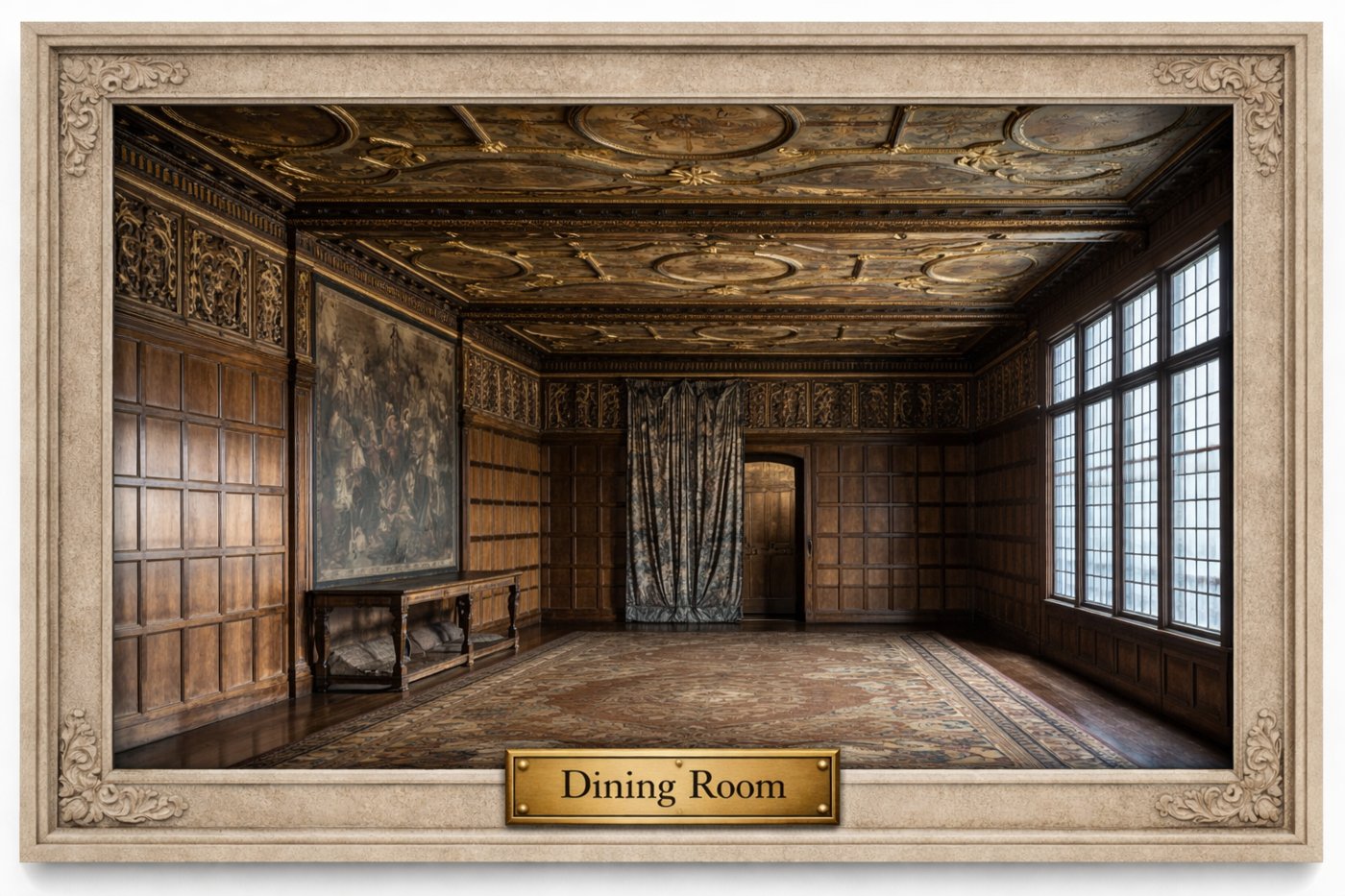
So the woodwork arrived in America not as lumber but as masterpiece. The Minneapolis Journal of August 1913 described paneling “almost priceless… of the Elizabethan period,” dining-room panels from the time of Henry VIII, and teak flooring laid in broad planks. Every carved rail and linen-fold panel that today lines the mansion’s great rooms passed a customs examiner’s desk as a work of art — a legal judgment that, standing in the Great Hall a century later, is hard to argue with.
1913: the year the doors swung open
The timing could hardly have been better. That same year, the Underwood Tariff (the Revenue Act of 1913) swept away the remaining duties on art, lowered rates across the board, and traded the tariff for a brand-new federal income tax. The gates that had guarded America’s ports for a generation swung open just as the Pillsburys’ English rooms came through them — and just before the First World War made such Atlantic crossings unthinkable. A year or two of hesitation, and the oak might never have left England at all.
It wasn’t the family’s only brush with import intrigue, either — there’s the small matter of William Randolph Hearst’s $50,000 fireplace, which may have reached Minneapolis by mistake.
Come see what the customs men waved through
The “works of art” of 1913 are still exactly where Charles of London installed them — at 100 East 22nd Street, in the last great mansion standing on Washburn-Fair Oaks. Tour the house with the Pillsbury Club, or make a day of Minneapolis history aboard Minneapolis Trolley Tours, which launches right from the mansion. And if one historic landmark isn’t enough, you can sleep in another: the 300 Clifton bed & breakfast, a National Register mansion just across Loring Park. For more on the city’s history, the Minnesota Historical Society is the place to dig deeper.
Keep reading: that duty-free oak included a staircase a monarch once descended — did a king really walk the staircase inside the Pillsbury Mansion?