
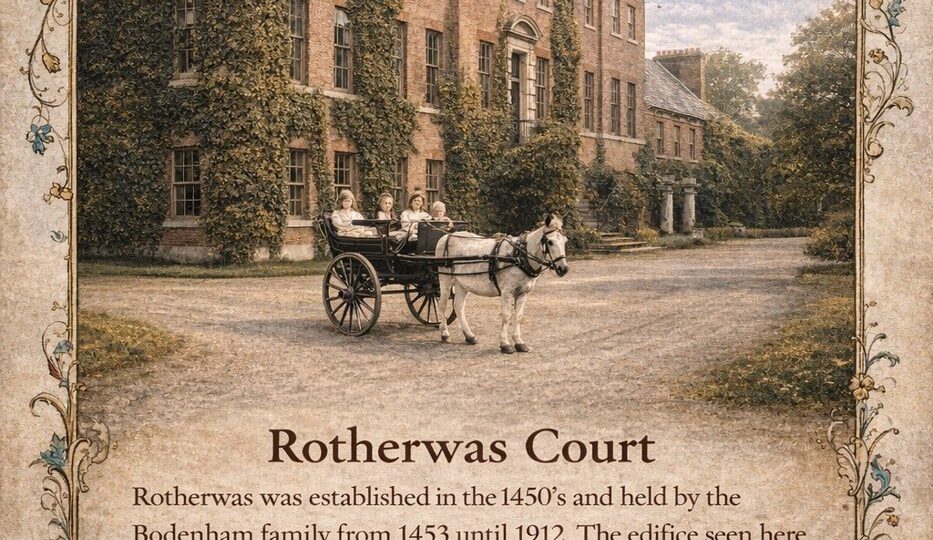
Where Did the Other Rooms of Rotherwas Court End Up?
In the spring of 1913, dockworkers in Liverpool loaded a very unusual cargo bound for New York: thirteen entire rooms. Carved oak walls, walnut paneling, mantelpieces, a staircase a king had walked — the interiors of Rotherwas Court, the Herefordshire seat the Bodenham family had held since before the Domesday Book, packed flat into crates. We have already told the story of the Bodenhams themselves and of what became of the emptied house. Tonight, follow the crates.
Thirteen Rooms in a Fifth Avenue Showroom
The man behind the shipment was C.J. Charles — Charles Duveen, the dealer who traded as “Charles of London” and displayed his plunder at the Charles Gallery at 718 Fifth Avenue. When the last of the Bodenham line died and the estate was broken up, Duveen bought the famous interiors and, according to the records kept at Amherst College, sent thirteen of the mansion’s paneled rooms across the Atlantic. England mourned in print; the Illustrated London News ran the story under a wounded headline: “Lost to England: Superb Rotherwas Panelling for America.”
America’s tycoons were waiting. And two buyers in particular would give the scattered rooms of Rotherwas their strange American afterlife.
The Rooms That Came to Minneapolis
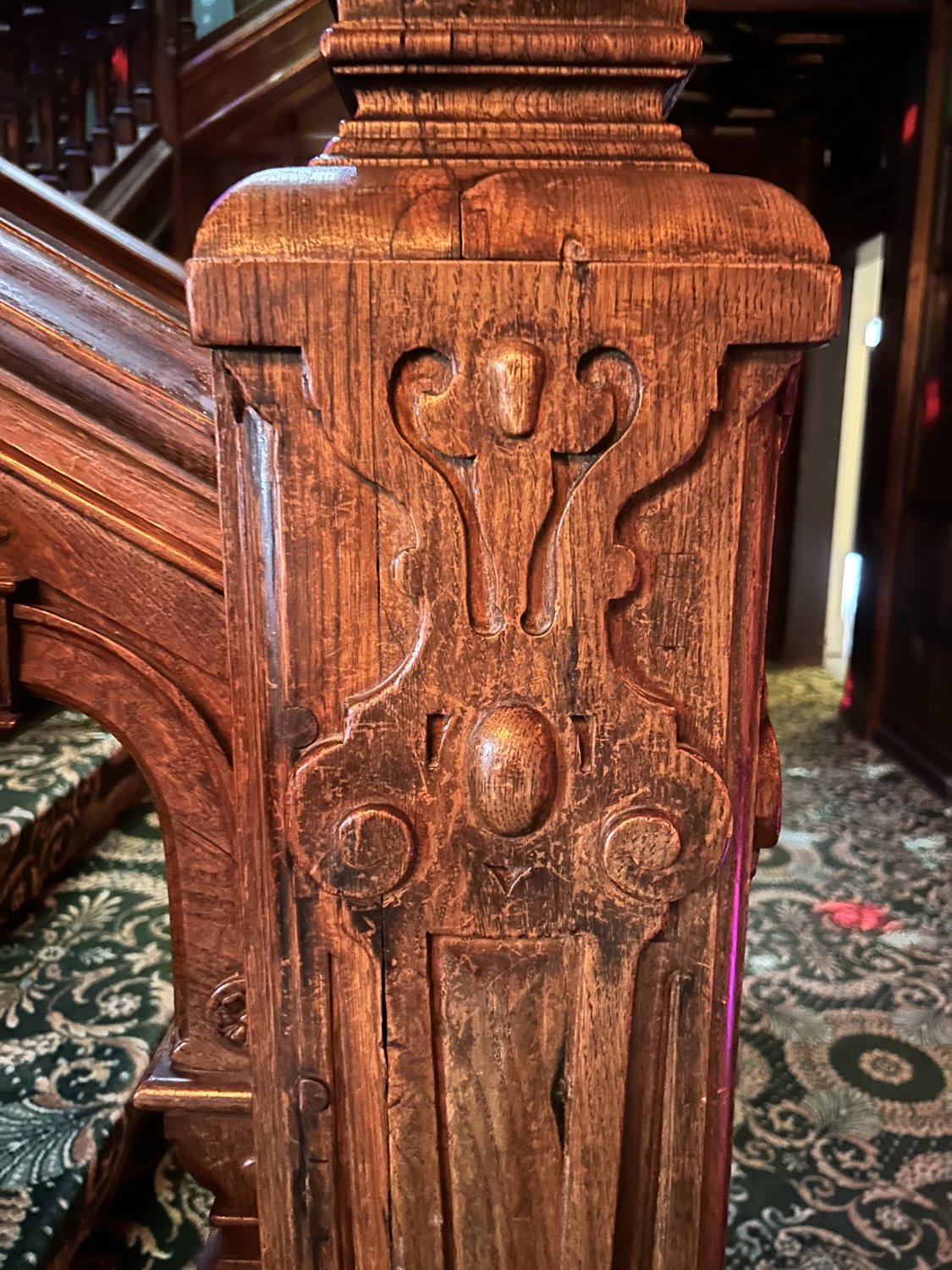
Charles S. Pillsbury bought several of the thirteen rooms — along with the carved oak staircase King James I once descended — and built his new Minneapolis mansion around them. When federal surveyors documented the house for the National Register decades later, they singled out those Duveen interiors: the imported woods, the hand-painted glass, the carved quarter-sawn oak staircase in the vestibule. Look closely at the paneling around the Pillsbury Club today and you can find the Bodenham signature hidden in the carving — three chess rooks, a pun on Rotherwas that the family wore like a monogram. You can meet all of these treasures in The Splendors, and see how a steel-framed Minneapolis house was built to receive them.
The Room That Went to Long Island
But Pillsbury was not the only buyer that February of 1913. An oil executive named Herbert L. Pratt paid a reported $350,000 — a fortune — for the finest single room of the lot: the great parlor Sir Roger Bodenham completed in 1611, its date still carved into the mantel. Sir Roger had been knighted by King James I at his coronation in 1603, and the room was his proclamation in wood — rare imported walnut paneling below a carved oak overmantel bearing twenty-five family coats of arms, flanked by figures of Justice, Temperance, Prudence, and Fortitude.
Pratt installed the room in “The Braes,” the neo-Jacobean mansion he was building at Glen Cove on Long Island — an American house dressed, like Pillsbury’s, in genuine English clothes.
…and Finally to a College Museum
In 1944 Pratt bequeathed his treasure to his alma mater, Amherst College, and when the college raised its new Mead Art Museum a few years later, the architects designed a corner of the building specifically to hold it. The Rotherwas Room still stands there today, in Amherst, Massachusetts — a gallery, a study hall, and an event room where, in the mid-1900s, the poet Robert Frost gave public readings of his work beneath the Bodenham arms.
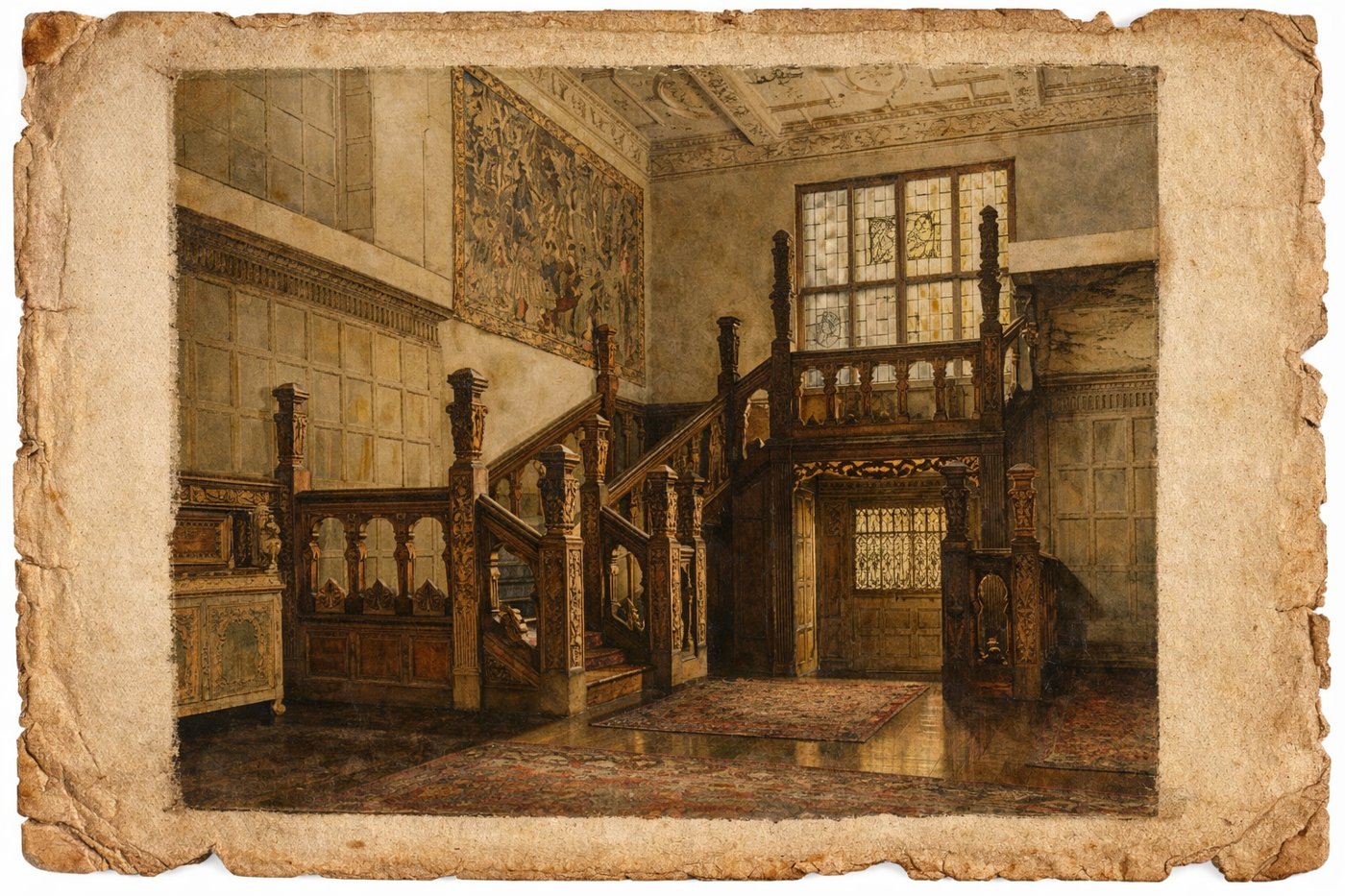
Two Rooms, Twelve Hundred Miles Apart
So the rooms of Rotherwas live on as cousins separated by a continent’s worth of geography: a scholar’s gallery in a New England college town, and a set of living, breathing rooms in Minneapolis where people still dine, laugh, and celebrate beneath the old oak. As for the rest of the thirteen — some vanished into private hands, and their whereabouts remain one of the quiet mysteries of the Gilded Age art trade. It is entirely possible that somewhere in America, a family is eating breakfast inside a room of Rotherwas Court and has no idea.
The difference between the two known survivors is simple: in Amherst you may look. Here, you may live in it for an evening. Book a mansion tour or a ghostly evening ride with Minneapolis Trolley Tours — the trolley departs from the Pillsbury Club itself — then stay the night in another National Register survivor, the Carpenter Mansion at 300 Clifton. And when you stand at the foot of our staircase, remember: you are standing inside the crates of 1913.
Plan your visit to the Pillsbury Club →
Keep reading: how did all that ancient oak clear American customs without paying a cent? The answer — it was admitted duty-free, as art.