
What Happened When an Advertising Agency Moved Into the Pillsbury Mansion?
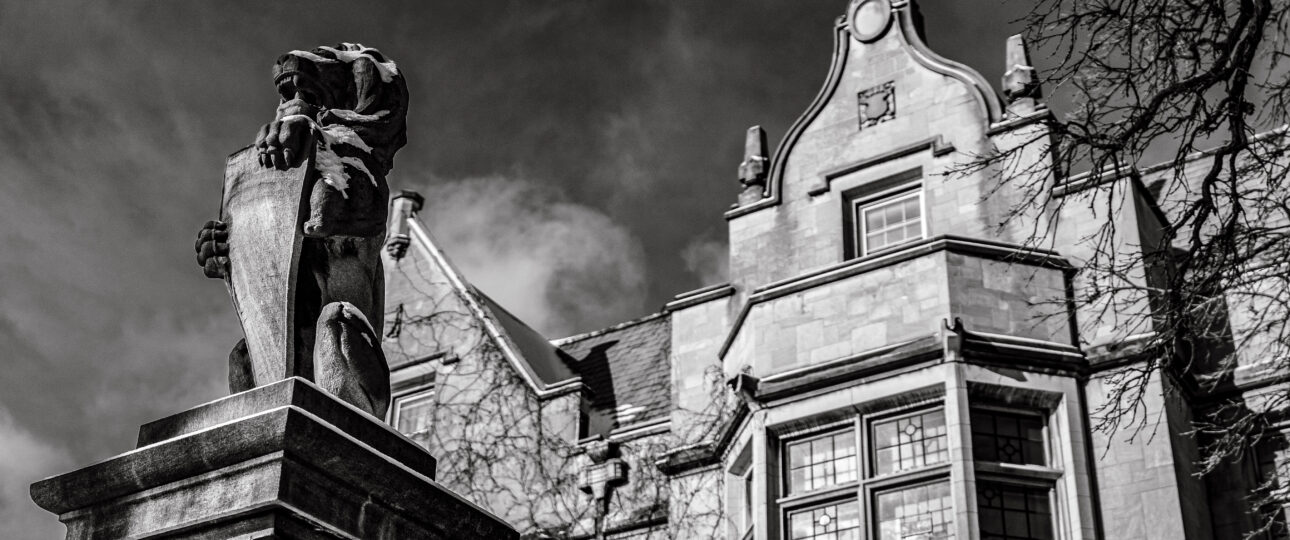
The Charles S. Pillsbury Mansion at 100 East 22nd Street has worn a great many disguises in its long life. It has been a family showplace, a Lutheran seminary, a training center, and — most improbably of all — the headquarters of an advertising agency that would help rescue a global motorcycle brand from the edge of collapse. Of all the house’s lives, the years it spent as a working ad shop are the least expected, and, in a strange way, the most fitting.
A house that nearly didn’t survive
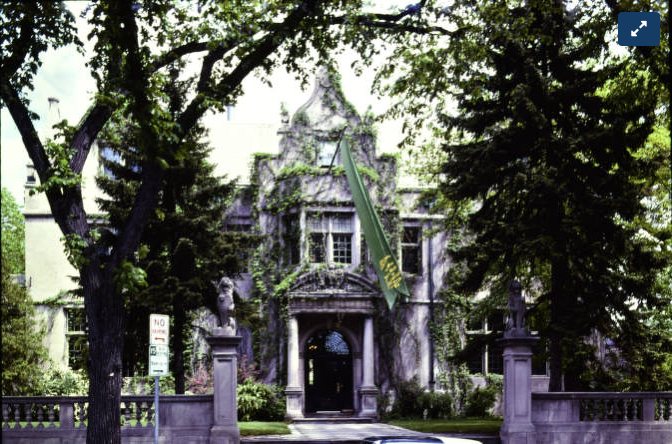
To understand how an ad agency ended up beneath five-century-old English beams, you have to know how close the house came to the wrecking ball. By the late 1960s the great mansions of Minneapolis’s empire-builders were falling one after another, their grand neighbors reduced to parking lots and rubble. In 1969 an anonymous donor stepped forward and gave the Minneapolis Society of Fine Arts the means to buy four threatened houses around Washburn–Fair Oaks Park — and the Pillsbury mansion was the largest of the four.
That single act of generosity is the reason the house still stands. The mansion was named a Minneapolis landmark in 1975 and remains part of the Washburn–Fair Oaks Mansion District, one of the last clusters of Gilded Age palaces left in the city. (We’ve told the fuller survival story in how the Pillsbury mansion outlived its neighbors.) But surviving is one thing; being cared for is another. When the Society of Fine Arts sold the houses in 1976, the mansion needed a tenant with deep pockets and a genuine reason to love old oak.
Enter the ad men
That tenant turned out to be Carmichael Lynch — a Minneapolis advertising agency founded in 1962 by Lee Lynch and Jack Carmichael, who had launched the firm out of Carmichael’s south Minneapolis home (you can read the agency’s full origin story here). By the late 1970s the growing shop had taken over the Pillsbury mansion, restoring the building and turning its paneled rooms into offices for roughly fifteen years. Picture it: copywriters and account executives sketching out campaigns beneath carved English ceilings, the same oak that once watched over Minneapolis high society now presiding over storyboards and coffee cups. The chain of stewards who kept this house alive rarely gets stranger than this.
The Harley-Davidson legend, written inside an English manor
Here is the part that ought to be on a plaque. In 1979, while it was working out of the mansion, Carmichael Lynch won the Harley-Davidson account. Two years later, a group of Harley managers bought the company back from its corporate parent just as the brand was speeding toward bankruptcy — and they kept their Minneapolis agency. What followed became advertising legend: Carmichael Lynch helped reposition Harley-Davidson as an enthusiast brand built around a community rather than a mass market, a relationship that lasted some three decades and helped make the motorcycle a global cultural icon. A great deal of that foundational work was dreamed up inside these very walls.
A fitting irony
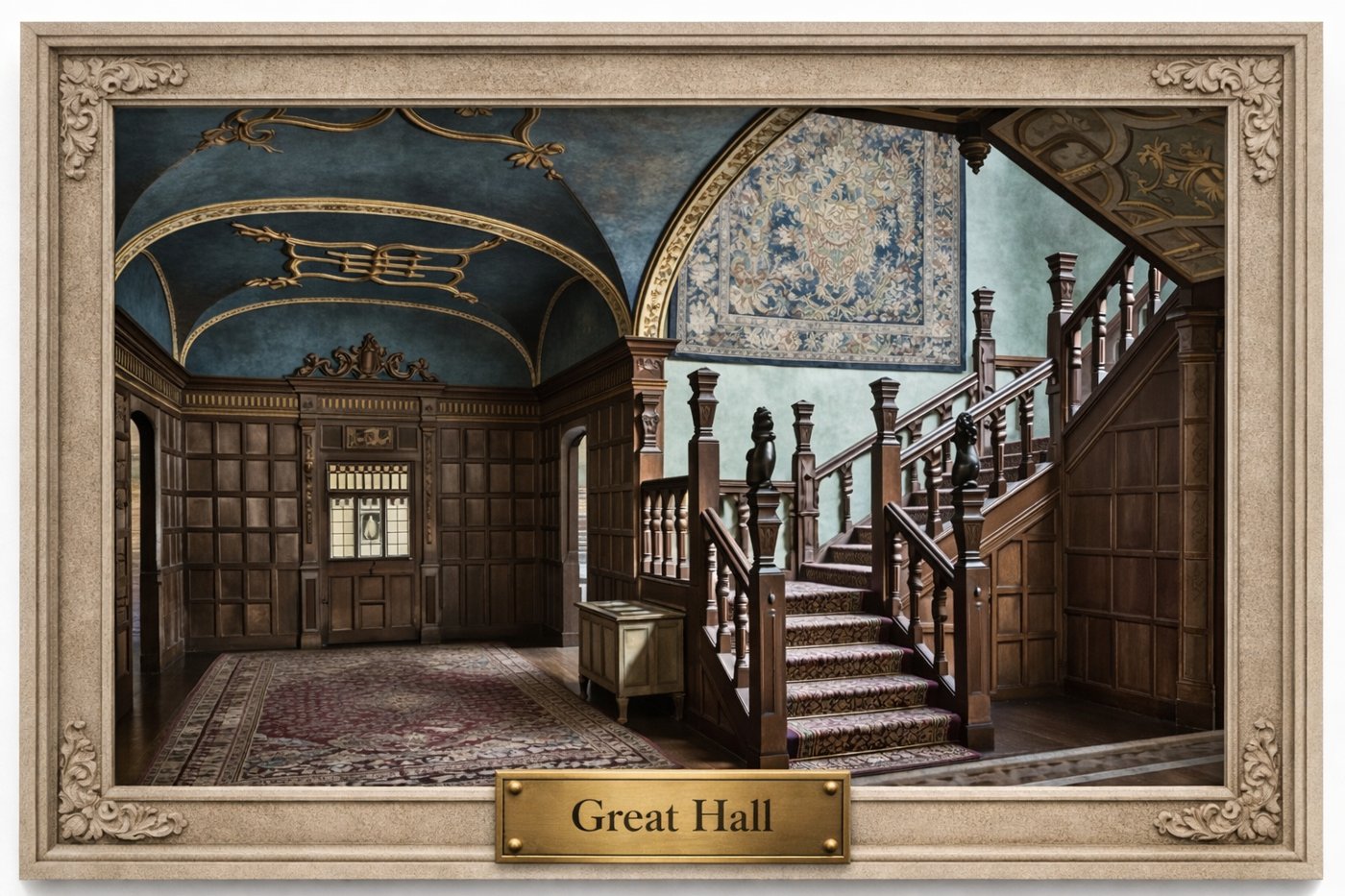
There’s a real poetry in it. The family that built this house made its fortune not only by milling flour, but by selling it — Pillsbury was a marketing pioneer that famously learned to sell the recipe rather than the product, teaching America to cook with confidence and attach that confidence to a single friendly name. You can read about that revolution on the company’s page. So the mansion built by one generation of marketing geniuses became, half a century later, the workshop of another. The genuine English rooms Charles Pillsbury imported across the ocean — described in building the mansion and catalogued among the splendors — had once been staged to impress Minneapolis society. Now they impressed national clients instead.
The house’s later chapters
Eventually Carmichael Lynch outgrew the mansion and moved on in the early 1990s. From 1993 to 2025, the house served BLIND, Incorporated, a Minneapolis training center for people who are blind or visually impaired — a fitting steward for a building whose deepest beauty, the hand-rubbed oak and the deep relief of its carving, was always meant to be felt as much as seen. And before any of that, it had spent three decades as a Lutheran seminary, a story we tell in what happened when a seminary moved into the mansion. Each tenant, in its own way, kept the great house standing. (The city’s own landmark record traces the whole sequence.)
See the house that flour — and advertising — built
Today the mansion has begun its newest chapter as the Pillsbury Club, and at last it gets to tell its own story. It’s also the departure point for the vintage Minneapolis Trolley, which rolls out from the mansion on tours of the city’s grand and ghostly past. Come see the rooms where flour money met motorcycle legend — book a tour of the Pillsbury Club and stand inside one of the most improbable buildings in Minneapolis.
Keep reading: Why did a training center for the blind call the Pillsbury Mansion home?