
Where Did the Pillsbury Mansion’s Centuries-Old Stained Glass Come From?
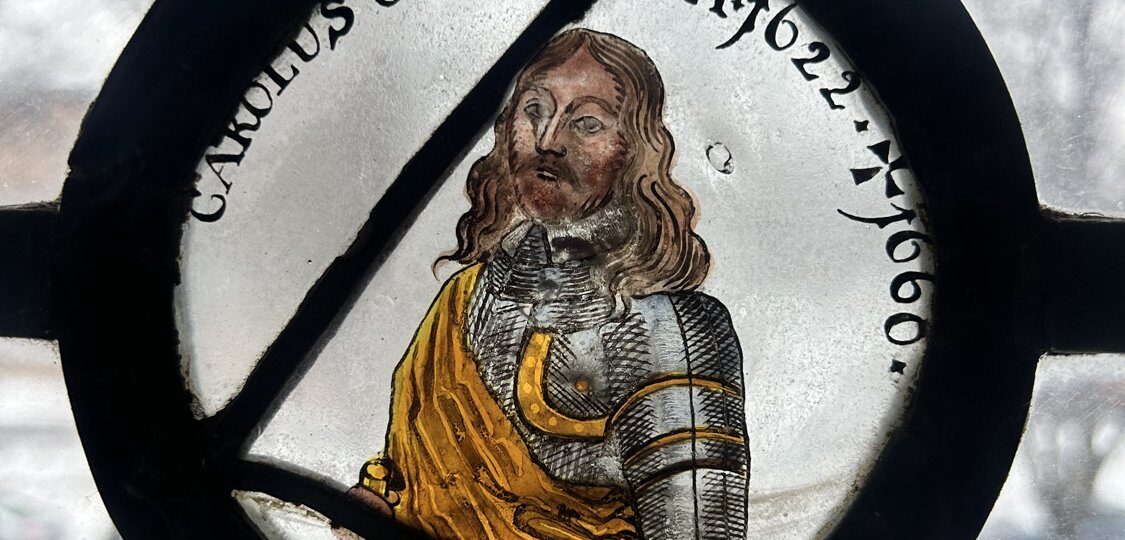
Stand in the right room of the Charles S. Pillsbury Mansion on a bright afternoon, and the light arrives already colored. It falls through scores of small leaded panels — saints and kings, heraldic shields, scenes from lost castles and churches — some of them four, five, even six hundred years old. This is not Jazz-Age decoration made to look antique. It is genuinely ancient European glass, and it traveled a very long way to reach a flour magnate’s house on 22nd Street.
Glass that outlived the wars it was made for
Most of the figural and heraldic glass in the mansion is medieval and Renaissance work — the kind of painted glass that once filled the windows of European cathedrals, guild halls, and great houses. A staggering amount of it was lost over the centuries: smashed in the Reformation, pulled down in the religious wars, cleared out by 18th-century “improvers” who thought the old colored windows looked gloomy. The pieces that survived became prized collectors’ items, traded among dealers and pieced back together like stained-glass jigsaws.
By the early 1900s, the great clearinghouse for this kind of glass ran straight through one London firm.
The man who moved ancient glass across the Atlantic
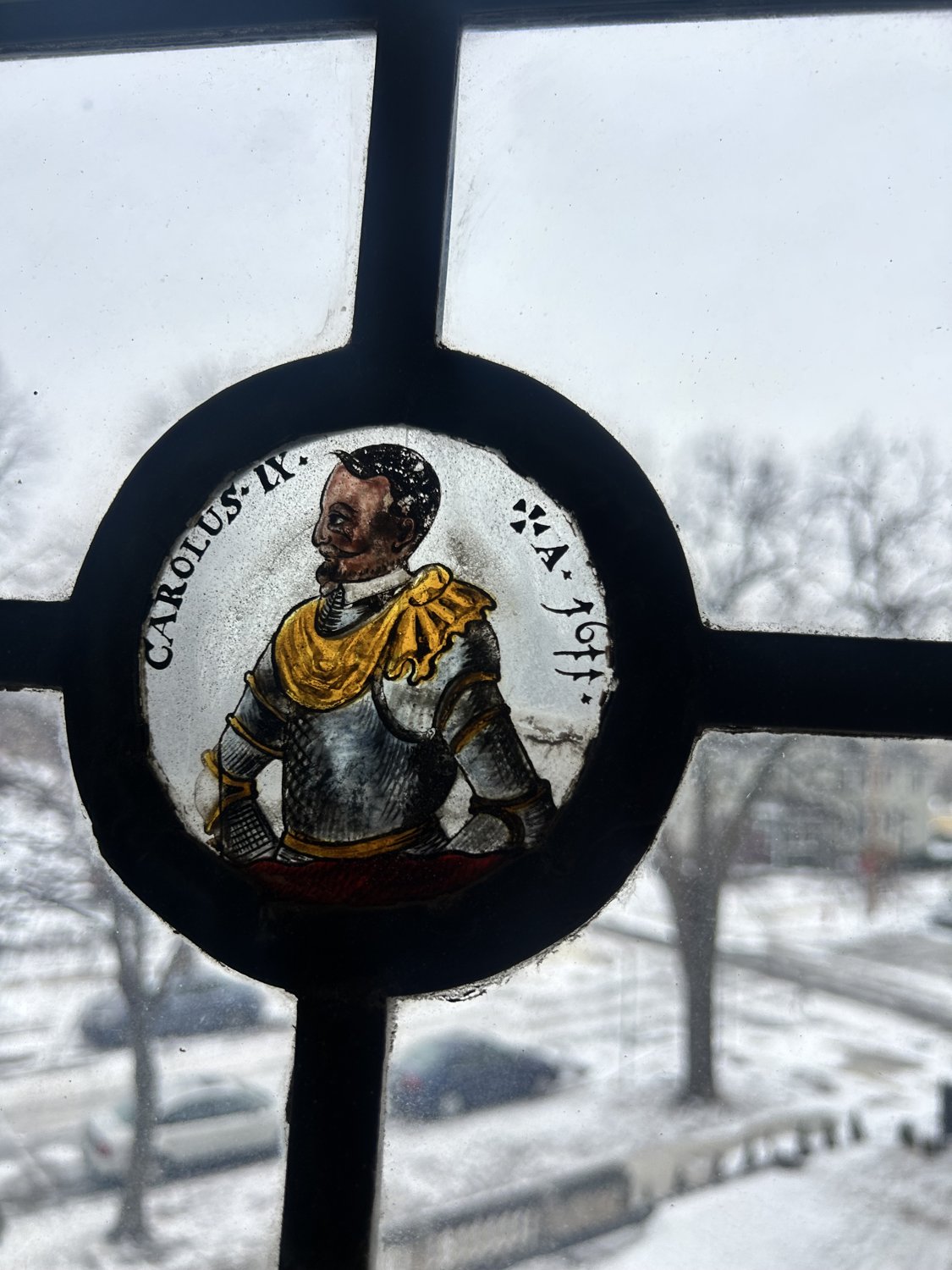
The dealer Grosvenor Thomas (1856–1923) and his son Roy built the firm that supplied medieval and Renaissance stained glass to America’s wealthiest collectors. They kept meticulous stock books — records that scholars still use today to trace where individual panels came from — and ran an office in New York to feed the American appetite for “old world” interiors. Through their hands and those of allied dealers, fragments of Europe’s church and castle windows crossed the ocean by the crate.
The link to Minneapolis was Charles Joel Duveen — “Charles of London” — the same dealer who supplied the mansion’s carved oak, its Tudor plaster ceilings, and its famous imported fireplaces. Charles and his brother had built a dynasty selling Old World grandeur to Gilded Age fortunes; you can read more about that remarkable family in our piece on the Duveen brothers. When the great collections of ancient glass came onto the market, the same titans who fought over paintings — Vanderbilt, Hearst, Guggenheim, Getty — lined up to buy. Charles S. Pillsbury bought too.
From an English cathedral city to a Norfolk hall
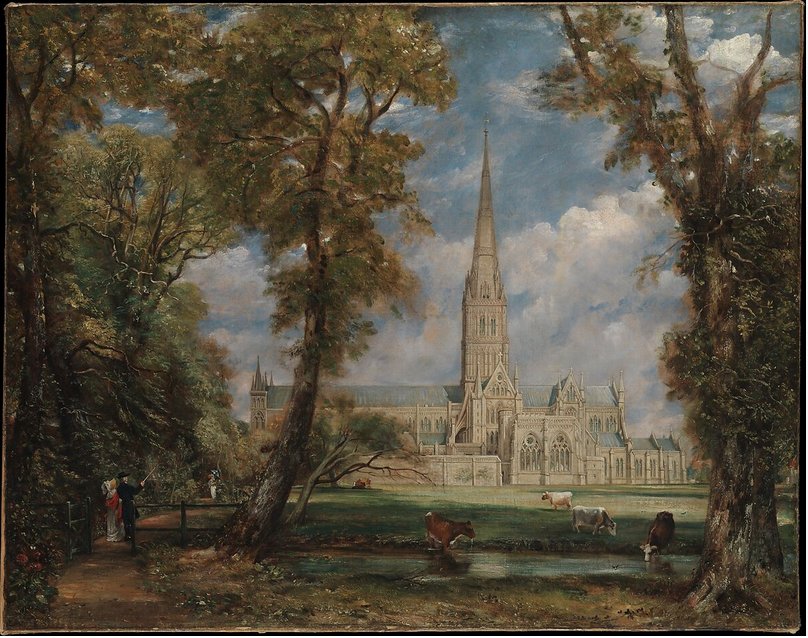
According to the house’s own history, a portion of the glass traces back through Salisbury — the English cathedral city that, like many, had shed quantities of its medieval glazing over the centuries — before passing into the dealers’ inventory. Other panels carry a more precisely documented pedigree. Some came from the celebrated Costessey collection, an enormous trove of heraldic and continental glass assembled at Costessey Hall in Norfolk by the Jerningham family, Barons Stafford. That collection was sold off in 1913 — the very years Charles Pillsbury was assembling the materials for his mansion — and Costessey Hall itself was demolished in 1925. A few of the mansion’s panels even carry the crest of Friedrich Magnus zu Salm, a 17th-century general whose donated glass once hung in a Brussels cathedral before war and revolution scattered it across Europe.
A knockoff of a knockoff, and a Rembrandt connection
Look closely and the panels reward you. One depicts King Ahasuerus and the wicked Haman at the Feast of Esther — a Flemish painted-glass scene from around 1660 that copies a Dutch painting which was itself a copy of a Rembrandt. A knockoff of a knockoff, and yet itself nearly four centuries old. The craft is genuinely old-world: in an Annunciation panel, the yellow is silver oxide, the blue is cobalt, and the black outlines are iron oxide painted on like enamel and fired into the glass to last.
The glass the priests removed
Here is the detail visitors love most. From 1939 to 1969, the mansion served as a Lutheran theological seminary — a chapter we covered in our look at the building’s many owners. The seminary’s caretakers studied the mansion’s worldly saints and sensuous biblical figures and decided certain panels were a touch too provocative for young men in training. So they quietly took them down. Look carefully at the windows today and you can still find the gaps — the empty leaded spaces where a six-hundred-year-old scene used to glow.
See the ancient glow for yourself
Photographs flatten this glass; daylight does not. The colors shift hour by hour, and the painted faces seem to wake up as the sun moves across them. The best way to understand it is to stand beneath a window and look up. The mansion — now the Pillsbury Club and the departure point for Minneapolis Trolley Tours — opens its doors for guided history tours year-round, and the ancient glass is always a highlight. Come see a lost world still throwing light onto a Minneapolis floor.
More from the journal: read how a 17th-century marriage is carved into the lounge fireplace, and how Charles of London assembled an entire English manor and shipped it to Minnesota. Further reading: the Corpus Vitrearum USA documents medieval stained glass in American collections, and Salisbury Cathedral tells the story of England’s great glazing traditions.
Keep reading: What happened when an advertising agency moved into the Pillsbury mansion — the unlikely years when Carmichael Lynch restored the house and built Harley-Davidson’s legend inside its oak walls.