
What Happened When a Lutheran Seminary Moved Into the Pillsbury Mansion?
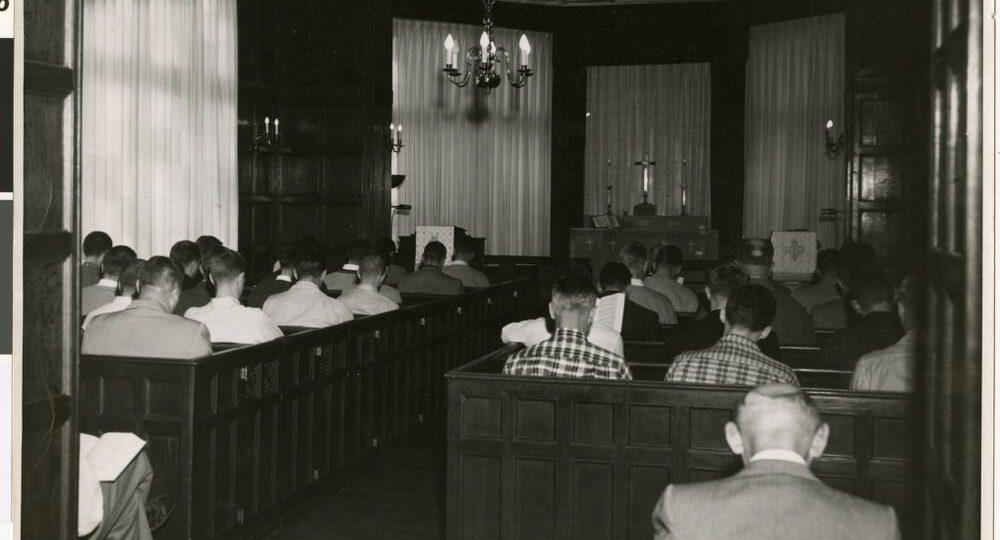
When Charles S. Pillsbury died in 1939, the great English manor at 100 East 22nd Street fell silent. The family that had filled it with dinners and music was gone, and a house built to last five centuries suddenly had no one to live in it. What came next is one of the strangest chapters in the mansion’s long life: for nearly thirty years, the flour baron’s showplace became a theological seminary — and not a gentle one for the house itself.
A seminary moves in — and starts stripping the house
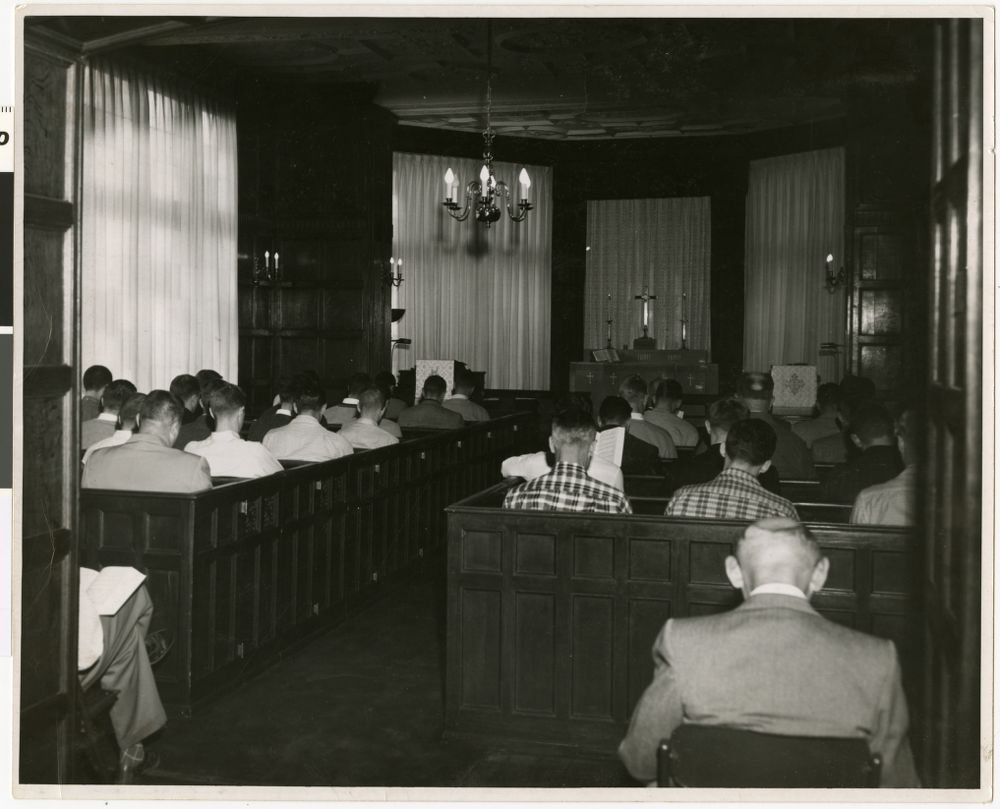
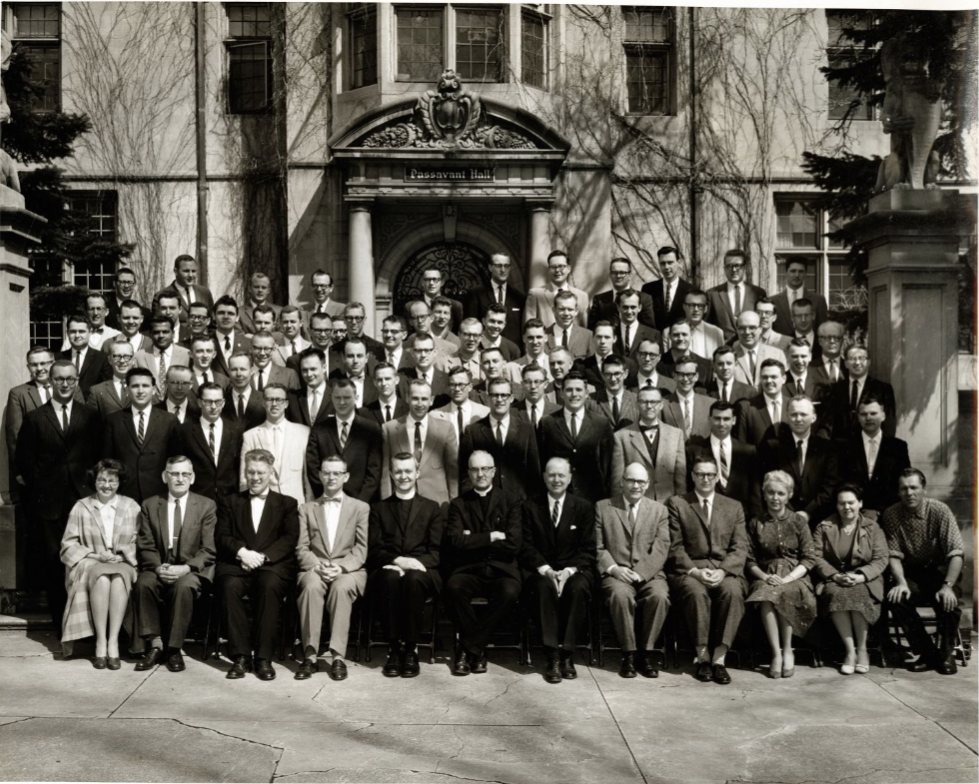
In 1940 the mansion was sold — through the David C. Bell Investment Company — to the Northwestern Lutheran Theological Seminary, which had outgrown its quarters in northeast Minneapolis. The seminary moved its students into a cluster of empire-builders’ homes in the Washburn–Fair Oaks neighborhood and renamed the Pillsbury house Passavant Hall, after the nineteenth-century Lutheran churchman William Alfred Passavant (1821–1894).
What followed was not careful stewardship. In several rooms it was disfigurement in the name of doctrine — and the house still carries the scars.
They tore out the panels they didn’t approve of
The mansion’s leaded windows were not ordinary glass. They were genuine medieval and Renaissance panels — centuries old — brought from England by the legendary dealer Charles of London, the same trade that supplied the Gilded Age’s greatest collections. Hundreds of those panels still glow in the house today, and they are extraordinary; we tell their fuller story in The Splendors.
But not all of them survived the seminary. A select few — the panels whose worldly or sensuous imagery the seminarians judged unfit for young men training for the ministry — were singled out and removed. In their place, the seminary installed its own Lutheran iconography in the conservatory. The great body of the collection was left intact, but those few censored panels were ancient, irreplaceable European art, taken down for no reason but doctrine. They do not come back.

The stolen sconces and the butchered oak
The glass was only the beginning. The original lighting sconces — hand-made fixtures fitted throughout the entire house, worth a small fortune in their own right — vanished during these years. Every one of them, gone from the rooms they were made for.
And then there was the oak. The mansion’s hand-carved English paneling traces to Tudor-era interiors — the kind of five-hundred-year-old craftsmanship associated with the age of Henry VIII. To make room for their pipe organ, the seminary cut into it, removing sections of that hand-carved historic paneling and altering the room to fit an instrument. You cannot re-carve what a Tudor workshop made. It was destroyed anyway.
The damage outlasted the seminary
By the late 1960s the Northwestern Lutheran Theological Seminary had merged into what became Luther Seminary — you can trace that lineage in Luther Seminary’s own historical timeline — and moved on. The house went on to survive the wrecking ball that took nearly every other mansion on its avenue, and in 1974 it was entered on the National Register of Historic Places (it is also a designated City of Minneapolis landmark) — the English Gothic Revival pile that architects Hewitt & Brown raised in the 1910s. But survival is not the same as preservation. The seminary’s decades left scars the building still carries: the empty frames where a few medieval panels once glowed, the missing sconces, the cut oak around the old organ. The full chain of owners is the subject of The Owners.
Come hear the house tell its own story
Today the mansion is the Pillsbury Club, and the rooms the seminary once altered are open again — now with a speakeasy-style bar, a private theater, and tours that let you stand beneath the surviving glass yourself and see both the beauty that endured and the gaps left behind. The house is also the launch point for Minneapolis Trolley Tours, so you can pair a visit with a vintage trolley ride through the historic neighborhoods nearby.
Making a weekend of it? Settle into the romantic, haunted-history charm of the 300 Clifton bed & breakfast in Loring Park, or take a furnished downtown studio at Oakland’s on 9th if you’re staying a while. However you come, come ready for a story — this house has had more lives than most, and it remembers every one of them. Book a tour of the Pillsbury Club and see it for yourself.