
Who Were the Pillsburys’ Rivals Across the River?
Walk into the great hall at 100 East 22nd Street and the first thing that meets you is England: carved oak that crossed an ocean, a fireplace that outlived the Great Fire of London, cathedral glass older than the United States. It is easy, standing there, to forget that every board and every pane of it was paid for by wheat — and that the wheat was ground in the middle of a fight.
For half a century, two Minneapolis milling houses faced each other across the Mississippi at St. Anthony Falls and tried, year after year, to out-grind, out-sell and out-advertise the other. One of them was Pillsbury. The other was Washburn-Crosby. If you have ever bought a sack of Gold Medal flour, you have met the rival.
Two companies, one waterfall
Everything in Mill City began with a fifty-foot drop of water. St. Anthony Falls was the only true waterfall on the Mississippi, and it turned a frontier town into an industrial capital in a single generation. Minneapolis counted about 13,000 people in 1870; twenty years later it held nearly 165,000, and from 1880 onward it wore the title “Flour Milling Capital of the World” for fifty straight years.
Charles A. Pillsbury arrived in 1869 and paid $10,000 for a one-third share of a struggling little mill that produced 200 barrels a day. He installed the new middlings purifiers — machines invented by Edmund La Croix that could pull fine white flour out of the region’s stubborn hard spring wheat — and the mill turned a profit within a year. He founded C.A. Pillsbury & Co. in 1872. By 1886, his mills were producing 10,000 barrels a day. That is the fortune that eventually became this house; you can trace the whole arc on our page about the Pillsbury Company.
On the other side of the water, Cadwallader C. Washburn had been building mills since the 1860s. In 1877 he took on a partner named John Crosby, and the Washburn-Crosby Company was born. They made the Washburn A Mill their headquarters — a building that, when it reopened in 1880 after a catastrophic explosion, was the largest and most advanced flour mill on earth, grinding enough in a day to make twelve million loaves of bread.
A gold medal, and four Xs
The rivalry turned public in the summer of 1880. Washburn-Crosby entered several grades of flour in the first International Millers’ Exhibition in Cincinnati, and its flours took the gold, silver and bronze medals. The company promptly renamed its finest grade Gold Medal — a brand still on grocery shelves 146 years later.
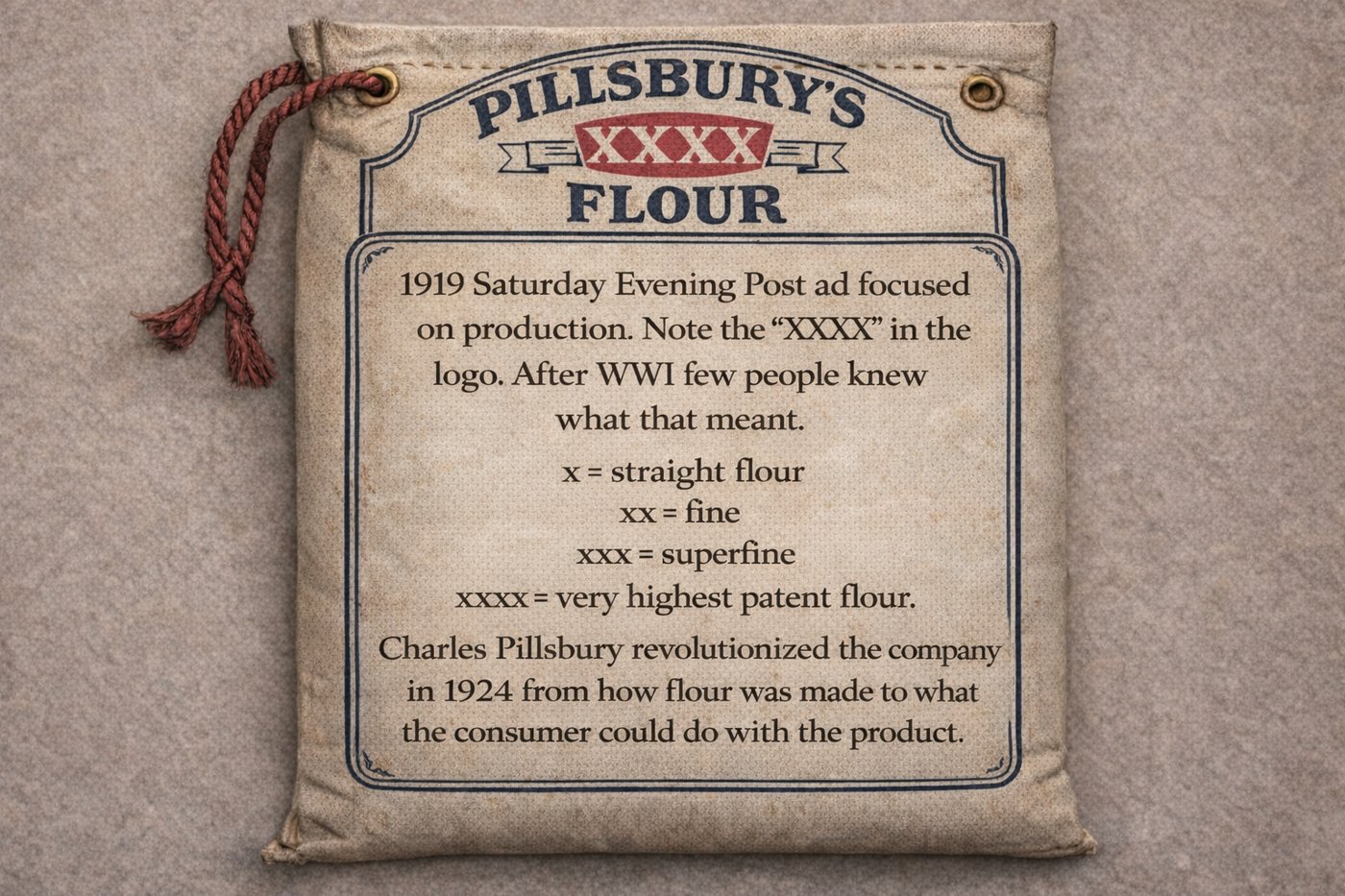
Pillsbury’s answer was already on its own sacks: Pillsbury’s Best, and those four mysterious Xs. (We unpacked that particular piece of marketing in what the four Xs actually mean.) Both houses had figured out the same thing well before modern advertising had a name: the wheat came from the same fields, the machines were the same machines, so the only thing left to compete on was the story printed on the bag.
Rivals, but never quite enemies
They were competitors in the market and colleagues everywhere else. Both belonged to the Minneapolis Millers Association. Both lobbied the railroads together for the freight rates that made the city the hinge of the northern grain trade. Their families lived within carriage-ride distance of one another on Park Avenue and around Fair Oaks.
The names even briefly merged. In 1889 Charles A. Pillsbury sold his company to an English syndicate, which folded it together with Washburn milling properties into the Pillsbury-Washburn Flour Mills Company, Limited. Pillsbury stayed on as managing director until his death in 1899. The Washburn-Crosby Company, however, was a separate concern — it kept its own owners, its own mills and its own Gold Medal, and it kept milling.
The house the rivalry built
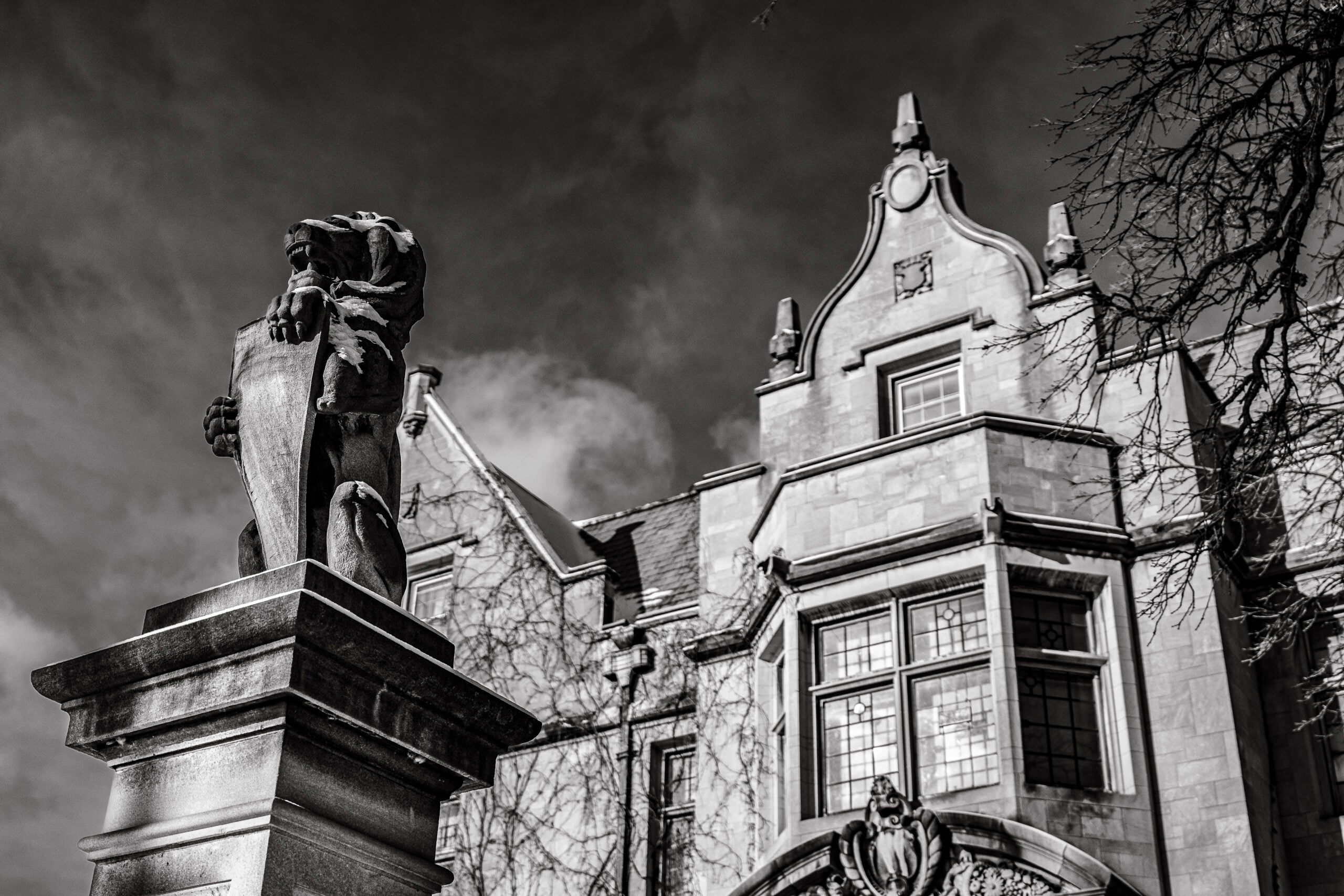
Charles A. Pillsbury did not live to see this house. It was his son, Charles S. Pillsbury, who completed the mansion on East 22nd Street in 1916, at the very crest of the Minneapolis milling boom — importing genuine centuries-old English rooms through the London dealer Charles of London and assembling them here. The full story is in building the mansion and the Pillsbury family.
How the rivalry finally ended
Slowly, and then all at once. After the First World War, shifting freight and import rules pulled milling east; by 1930 Buffalo had overtaken Minneapolis. In June 1928, Washburn-Crosby merged with a raft of other mills under president James Ford Bell and renamed itself General Mills. The Washburn A Mill closed in 1965. The Pillsbury A Mill held on longest of all the riverfront mills, shutting down in 2003.
And the ending is the part nobody on either bank could have scripted. Pillsbury was bought by the British group Grand Metropolitan in 1989. Then, in 2001, General Mills — Washburn-Crosby, grown up and renamed — acquired Pillsbury outright for roughly $10.4 billion, finally uniting Minnesota’s two great milling names after 130 years of competition. The rival across the river won by buying the other side.
Where to see the rivalry today
It is all still legible if you know where to look. The Mill City Museum opened in 2003 inside the ruined shell of the Washburn A Mill, and the Minnesota Historical Society keeps the Flour Tower and the milling floors open to visitors. The Gold Medal Flour sign still stands over the west bank. The Pillsbury A Mill still looms on the east. And three miles south, the house that all of it paid for is still standing too — you can read about everyone who has owned it since, and about the imported rooms inside.
The best way to see both halves of the story in one afternoon is from a trolley seat: Minneapolis Trolley Tours departs from the mansion and takes in the riverfront milling district, and if you are making a weekend of it, 300 Clifton puts you a few blocks away in another mansion of the same vintage.
Come stand in the room the flour built. Book a tour of the Pillsbury Club and see the oak, the glass and the fireplaces that a milling rivalry brought across an ocean to Minneapolis.
Keep reading: Why did whole English rooms cross the Atlantic in the early 1900s? — how the mansion’s Elizabethan interiors came to Minneapolis in the first place.