
What Did a 1914 Brooklyn Newspaper Say About the Rotherwas Room Going Into a Long Island Mansion?
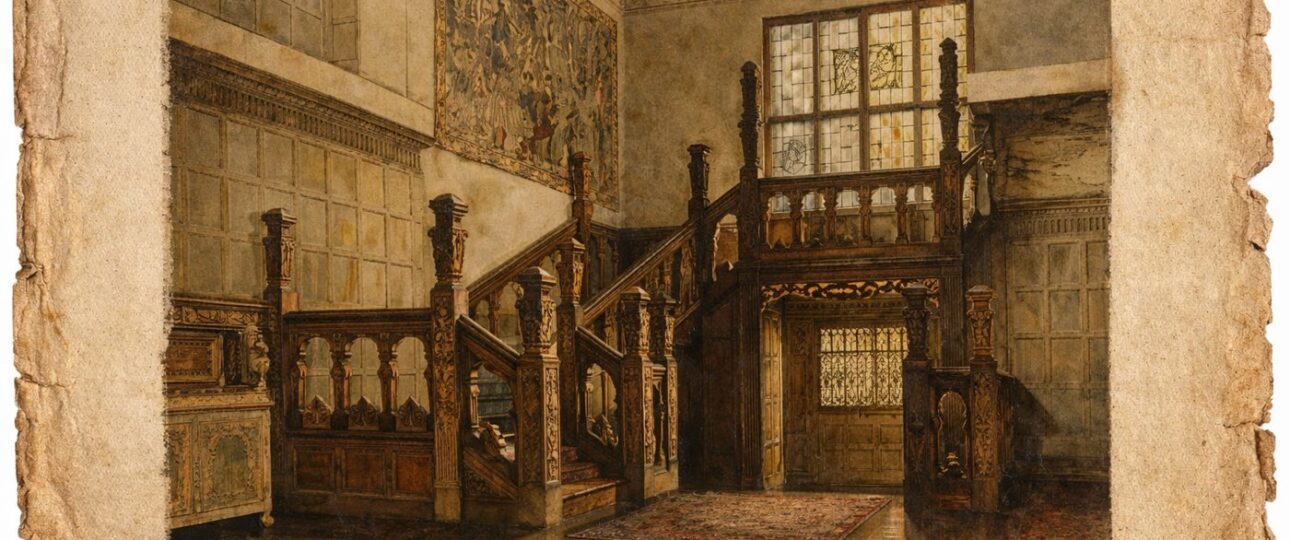
When the carved rooms of Rotherwas Court left Herefordshire in 1913, they did not all go to Minneapolis. The finest single room went to New York oil executive Herbert L. Pratt, and a Brooklyn newspaper followed its journey. A clipping from The Brooklyn Daily Times of Friday, Jan. 9, 1914, page 11, headed “Pratt’s Mansion Has Historic Panels,” shows how the story was told to readers at the time, while the Rotherwas paneling was being fitted into a house still under construction.
What did the Brooklyn Daily Times report on January 9, 1914?
The dispatch is datelined Glen Cove, Long Island, and describes the new country mansion for “Herbert L. Pratt, of Brooklyn” in the Red Spring summer colony. The subhead calls it a “$1,000,000 Country Home” furnished with a historic interior from Rotherwas House, England. By the paper’s account the building had been under way for more than two years and would take some months more, because “one of the most important points” in its construction, the arrangement of the Rotherwas paneling, was still to come.
How did the paper describe the house itself?
The numbers are the part a 1914 reader would remember. The house was to have 83 rooms, including 15 bathrooms, with special arrangements for salt-water baths. It was modeled on an old English country mansion, built around a fore-court with a central building and two wings that the paper says were as large as ordinary country houses. The main floor was red brick with white stone trimmings, holding the drawing and reception rooms, with the family’s apartments above and the servants’ quarters on the top floor. The paper called the architecture Elizabethan, added lily ponds and a rose garden for the terraces, and placed the house on a knoll overlooking Long Island Sound, built by the C. T. Willis Company of New York City. The family expected to take possession “probably the early part of next summer.”
What did it say about the Rotherwas paneling?
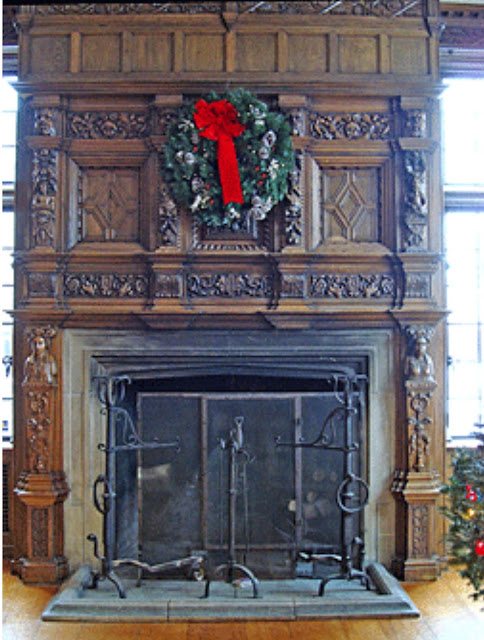
The article gives the room a long introduction. It calls Rotherwas House, at Hereford, the seat of the Bodenham family, and says it was mentioned in the Domesday Book as a “wonderful house.” It says the wood came from an estate of five thousand acres, that the hand-carving was done “by experts in the house itself,” and that the great mantel was so large it had to be cut in half to be removed. It reports that Pratt bought the carvings alone for $350,000, and that the finished room would be “artistically perfect and historically one of the most wonderful rooms in America.”
Where does the newspaper disagree with later sources?
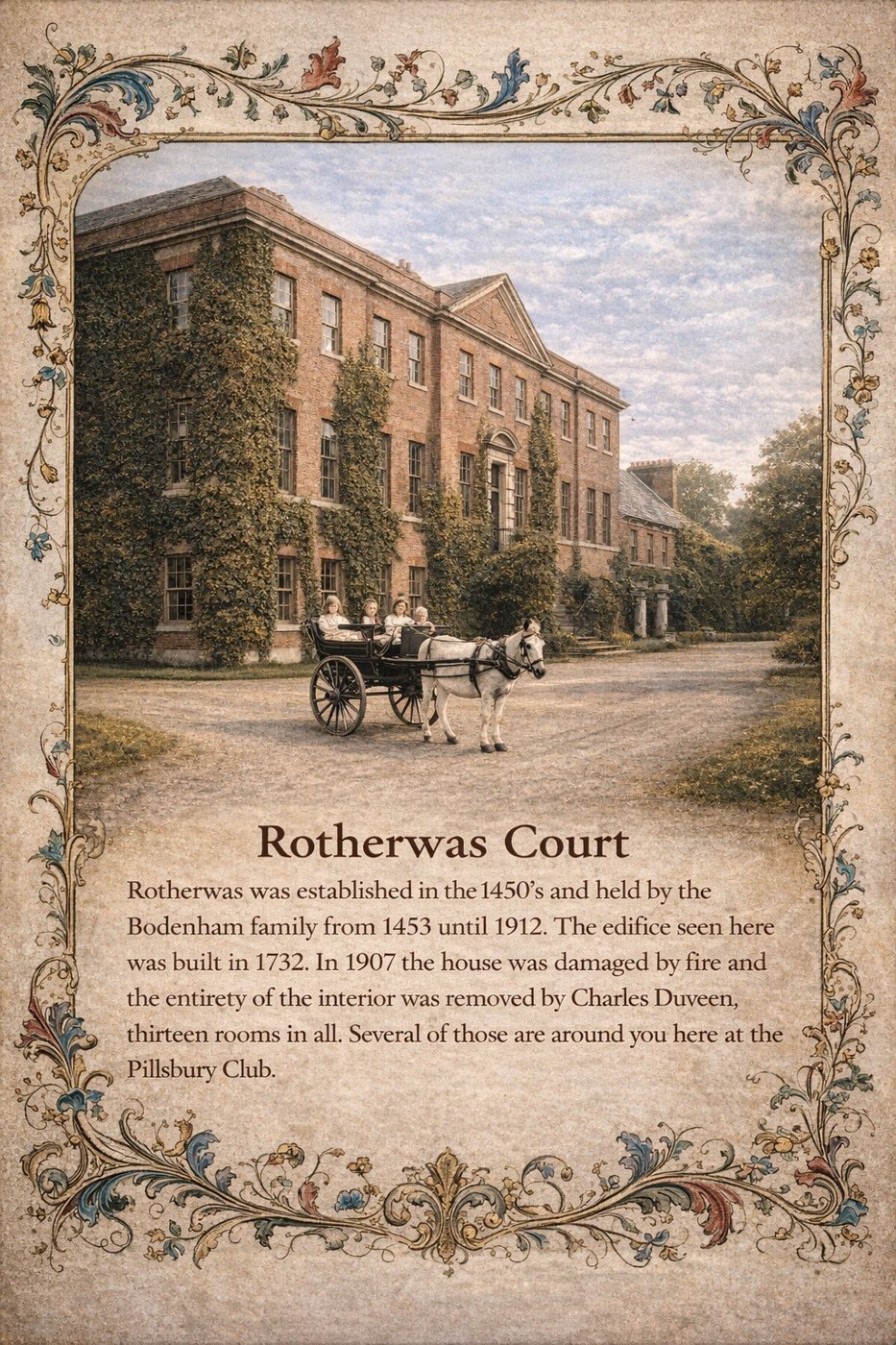
A 1914 society page is a snapshot, not the last word, and a few details do not line up. The paper says the fireplace was walnut and the mantel oak, and that the paneling was set up in 1731. Wikipedia’s entry on the Rotherwas Room says the mantelpiece is dated 1611 and the chimneypiece is oak, with walnut wall paneling, and says Pratt bought the room in February 1913 for about $350,000. The Rotherwas story card at the Club says the house seen in its illustration was built in 1732. We have not tried to settle the 1731 and 1732 dates. The $350,000 price, at least, is the same in every account.
The same sources tell us what happened next: Wikipedia reports that Pratt installed the room in his Glen Cove house, and that he bequeathed it to Amherst College in 1944, where it is now part of the Mead Art Museum. Amherst’s own museum page describes a 17th-century English knight’s parlor among its permanent installations, though it does not name the room, and a local news piece describes the paneled room there as more than 400 years old.
What does this have to do with the Pillsbury Mansion?
Everything, because the same dispersal stocked this house. The Club’s story card says that after a fire in 1907 the whole interior of Rotherwas was removed by Charles Duveen, thirteen rooms in all, and that several are “around you here at the Pillsbury Club.” Pratt’s room is the one that went to Long Island. To follow the others, read Where Did the Other Rooms of Rotherwas Court End Up?, Why Did Whole English Rooms Cross the Atlantic? and the Manchester newspaper’s visit to the Bond Street showroom. The dealer behind the sale is the subject of Charles of London, and The Splendors tours the rooms that stayed in Minneapolis.
If you would rather see the oak than read about it, you can book a guided tour of the mansion. Details are on our experiences and tours page, and hours and reservations are on Plan Your Visit. More stories like this one are in the History Journal.
Keep reading: What is the True Crime Tour at the Pillsbury Club? Play the jury on a Minneapolis trolley
Keep reading: What Did a 1944 Star Tribune Columnist Say Mary Pillsbury Lord Had Done for the War? From Belgian Pen Pal to WAC Recruiter