What Did the 1917 “Save the Wheat” Food Pledge Mean for a Flour-Making Family in a Minneapolis Mansion?
On Monday, December 10, 1917, the Society page of the Minneapolis Morning Tribune carried a small item about a gathering at 100 East Twenty-second Street, the Pillsbury mansion. In the same strip of the page sat a boxed message to “Women Who Signed the Food Pledge.” Read together, they put a flour-making family’s new house in the middle of a national wartime campaign to save wheat.
What did the December 1917 clipping say?
The Society item reports that Mrs. Charles S. Pillsbury of 100 East Twenty-second Street would entertain members of the Robert E. Lee chapter of the United Daughters of the Confederacy at 2:30 p.m. the next day, in her home. That is all the clipping tells us about the occasion, and we do not know more from it. The mansion had been finished only a year or so earlier, so this is one of the early newspaper glimpses of the house being used for social calls.
The boxed note beside it was addressed to women who had signed the Food Pledge. It reads, in part: “You have pledged yourself to ‘Save the Wheat.’ You are doing a great work to win the war,” and it advised readers to keep meals tasty and to “learn to use corn in 61 different ways.” The clipping cuts off mid-sentence, so we cannot say what the paper offered to send readers next.
What was the Food Pledge?
In 1917 President Wilson created the U.S. Food Administration under Herbert Hoover, formally established by the Food and Fuel Control Act in August of that year, according to the Minnesota Historical Society’s MNopedia. Households were asked to sign a pledge to follow the Food Administrator’s advice and eat less of the foods that could be shipped to Europe. A North Dakota account in Prairie Public’s “The Food Pledge” says the signing drive was scheduled to open October 21, 1917, for one week, cost nothing but a signature, and was aimed at housewives. The National Archives shows what the wider campaign looked like through its World War I posters and home cards.
Why would a wheat pledge matter in a flour family’s home?
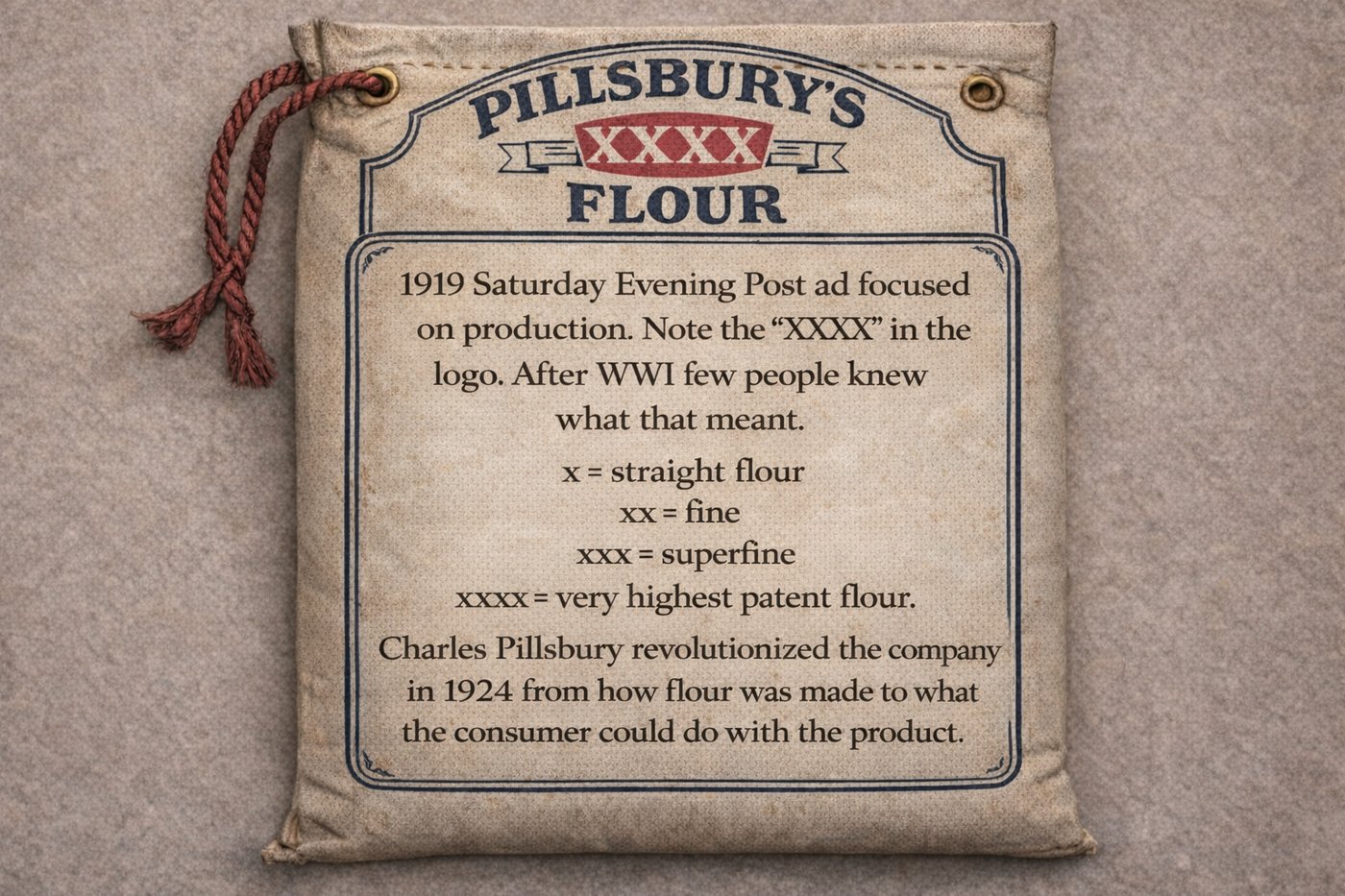
Because Minneapolis made so much of the flour. MNopedia reports that local mills hit a peak of 18.5 million barrels in 1916, more than a fifth of the nation’s output, and that between April 1917 and June 1919 the United States sent 6.2 million metric tons of flour to Europe. The Pillsbury Company ran six mills with a daily capacity of 29,300 barrels in 1916, and the Pillsbury A Mill, with a daily capacity of 12,000 barrels, was the world’s largest. (Our A Mill story has more.)
The same source says the Food Administration put millers under registration and price controls, required them to mill whole wheat flour rather than refined flour, and had them produce substitute flours for Victory Breads containing at least 20 percent non-wheat flour. It also records that soldiers from D Company, First Minnesota Infantry, were photographed on guard duty at the Pillsbury mills in 1917, in a district guarded against possible sabotage. For a family whose name was on the sack, saving wheat was not an abstraction.
Did the Pillsburys sign the pledge?
We do not know. The clipping is addressed to women who had signed, not to the Pillsburys by name, and nothing in it says the household took part. What it does show is how close the household’s social life and the national wheat campaign were on the same newspaper page, in a city whose economy ran on flour. For the family’s later business story, see how Charles Pillsbury bought back the flour company in 1924.
Where can you see the house now?
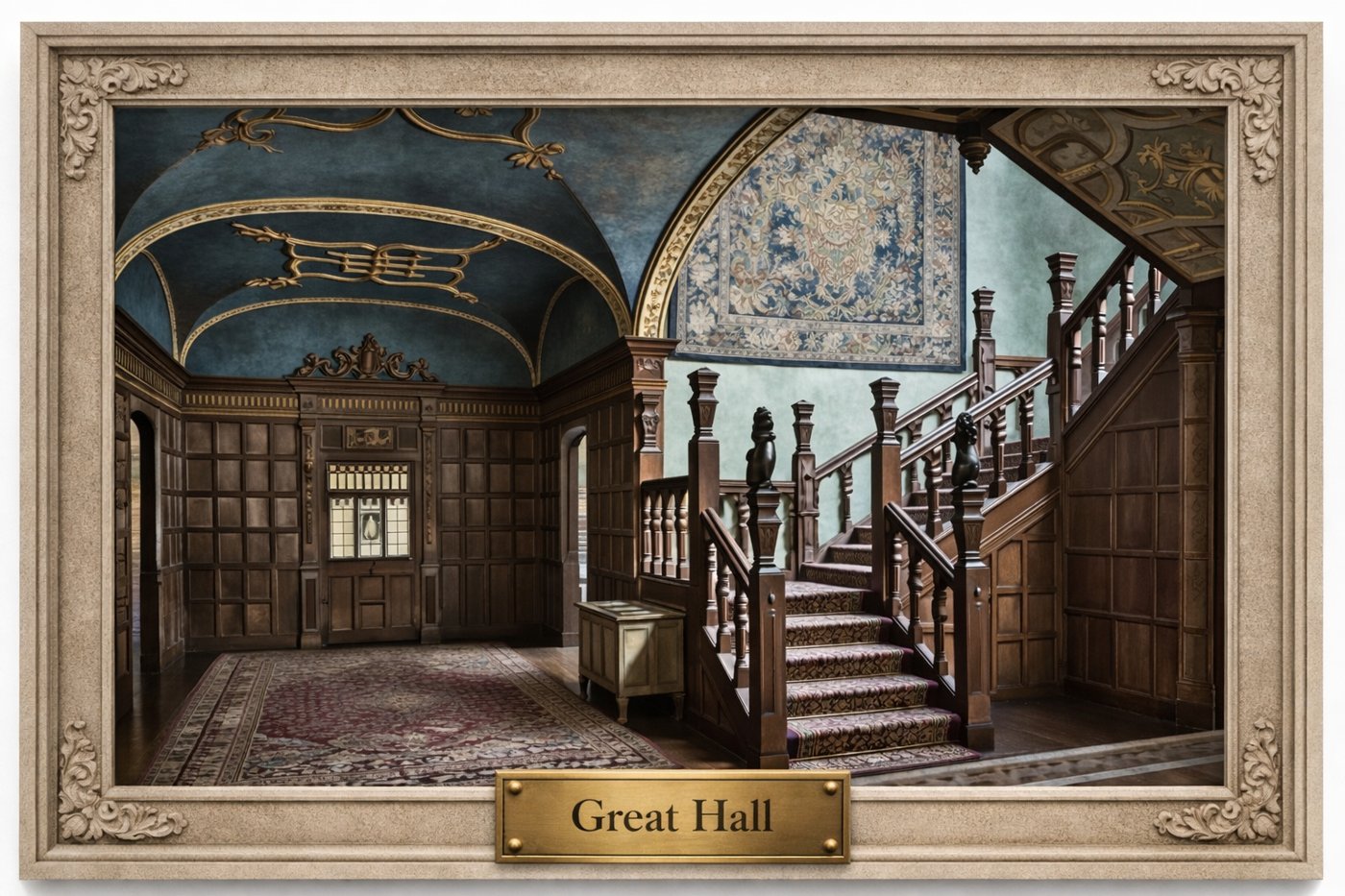
The mansion at 100 East 22nd Street is today the Pillsbury Club. You can plan a visit, join a guided tour, or read more in the story of the Pillsbury Company. For another look at the neighborhood in those years, read the decade-by-decade ledger of lost Fair Oaks mansions.
Keep reading: What did a 1914 Brooklyn newspaper say about the Rotherwas Room going into a Long Island mansion?