
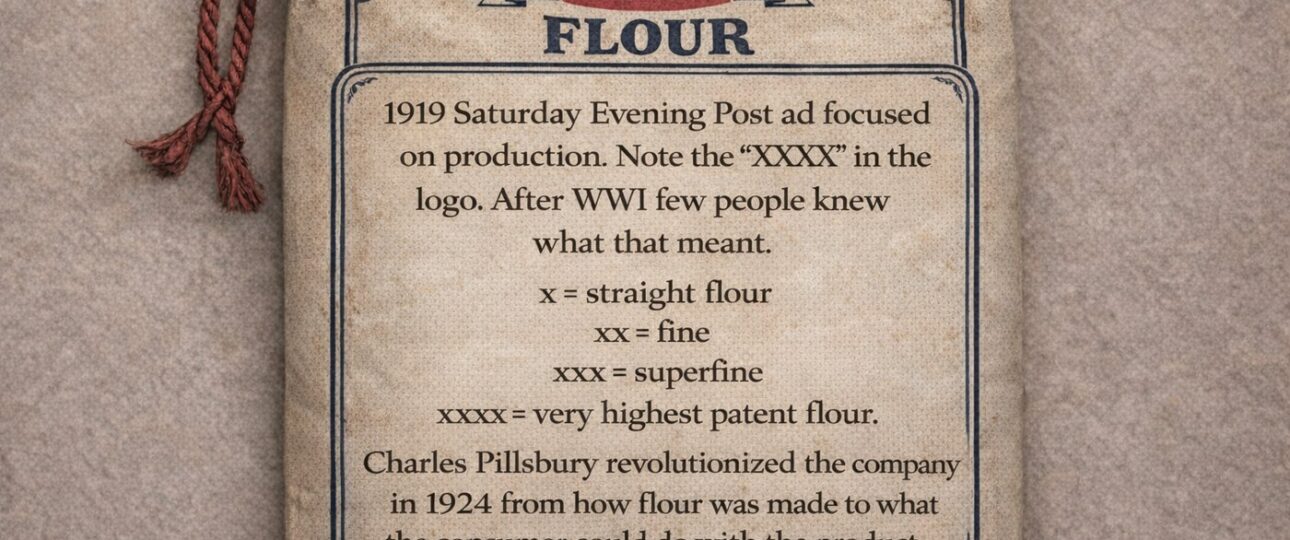
Who Was Charles A. Pillsbury, the Miller Who Made the Fortune Behind the Mansion?
The Pillsbury Mansion was finished in 1916. The man whose fortune paid for every carved panel of it had been dead for seventeen years.
Charles Stinson Pillsbury built the house at 100 East 22nd Street — he chose the English rooms, hired the dealer, argued over the fireplaces. But the money was his father’s, and his father never walked through the front door. Charles Alfred Pillsbury died in September 1899, and the story of how a New Hampshire shopkeeper’s son came to bankroll an Elizabethan manor in Minneapolis is one of the odder business stories this city has.
A shopkeeper’s son from Warner, New Hampshire
Charles Alfred Pillsbury was born on December 3, 1842, in Warner, New Hampshire, the eldest of three children of George Alfred Pillsbury, a shopkeeper, and Margaret Sprague Carleton. The family had enough for schooling and not much past it. Charles attended public schools in Warner and Concord, spent a year at New London Academy, and graduated from Dartmouth College in 1863 — paying his own way by teaching part-time.
He went to Montreal afterward and clerked for a produce commission house, eventually buying into it. Montreal handled grain coming east from the prairies, and Charles spent six years watching it move. He was learning a market before he knew he would need one.

The $10,000 gamble everyone thought was foolish
In 1869 he sold his Montreal stake and came to Minneapolis, where his uncle — John Sargent Pillsbury, the future governor — had settled at the Falls of St. Anthony in 1855. Charles and his father pooled $10,000 and bought one third of a struggling flour mill.
At the time it looked like a poor bet. Milling was neither stable nor especially lucrative, and no Pillsbury had ever milled anything. Within three years the business was turning a considerable profit and carrying a new name: Charles A. Pillsbury and Co.
The machines that made Minneapolis
What changed the arithmetic was technology. Charles threw out the old buhr stones and brought in the middlings purifier and gradual reduction on steel rollers — a process that pulled a whiter, finer flour from the hard spring wheat of the northern plains, which until then had been the less desirable grain. He toured European mills, Budapest’s among them, to study the best of it, and he named the result Pillsbury’s Best.
Then he built the Pillsbury A Mill. Completed in 1881 to a design by architect LeRoy Buffington — Charles insisted on an architect, which was nearly unheard of for a mill — it was built to turn out 5,000 barrels a day when a 500-barrel mill was considered enormous. It became the largest flour mill in the world, and it still stands on the east bank of the Mississippi, now artist lofts. Downriver, the Mill City Museum occupies the ruins of his chief rival’s mill.
The senator who would rather have been milling
From 1878 to 1886 Charles sat in the Minnesota Senate, chairing its Finance Committee for most of that time and carrying state bond legislation for his uncle, by then governor. He turned down a nomination for mayor of Minneapolis outright. He had accepted the Senate seat, by his own account, largely because the session was short and fell in winter.
He was unusual in a second way. In 1883 he started one of the first profit-sharing plans in the country, paying out as much as $25,000 a year in bonuses tied to the company’s results; no strike interrupted the Pillsbury mills in his lifetime. He backed the local coopers’ cooperatives, invested in the electrification of Minneapolis and its streetcar lines — the world of Thomas Lowry — and gave to the Minneapolis Maternity Hospital and to relief after the Hinckley fire of 1894.
The English sale, and the last ten years
In 1889 an English syndicate bought a controlling interest in the biggest Minneapolis mills and combined them as the Pillsbury-Washburn Flour Mills Co. Charles sold — and then stayed, as general manager and one of three American directors, running a company he no longer owned. How that arrangement curdled is a story of its own, and it would fall to his son to undo it.
He kept at it for ten more years. On September 17, 1899, he died suddenly of a heart ailment at fifty-six. He was buried at Lakewood Cemetery, and Pillsbury Settlement House was founded in Minneapolis in his memory. He left a widow, Mary Ann Stinson Pillsbury, and twin sons born December 6, 1878: Charles Stinson and John Sargent.
The house he never saw
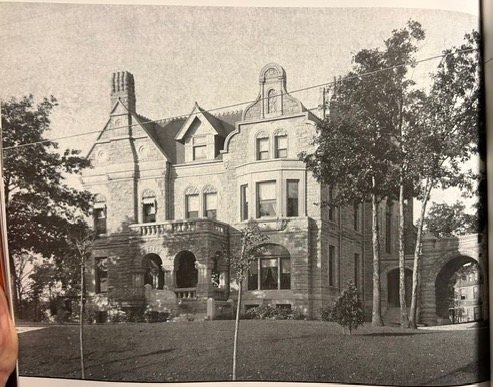
Charles S. married Nelle Winston in 1901 and, a decade and a half later, completed the great English house on East 22nd Street. His father’s own Minneapolis mansion — the grander address in its day — came down in 1937 with the rest of the vanished avenue. The son’s house is still standing. That is not usually how these things go.
Climb the oak staircase today and you are climbing on flour: on a middlings purifier, a $10,000 gamble, and a shopkeeper’s son who decided that a mill ought to be beautiful. The rest of the family and the company they made follow from that one bad-looking bet in 1869.
Come see what the flour built
The mansion is open year-round — book a mansion tour or an evening at the club, and plan your visit here. It is also the departure point for Minneapolis Trolley Tours, and if you would rather sleep inside a National Register mansion than merely tour one, 300 Clifton is a few minutes away.
Keep reading: the flour fortune paid for the house, but somebody had to run it — what it took to run the Pillsbury Mansion in 1916.