

What Was the 1940 Armistice Day Blizzard? The Storm That Hit Minneapolis the Year the Pillsbury Mansion Was Sold
On the morning of November 11, 1940, Minneapolis woke to weather that felt borrowed from September. By the next day the city was digging out of about sixteen inches of snow, and Minnesota was counting its dead. The Armistice Day Blizzard is still the storm older Minnesotans measure every other storm against, and it arrived in a year of upheaval at 100 East 22nd Street: 1940 was the year the Pillsbury Mansion left the family.
What happened on Armistice Day 1940?
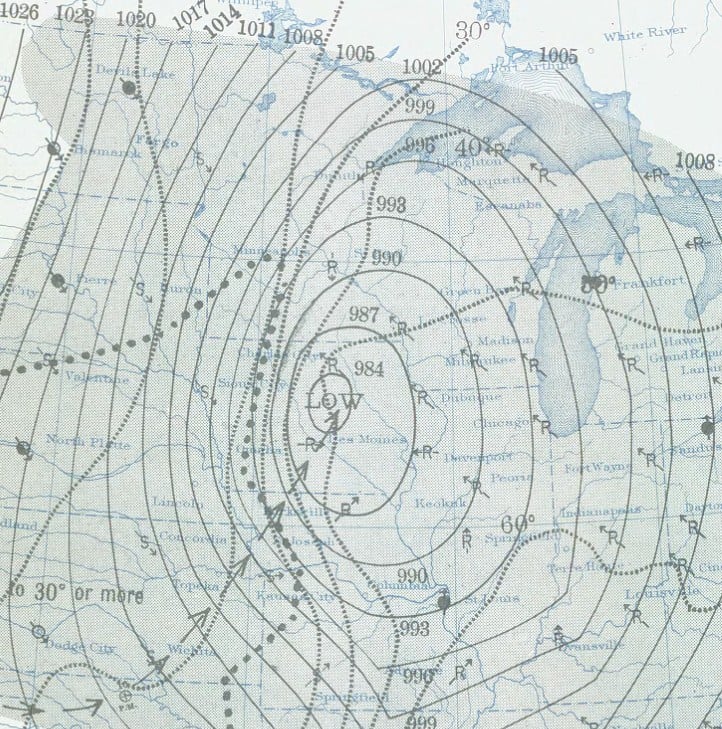
Armistice Day — today’s Veterans Day — began unseasonably warm across the Upper Midwest, with temperatures approaching 65 degrees by early afternoon. Then the bottom fell out. An intense low-pressure system raced from the southern Plains toward western Wisconsin, pulling Gulf moisture north and Arctic air south. Rain turned to sleet, sleet turned to snow, and the wind rose to 50 to 80 miles per hour.
According to the Wikipedia account of the storm, the Twin Cities recorded 16 inches of snow, Collegeville, Minnesota, recorded 27, and drifts reached 20 feet. Temperatures fell by as much as 50 degrees. The same storm system had passed over the Pacific Northwest days earlier, producing the winds that brought down the Tacoma Narrows Bridge on November 7.
Why was it so deadly?
Forecasting in 1940 looked nothing like it does now. The National Weather Service’s own history of the storm explains that the Chicago district of the Weather Bureau issued forecasts for eight Midwestern states, including Minnesota, and those forecasts were brief and general. There were no satellite images and few upper-air observations. Nobody saw it coming in time.
The holiday made it worse. The mild morning drew hundreds of duck hunters onto the Mississippi River backwaters, many dressed for a fall day. When the storm hit, some sheltered on small islands and froze overnight as temperatures dropped below 10 degrees; others drowned trying to reach shore. Duck hunters made up about half of Minnesota’s 49 deaths. Pilots Max Conrad and Bob Bean of Winona flew the river afterward, finding survivors and dropping supplies. Even a future Vikings coach, Bud Grant, was caught out hunting and found shelter only by following the sound of a train horn to the tracks.
How many died in all? The sources do not agree, and we will not pretend they do. The Weather Service puts the toll at more than 150 people. Wikipedia gives 154 in its summary box and 146 in its text. What every account agrees on is that it ranks among the worst weather disasters in Minnesota’s history.
What does the blizzard have to do with the Pillsbury Mansion?
Timing. Charles S. Pillsbury, who built this house with his wife Nelle, had died, and in March 1940 a Minneapolis newspaper reported that “one of Minneapolis’ most famous show places” had been sold for use as a theological seminary. As our history of the mansion’s owners tells it, the house was sold through the David C. Bell Investment Company and became Passavant Hall of the Northwestern Lutheran Theological Seminary.
So when the Armistice Day storm buried south Minneapolis eight months later, the great Elizabethan house was in the middle of the biggest change in its life — from a family home of Gilded Age society to a place of lectures and chapel services. We have told the story of what happened when the seminary moved in, and of why it eventually left. (Our own pages give the seminary years as both 1939 and 1940; the 1940 newspaper report of the sale is the firmest date we have.)
How did a house like this ride out a Minnesota winter?
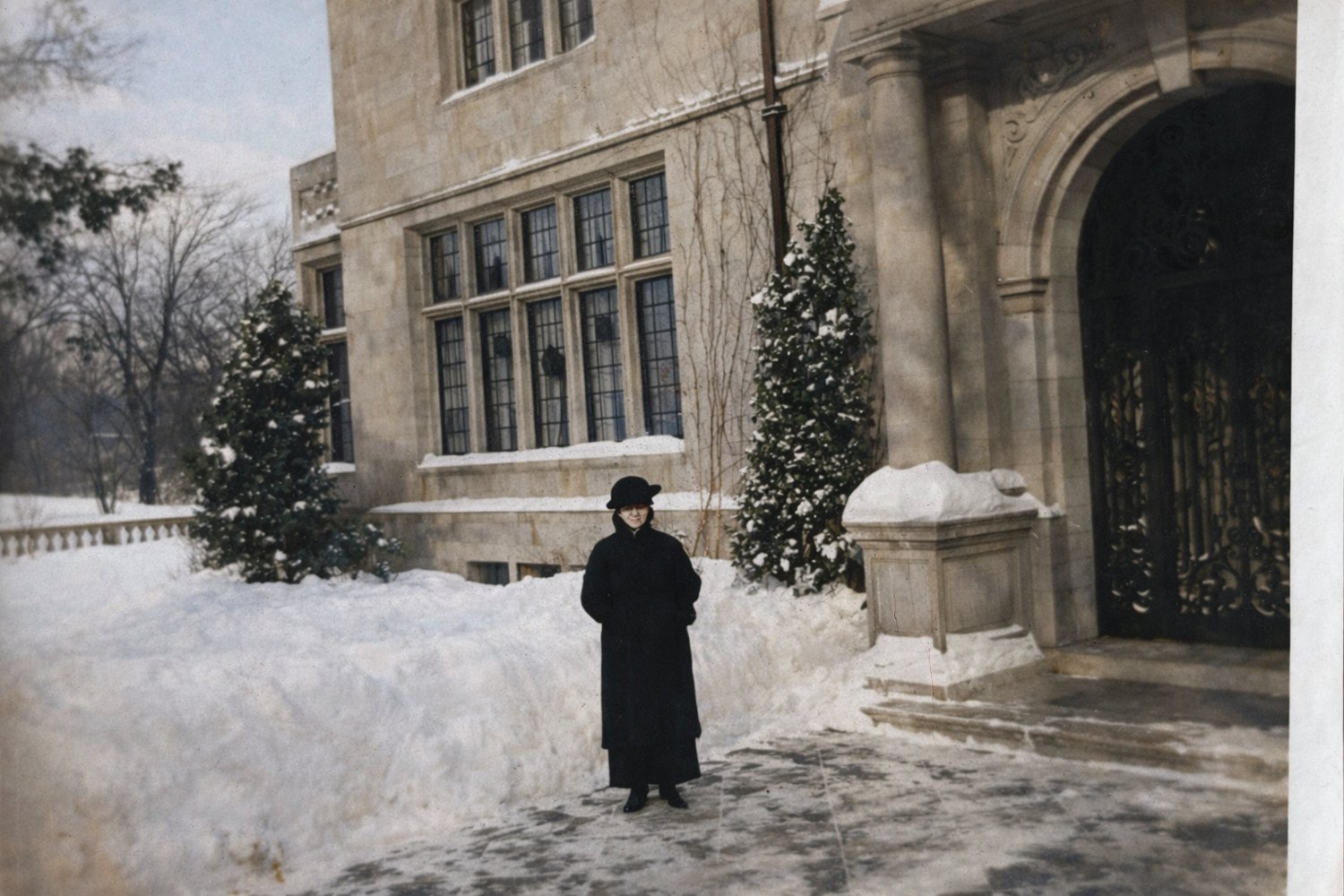
The mansion was built to. Behind the carved English oak is a structural steel frame set on concrete caissons, a modern skeleton under centuries-old rooms, finished in 1916. You can read about how it went up in Building the Mansion.
Where can you learn more?
Minnesota newspapers from November 1940 are searchable through the Minnesota Historical Society’s digital newspaper hub, and the state’s climate office keeps Twin Cities weather normals and records for anyone who wants to compare this November to that one.
The best way to feel how solid this house is on a cold night is to step inside it. Plan your visit to the Pillsbury Club, take a guided mansion tour, and stand in the rooms that watched the snow come down in 1940. Reservations are required.