
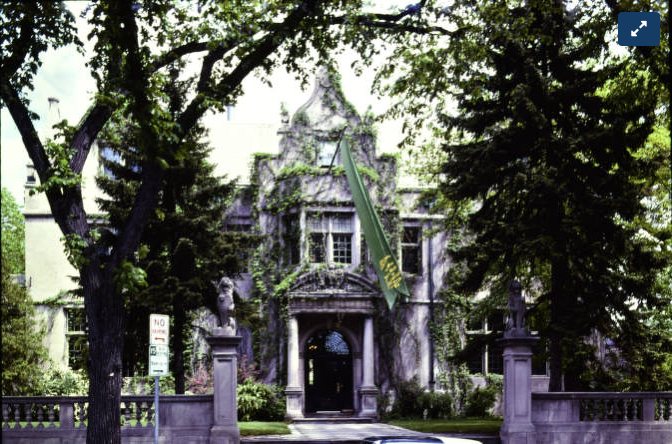
What Happened When a Training Center for the Blind Moved Into the Pillsbury Mansion?
The Charles S. Pillsbury Mansion was built for the eye. Five centuries of English carving were shipped across the Atlantic and installed here so that a visitor walking through the door in 1916 would look up, and keep looking. It is a house that spends its whole argument on what you can see.
Which makes its longest twentieth-century tenancy the most interesting thing that ever happened to it. For roughly three decades, 100 East 22nd Street was the home of BLIND, Incorporated — a Minneapolis training centre where blind adults learn to live independently.
Who were BLIND, Inc.?
The full name is Blindness: Learning In New Dimensions. It was incorporated on December 31, 1986, with a board of directors drawn from the rank and file of the National Federation of the Blind of Minnesota, and it took its first students in January 1988.
That founding was the second attempt. As the Federation’s own history of the period records, the organisation had hired its own home teacher back in August 1973 — Sharon Grostephans, who taught Braille, home management and travel to blind Minnesotans who could not get that training anywhere else. The state agency would not refer clients to her, and the programme was shut down on March 1, 1975. Discussions about building a proper centre resumed in 1982, and the 1986 incorporation was the result.
It worked. Within three years of opening, BLIND had become the major supplier of rehabilitation services to State Services for the Blind — the same agency that had declined to send a single student a decade earlier. The programme runs six to nine months and teaches the practical architecture of an independent life: cane travel, Braille, cooking, running a household. It has run programmes for blind teenagers, for blind seniors, for blind refugees and immigrants learning English, and for adults returning to work.
How the mansion came to them
The house arrived at BLIND, Inc. by a slightly desperate route. The Minneapolis Society of Fine Arts had rescued four Park Avenue mansions in 1969 and sold this one in 1976. The buyer was the advertising agency Carmichael Lynch, which under Lee Lynch restored the house and worked inside it — a story we have told at greater length elsewhere — through the 1980s and into the ’90s.
Then the agency moved on, and the house went back on a market that did not want it. A Minneapolis press account from 1993 put it plainly: half a dozen of the city’s great mansions were for sale at between $345,000 and $1.25 million, and buyers remained elusive. That is the moment BLIND, Inc. stepped in.
The dates deserve a note. Our own history of the owners dates the tenancy from 1993; the National Federation of the Blind’s account says the staff took possession of the mansion in 1994. Both are in print, and we would rather show you the seam than iron it flat.
A house built for the eye, taught by hand
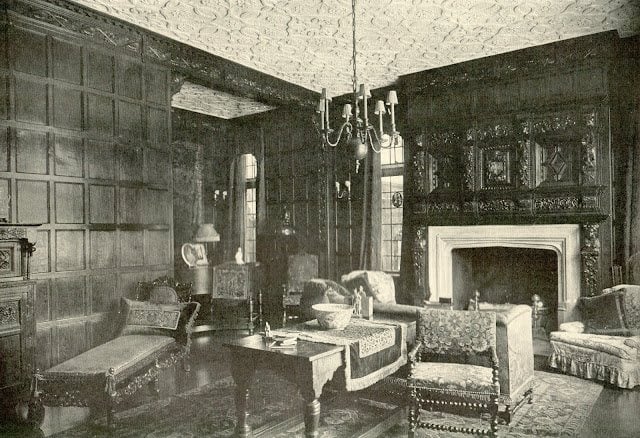
There is an obvious irony here and it is worth resisting the easy version of it. The Pillsbury Mansion is not a house that only works if you can see it. Almost everything remarkable about this building is something you could put your hand on: the deep relief of the Rotherwas carving, the grain of hand-rubbed oak that has been polished by four hundred years of touch, cut stone around a fireplace, the weight of a door. Our page on the splendors is a catalogue of things that read as well through the fingers as through the eye.
For thirty years the students who learned to move confidently through this building were learning in a house that rewards exactly that. It is difficult to imagine a building better suited to the argument that blindness is not the same thing as being shut out.
What it did for the building
Institutions are what saved this house. A seminary took it in first — we wrote about what happened when a Lutheran seminary moved into the mansion — then the Society of Fine Arts, then the ad men, then BLIND, Inc. Each of them kept the roof on, the heat running and the rooms in use during decades when the far more common fate for a Park Avenue mansion was the wrecking ball.
The Pillsbury Mansion went onto the National Register of Historic Places in 1974, which offers a house recognition rather than protection. Occupancy is the protection. A building with people in it gets fixed; an empty one gets demolished. The neighbours who are no longer standing make the point better than we can — the full arc is in our history of the mansion.
The house now
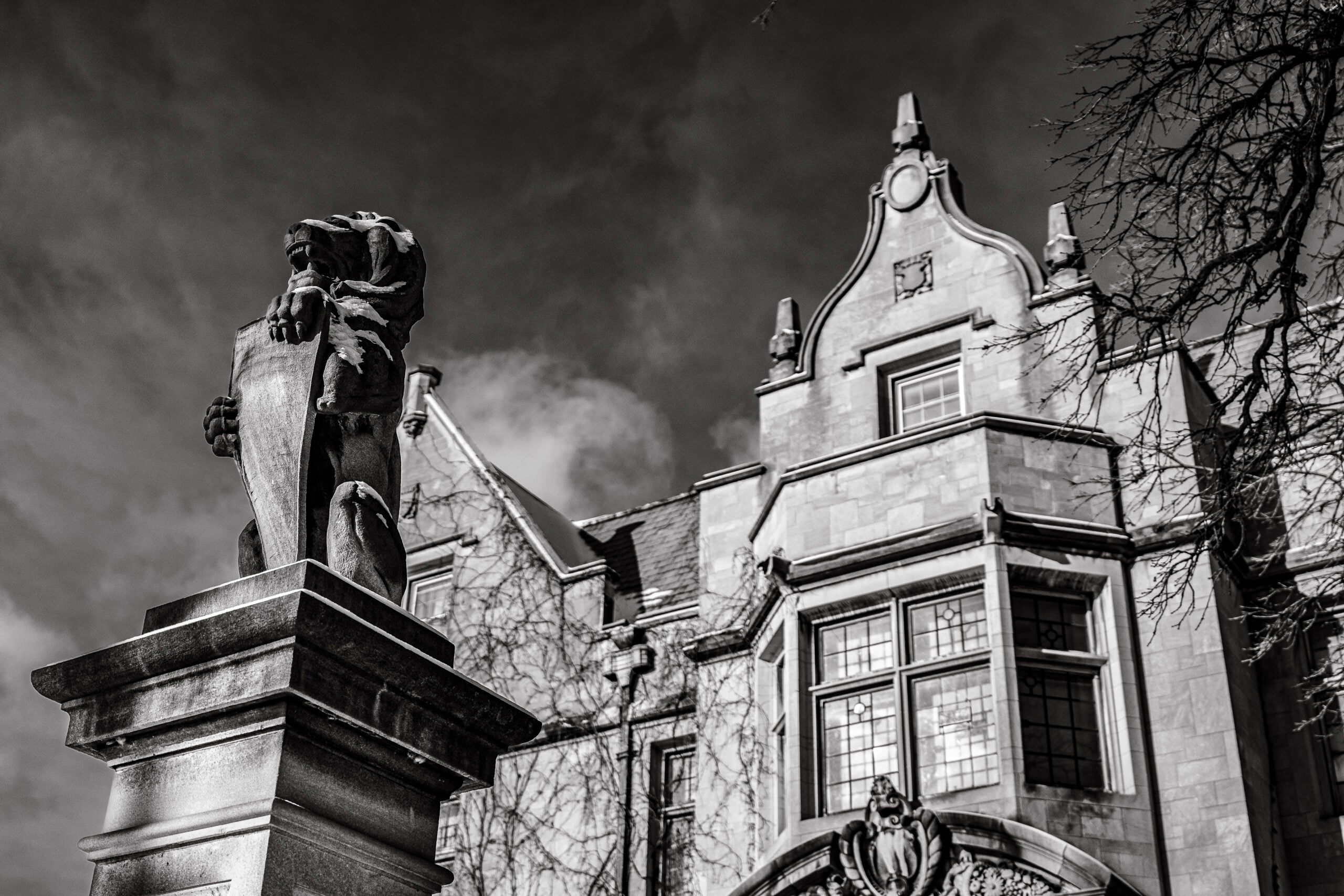
The mansion is now the Pillsbury Club, and after a century of seminarians, curators, copywriters and students, it is open to guests again. We run guided tours of the house year-round, the club rooms and dining room are back in use, and Minneapolis Trolley Tours departs from the front door.
If you would like to stand in the rooms this story happened in, our experiences and tours page has the options, and plan your visit has the hours. Come and put your hand on the carving. That is rather the point of it.
Keep reading: Whose Marriage Is Carved Into the Pillsbury Mansion’s Oak Fireplace?
Correction (September 13, 2026): the press account cited above — half a dozen Minneapolis mansions for sale between $345,000 and $1.25 million — is dated in this post to 1993. The clipping in the Club’s files is the Star Tribune of Sunday, March 20, 1988 (pages 1B–2B). The account is discussed in full in What Was the Pillsbury Mansion Worth in 1988?