
What Does the Pillsbury Doughboy Have to Do With a Minneapolis Mansion?
Poke him in the belly and he giggles. He is eight and three-quarter inches of pure joy, he wears nothing but a chef’s hat and a neckerchief, and he may be the most beloved lump of dough in advertising history. But before Poppin’ Fresh ever popped out of a can on national television, there was a house — a soaring Elizabethan manor on Minneapolis’s old avenue of mansions, and the flour dynasty that lived inside it. Pull the thread on the Pillsbury Doughboy and it leads, improbably, straight back to the mansion at 100 East 22nd Street.
A giggle that began inside a dough can
The Doughboy was born on November 7, 1965. His father, in a sense, was Rudy Perz, a copywriter and creative director at the Leo Burnett advertising agency in Chicago. Tasked with selling Pillsbury’s newfangled refrigerated dough — the kind that came in a cardboard tube you whacked on the counter edge — Perz imagined a cheerful little fellow springing to life out of the can itself. He pitched the idea to agency head Leo Burnett, who loved it, and Pillsbury’s executives ordered thirteen commercials on the spot.
That first spot, “Dancing Fingers,” advertised Pillsbury Crescent Dinner Rolls, and the Doughboy was brought to life not by a computer but by painstaking stop-motion animation — roughly twenty-four separate shots for every single second of film. For his voice, the team auditioned some fifty actors (among them Paul Winchell, the voice of Tigger) before choosing Paul Frees, who would voice Poppin’ Fresh for twenty-one years. His first words: “Hi! I’m Poppin’ Fresh, the Pillsbury Doughboy.” The belly poke and the giggle were there from day one.
The man from the mansion who bet on dough in a tube
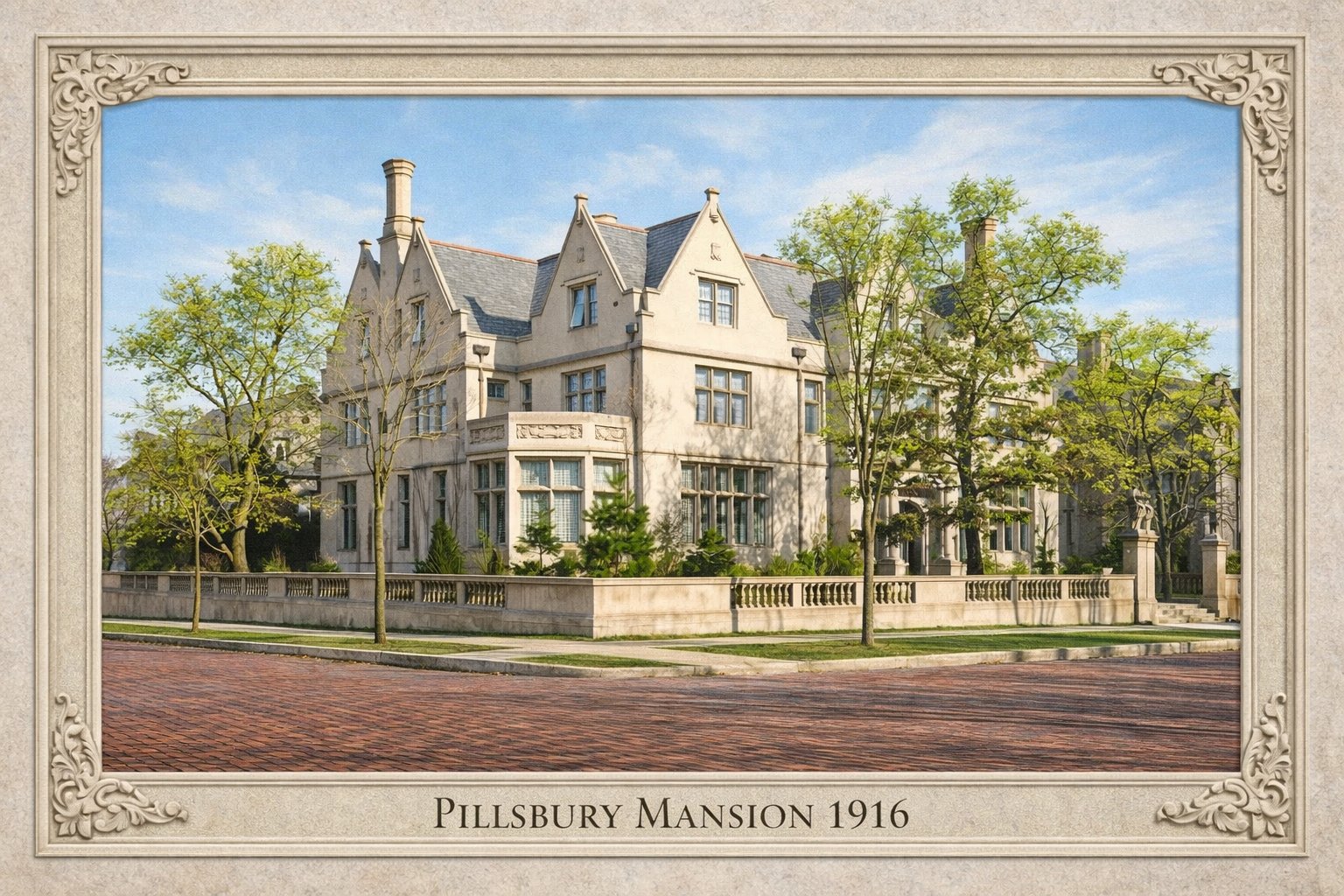
Here is where the house enters the story. The mansion was built by Charles Stinson Pillsbury, completed in 1916, and among the children who grew up under its imported oak ceilings was Philip Winston Pillsbury (1903–1984). Philip was a grandson of company founder Charles A. Pillsbury, and he did not simply inherit a name — he started on the mill floor as a laborer and became a master miller before rising through sales and management. He joined the board in 1928, became president in 1940, and took the chairmanship in 1951.
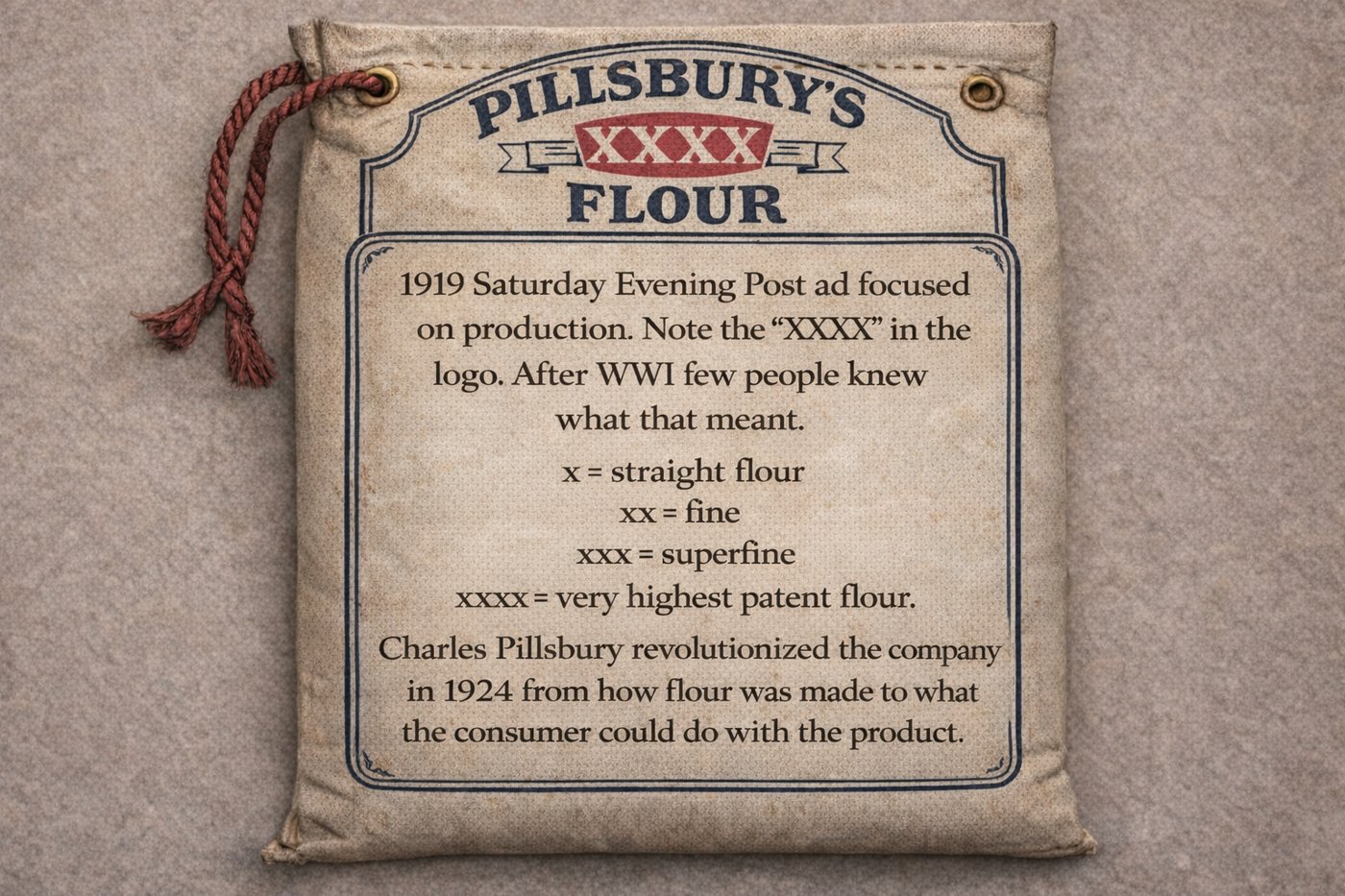
It was during Philip’s long stewardship that Pillsbury pushed hard into the refrigerated-dough business — the “pop it fresh” category that the Doughboy was invented to sell. In other words, the boy who came of age inside a Minneapolis mansion helped steer the company toward the very product that would, a few years later, give the world its most huggable mascot. To understand how a milling family reached that point, it helps to read how the flour empire built the mansion in the first place.
How Poppin’ Fresh became a household name
The Doughboy caught on with startling speed. Within three years of his debut, surveys found he enjoyed an 87 percent recognition rate among American consumers — the kind of number brands spend fortunes chasing. In 1999, Advertising Age ranked him the sixth-greatest advertising icon of the entire twentieth century. He picked up a family, too: a companion named Poppie Fresh in 1973, grandparents and an uncle in 1974, even a dog named Flapjack and a cat named Biscuit.
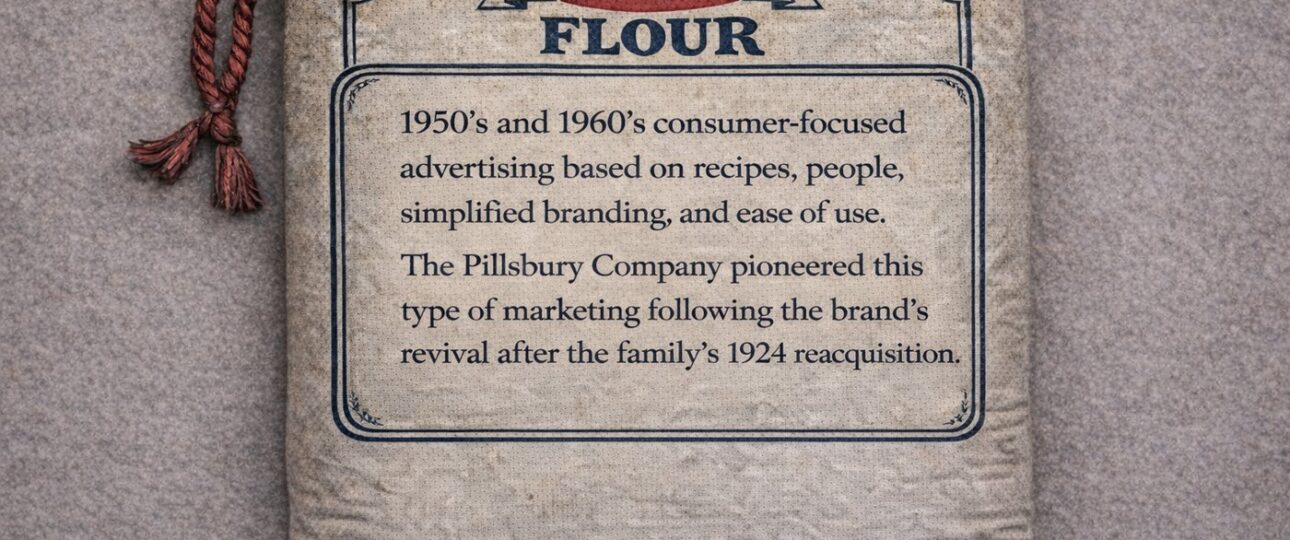
Minnesotans have always felt a particular claim on him. The Hennepin History Museum keeps vintage Poppin’ Fresh dolls in its collection, and General Mills — which now owns the Pillsbury brands — still celebrates his birthday each November. Since 2009 a giant Doughboy balloon has floated through the Macy’s Thanksgiving Day Parade, and today he appears on everything from atta flour in India to frozen pizza in Greece. For the fuller telling of the marketing revolution behind him, see the story of the Pillsbury Company.
From a Minneapolis mansion to America’s kitchens
It is a lovely bit of symmetry. The same family whose fortune imported centuries-old English rooms across the Atlantic — the panelled chambers, the ancient fireplaces, the cathedral glass — also gave America a giggling ambassador of convenience baking. One story is all Old World grandeur; the other is mid-century Main Street. Both begin with Minneapolis flour, and both run through the same address. The Pillsburys were a family of contrasts, as you’ll discover in the family’s own chapter and in the life of Mary Pillsbury Lord, the mansion daughter who took Eleanor Roosevelt’s seat at the United Nations.
You can still stand where that story started. The mansion survives today as the Pillsbury Club and the launch point for Minneapolis Trolley Tours — the best way to roll past the city’s grand old houses and hear the tales behind them. Come take a tour of the house that flour built, and see the rooms where a Doughboy dynasty grew up.
Sources and further reading: Pillsbury Doughboy (Wikipedia), Philip W. Pillsbury (Wikipedia), the Hennepin History Museum, and General Mills.
Keep reading: the Doughboy’s fortune began with an uncle’s handshake — meet John S. Pillsbury, the “Father of the University of Minnesota”.