
How Did a Fireplace That Survived the Great Fire of London End Up in Minneapolis?
Walk into the library of the Charles S. Pillsbury Mansion and your eye is pulled, almost against your will, to the fireplace. It is enormous, blackened in places, carved with saints and heraldry — and it is older than nearly anything else on the North American prairie. The stone was cut in 1476, for a guild of London candlemakers, and the story it carries runs straight through the Great Fire of London itself.
A chimneypiece made for candlemakers
The story begins with the Worshipful Company of Tallow Chandlers, one of London’s ancient livery companies — the men who made and traded tallow candles, the everyday light of the medieval city. In July 1476 the Company bought a merchant’s house on Dowgate Hill and made it their hall. They have been on that same spot ever since, nearly 550 years and counting.
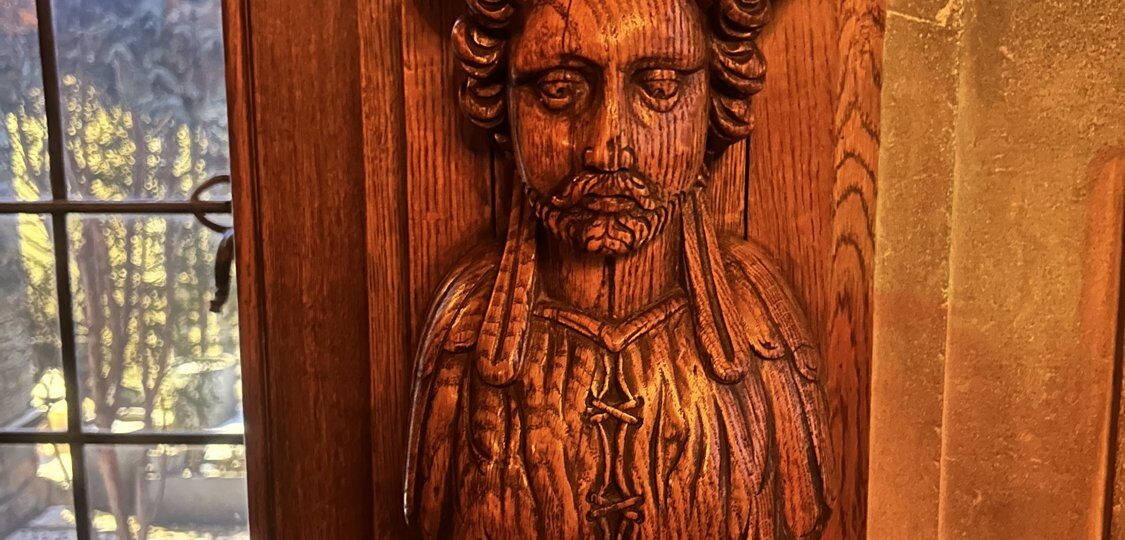
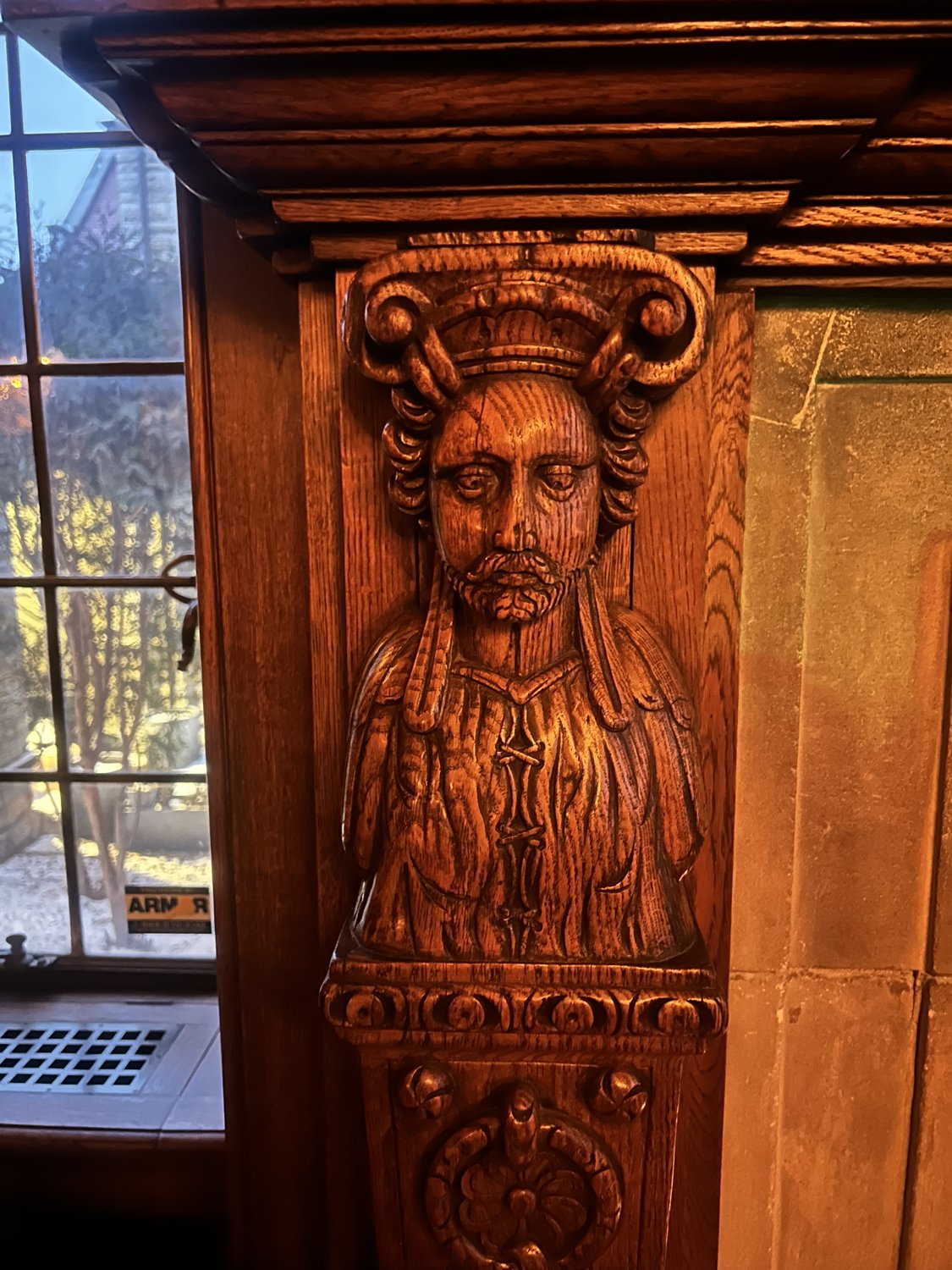
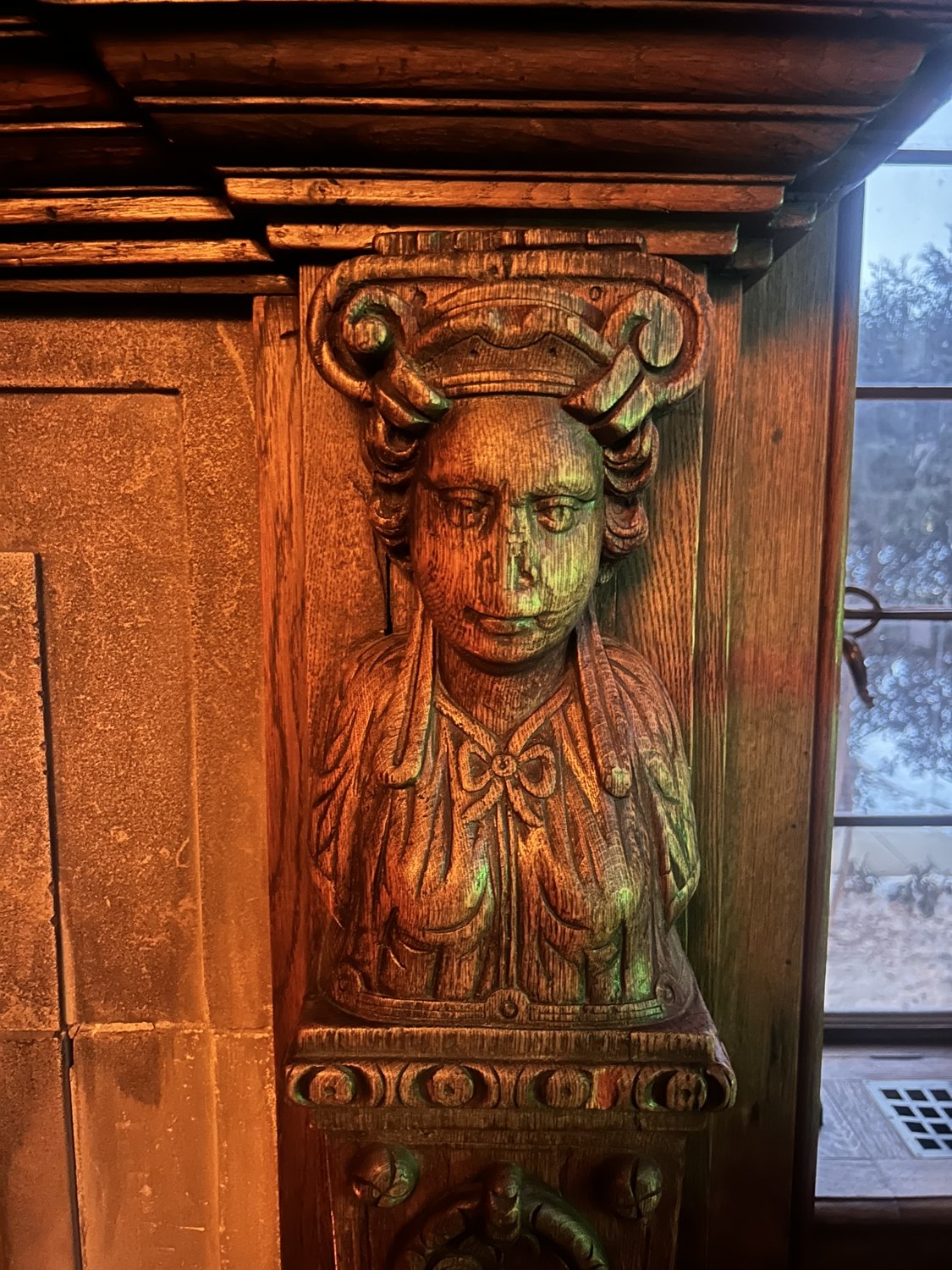
Into their new hall they set a grand stone chimneypiece, carved with the arms the guild had been granted two decades earlier. Those arms were no small thing: the College of Arms records that the Tallow Chandlers received their coat of arms on 24 September 1456, from John Smert, Garter King of Arms, in the reign of Henry VI — among the earliest such grants ever made to a London company. The guild’s patron was Saint John the Baptist, and his severed head appears in the heraldry to this day. Look closely at the carving in the library and you can still find him, presiding over the hearth.
The night the city burned
Then came September 1666. The Great Fire tore through the medieval city for four days, consuming some 13,000 houses, 87 churches, and the homes of livery companies up and down the riverside. The Tallow Chandlers were not spared — the fire destroyed their hall along with more than two dozen other properties the Company owned. A new hall rose from the ashes in 1672, and that rebuilt hall still stands near the Thames.
What of the stone chimneypiece carved in 1476? By the mansion’s own account, the heavy stone survived the flames that gutted the hall around it — and when the guild later updated its arms, the older, “outdated” fireplace was sold off. From London it traveled north to Chester, where it warmed another guildhall for roughly 250 years. Stone, it turns out, is a stubborn survivor.
How it crossed an ocean to Minneapolis
Around 1913, the fireplace caught the eye of the great American collectors. As the mansion’s history tells it, the newspaper magnate William Randolph Hearst — forever feeding his castle at San Simeon — wanted it too. But the prize went instead to Charles Stinson Pillsbury, the Minneapolis flour heir then assembling whole rooms of genuine old England for the manor he was about to build. A legal tussle followed; the fireplace stayed put. (We tell that story with a wink — provenance lore from a century ago is half fact, half legend, and we love it for both.)
The man who made it all possible was the London dealer Charles Joel Duveen, known in the trade as “Charles of London.” He was the supplier behind nearly every ancient treasure in the house — the Rotherwas oak and staircase, the Tudor plaster ceilings, the cathedral stained glass, and this very chimneypiece. You can read more about the Duveen dynasty and the Gilded Age art trade that emptied England’s great houses to furnish America’s new fortunes.
When the mansion was completed in 1916 at 100 East 22nd Street, the chimneypiece was set into the library — one of the seven splendors that make this house not a copy of a great English home but, in many rooms, an actual one, reassembled stone by stone on the prairie. Curious how the whole improbable thing was engineered? The story of building the mansion is its own marvel of steel and craft.

Come stand in front of 550 years of history
It is one thing to read that a fireplace outlasted the Great Fire of London. It is another to stand in front of it, run your eye over the saint’s worn face, and realize the stone was already two centuries old when London burned. The mansion — now home to the Pillsbury Club and the launch point for Minneapolis Trolley Tours — keeps stories like this in every room, and the best way to meet them is in person.
The mansion has been on the National Register of Historic Places since 1974, and it is one of the last grand survivors of a vanished avenue of Minneapolis’s empire-builders. Book a tour of the Pillsbury Club and come see the fireplace that refused to burn.