
Did the Pillsbury Mansion Get William Randolph Hearst’s $50,000 Fireplace by Mistake?
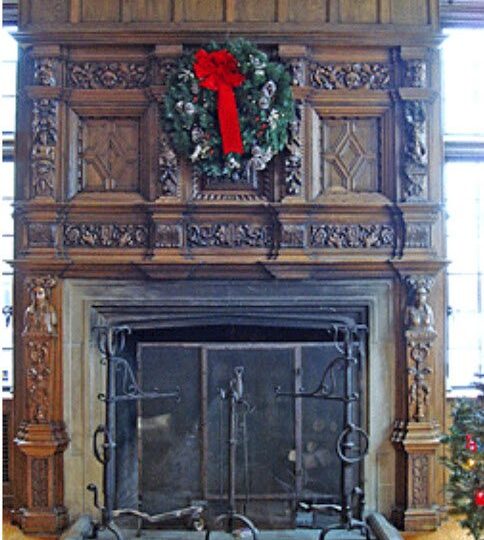
Every great house has one story the guides save for last, the one that makes visitors lean in. At the Pillsbury Club, it is the tale of a fireplace — a hearth so expensive, and so fiercely wanted, that two of America’s richest men ended up fighting over it in court. One was a Minneapolis flour heir building the finest English manor the prairie had ever seen. The other was William Randolph Hearst, the newspaper colossus who would soon raise a castle of his own on a California hilltop. The question that still hangs in the air a century later: did the Pillsburys end up with Hearst’s fireplace by mistake?
A $50,000 hearth in 1915 money
Start with the number, because the number is the whole point. According to a Minneapolis Star account from March 1940, William Randolph Hearst paid $50,000 for an imported fireplace destined for one of what he cheerfully called his “chummy little castles.” Fifty thousand dollars in the mid-1910s is not a misprint and not a flourish — run it through an inflation calculator and it lands north of $1.6 million in today’s money. For a single fireplace. That figure alone tells you what kind of men we’re dealing with, and what kind of house was rising at 100 East 22nd Street.
Two collectors, one dealer
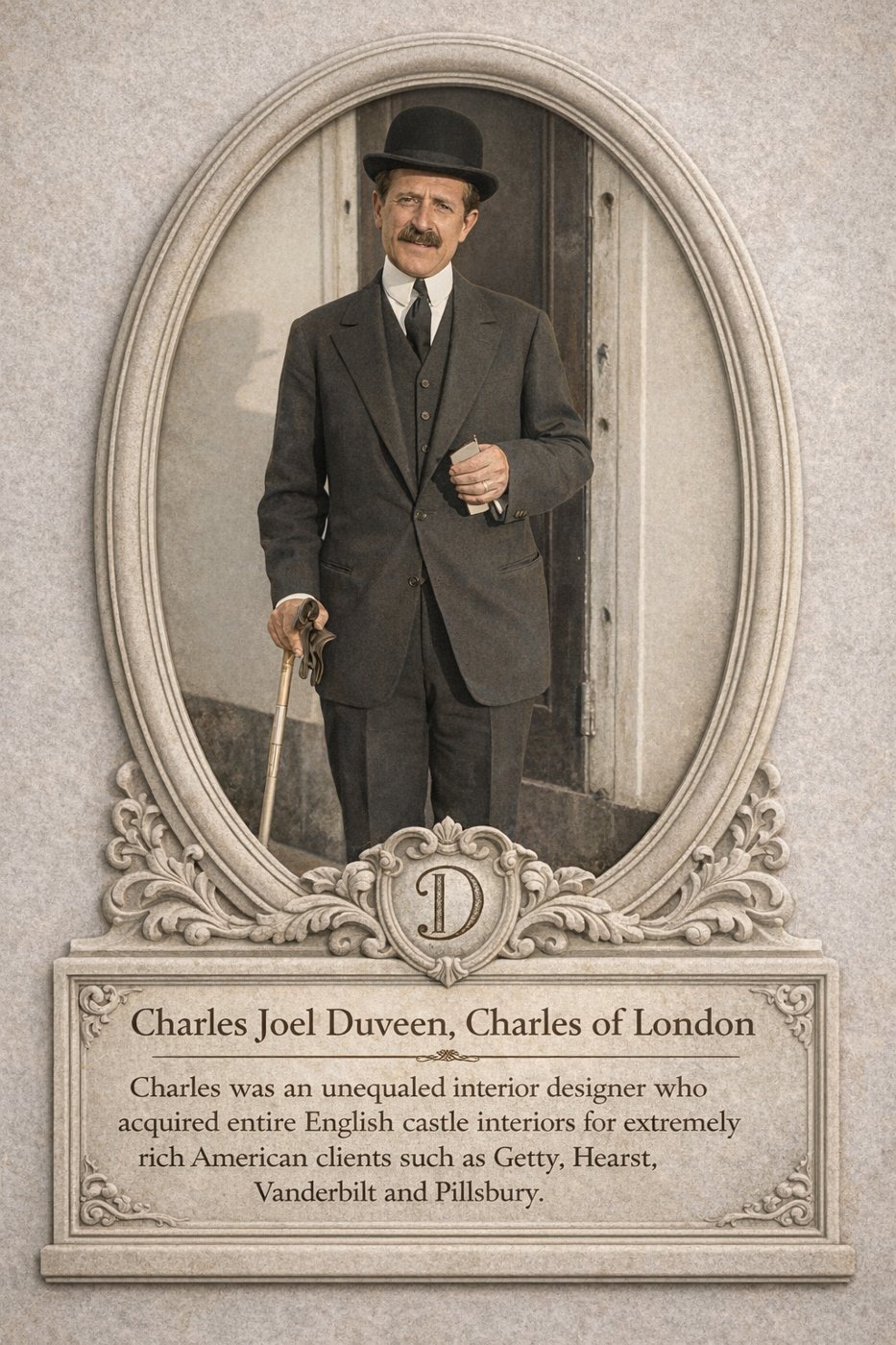
To understand how the same fireplace could belong to two men, you have to understand the world that sold it. In the early twentieth century, England’s old houses were being broken up, and a brilliant London dealer named Charles Joel Duveen — better known as “Charles of London” — made a fortune buying their finest interiors and shipping them across the Atlantic to America’s wealthiest buyers. His client list was a who’s who of the Gilded Age: J. Paul Getty, the Vanderbilts, William Randolph Hearst, and Charles S. Pillsbury. The same hands that dressed the Pillsbury mansion in centuries-old oak were also feeding Hearst’s legendary appetite.
And Hearst’s appetite was something to behold. Cataloguers later nicknamed him the “Great Accumulator.” Over the years he bought more than thirty ceilings, doorcases, fireplaces and mantels out of Europe — along with entire monasteries, paneling, and even a medieval barn — warehousing the overflow in the Bronx because his half-dozen residences couldn’t hold it all. Much of it ended up at San Simeon, the hilltop palace we now call Hearst Castle, where antique hearths from French châteaux and Italian palazzi were rebuilt stone by stone. A man buying fireplaces by the dozen is exactly the sort of man who might lose track of one.
The mix-up at the docks
Here is the story as the mansion has long told it. Just before the Pillsbury house was finished, Hearst bought his $50,000 fireplace. Word of the extraordinary purchase reached Minneapolis, and the Pillsburys — not to be outdone — ordered a duplicate for their own new home. But their mansion was completed first. And when the crates were sorted, the importer made a costly slip: the original Hearst fireplace was shipped to Minneapolis and installed in the Pillsbury house, while the copy presumably went west.
Hearst, the story goes, found out. He sued the importer — and, being Hearst, he collected. The Pillsburys kept the fireplace. So whether by purchase or by accident, the family ended up with a $50,000 hearth either way: if it was the original, they got Hearst’s; if it was the duplicate, they got exactly what they paid for. A no-lose proposition, settled in oak and stone, with a newspaper baron left to argue it out with a shipping clerk.
How much should we believe?
A good host owes you honesty along with a good story. This tale comes down to us from a single 1940 newspaper account, recalled a quarter-century after the fact, and the fine details — which room, which fireplace, the precise terms of the lawsuit — have blurred with time. What we can stand behind is the world that made the story plausible: Charles of London really did supply both the Pillsburys and Hearst; Hearst really did buy imported fireplaces by the score and really did spend sums like this; and the Charles S. Pillsbury House, completed in 1916, really was filled with genuine centuries-old English interiors. The bones of the legend are entirely in character. We simply can’t certify the docks mix-up to the letter — which, honestly, is what makes it worth telling.
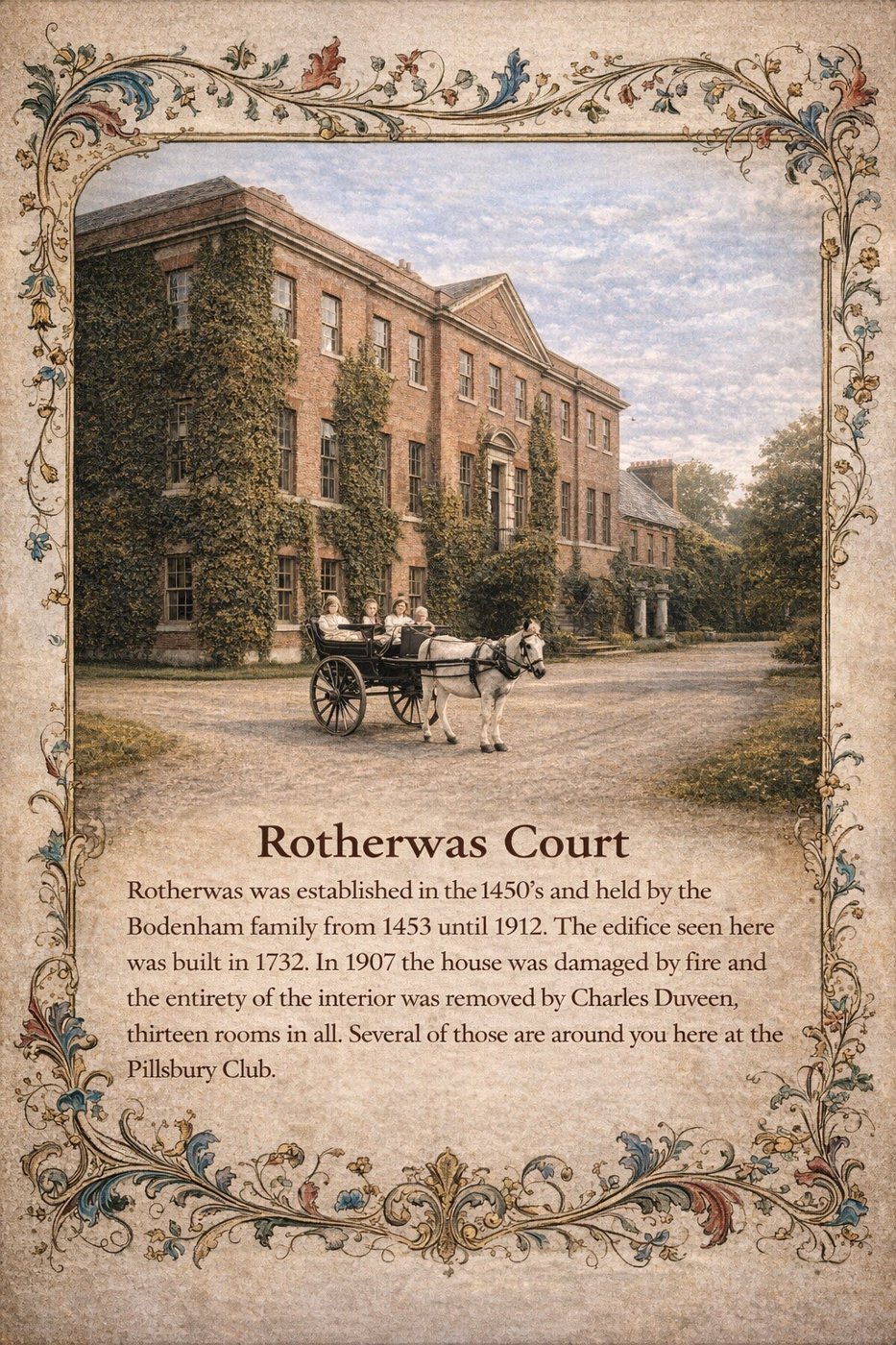
It also sits comfortably beside the mansion’s other documented treasures: the library chimneypiece that survived the Great Fire of London in 1666, the lounge overmantel carved with a Tudor marriage crest from Devon, and the Rotherwas oak that traveled here through the Duveen dealers. You can wander the whole collection in The Splendors. In a house where the fireplaces have biographies, a hearth that a newspaper king once owned fits right in.
Come stand by the fire
The best way to weigh the legend is to stand in front of the stonework yourself and decide what you believe. The Pillsbury Club is home to the Minneapolis Trolley, and year-round tours of the mansion bring you face to face with the imported fireplaces, the carved oak, and the ancient glass — the whole improbable inventory of an English manor airlifted to Minnesota. Make a weekend of it: settle in at the historic 300 Clifton bed & breakfast in Loring Park, or take a downtown base at Oakland’s on 9th. Then book your tour and come argue with us about whose fireplace it really is.