
Who Were the Duveen Brothers, the Art Dealers Behind the Pillsbury Mansion?
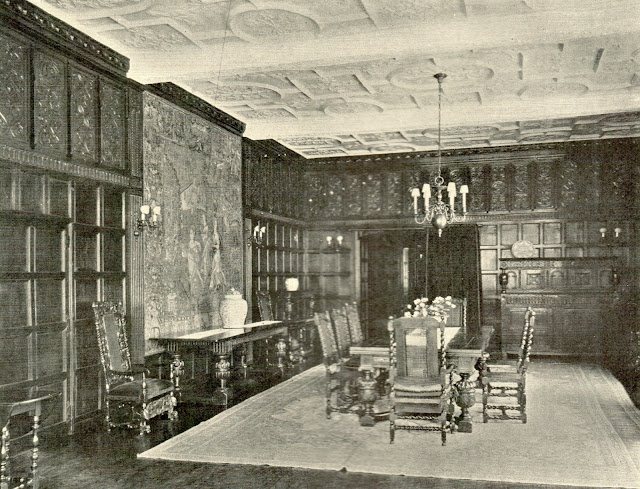
Walk into the Charles S. Pillsbury Mansion today and you are standing inside the handiwork of the most formidable art-dealing family of the age. The carved oak, the Tudor plaster, the ancient glass — none of it was made in Minnesota, and almost none of it would be here without a single, remarkable surname: Duveen. To understand this house, you have to meet the brothers who supplied it.
The most famous art dealer of the Gilded Age
The name that history remembers is Joseph Duveen, later Lord Duveen of Millbank (1869–1939). He built his fortune on a single, ruthless observation — that Europe had a great deal of art, and America had a great deal of money — and he spent forty years moving the one toward the other. His clients were the titans: Henry Clay Frick, J. P. Morgan, Henry Huntington, Samuel Kress, and above all the financier Andrew Mellon.
The scale is hard to overstate. The National Gallery of Art in Washington — founded on Mellon’s collection — today lists thousands of works that once passed through Duveen’s hands. He paid for sculpture galleries that still bear the Duveen name at Tate Britain and at the British Museum. If you have ever admired an Old Master in an American museum, the odds are uncomfortably good that Joseph Duveen sold it first. You can read the fuller arc of his career in the biographical record and in Britannica.
A different kind of Duveen
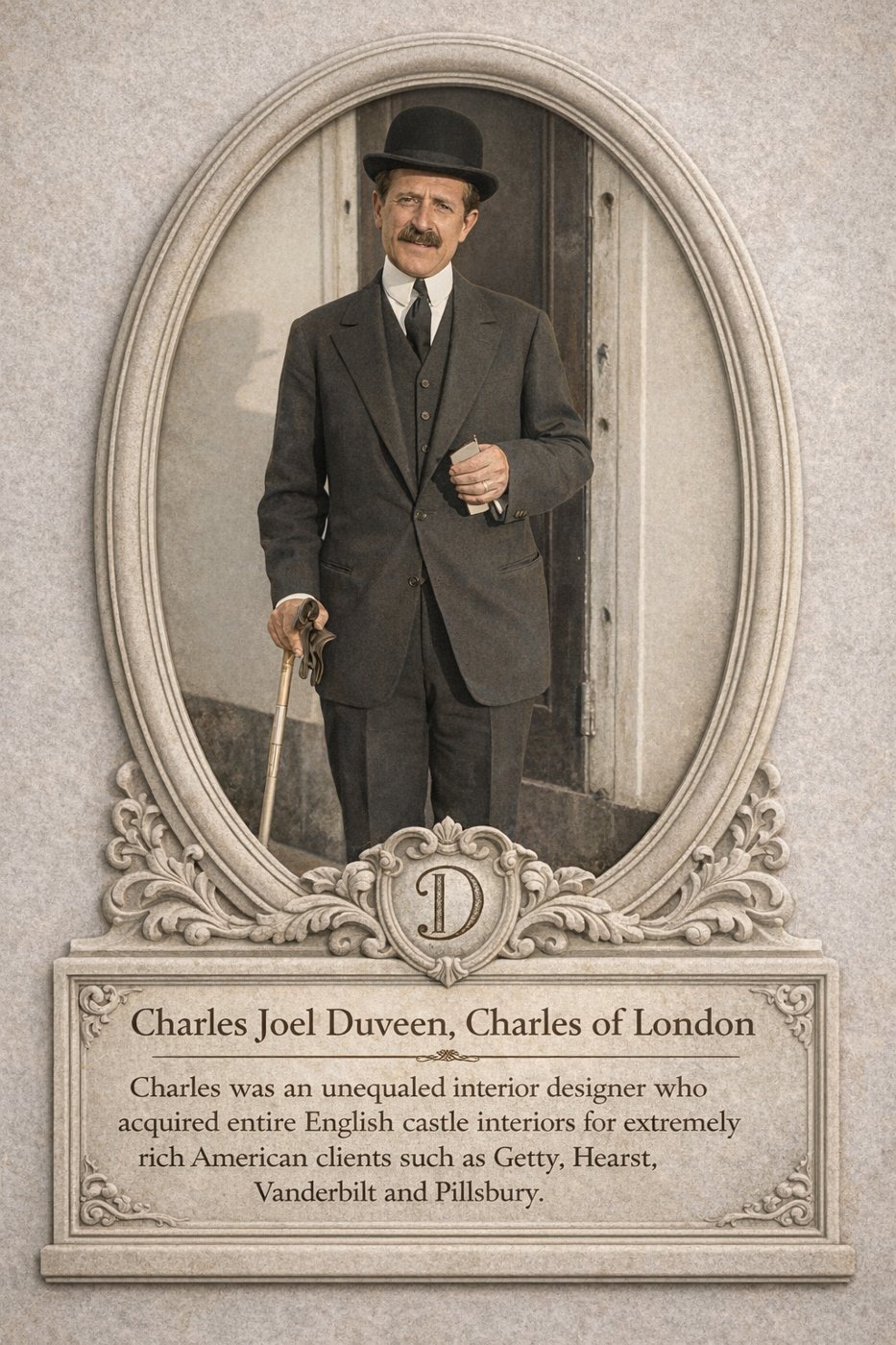
But the brother who matters most to this mansion was not Joseph. It was Charles Joel Duveen (1871–1940), who in 1908 broke away from the family firm and traded under a name connoisseurs would soon know on both sides of the Atlantic: Charles of London. Where Joseph chased paintings, Charles fell in love with the fabric of old houses themselves — the paneling, the plaster ceilings, the carved staircases, the leaded glass.
He all but invented the American taste for Tudor and Elizabethan interiors, and he wrote the standard reference on the subject, a folio titled Elizabethan Interiors. When palaces went out of fashion in England, Charles bought their rooms by the crateload and shipped them across the ocean to clients who wanted instant, authentic antiquity. Among his customers was William Randolph Hearst, to whom he reportedly sold a single Devonshire room — said to have been used by King Charles I — for $150,000 in 1927.
How the Duveen trade reached Minneapolis
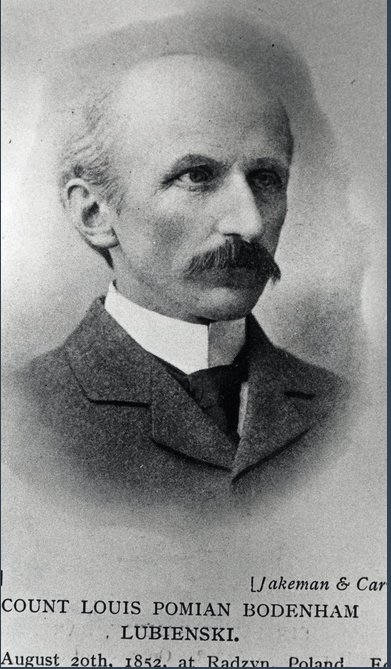
In 1913, Charles pulled off the coup of his career: he bought the interiors of Rotherwas, the ancient seat of the Bodenham family near Hereford. The sale was so contentious that English newspapers protested the loss, and the news was cabled to New York. Charles dismantled the great house’s staircase, paneling, ceilings, and front door — and, with modifications, had them installed in a brand-new mansion rising at 100 East 22nd Street in Minneapolis, completed in 1916.
The buyer was Charles S. Pillsbury, of the great milling family — and he did not always have the field to himself. For several of the house’s treasures, Pillsbury was bidding against Hearst himself. The splendors that Charles of London gathered here read like a museum inventory: the Rotherwas oak and staircase, Tudor plaster ceilings, a Tallow Chandlers fireplace that survived the Great Fire of London, the Walrond marriage fireplace from Bovey House, and panels of ancient cathedral glass.
Why the story still matters
Charles closed his London branch in 1933 and retired, in failing health, in 1938; he died in 1940, a year after his celebrated brother Joseph. The Duveen empire dissolved, but the rooms they assembled endure — and few survive as completely as the ones here. While Minneapolis lost most of its other great mansions to the wrecking ball, this one was saved, listed on the National Register of Historic Places in 1974, and is now home to the Pillsbury Club. You can read more about the dynasty on our full Duveen brothers page.
See the Duveen treasures for yourself
The best way to understand the Duveen trade is to stand inside it. The Pillsbury Club opens its centuries-old rooms for year-round tours, and the mansion is also the launch point for Minneapolis Trolley Tours — a vintage ride through the history of the old avenue and the city that milled the world’s flour. Plan your visit to the Pillsbury Club and walk through a house that an ocean of money and one extraordinary family built.