
Why Is There a Castle on Park Avenue Near the Pillsbury Mansion?
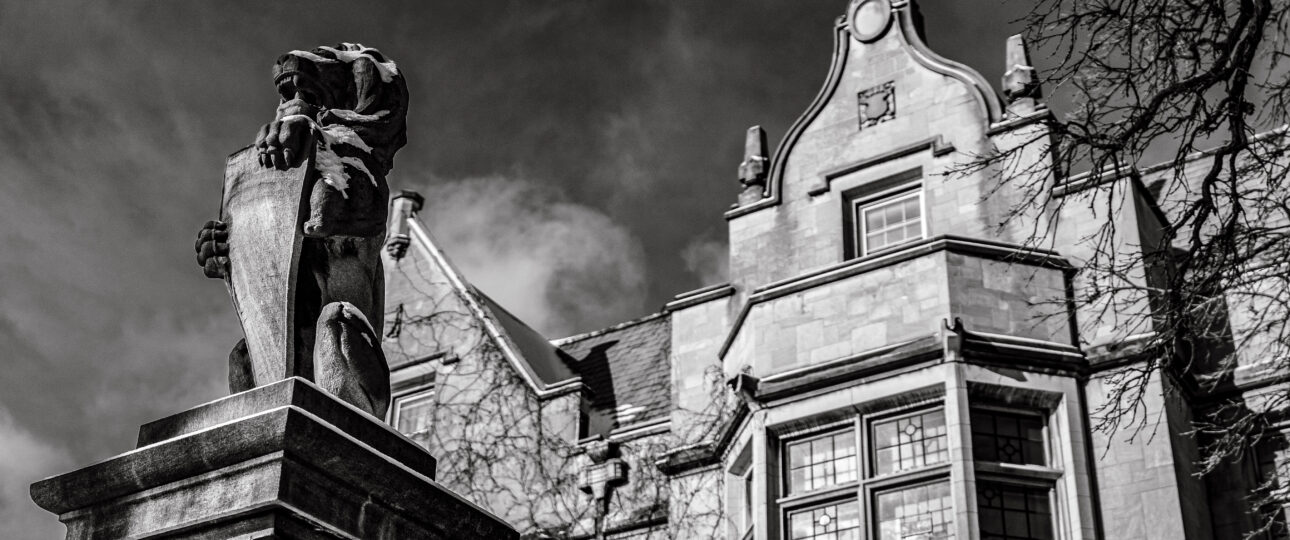
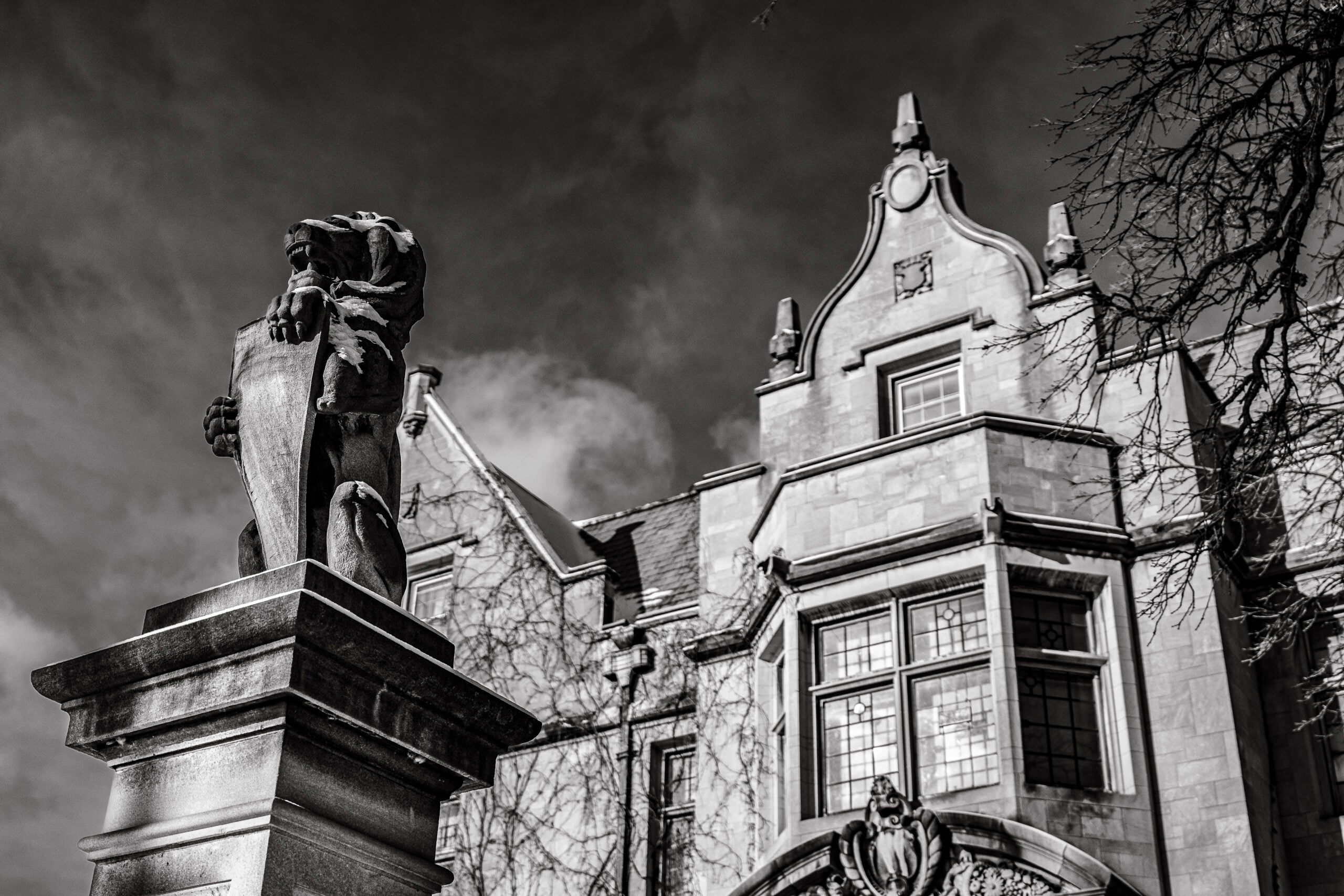
Drive south on Park Avenue and, somewhere around 26th Street, the street stops making sense. A turret rises out of the boulevard trees. Gargoyles lean off the eaves. It is cut from pale Indiana limestone and looks lifted out of the Loire Valley. Locals simply call it the Castle.
It stands less than a mile from our own front door at 100 East 22nd Street — and its story is very nearly the mirror image of ours.
The Newspaperman Who Almost Built in Loring Park
The Castle belongs to Swan Turnblad, and Turnblad did not arrive in Minneapolis with a fortune. According to the Minnesota Historical Society’s MNopedia entry, he was born in 1860 in Vislanda, in the Swedish province of Småland, and came to America with his farming family in 1868 after a run of bad harvests. The family settled at Vasa, in Goodhue County; in 1879, at nineteen, Swan moved to Minneapolis and took work setting type.
In 1886 he became manager of the ailing Swedish-language weekly Svenska Amerikanska Posten. He was ruthless about technology — the first Swedish publisher in America to set his paper on a Linotype machine — and the circulation followed: roughly 1,400 readers when he took over, 40,000 by the turn of the century, 55,000 by 1915.
Here is the detail that always stops us. In 1899, flush with newspaper money, Turnblad bought land that extended into what is now Loring Park and set about building there. The Minneapolis Park Board objected. The fight went all the way to the Minnesota Supreme Court, and Turnblad lost. Had it gone the other way, the Castle would be standing in the same leafy blocks where our sister house, the 300 Clifton mansion, keeps its garden gate today.
Instead he bought six lots on Park Avenue.
Six Lots, Five Years, Thirty-Three Rooms
Planning began in 1903. The Minneapolis firm of Christopher Boehme and Victor Cordella drew a Châteauesque pile of 33 rooms, and construction ran nearly five years; the family moved in during 1908. The American Swedish Institute, which occupies the house today, notes that the limestone came from the same quarry that later supplied the Empire State Building.
Inside are eleven kakelugnar — tall Swedish tile stoves, shipped from Sweden — and a painted-glass Visby Window presiding over the Grand Hall. Nobody knows what it cost. The Turnblads took no mortgage and paid the bills as they came due, so no construction ledger survives; the figures you see quoted are guesswork.
Two Castles, Two Opposite Ideas of Europe
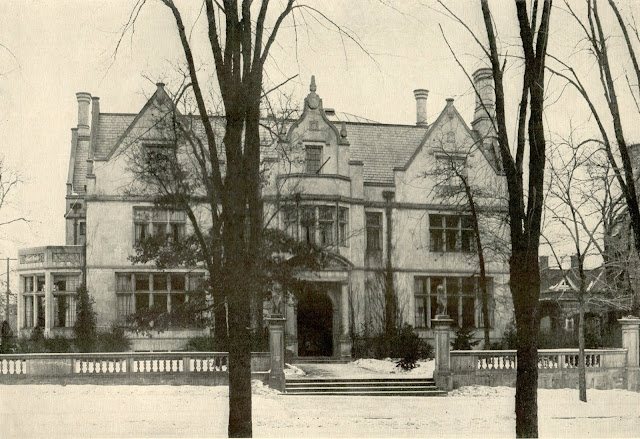
Eight years after the Turnblads moved in, Charles S. Pillsbury finished his own house up the hill. The two projects answered the same question — how does a young city acquire an old world? — in opposite ways.
Turnblad had Europe carved — new stone, new plaster, new gargoyles, executed in Minneapolis by master craftsmen working in a French idiom.
Pillsbury bought the real thing and had it shipped. Through the London dealer Charles Joel Duveen — trading as Charles of London — genuine centuries-old English interiors crossed the Atlantic and were reassembled here: oak and a staircase traced to Rotherwas Court in Herefordshire, a Tallow Chandlers fireplace that outlived the Great Fire of London, ancient cathedral glass. You can read how the pieces were fitted together in Building the Mansion, and what arrived in the crates in The Splendors.
One man commissioned a memory. The other imported one.
The House Nobody Quite Lived In
For all its grandeur, the Castle was barely a home. It is believed the house was never fully furnished, and after 1915 the Turnblads spent most of their time in an apartment across the street. In 1929 Swan handed over both the mansion and the newspaper to found the American Institute of Swedish Arts, Literature and Science — today the American Swedish Institute. Asked why so small a family had wanted so large a house, he said only that perhaps people could guess now. He served as the Institute’s first president until his death in 1933.
The Pillsburys, by contrast, actually lived at 100 East 22nd Street — a working household with children, staff and decades of ordinary evenings. You can meet the family and the tenants who came after them in The Owners.
Why Both Are Still Standing

Park Avenue was once called the Golden Mile, lined with the houses of milling and lumber money between 1885 and 1921. The Turnblad Mansion is one of only eight structures from that era still standing. Third Avenue South fared no better; we told that story in The Last Mansion Standing.
Both survivors were saved the same way: they stopped being houses. The Castle became a museum in 1929 and was listed on the National Register of Historic Places in 1971. This house passed through a Lutheran seminary, the Carmichael Lynch advertising agency and BLIND Inc. before becoming the Pillsbury Club, and joined the Register in 1974 — the story is in Is the Pillsbury Mansion on the National Register?
The mansions that stayed private are parking lots now. The ones that found a second job are still here.
See Both in One Afternoon
Spend a morning at the American Swedish Institute — Meet Minneapolis has a good visitor guide, and there is more background on the Institute’s history and on Turnblad himself — then come north to us and see what the other approach looks like.
Book a mansion tour at the Pillsbury Club, or roll out through the neighborhood with Minneapolis Trolley Tours, which departs from our door. Plan your visit — the oak is four hundred years old and it does not mind an audience.
Keep reading: the Turnblad castle is only one landmark on this stretch of the city — see where else in Minneapolis you will find the Pillsbury name, from a stone hall on the old university campus to a bronze by the sculptor of the Lincoln Memorial.