
Where Did the Walrond Family Live? Bradfield House in Devon and the Family Behind the Pillsbury Mansion’s Marriage Fireplace
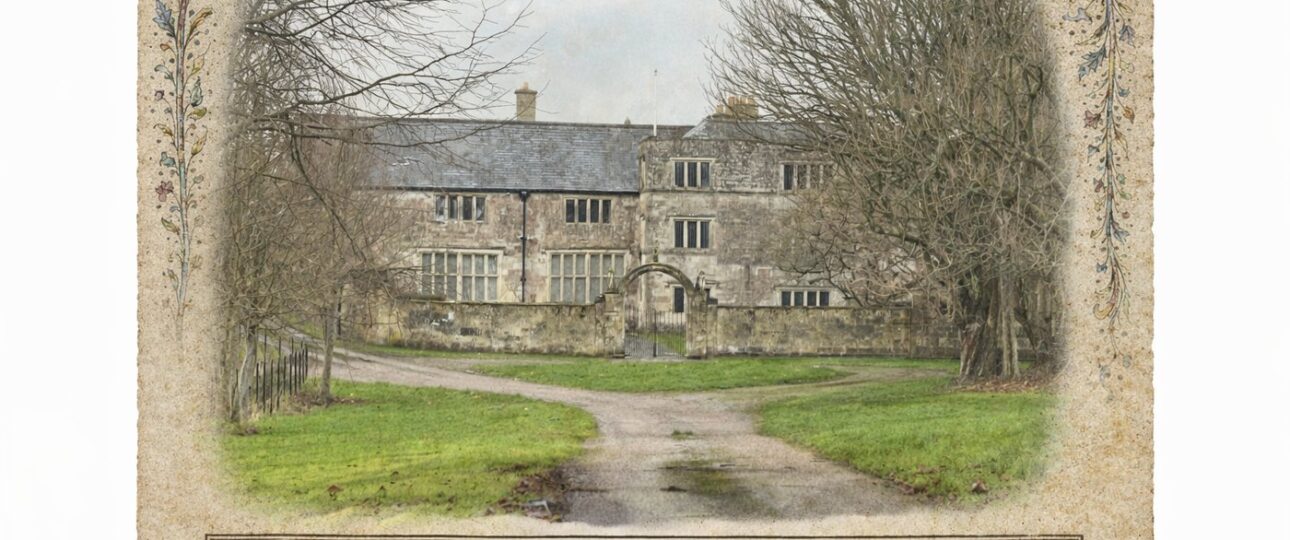
Walk past the carved oak fireplace in the Pillsbury Mansion that joins two family crests, and you are looking at the Walrond family of Devon. We have told that story already in Whose Marriage Is Carved Into the Pillsbury Mansion’s Oak Fireplace. But where did the Walronds actually live? The answer is a Grade I listed house called Bradfield, and it is worth a detour.

Where Is Bradfield House?
Bradfield House sits in the parish of Uffculme in Devon, about two miles south-west of Uffculme village, according to Wikipedia’s entry on the house. The same entry says Bradfield was the principal seat of the Walrond family from the 13th century until the early 20th century, and that Richard Walrond was lord of the manor by the reign of Henry III.
That is a very long tenure. The Walronds we meet in the mansion’s fireplace were one branch of a family that held this land for roughly seven centuries.
What Is Special About the Hall?
The heart of the house is a great hall from the early to mid 16th century. The listing text, reproduced on British Listed Buildings, describes a four-bay hall with a painted legend reading “VIVAT E REX” at the dais end, and a hammerbeam roof it calls one of the finest of its kind in Devon. The house was first listed as Grade I on 24 October 1951; you can find the official record on the Historic England list entry.
Why Does 1592 Matter Here?
The listing notes two datestones, 1592 and 1604, marking a remodelling that turned the higher end of the house into a cross-wing holding the drawing and dining rooms. Wikipedia attributes the Oriel Room to 1592 and the small square porch to 1604.
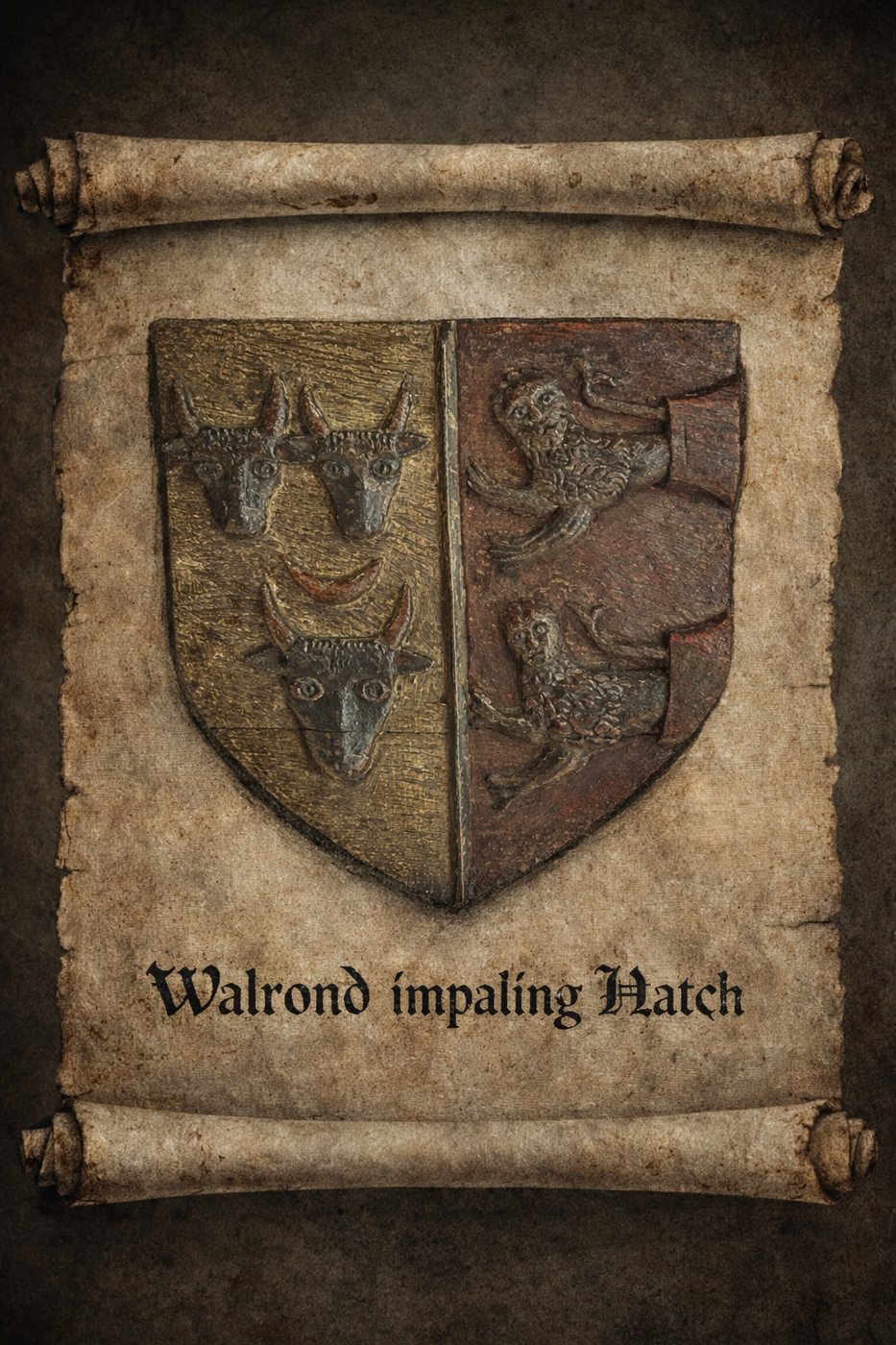
Here is the part that makes a Minneapolis reader sit up. The Pillsbury Mansion’s Walrond fireplace is dated to 1592 as well: that was the year John Walrond married Jane Hatch and remodelled Bovey House at Beer. Two Walrond building projects in the same year is a lovely coincidence, but we have not found a source that ties the Bradfield datestone to the same John Walrond, and the family was large. So we will leave it as a coincidence of dates rather than a claim.
What Happened to the House Over the Centuries?
Wikipedia records that in November 1688 a general of William of Orange used Bradfield as a headquarters after William landed at Torbay. Around 1860, Sir John Walrond Walrond greatly enlarged the house to designs by the architect John Hayward, adding a service wing and a new south entrance front; the work almost doubled its size. The baronetcy “of Bradfield” was created in 1876, and the barony of Waleran in 1905. The male line and titles became extinct in 1966.
After the Walronds left, the house served for years as a residential school, which Wikipedia says closed on 23 July 1997; it is now maintained as a private residence. (Some older listing text still calls it a school, so check before you plan a trip. It is not a public attraction we can vouch for.)
How Does This Connect Back to the Pillsbury Mansion?
Charles S. Pillsbury’s 1916 house was filled with English interiors sold through Charles Joel Duveen, “Charles of London.” You can read how that trade worked on our page about Charles of London and see the full collection on The Splendors. Bradfield is the home that explains who the Walronds were; the fireplace in Minneapolis is the piece of that story you can stand in front of.
Want to see the Walrond fireplace for yourself? Plan your visit to the Pillsbury Club and book a mansion experience. You can browse more mansion stories in the History Journal.
Keep reading: What Is the Narrated Scenic Trolley Tour at the Pillsbury Club? A Guided Sightseeing Ride Through Minneapolis