
Why Did 10,000 Schoolchildren Pull a House Across Minneapolis in 1896?
On the morning of May 28, 1896, Minneapolis declared a holiday, and the strangest parade in the city’s history began to move. There was no float, no brass band worth remembering — just a small white farmhouse creaking down Minnehaha Avenue on wheels, steadied by teams of horses and hauled, in relays, by roughly ten thousand schoolchildren gripping two 600-foot ropes. The children of Minneapolis were towing their city’s birthplace to safety. And decades later, the granddaughter of the man who built that little house would preside over the grandest mansion Minneapolis ever raised — the Charles S. Pillsbury Mansion at 100 East 22nd Street.
The house where Minneapolis was born
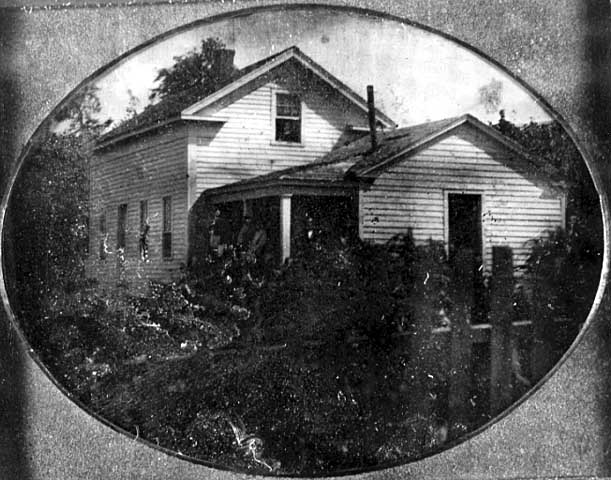
In 1850, a Vermont-born colonel named John Harrington Stevens built a modest wood-frame house beside St. Anthony Falls — the first authorized house on the west bank of the Mississippi, on land that still belonged to the Fort Snelling military reservation. The army let him stay in exchange for running a ferry across the river at the falls. What happened inside that plain little parlor over the next five years beggars belief: the name Minneapolis was chosen there, Hennepin County was organized there, the city’s first school district took shape there, and the idea for what became the Minnesota State Fair was first raised under its roof. Minneapolitans have called it “the birthplace of Minneapolis” ever since.
Ten thousand small hands on the ropes
By the 1890s the city that had been christened in the Stevens parlor had swallowed it whole. The house had been shunted from lot to lot as downtown grew, and it was headed for the scrap heap when the Minneapolis Journal took up its cause, put up the money to buy it, and proposed something wonderful: let the city’s schoolchildren save it themselves.
So on that May morning in 1896, students from first grade through twelfth were let out of school and organized into seven relay teams along the six-mile route to Minnehaha Park. Each team took its turn on the ropes — with horses hitched to the wheels for the moments young strength failed — dragging the house stage by stage down Minnehaha Avenue while crowds cheered from the curbs and rival high schools fought over whose banner flew from its second-story window. The Hennepin History Museum preserves accounts of the day, and the story of the 10,000 children has become one of the city’s founding legends — perhaps the only landmark in America delivered to its museum site by elementary schoolers.
The pioneer’s granddaughter, the mansion’s lady
Here is where the little farmhouse and the great mansion join hands. Colonel Stevens’s daughter, Katharine, married into the Winston family, and her daughter — Helen Pendleton Winston, known all her life as Nelle — married Charles Stinson Pillsbury of the flour dynasty. When Charles raised his Elizabethan manor across from Washburn Fair Oaks Park in 1916, filling it with centuries-old English oak and stained glass, its hostess was the granddaughter of the man in whose parlor Minneapolis had been named. The city’s beginning and its gilded zenith, two houses, one bloodline.
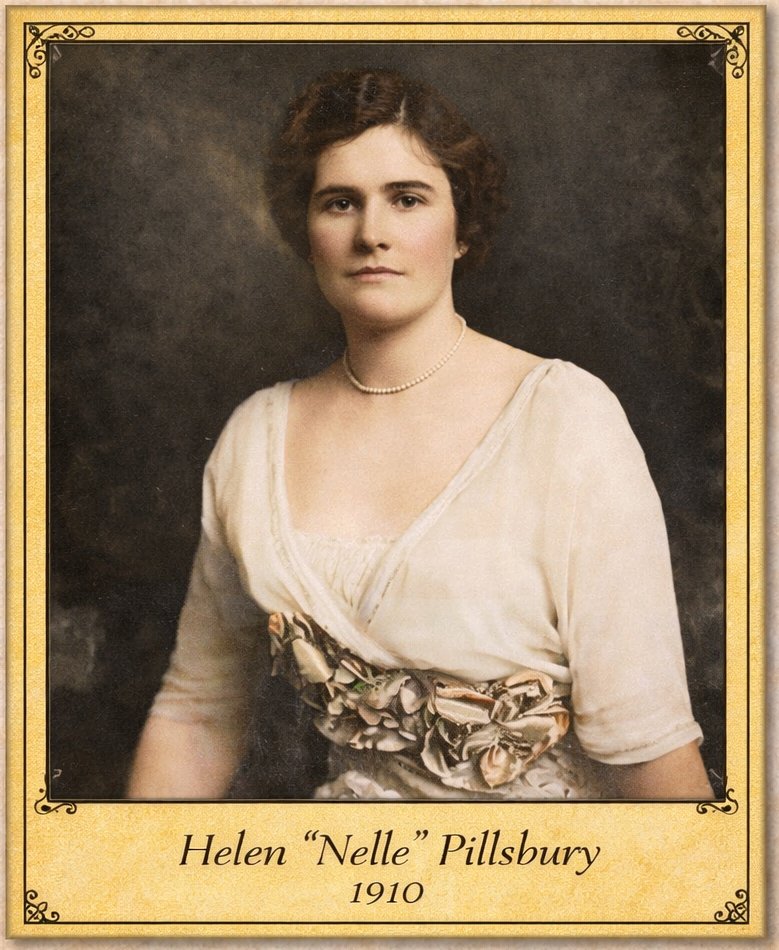
Nelle never let the connection fade. She commissioned genealogists to produce a two-volume ancestry of Colonel John Harrington Stevens, still held by the New Hampshire Historical Society — a flour queen’s tribute to a grandfather who had arrived at the falls with little more than a ferry contract. You can read more about the family she raised in the mansion on The Pillsbury Family, and about the city as she knew it in our portrait of Minneapolis in 1916.
Where the little house stands today
The John H. Stevens House still sits where the children left it, in Minnehaha Park near the falls. It has needed rescuing more than once since — a string of arson fires in 2022 gutted parts of the interior, and the Minneapolis Park and Recreation Board has since repaired the building. Check the Park Board’s page for its current visiting status before you make the trip; the house has spent 130 years being saved by Minneapolitans, and it is not done being cared for yet.
Two houses, one story
Stand in the Pillsbury mansion’s carved oak rooms today and you are standing at one end of a rope that stretches back to a farmhouse parlor beside the falls — with ten thousand schoolchildren pulling somewhere in the middle. Come walk it yourself: plan a visit to the Pillsbury Club, join a year-round mansion tour, or see the whole sweep of the city’s story from the seats of a Minneapolis Trolley Tour — which departs, fittingly, from the mansion door.
Keep reading: Which Other Minneapolis Buildings Did the Pillsbury Mansion’s Architect Design?