
Which Gilded Age Mansions in Minneapolis Can You Actually Tour Inside?
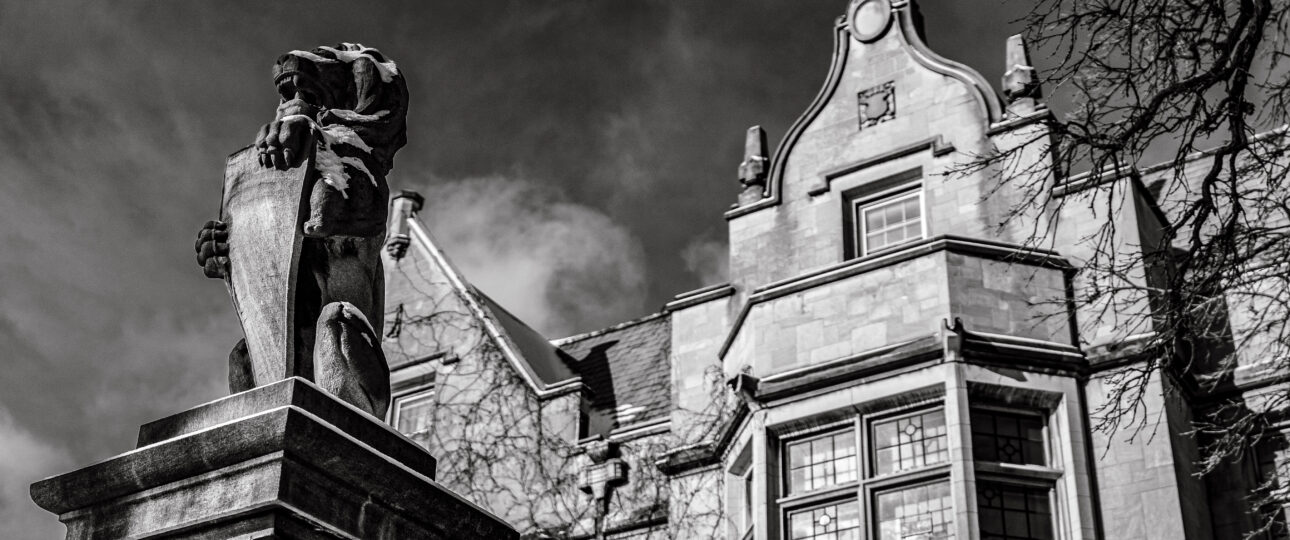
Drive down Park Avenue, or Mount Curve, or the quiet blocks around Twenty-Second Street, and you pass a dozen fortunes in stone. Turrets. Limestone. Leaded glass going dark at dusk. And almost all of it is admire-from-the-sidewalk only.
Which is why the question we hear most often is not where are the mansions. It is: which ones can I actually go inside?
The short answer
Minneapolis has hundreds of Gilded Age houses and a very short list of ones open to visitors. The Gilded Age Mansion Tour exists to close that gap: a narrated trolley route past the great houses of the lumber, grain, and milling families — the Van Dusens, the Semples, the Washburns, the Winton house by George Washington Maher — with interior access to a pair of them. Tickets start at $52.
Two of those interiors are worth knowing about in detail, partly because they are open year-round, and partly because they share an architect.
The Pillsbury Mansion, 100 East 22nd Street
The house exists because of a coin toss. Around 1912, Charles S. Pillsbury and his twin brother John flipped for the family home on East 22nd Street. Charles lost — and responded by building his own mansion directly across the street.
What went up between 1912 and 1914 is English Gothic Revival by the Minneapolis firm of Hewitt & Brown: reinforced concrete faced in random-jointed gray Bedford limestone, built at a reported cost of $300,000 in 1912 dollars. It is listed on the National Register of Historic Places and designated a City of Minneapolis landmark. Locals call it the mansion flour built, and the description holds up.
Today it operates as the Pillsbury Club — a private club rather than a museum, which means reservations are required in advance, and which also means the rooms are lit, warm, and in use rather than roped off. If you want the deeper history first, we have written about its National Register listing, the carved faces watching the dining room, and what it took to staff the place in 1916.
300 Clifton, the Eugene J. Carpenter House
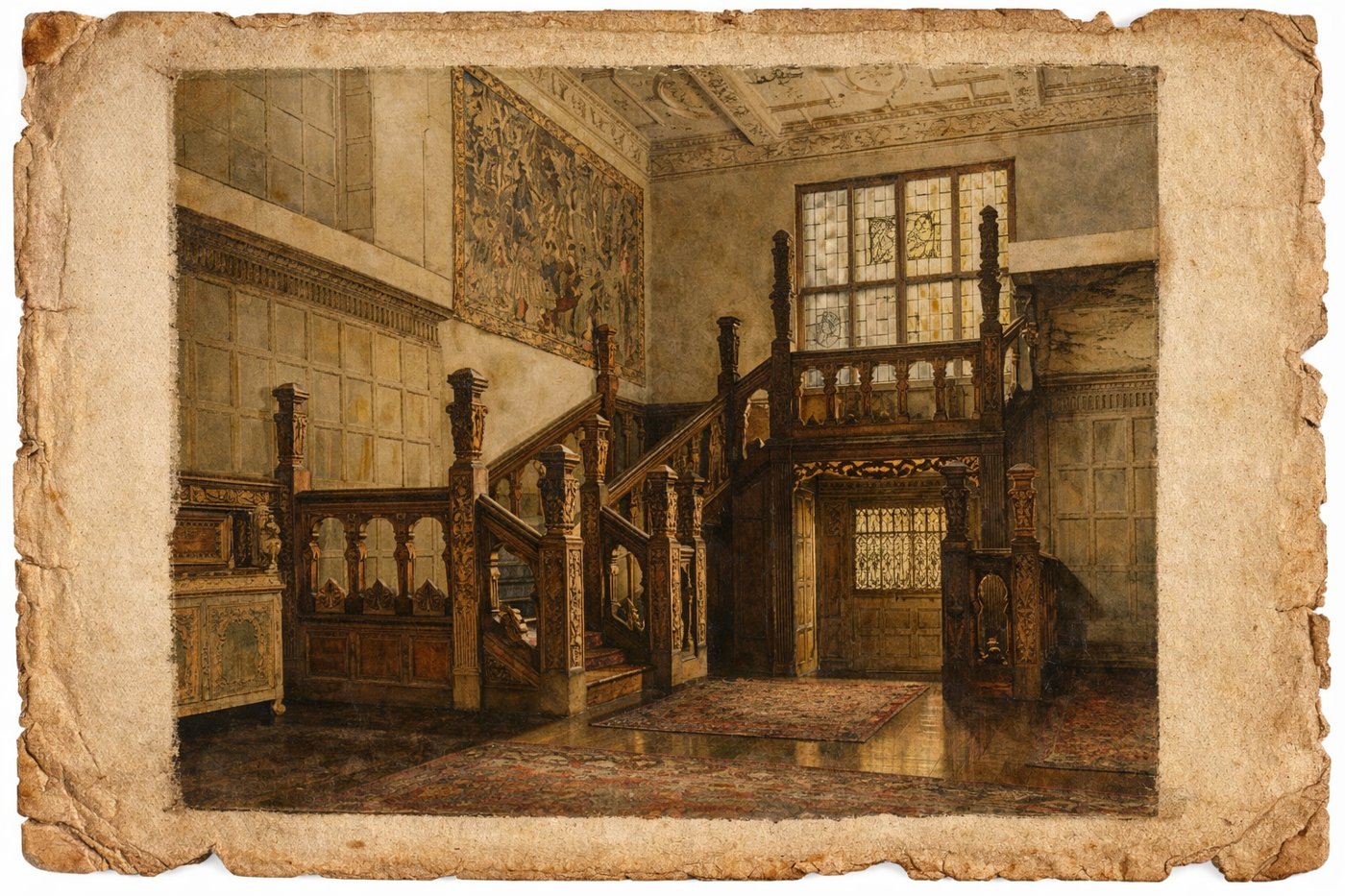
A mile north, on the edge of Loring Park, sits a house with a stranger biography. Built in 1887 for a coal merchant, it was bought in 1905 by Eugene and Merrette Carpenter, who promptly hired Edwin Hewitt to make it something else entirely. Over roughly ten months the roof came off, walls were rebuilt, and the Victorian exterior was refinished into the symmetrical brick Georgian Revival facade that still anchors Clifton Avenue. It joined the National Register in September 1977 and is recognized as the finest example of Georgian architecture in Minnesota.
Eugene Carpenter was a lumberman with an unusual second career: he helped lead the Minneapolis Society of Fine Arts, the organization that went on to establish the Minneapolis Institute of Art in 1915. A fair amount of what became this city’s arts establishment was argued into existence in rooms you can still stand in.
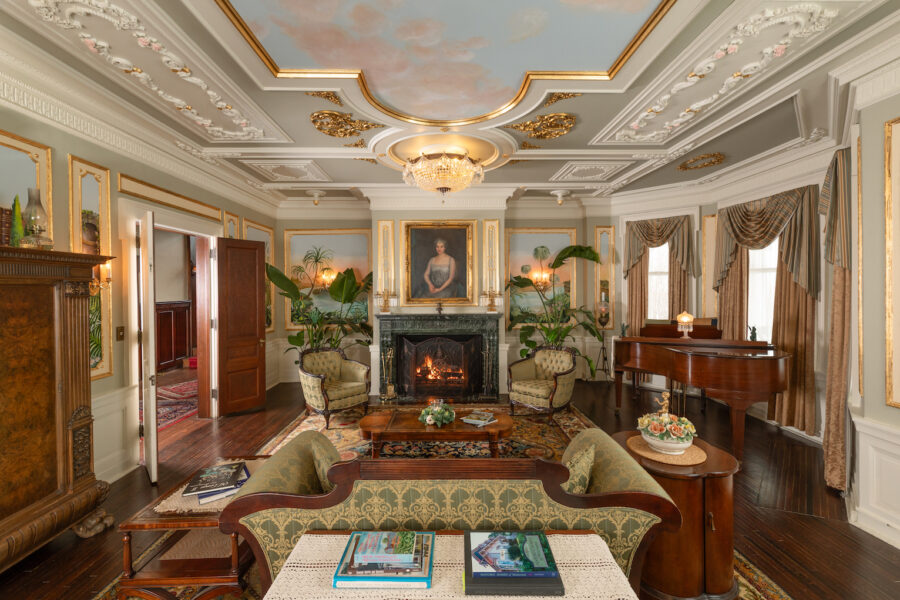
And here is the part that surprises people: 300 Clifton is one of the few historic homes in Minnesota where you can tour the property and spend the night in it. The drawing room with its hand-painted ceiling and gold plaster onlays is not a diorama. It is down the hall from a guest room.
One architect, two mansions
Edwin Hewitt is the thread. He gave the Carpenters their restrained Georgian symmetry in 1906, then, with his partner Edwin Brown, gave Charles Pillsbury a Gothic pile in limestone six years later. Seeing both in one day is a short course in how quickly Minneapolis taste moved between the turn of the century and the First World War — and how much of it came out of one drafting room.
What about a Christmas mansion tour?
Here the calendar thins out. The American Swedish Institute’s Turnblad Mansion is the city’s other great tourable house, but ASI notes that its public mansion tours are not available during the Holiday Exhibition (pre-booked group tours continue through the season). The house is glorious in December — it is simply not being toured in the usual way. Meet Minneapolis has the visitor details if you are planning around it.
Which leaves a short December list, and we are on it. Through the holidays the mansion fills with a market of more than 50 Minnesota makers, the dining room runs, and the Holiday Light Ride boards from inside these walls rather than a parking lot — the family-friendly Nice ride from about $27, the 21+ BYOB Naughty ride from about $69. Our friends at 300 Clifton have written a guide to choosing between the two.
How to actually do it
Book the Gilded Age Mansion Tour for the full route and the interiors. Reserve ahead for anything at the Pillsbury Club — it is a private club and advance reservations are required, not a formality.
For longer visits, Oakland’s on 9th has furnished month-to-month studios downtown.
Minneapolis built these houses to be seen and then, mostly, closed the doors. A few are still open. Come use them.
Keep reading: Where Can You Book a Private Room for a Small Group in Minneapolis? Inside the Emerald Suite