
Who Was Alfred Pillsbury, the Other Collector on East 22nd Street?
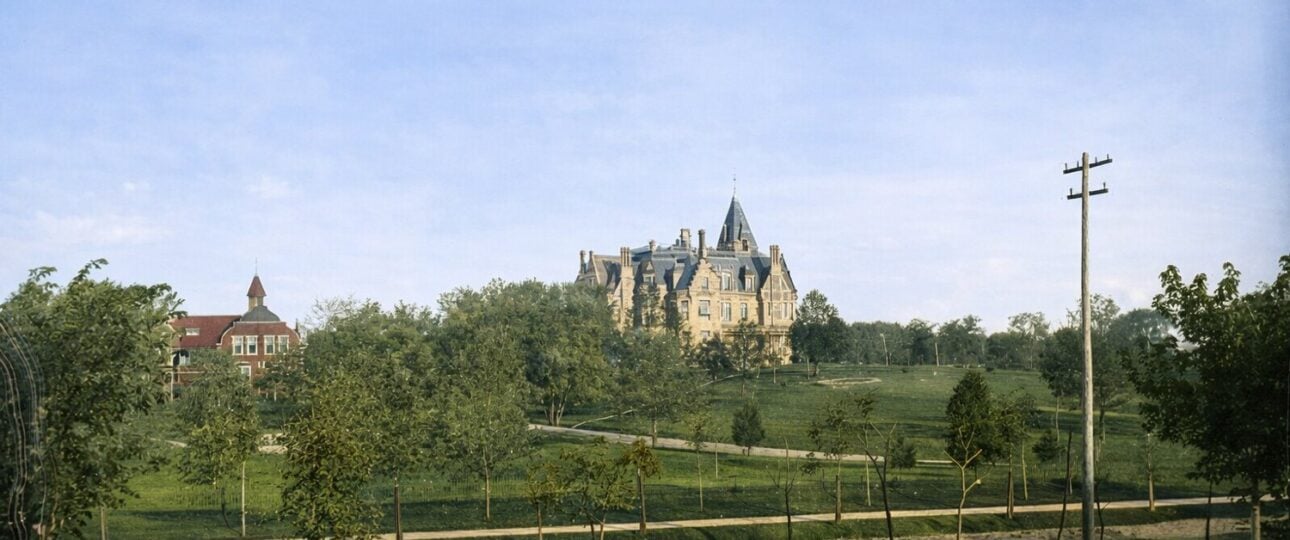
Stand at the corner of East 22nd Street and Stevens Avenue on a winter evening in, say, 1930, and you could watch two very different empires of beauty burning their lamps a block apart. At 100 East 22nd Street, Charles S. Pillsbury’s Elizabethan manor glowed behind leaded glass, its rooms lined with English oak older than the state of Minnesota. And at 116 East 22nd Street, behind rough grey walls that the neighbors simply called the castle, Charles’s first cousin once removed was quietly assembling one of the finest collections of Chinese art in the Western world.
A limestone castle one block west
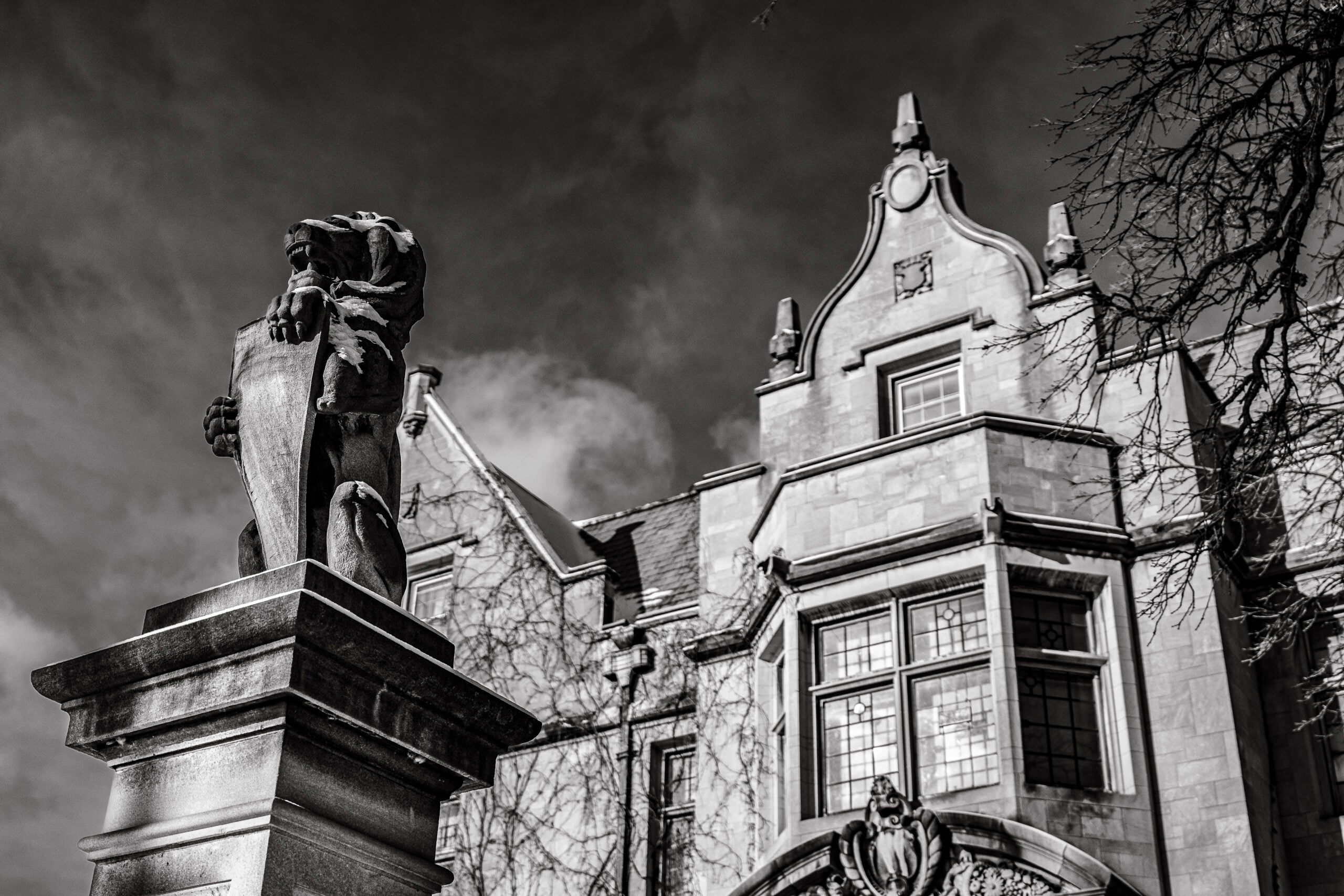
Alfred Fiske Pillsbury was the son of Governor John S. Pillsbury — the “Father of the University of Minnesota” and co-founder of the family flour company. Alfred studied law at that same university and starred on its earliest football teams before settling into a long life of business and civic work. In 1903, thirteen years before Charles’s mansion rose down the block, Alfred and his wife Eleanor built a Tudor Revival house of rock-faced Platteville limestone, designed by architect Ernest Kennedy and raised by master builder F. G. McMillan — stone surrounds, projecting bays, pointed parapets. The City of Minneapolis made it a local landmark in 1975, and after years as an architecture firm’s offices it is a private home once more, restored today under the name Pillsbury Castle.
The collector who looked east
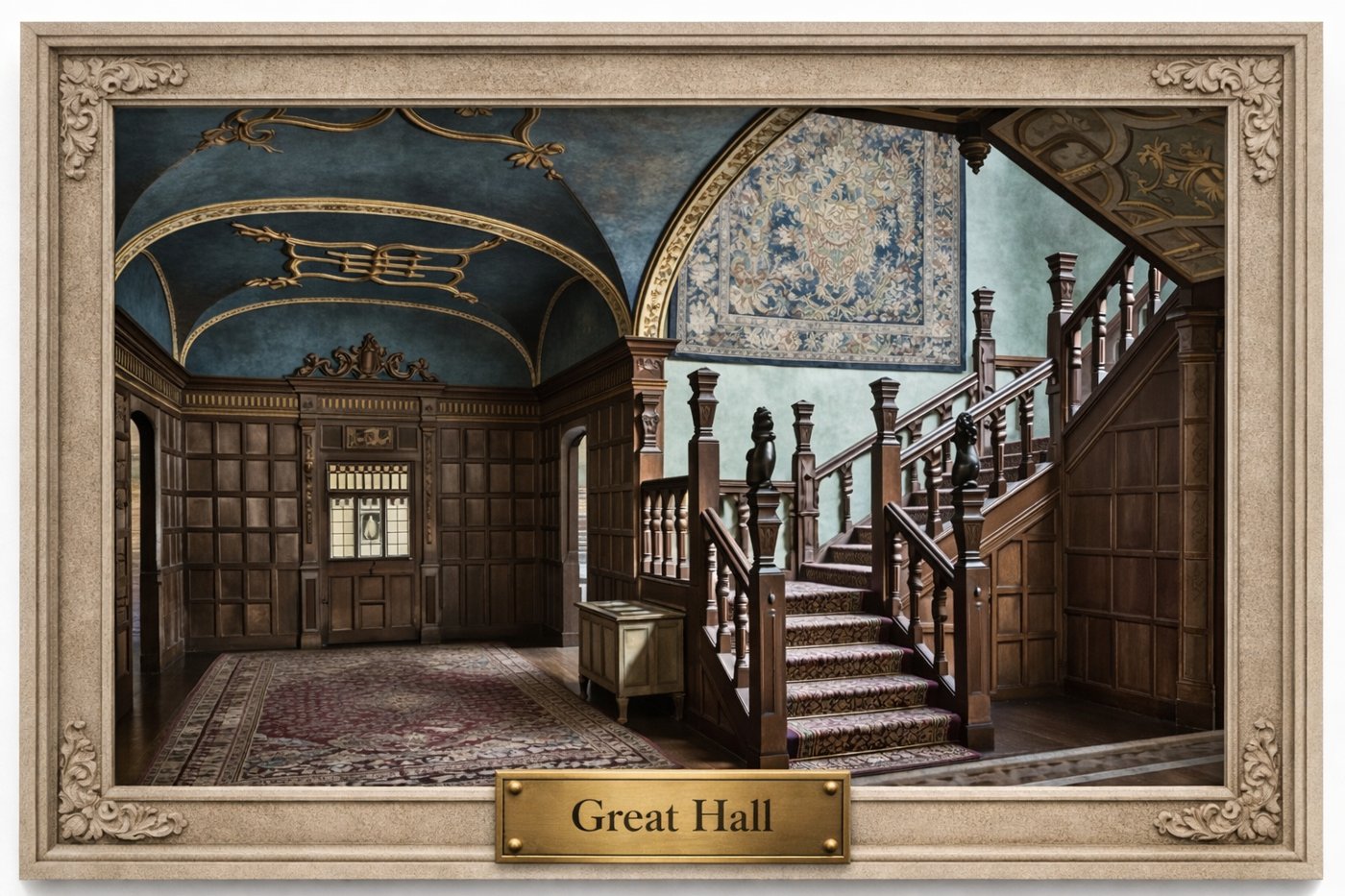
The Pillsburys seem to have carried a collecting gene, and in the two cousins it expressed itself in opposite directions. Charles looked to England: whole centuries-old rooms, staircases, and fireplaces shipped across the Atlantic through the Duveen Brothers — a story we told in our post on the art dealers behind the mansion. Alfred looked much farther east. Shortly after the First World War he began buying archaic Chinese jade — eventually several hundred pieces — then branched into Chinese and Persian pottery, Chinese tomb figurines, and at last the great ritual bronzes of ancient China. A museum summary of his gifts published in 1948 called the bronzes “the ultimate in Chinese art.” And where did he keep three thousand years of treasure? At home, at 116 East 22nd — scholars came to the castle to study objects older than Rome.
A million dollars for the museum across the park
Both cousins lived at the edge of Washburn–Fair Oaks, the park at the heart of the city’s grandest neighborhood — and on its south side, in 1915, the Minneapolis Institute of Art opened its columned marble home. Alfred gave the museum much of his life: he led the Minneapolis Society of Fine Arts, the institute’s parent body, and served for years as chairman of its board of trustees (he was president of the city’s park board, too). When he died in 1950, his will left the museum more than $1,000,000 of Asian art — over nine hundred objects, among them some 150 ancient bronzes — the most valuable collection ever given to the institute up to that time. It remains the nucleus of Mia’s celebrated Chinese galleries.
The owl that came back
The star of the bequest is a bird. The Pillsbury Owl is a bronze zun wine vessel cast in the late Shang dynasty, in the 13th–12th century BCE — roughly 3,200 years old, its lid the head of a wide-eyed, faintly amused owl. In 2023 a visitor accidentally knocked it from its plinth; a celebrated Japanese bronze conservator spent years restoring it, and in April 2026 the owl returned to its perch in the galleries, sturdier than before. Not bad for a creature that has already outlived every dynasty, empire, and flour company it has ever known.
Full circle on Fair Oaks
There is one last turn in the story. By the late 1960s the mansions of the old neighborhood were falling to the wrecking ball one by one. In 1969 an anonymous donor gave the Minneapolis Society of Fine Arts — the very institution Alfred had helped lead — the means to rescue four threatened houses around the park, the Pillsbury mansion the largest among them, and in 1974 all four entered the National Register of Historic Places together. Read it again slowly: the museum one Pillsbury filled became the institution that saved another Pillsbury’s house.
Come meet the neighbors
Alfred’s castle at 116 is a private home — admire it from the sidewalk. But the manor at 100 East 22nd opens its doors. Tour the Charles S. Pillsbury Mansion with the Pillsbury Club, the launch point for Minneapolis Trolley Tours — and if you’d rather sleep in a National Register mansion than merely visit one, our sister house 300 Clifton keeps a room ready.
Keep reading: the mansion isn’t just history — here’s where to find a speakeasy-style night out in Minneapolis, right inside the Club.
Keep reading: the fortune behind all of this was ground out on the riverbank — meet the Pillsbury A Mill, the largest flour mill in the world.