
What Is the History of Rotherwas Court? From the Domesday Book to the Oak Staircase in a Minneapolis Mansion
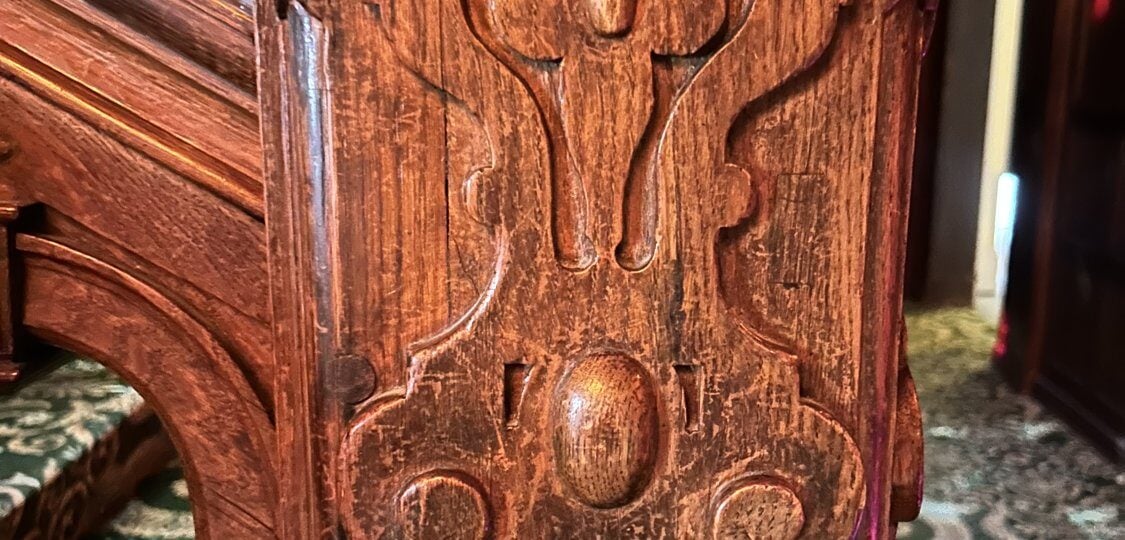
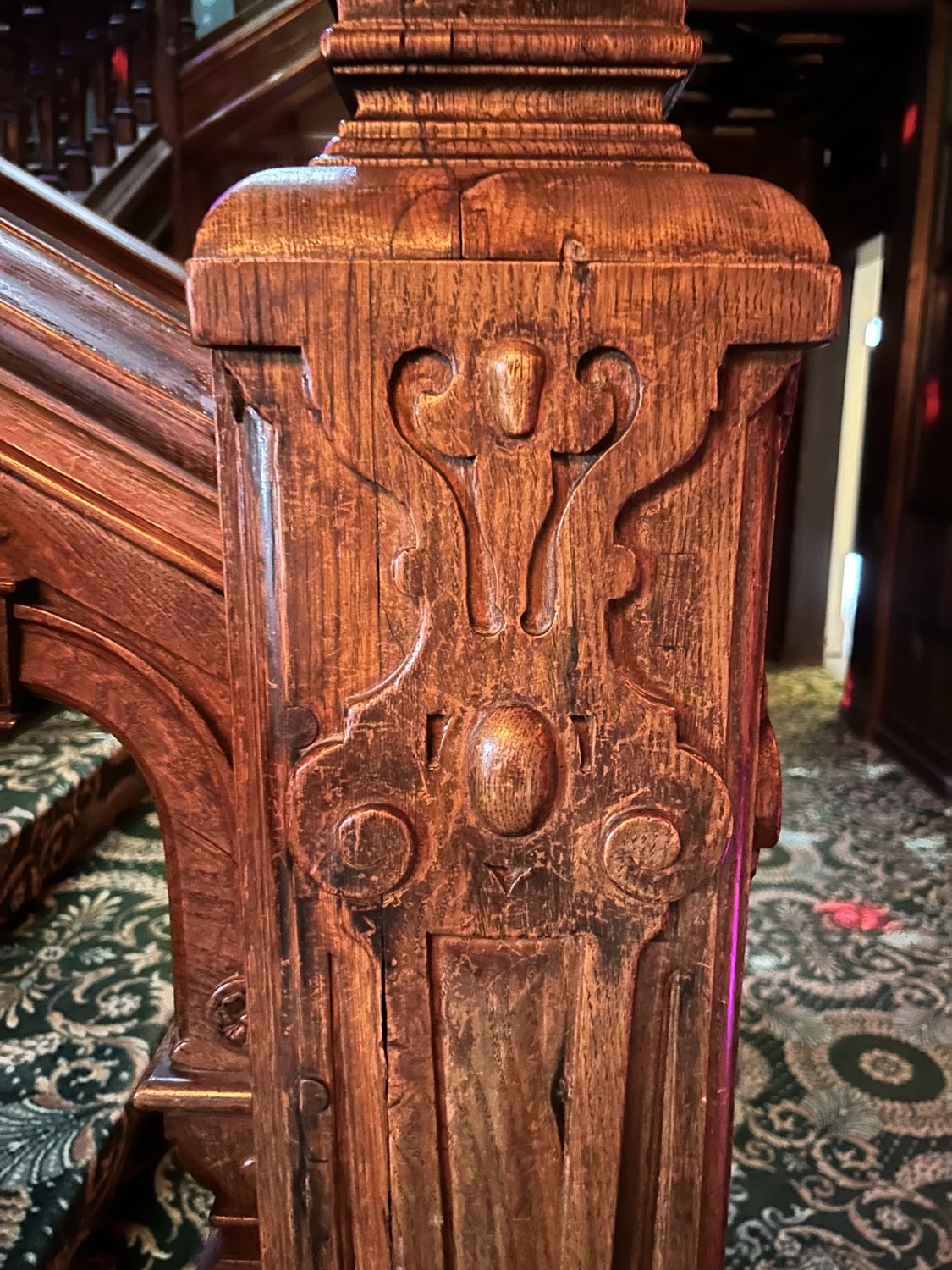
Some houses are remembered for their owners. Rotherwas Court in Herefordshire, England, is remembered for its rooms. The estate has almost vanished, but pieces of it survive on two continents, including the oak staircase, paneling and front door that now stand in the Pillsbury Mansion in Minneapolis. Here is the history of Rotherwas, and how part of it crossed the Atlantic.
Where was Rotherwas Court?
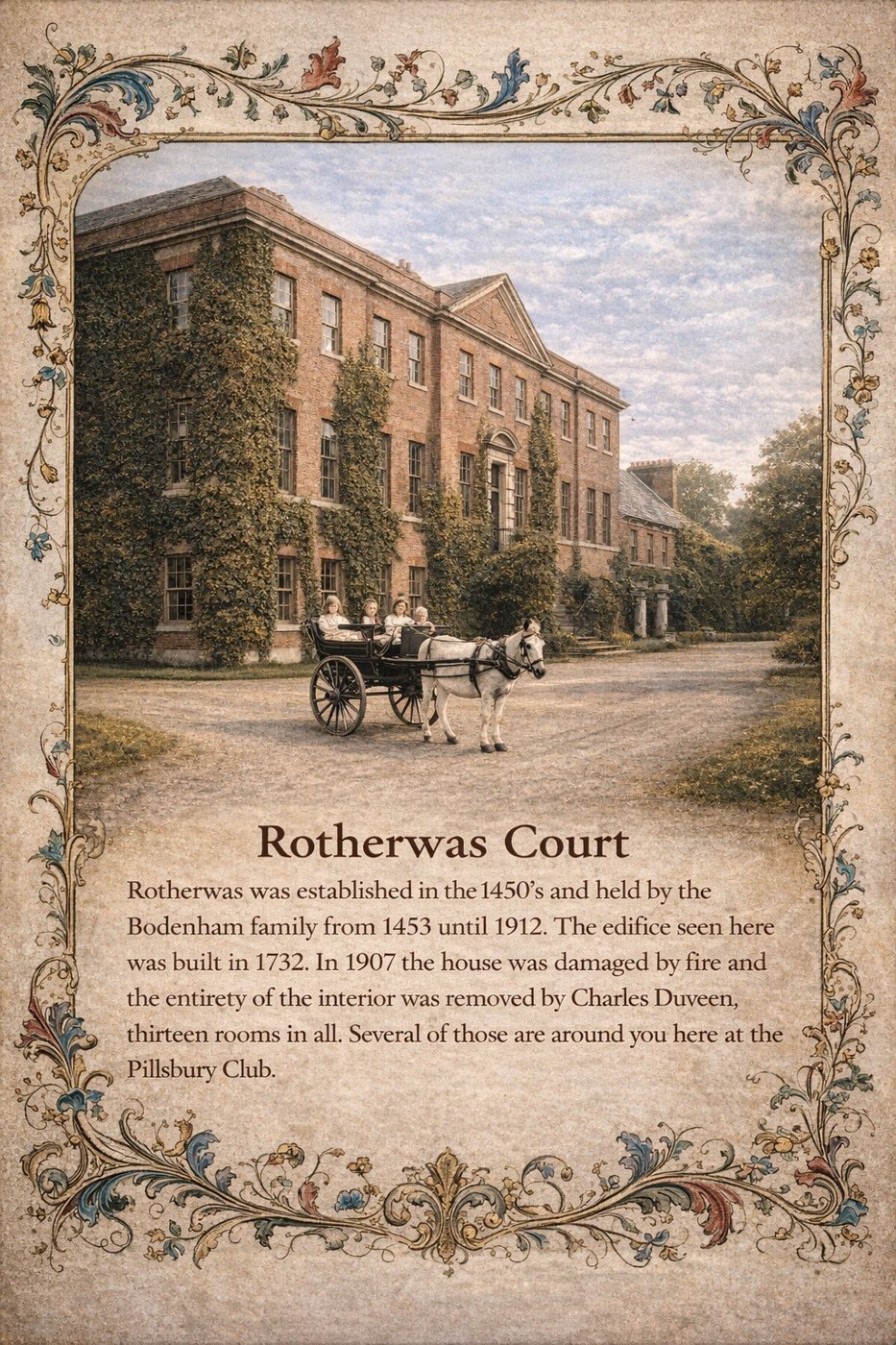
Rotherwas sits on the River Wye near Hereford, in the English county of Herefordshire. The name appears in the Domesday Book of 1086, which records that Gilbert, son of Thorold, held Rotherwas. The estate later belonged to the de la Barre family, and it passed to the Bodenhams through marriage: in the early fifteenth century John Bodenham married Isabella de la Barre, and after Sir Charles de la Barre died in 1483 his property went to Roger Bodenham, John’s grandson. (Much of this comes from the Wikipedia article on the Rotherwas Room.)
Who were the Bodenhams?
The Bodenhams were a Herefordshire gentry family who lived at Rotherwas for generations. Their crest included three chess rooks, a heraldic pun on the family name that turns up in the carving. They were Royalists, and the family suffered in the years of the Commonwealth. Sir Roger Bodenham was knighted by James I around his coronation in 1603, and he is credited with commissioning one of the great rooms of the house, finished in 1611. James I is reported to have visited more than once and to have remarked that not everyone could live at Rotherwas, a line the mansion’s own pages also tell. For the family’s story in more depth, see The Bodenhams of Rotherwas.
What was inside the house?
The 1611 room is the best-documented. According to the Rotherwas Room article, its carved oak chimneypiece displays an achievement of 25 family seals flanked by figures of the four virtues, and its walls are paneled in walnut. In 1678 the antiquary Thomas Blount described a “fair parlour full of coats-of-arms,” and a dining room wainscoted with walnut. A new wing designed by architect James Gibbs was added in the 1730s, and some of the older woodwork was moved into the newer house.
How did Rotherwas end up in America?
The Bodenham line ended in the early twentieth century. The Wikipedia article places the end of the family with Count Lubienski Bodenham’s death in 1912 (it also notes an earlier direct line ending in 1884), and says the house was dismantled in 1913, with thirteen paneled rooms sent to America by the dealer C. J. Charles, known as Charles Duveen or “Charles of London.” The British press mourned the loss. The Illustrated London News ran the headline “Lost to England: Superb Rotherwas Panelling for America,” while American papers celebrated the arrival.
The best-known room was bought for the Long Island estate of Herbert L. Pratt, and it is now at the Mead Art Museum at Amherst College in Massachusetts. Historic England lists the site of Rotherwas House, its garden earthworks and Rotherwas Chapel as a scheduled monument. The house is gone; the chapel and earthworks remain.
What part of Rotherwas is in the Pillsbury Mansion?
Charles S. Pillsbury acquired a share of the Rotherwas woodwork through Charles of London for the house he built at 100 East 22nd Street, completed in 1916. The mansion’s own history says the staircase, paneling, front door and ceiling of Rotherwas Court were dismantled, modified, and reinstalled in Minneapolis, and it describes the staircase as the one King James I is said to have walked. If you step into the entry hall, you are standing inside a piece of Herefordshire history. Read more about the oak on The Splendors, follow the dispersal of the rooms in Where Did the Other Rooms of Rotherwas Court End Up?, and find out what happened to the house itself in What Happened to Rotherwas Court After Its Rooms Came to Minneapolis?.
To see the oak in person, check the Plan Your Visit page or the mansion tours, and keep reading in the History Journal.
Keep reading: What Is the History of the Pillsbury Family and Company? From a Mill on the Mississippi to a Mansion on 22nd Street