
Who Was Thomas Lowry, the Streetcar King of Minneapolis?
On a February morning in 1909, the front pages of every Minneapolis newspaper carried the same news: Thomas Lowry was dead. The flour barons of Washburn–Fair Oaks — the Pillsburys among them — had lost the man who, more than almost any other, had built the city their mansions looked out upon. He never milled a sack of flour. He simply made it possible for everyone else to get to work.
The Lawyer Who Bought the Edge of Town
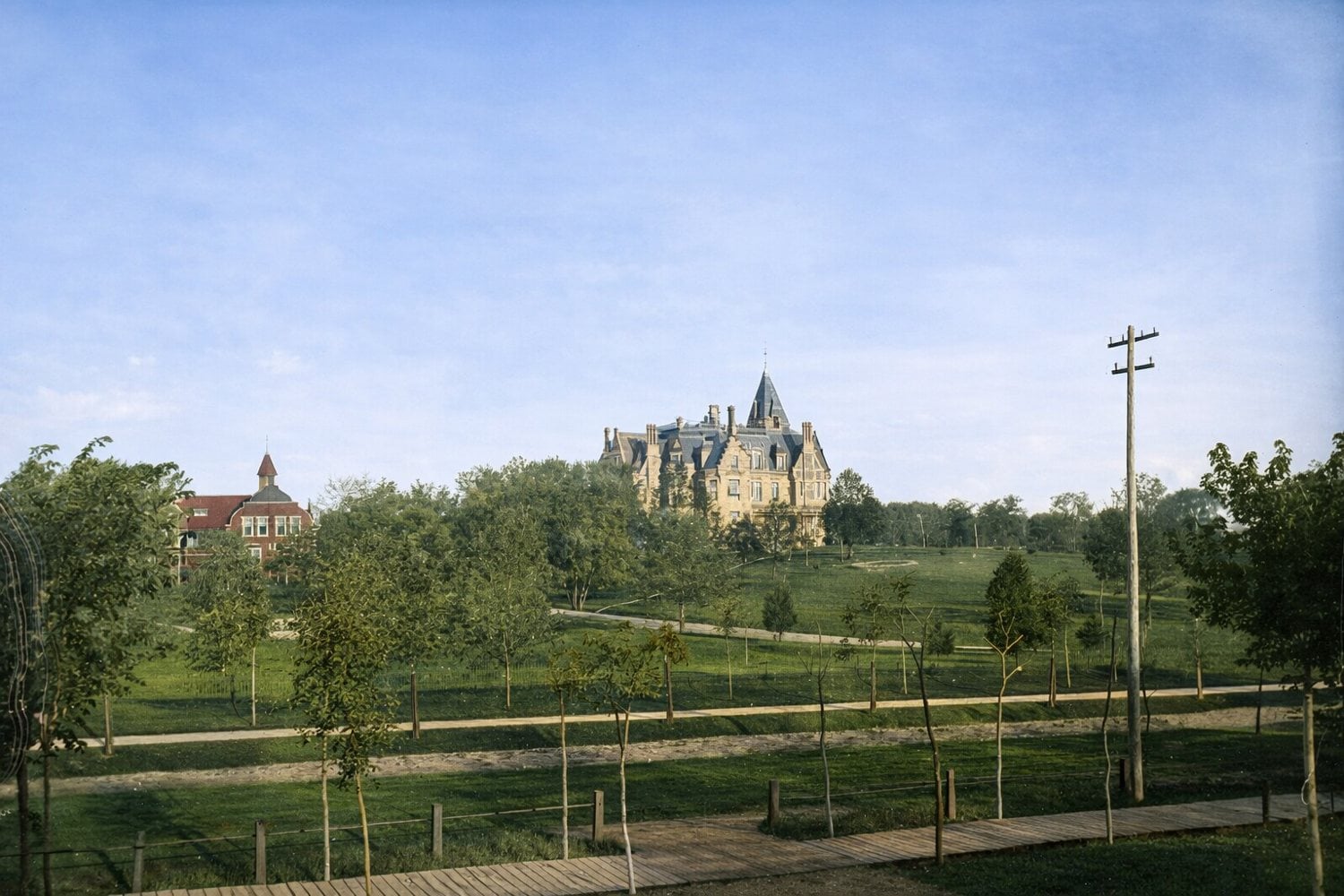
Lowry arrived in Minneapolis in July 1867, a newly minted Illinois lawyer with, as the Minnesota Historical Society puts it, few possessions and little money. The law paid; land paid better. During the 1870s, more than a third of the property that is now Minneapolis passed through his hands. He built his family’s home on a rise near Hennepin and Groveland avenues, then the very edge of the city — a hill Minneapolitans have called Lowry Hill ever since.
Rails to Nowhere — and the Genius of It
In 1875 Lowry joined the revived Minneapolis Street Railway Company; by 1878 he was its president, and he stayed president for the rest of his life. His insight was beautifully simple: lay streetcar tracks out to land nobody wanted yet — much of which he happened to own — and the city would follow the rails. It did. His Minneapolis and St. Paul lines merged into the Twin City Rapid Transit Company, the network that would knit the Twin Cities together for half a century. The Panic of 1893 nearly bankrupted him; charm, grit, and an international web of investors carried him through. By 1898 the company was building its own cars — the first of them a private streetcar for Lowry himself, fitted with oversized windows so he could watch his city roll past. President William McKinley rode it on a visit around 1900.
The Streetcar King and the Flour Kings
The rails and the mills were never separate stories. In the 1890s Lowry worked with Charles Alfred Pillsbury — father of the Charles S. Pillsbury who would later raise the great house at 100 East 22nd Street — and the engineer William de la Barre on the Lower Dam hydroelectric plant just below St. Anthony Falls. When it was finished in 1897, Lowry’s streetcars claimed every watt the plant produced. Pillsbury water power, quite literally, drove the city’s transit. How that milling fortune became an English manor on East 22nd Street is a story of its own.
Longtime readers of this Journal may prick up their ears at the engineer’s surname: the de la Barres of Rotherwas held the very Herefordshire estate whose ancient oak now lines our halls. A different family, an ocean and several centuries apart — but this mansion does love a coincidence.
The Palace That Vanished from Lowry Hill
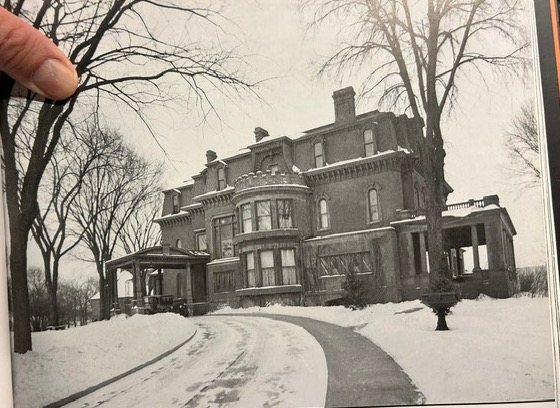
Lowry’s own house was a towered Second Empire showplace set on acres of lawn at the crown of his hill. He died there on February 4, 1909, and the city mourned him in column after column. The lumber baron T. B. Walker acquired the property a few years later, and around 1932 the mansion came down — one more name in the roll of the city’s lost palaces. Our gallery of the vanished avenue marks it simply: Lowry · 1932. Of that whole generation of grand houses, the Pillsbury mansion is the last one standing.
What Remains of Thomas Lowry
Almost everything, in a way. The name is written across the city: Lowry Hill, Lowry Avenue, Thomas Lowry Park, the Lowry Hill Tunnel burrowing beneath his old neighborhood. A bronze memorial by the sculptor Karl Bitter rose at Hennepin and Lyndale in 1915 and was moved up the avenue in the 1960s when the tunnel came through; it stands today as a designated Minneapolis landmark. And every time a trolley bell rings in Minneapolis, it rings a little for him.
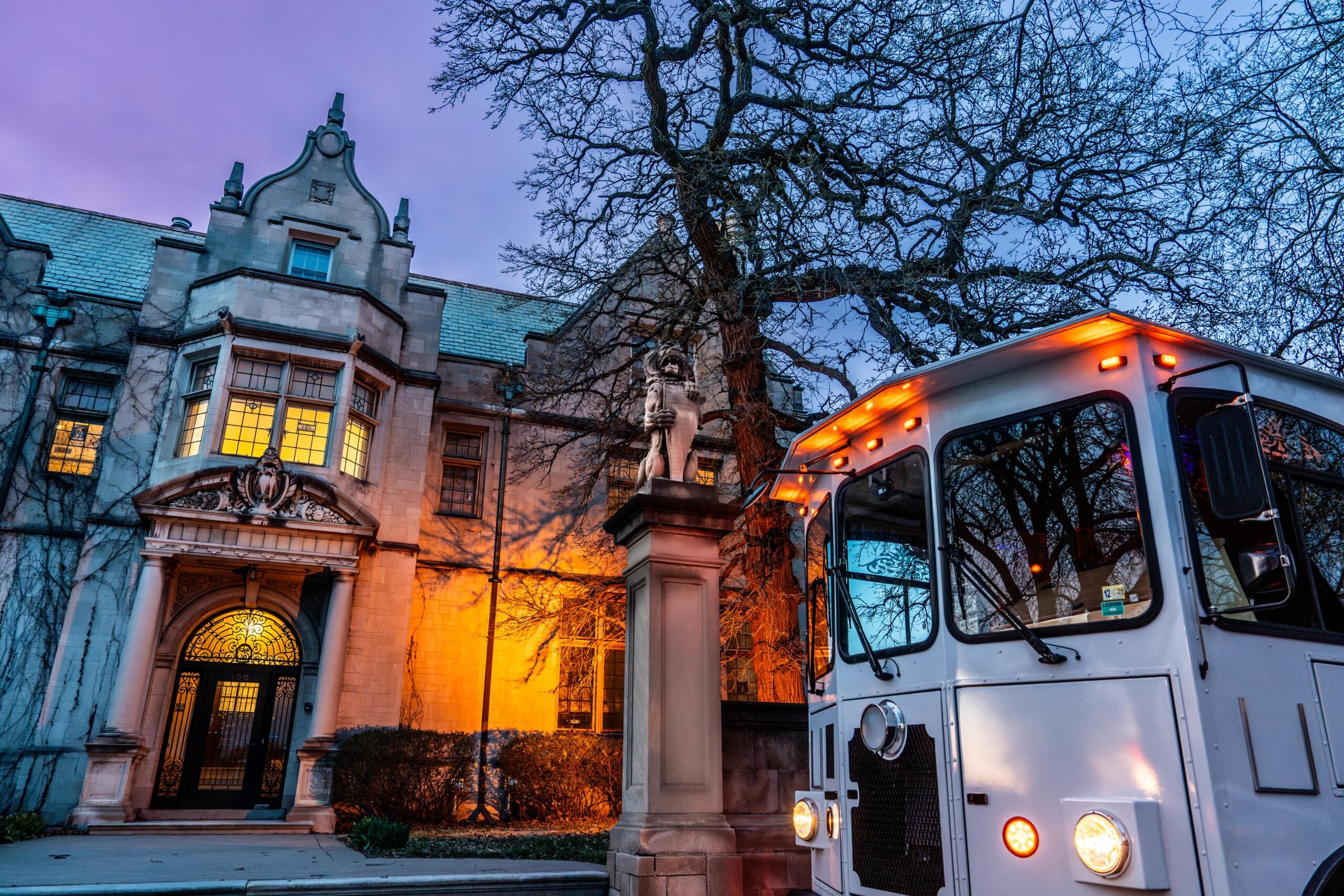
The streetcar era isn’t entirely gone, either. The Minneapolis Trolley departs from the Pillsbury Club at 100 East 22nd Street, rolling past Washburn–Fair Oaks much as Lowry’s cars once did — come ride through the city he built. And if you’d like to sleep in a mansion his streetcars once rattled past, the historic Eugene J. Carpenter mansion at 300 Clifton in Loring Park keeps its lamps lit for you.
Keep reading: What Do the Four X’s on Pillsbury’s Best Flour Mean? — the 1872 boast that started the whole fortune.
Keep reading: Lowry’s streetcars once rolled straight through the mansion district — see how to spend a modern day there in our guide to Whittier, Minneapolis.