What Is the Hennepin History Museum? The Flour Family Mansion a Few Blocks From the Pillsbury House
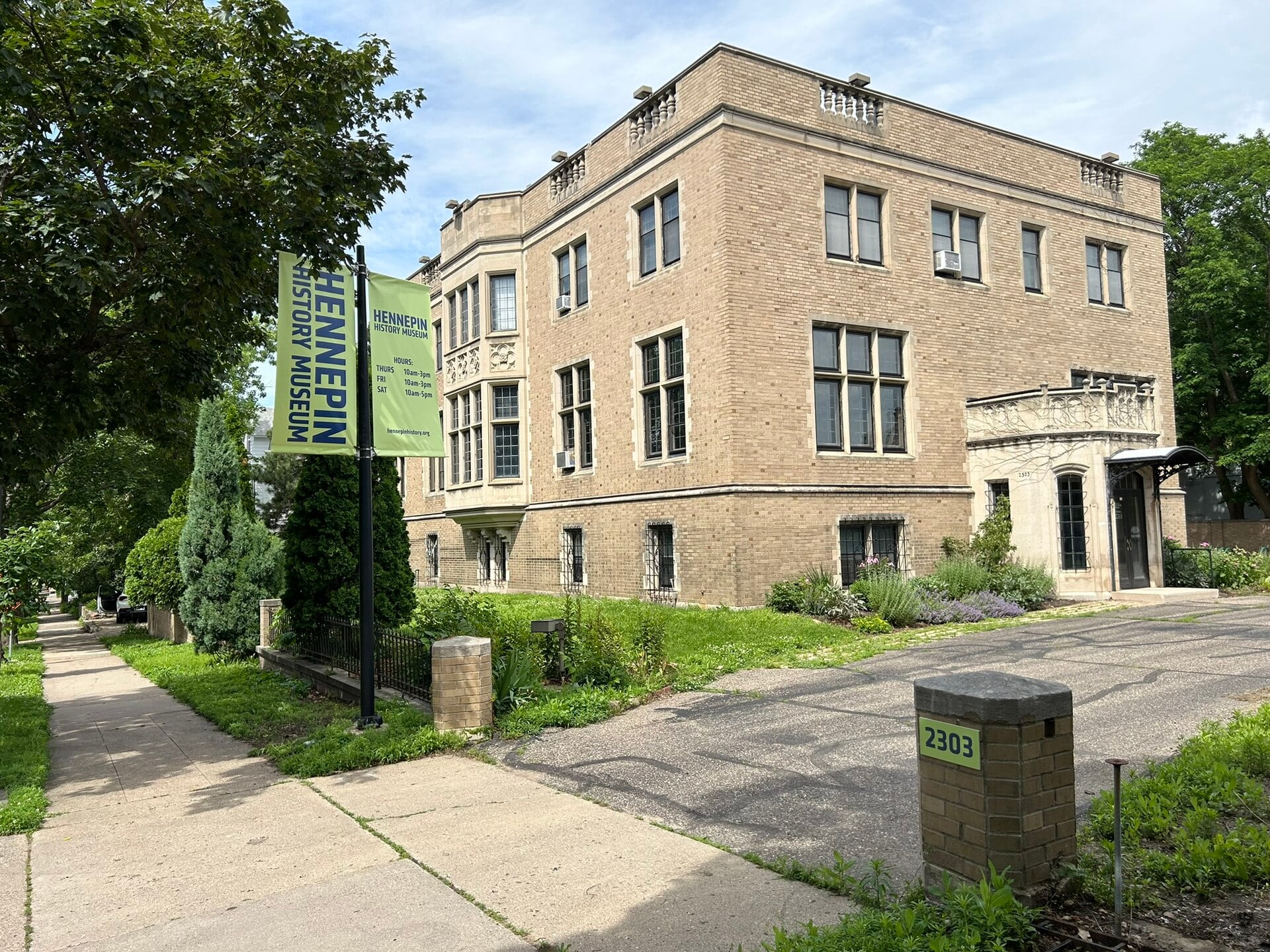
Walk a few blocks from the Pillsbury Mansion’s front door, across Washburn–Fair Oaks Park, and you reach another great house built on Minneapolis flour — one you can walk into today with a museum ticket. The Hennepin History Museum, at 2303 Third Avenue South, lives in the old Christian family residence. Same neighborhood, same architects, same industry, and a family story that runs right alongside the Pillsburys’. Here is what the museum is, who built its house, and why it belongs on any history lover’s map of our corner of the city.
What is the Hennepin History Museum?
It is the museum of Hennepin County’s history — its people, communities, industries and politics — run by what began in 1938 as the Hennepin County Historical Society. Alongside permanent and changing exhibits, it keeps a research library open to the public, with city directories, house and building photographs, maps, atlases and business histories, and an archivist on hand during library hours. It also publishes Hennepin History magazine three times a year (overview). For anyone trying to trace a Minneapolis house or family, it is one of the best rooms in the county.
Who built the house?
The museum tells the story on its own Christian family page. The house was owned by Carolyn McKnight Christian, born in Colorado in 1875 to Sumner T. McKnight, a lumber and real-estate man whose family eventually settled at 2200 Park Avenue in Minneapolis. In 1897 she married George Chase Christian, a flour man like his father.
That father was George Henry Christian, and the museum credits him with one of the changes that put Minneapolis milling on the map: taking over management of the Washburn “B” mill in 1870 and moving it from millstones to chilled iron rollers, lifting output from 600 barrels a day to 10,000. In other words, the Christians were on the Washburn side of the river rivalry we wrote about in Who Were the Pillsburys’ Rivals Across the River?
One detail is worth flagging. Our earlier post on the architect’s other Minneapolis buildings described 2303 Third Avenue South as built for George H. Christian. The museum’s account puts it with his son and daughter-in-law instead: George H. died in 1918, and Carolyn and George C. were putting the finishing touches on the house when George C. died in 1919. Carolyn moved in, and the museum dates the completed residence to 1920. We give both here because both are in print — but the family that actually lived there was Carolyn’s.
A family that gave its money away
The Christians’ fortune came from flour, but their name in Minneapolis came from philanthropy. The museum notes that George H. and Leonora Christian’s oldest son, Henry, died of tuberculosis in 1905 at 27, and the family went on to fund hospitals and treatment camps for TB patients, especially children. In 1916 George H. founded the Citizen’s Aid Society with a $1 million endowment — an organization the museum says later became the United Way.
Carolyn carried that on for decades. She led the Citizen’s Aid Society for more than 25 years, was a charter member of the Woman’s Club of Minneapolis, and was the first president of the Friends of the Minneapolis Institute of Art — the museum that still anchors this neighborhood (plan a Mia visit). She loved music; the stage in what is now the museum’s fireplace room is original to the house, built for concerts in her living room.
How is it like the Pillsbury Mansion?
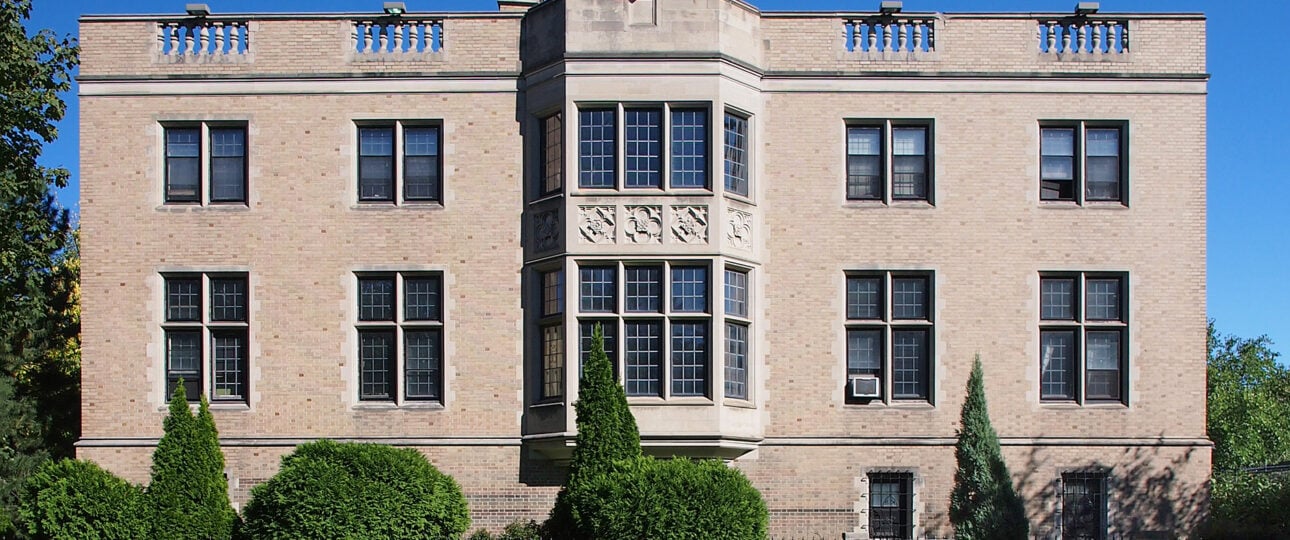
Look closely and the two houses are cousins. Both were designed by Hewitt & Brown, the Minneapolis firm behind the Pillsbury Mansion. The museum describes the Christian house as a mix of English Renaissance Revival and late English Gothic, with original leaded-glass windows, a two-story bay, a balustrade around the roof, exotic wood floors, large carved fireplaces and ironwork by the renowned smith Samuel Yellin. That is the same English vocabulary the Pillsburys chose — though at 100 East 22nd Street they went further, importing genuine centuries-old English rooms through Charles of London (the story is on Building the Mansion).
Both also landed in the same district for the same reason. The museum explains that families were leaving an increasingly commercial downtown, and the Washburn–Fair Oaks area filled with houses for the Washburns, Crosbys, Pillsburys and Morrisons — a first wave in the late 1800s and a second in the early 1900s. Many were torn down; we tallied the losses in our decade-by-decade ledger. The Christian house and the Pillsbury house are two of the survivors.
How did it become a museum?
Carolyn Christian lived at 2303 Third Avenue South for 36 years, moved out in 1956 and donated the house to the Minneapolis Institute of Art. In March 1957 the historical society bought it from the Institute. Its board liked that the 40-room house was “nearly fire resistant,” with brick and concrete walls, steel windows and a boiler room set in a fireproof space below the three-stall garage. The museum has been open there since 1958. Like the Pillsbury Mansion, it found a second life because someone saw a public use for a private house — which is, in the end, how most of this neighborhood’s survivors survived.
See both houses
Make it a two-mansion afternoon: browse the county’s story at the Hennepin History Museum (check its site for current hours), then come see the Pillsbury Mansion’s English rooms up close. Book the Gilded Age Mansion Tour, or see everything the Club offers on our experiences and tours page. Reservations are required.
Photos: McGhiever and MidwestMoss, Wikimedia Commons, CC BY-SA 4.0.
Keep reading: Is a Gilded Age mansion tour a good Christmas gift in Minneapolis? Ideas for history buffs, old-house lovers and the person who has everything.