
Did Minneapolis Read About Rotherwas Before the Pillsburys Ever Owned a Board of It?
Years before Charles S. Pillsbury’s mansion was finished on East 22nd Street, a wire story ran in the Minneapolis Journal that his future neighbors would have read over breakfast without knowing what it had to do with them. It described the interior of a famous English manor being sold off, piece by carved piece, an ocean away — the same interior that would, within a few years, be standing in their own Whittier neighborhood.
The Wire Story That Ran in the Minneapolis Journal
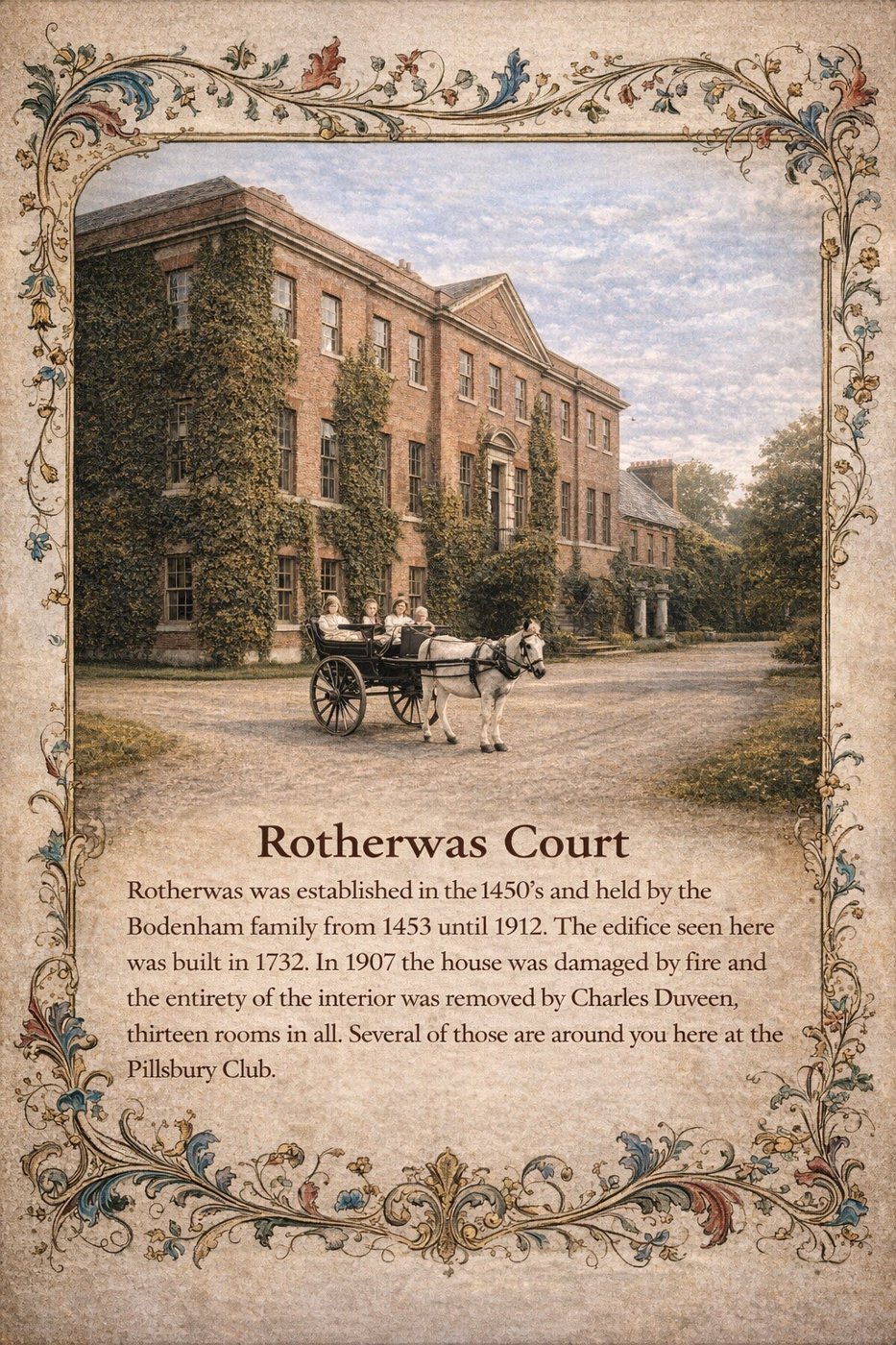
On April 2, 1913, the Minneapolis Journal reprinted a London Standard dispatch headlined “Relics of an Old Mansion.” It opened with a detail meant to impress a 1913 reader with how fast the modern world had gotten: within twelve hours of the news being cabled to America that the interior of Rotherwas — a Hereford manor — was for sale, several offers had already crossed the Atlantic. The London dealers who had acquired the property, Mr. Dawson among them, told the paper they had “already had many inquiries,” including one cabled offer from the United States they had turned down. They wanted to keep the relics on view in London for the season first and, if they could find a suitable building, exhibit the carved panelling before possibly shipping it to New York in the autumn.
The Minneapolis paper was, in other words, printing real-time salesroom gossip about the very rooms that would eventually cross an ocean and a continent to reach a mansion a few miles from its own presses — years before anyone in Minneapolis had a reason to care.
What the Panelling Actually Was
The Journal’s account described a house with a real architectural split: the right wing, built by Roger Bodenham early in the sixteenth century, was stone and brick, while the main portion — raised by another Bodenham later — was where most of the old Tudor panelling had ended up. When the Elizabethan wing was converted, part of it became a private chapel with special accommodation for the household’s priests. One room was significant enough that the seventeenth-century historian Blount recorded it in 1678, noting twenty-five coats of arms carved into its wainscoting, with an overmantel carrying four figures representing fortitude, prudence, temperance and justice.
The dispatch also caught a small mystery that had turned up during the survey: half of the parlor’s chimneypiece had been found built into a completely different room, and the other half was rescued from a cupboard in what was by 1913 being used as a bathroom — a small, human detail of a four-century-old house that had clearly been altered, patched and repurposed long before anyone thought to catalogue it.
A Room Kept for a King
The Journal’s dispatch noted that King James I was a frequent visitor to Rotherwas, and that one room — panelled oak, with carved wainscoting and cornice — had been set aside specifically for his own use. It’s a detail that never made it into any of the Minneapolis mansion’s later marketing, but it says something about how the Bodenham family understood their own house: not simply as a residence, but as a set of rooms worth reserving for a king, worth recording by a historian, and, in 1913, worth cabling across an ocean before the ink on the sale was even dry.
From London Salesroom to a Minneapolis Mansion
The Journal’s dealer, quoted at the close of the piece, predicted exactly what would happen: “If no buyer for the historic and beautiful relics of a past age can be found in London it is more than likely that America will absorb them, for competition to become the owner is already keen.” He was right, just not in the way a 1913 reader in Minneapolis could have guessed — some of that same Rotherwas oak would end up inside a mansion being built in their own city, bought through the London dealer Charles of London for the home Charles S. Pillsbury was building on East 22nd Street. For the fuller story of how the rooms actually crossed the Atlantic, see The Splendors and the mansion’s earlier Rotherwas coverage on this journal.
It’s the kind of coincidence a house tour can’t fully capture from inside the rooms themselves: the newspaper record of the sale, printed in the same city, years before the buyer and the house existed in the same sentence.
Keep reading: Why Is There a Luther Rose in the Pillsbury Mansion’s Stained Glass?