
What Was the Minneapolis Grain Exchange? The Wheat Market Behind the Flour That Built the Pillsbury Mansion
Every great Minneapolis fortune of the Gilded Age started somewhere far less glamorous than a carved-oak staircase. For the Pillsburys, it started with wheat: wagonloads and boxcars of it, rolling in from the prairies to the mills at St. Anthony Falls. And for most of the city’s milling century, the place where that wheat was bought and sold was a single trading room downtown. This is the story of the Minneapolis Grain Exchange, and why it belongs in the history of a mansion on 22nd Street.
Why was it called the Chamber of Commerce?
In late 1881, a group of bankers, millers, merchants, manufacturers and railroad men met for the first official session of a new organization. According to the Downtown Minneapolis Neighborhood Association’s history of the building, they wanted to call it the Minneapolis Board of Trade, a far better fit for what they meant to do. But another club of local businessmen already had that name and refused to give it up.
So they settled for “Minneapolis Chamber of Commerce,” a name they knew was misleading. It had only one mission: to run an open market where buyers and sellers of grain could meet and trade fairly. Its first home was a four-story building at First Avenue South and Third Street South. The name stuck until 1947, when it finally became the Minneapolis Grain Exchange.
What did they actually trade there?
Above all, hard red spring wheat — a high-protein wheat grown across the northern Plains and the Canadian Prairies, the kind that ends up in good bread, bagels and pizza dough. The exchange introduced its first futures contract on it in 1883 and has been the principal market for that wheat ever since.
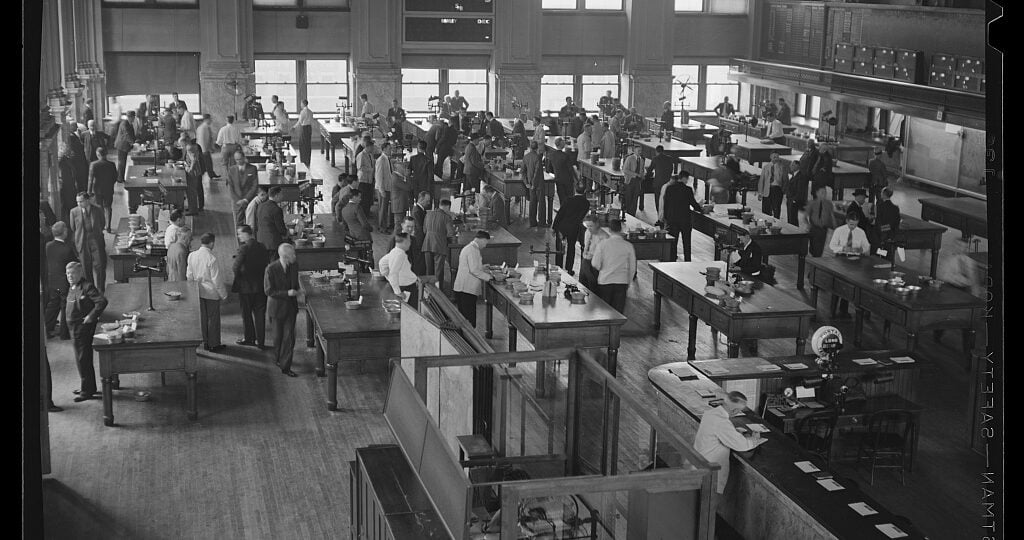
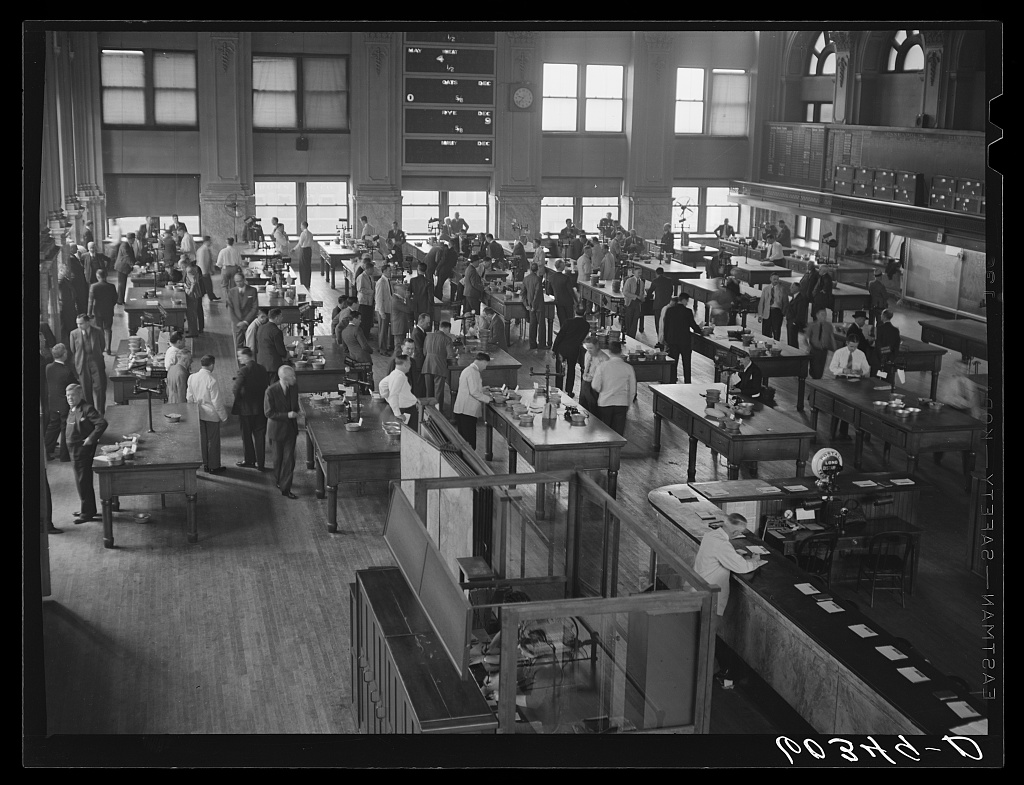
Much of the trading was gloriously physical. Buyers and sellers stood over tables piled with trays of sample grain, haggling over specific carloads. A photographer for the Farm Security Administration captured the scene in 1939, with samples drawn straight from freight cars set out on the tables:
What does the Grain Exchange building have in common with the Pillsbury Mansion?
More than you would think. The exchange’s main building, at Fourth Avenue and Fourth Street South, was designed by Frederick Kees and Serenus Colburn and cost $600,000. The DMNA history says it was completed in 1903; other sources date the main building to 1902. Either way, it was one of the first steel structures in the city — steel meant taller buildings that were largely fireproof and could hold elevators. Its design borrowed from Louis Sullivan’s great Chicago office blocks.
A little over a decade later, the same modern idea went into a very different building. As we tell in Building the Mansion, the Charles S. Pillsbury Mansion was built on a structural steel frame set on giant concrete caissons, then wrapped in centuries-old English interiors. Minneapolis’s grain men and its flour men both trusted steel underneath and saved the romance for the surface.
The exchange kept growing: an east building in 1909 by Long, Lamoreaux & Long, and a north building in 1928, reportedly built in just six months. Inside, corridors join the three so seamlessly you cannot tell where one ends. The fourth-floor trading room of the main building rose two stories and was wired with a signal board of one hundred boxes, so any broker on the floor could be summoned with a light.
How does wheat connect to the Pillsbury fortune?
Directly. Charles Alfred Pillsbury founded the company in 1869, and in 1879 he announced he would build the largest and most advanced flour mill the world had seen. The Pillsbury A-Mill held that title for some forty years. Every barrel of flour it turned out began as wheat that someone had to buy, and Minneapolis millers were among the men who founded the Chamber of Commerce to make that buying orderly. You can see the rest of that milling world at the Mill City Museum.
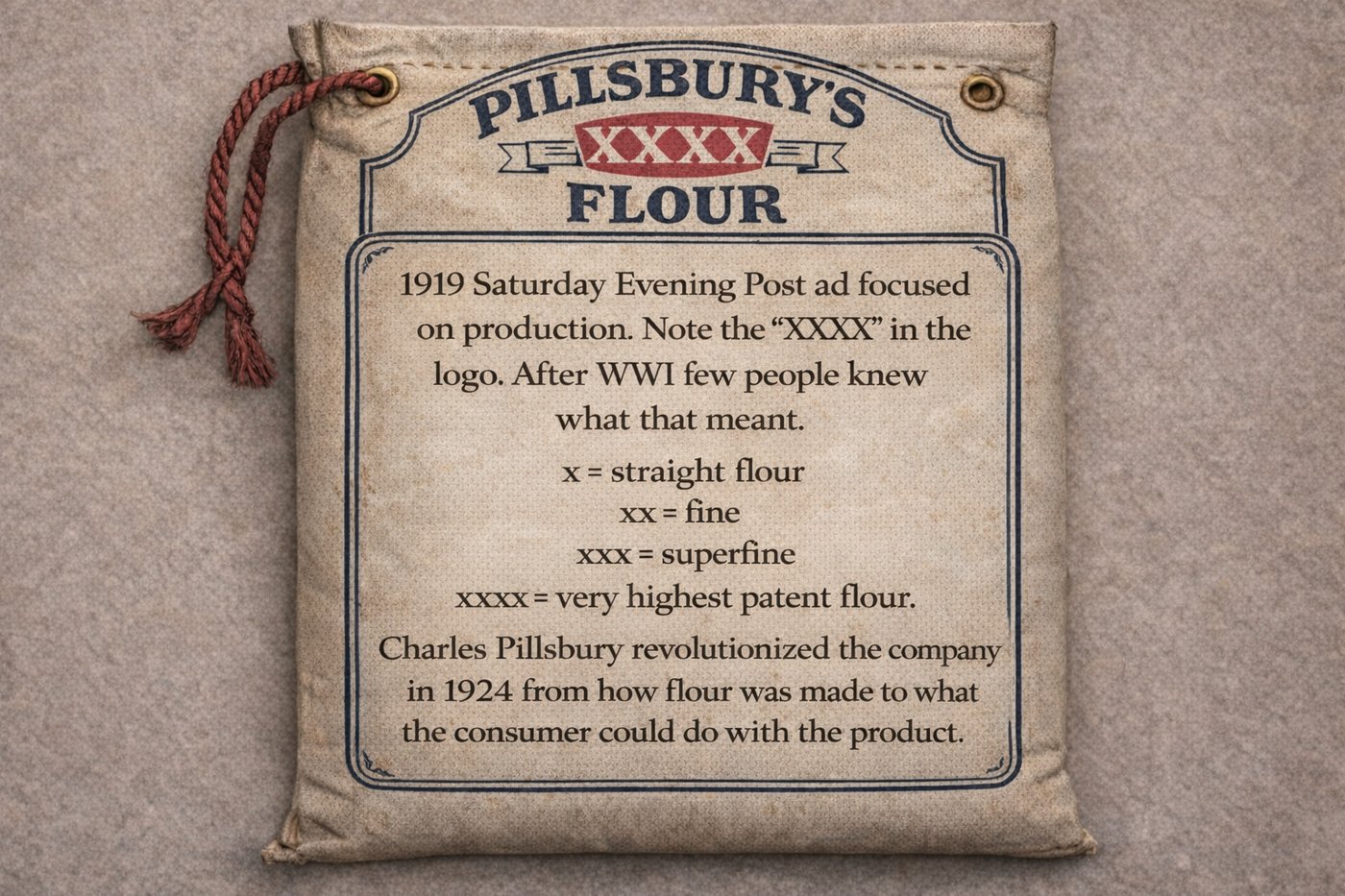
That flour, as our chapter on the Pillsbury Company puts it, built the fortune that built the house. For the wider family story, read our history of the Pillsbury family and company, and for the competition, who the Pillsburys’ rivals across the river were.
What happened to the trading floor?
Technology arrived early. In 1957, Cargill installed the first electronic computer used in the grain industry at the exchange; the Minneapolis Star reported it could do in eight hours what had taken ten days. All three buildings joined the National Register of Historic Places in 1977 — three years after the Pillsbury Mansion did. Open-outcry trading on the floor ended on December 19, 2008, and in 2020 the exchange merged with Miami International Holdings. Today the buildings hold offices for tech firms, lawyers, traders and nonprofits.
Where can you see what the wheat paid for?
Walk past the Grain Exchange downtown, then come see the other end of the story at 100 East 22nd Street. The mansion that flour built is open for guided tours, cocktails and dinner. Plan your visit to the Pillsbury Club or browse our experiences and tours.
Keep reading: What Is the Stone Arch Bridge? The 1883 Railroad Bridge in the Flour District That Built the Pillsbury Fortune