
How Many Mansions Around Washburn–Fair Oaks Park Were Lost, and When? A Decade-by-Decade Ledger From 1910 to 1968
Stand beside the Pillsbury Mansion today and you are looking at the last survivor of a once-crowded avenue. The Pillsbury Club’s own history page keeps a ledger of the grand houses around Washburn–Fair Oaks Park, each with the year of its passing. Read as a list, it is a sobering sequence. Read by decade, it tells a story about when Minneapolis lost its palaces, and how close the Pillsbury house came to joining them.
Here is that ledger, grouped by decade. Every name and year below comes from The Owners chapter of the mansion’s history; the page marks each year as the house’s passing, and the surrounding story is that these houses fell one by one across the twentieth century.
The 1910s: Two Houses Gone Before the Pillsbury Mansion Was Finished
The first losses came before the Pillsbury Mansion at 100 East 22nd Street was completed in 1916. The ledger lists two houses as gone in 1910: the G. A. Pillsbury house and the Morrison house, known as “Villa Rosa.” It adds the F. Pillsbury house in 1916. In other words, the Pillsbury family itself lost properties on this avenue even as Charles and Nelle Pillsbury made their own the showplace we still have.
The 1920s: Five Houses, Including a Senator’s
- 1922: Mendenhall
- 1923: Rand
- 1924: Washburn
- 1926: Judd
- 1927: Eastman
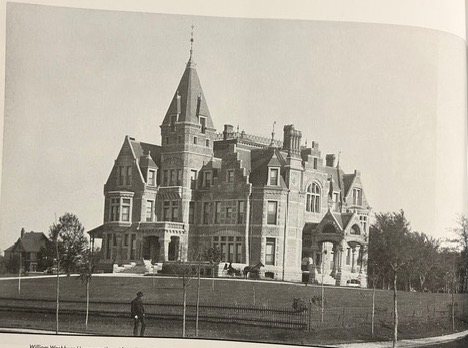
The Washburn name matters here. The Washburns were among the milling families whose fortunes built the district, and the 1924 loss of Senator William Drew Washburn’s mansion, called Fair Oaks, took the house that gave the park its name. The period photograph below shows it as it looked across the park from the Pillsbury house. We tell the full story of that house in What Was Fair Oaks, the Lost Palace That Named the Park.
The 1930s: The Busiest Decade, With Seven
- 1930: Nelson and Hart
- 1932: Lowry
- 1933: Gates and Gale
- 1935: Daggett
- 1937: C. A. Pillsbury
Seven houses disappear in the 1930s, the largest single-decade count in the ledger, and the decade overlaps the Great Depression. We will not claim the Depression alone explains it, because the ledger does not give reasons. What it does show is that the avenue was losing a house roughly every year or two. Then, in 1940, the Pillsbury Mansion itself changed hands after Charles S. Pillsbury’s death, sold for use as a theological seminary.
The 1950s and 1960s: Nine More, and a Cluster in 1961
- 1954: Partridge
- 1958: Kennedy
- 1961: Wilson, Bell and McNair
- 1962: Velie
- 1966: Gluek
- 1967: Dunwoody
- 1968: Clifford
Two houses fell in the 1950s, then seven in the 1960s, including three in the single year of 1961. By 1968 the last of the lost houses on the ledger, the Clifford house, was gone. Count them all and the avenue had lost twenty-four mansions between 1910 and 1968. The Pillsbury Mansion, then serving as a seminary, was the largest survivor still standing.
1969: The Year the Count Stopped
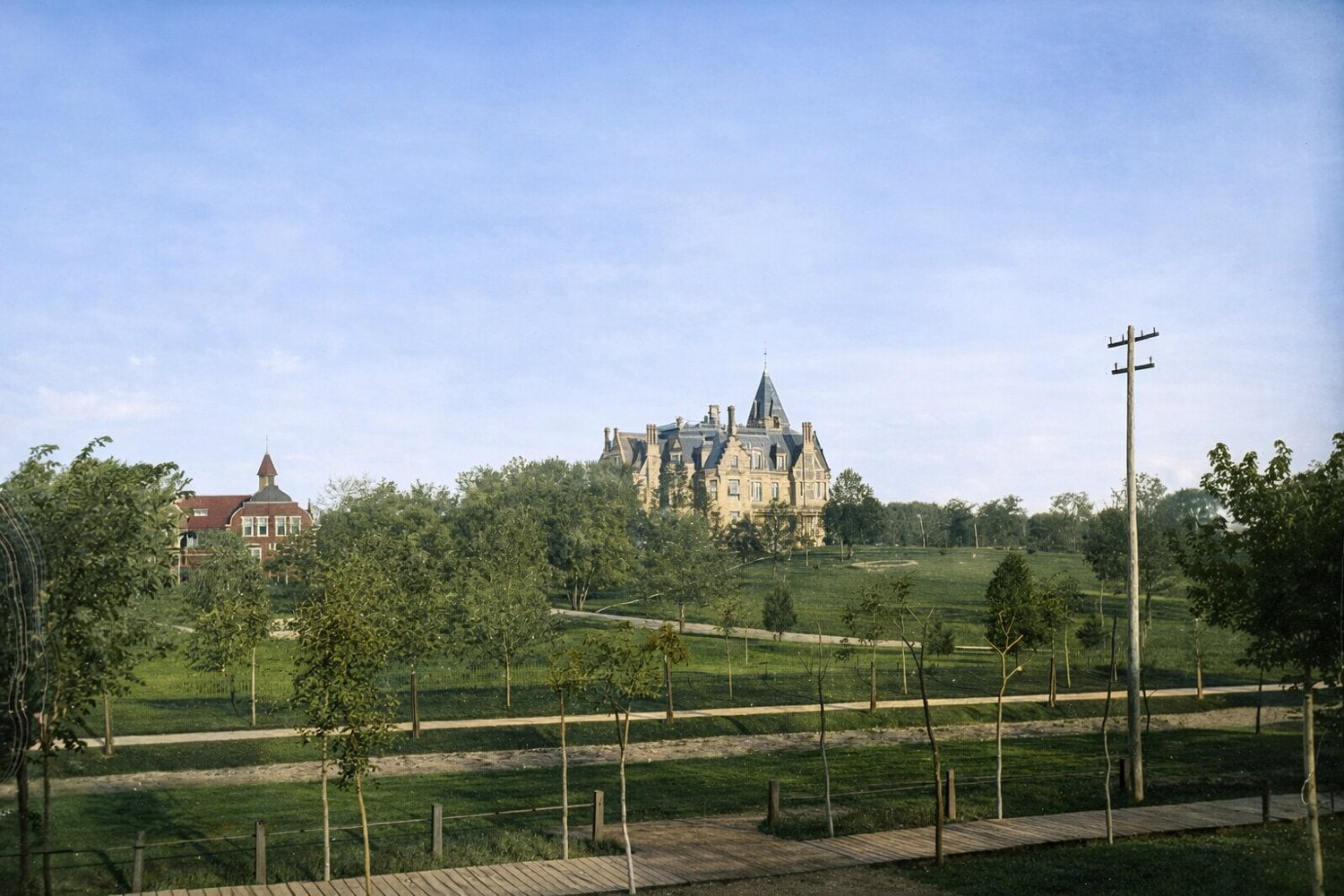
In 1969 an anonymous donor gave the Minneapolis Society of Fine Arts the means to preserve four threatened houses across the park, with the Pillsbury Mansion the largest of them. In 1974 all four were entered together on the National Register of Historic Places, an unusual act of collective preservation. You can read more in Which Four Minneapolis Mansions Were Saved From the Wrecking Ball and in How the Pillsbury Mansion Survived. For the wider preservation framework, the National Park Service publishes its Preservation Briefs on caring for historic buildings, and the Minnesota Historical Society’s digital newspaper collection is where you can look for period coverage of these houses yourself.
Why the Ledger Still Matters
Twenty-four houses lost across fifty-eight years. One house left standing at the end of the list: Charles S. Pillsbury’s. It later served the Carmichael Lynch advertising agency and BLIND, Inc., and today it is the Pillsbury Club. Across the street, the Minneapolis Institute of Art remains its neighbor.
You can see the survivor for yourself. Plan a visit on our Plan Your Visit page or join one of the mansion tours and experiences, and stand where the avenue of palaces once began.
Keep reading: What Did the 1917 “Save the Wheat” Food Pledge Mean for a Flour-Making Family in a Minneapolis Mansion?