
What Did a Newspaper Columnist See Inside the Newly Rescued Pillsbury Mansion in January 1969?
On January 9, 1969, Minneapolis Star columnist Barbara Flanagan opened her column with a line of pure relief: “We’ve finally saved something historic from the wrecking ball.” A day earlier, the Minneapolis Society of Fine Arts had announced it had acquired the Charles S. Pillsbury Mansion and three neighboring landmark houses, bought with anonymous donations “interested in preserving historic landmarks.” Flanagan got a personal tour before most of the city did, and what she wrote down is a genuinely fresh window into the house — including one detail that doesn’t match the story this website tells today.
“I Don’t Even Know Who Our Benefactors Are”
Flanagan’s column is unusually personal for a 1969 society page. She’d visited the mansion two years earlier, while it was still Northwestern Lutheran Theological Seminary, worrying about what would happen once the seminarians moved out — “so was I,” she wrote of Walter G. Robinson, the Society of Fine Arts president who orchestrated the purchase. Robinson wouldn’t name the donors (“he’s not talking,” Flanagan noted), only that the Pillsbury house — “a magnificent museum of a place” — and three former homes of “such historic pillars as Alfred F. Pillsbury and John and Caroline Crosby” were now the Society’s to protect. The complex sat within what the paper called the Model Neighborhood development, which Robinson hoped could become “the keystone to cultural education” for the area.
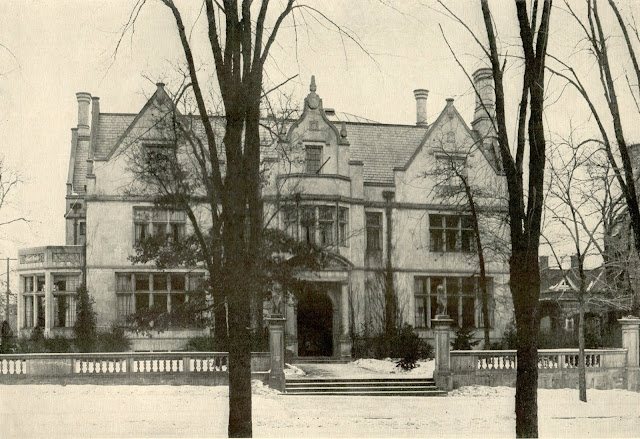
She had the family history slightly tangled — her column calls Charles Stinson Pillsbury “twin brother of John Pillsbury Sr.” and father of Philip W. Pillsbury, where the two Pillsbury cousins who built neighboring mansions on the block were sons of the company’s co-founders, not twins of each other. It’s the kind of loose shorthand a columnist reaches for on deadline, and we leave it as printed rather than smoothing it over.
A Fireplace Story That Doesn’t Match Our Own
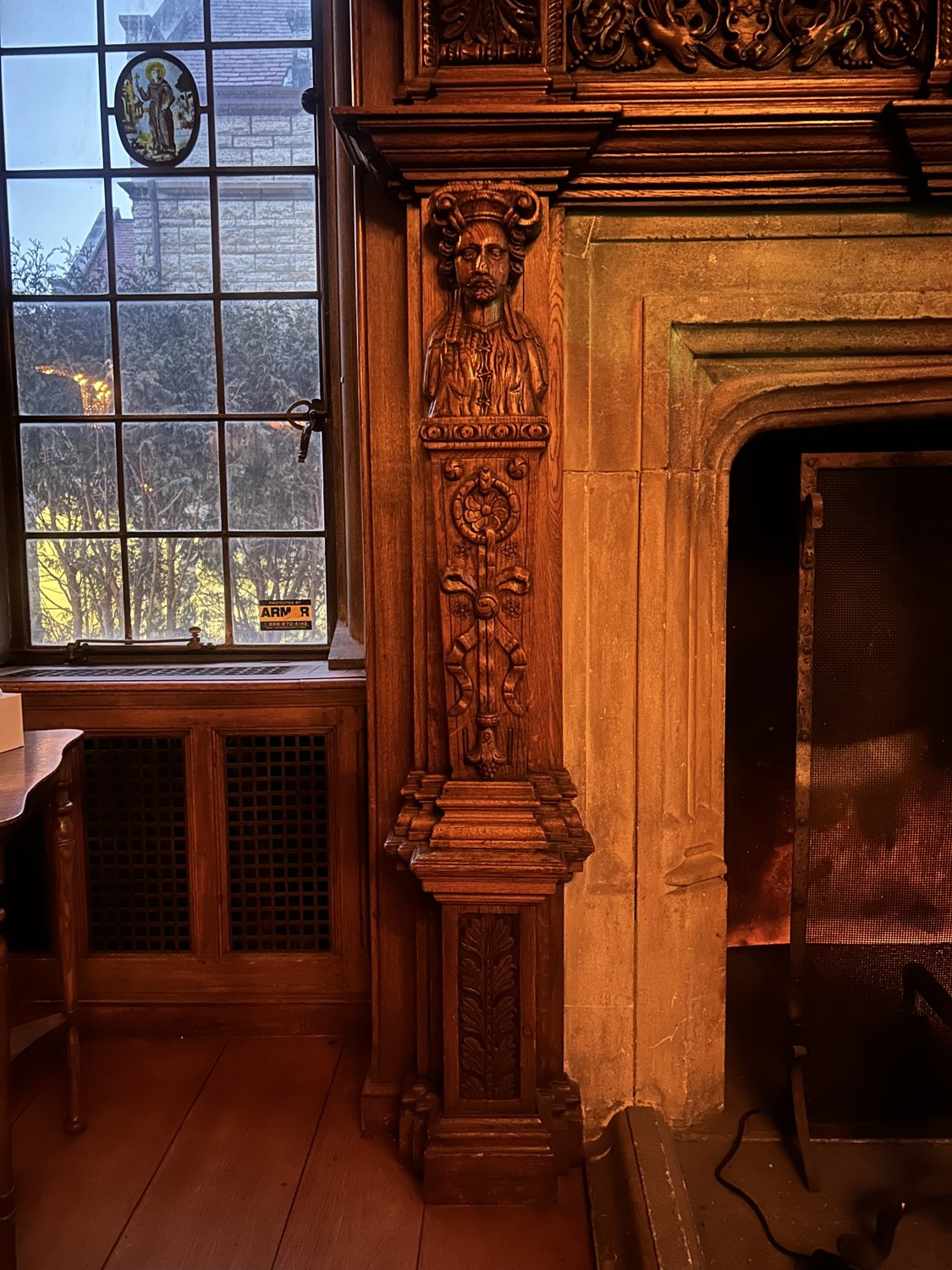
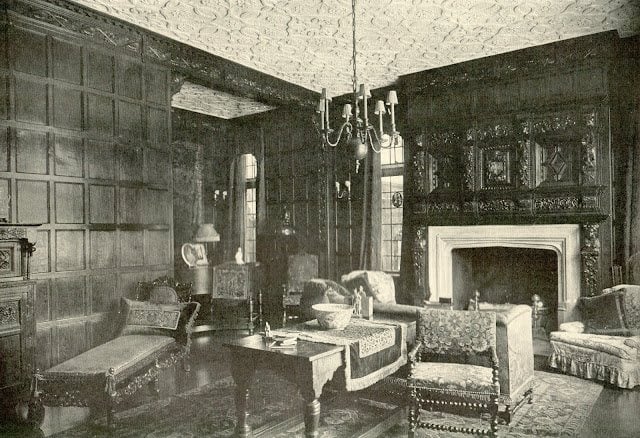
The most interesting wrinkle is about the library fireplace. Our own history pages, and an earlier post on this site, tell you the mansion’s library chimneypiece survived the Great Fire of London and came from the Tallow Chandlers’ livery hall. Flanagan’s 1969 column tells a different story: she writes that the library’s fireplace is “fantastic — a survivor of the Great Fire of London in 1666,” sourced from “the guild hall of Chester, England.” A photo caption on the same page adds a third wrinkle, dating the piece to “the great fire of London in 1660” — six years off from the actual 1666 fire, and naming Chester rather than London as the fireplace’s home guild. We’re not going to pick a winner here; a fifty-six-year-old newspaper page disagreeing with itself in two spots, and with our own site’s account, is exactly the kind of loose end worth leaving alone rather than quietly editing away.
What both accounts agree on: the fireplace nearly left Minneapolis. Flanagan repeats the story that William Randolph Hearst claimed the London dealer Charles Duveen had already sold him the mantel for one of his California castles, sued over it, and settled for a replica while the real stone stayed here — the same “$50,000 fireplace switcheroo” this site has told elsewhere, now independently corroborated by a contemporary newspaper account rather than family lore alone.
Two Bible Scenes in Glass, and a Number We Didn’t Have
The accompanying photo essay, headlined “Mansion Has a Museum Quality,” names two stained-glass window scenes in the library that no other source on this site has recorded: Job and the Three Tempters and The Destruction of Jerusalem, both installed among the ancient English and Venetian glass Duveen sourced for the house. The same page gives a figure worth keeping — the mansion’s grounds measured 62,000 square feet, a hard number for a property this site had only ever described in general terms.
Flanagan closes by counting the Pillsbury mansion among a handful of Minneapolis landmarks she felt had been properly saved: the Swan Turnblad mansion (already home to the American Swedish Institute), the George Chase Christian mansion (then the Hennepin County Historical Society), and the Edward C. Gale mansion (then the American Association of University Women) — a reminder that saving one grand house in 1969 Minneapolis usually meant fighting for several at once. Read more about who owned the mansion across the decades and the dealer who furnished it.
See the House Flanagan Toured
The mansion Barbara Flanagan wrote about in 1969 is the same building that now houses the Pillsbury Club. Plan a visit to see the library fireplace — and its conflicting stories — for yourself.
Keep reading: Did Minneapolis Read About Rotherwas Before the Pillsburys Ever Owned a Board of It?