
Who Was Christened Inside the Pillsbury Mansion in 1938?
On a Tuesday afternoon in the first week of January 1938, a baby was carried into 100 East Twenty-second Street in a long lace-trimmed christening robe. The robe was not new. It had been his father’s.
The Star Tribune reported it two days later, on Wednesday, 5 January 1938, under a headline of exactly three words: CHRISTEN PILLSBURY CHILD. It is a short notice — nine sentences — and like most short notices it turns out to contain a great deal.
Who was christened
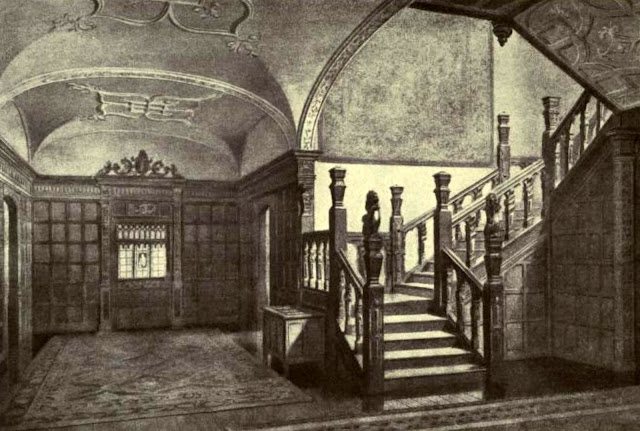
The child was Henry Adams Pillsbury, the small son of Mr. and Mrs. Philip W. Pillsbury of Chicago. The service was held at the home of the child’s grandparents, Mr. and Mrs. Charles S. Pillsbury, at 100 East Twenty-second Street — this house.
That detail is worth pausing on. By 1938 the mansion had been standing for more than two decades and had already hosted a great deal of Minneapolis public life: lectures, war-relief work, receptions, and the 1929 wedding of Mary Pillsbury to Oswald Lord in front of several hundred guests. A christening is the opposite scale of event. It is the house being used as a house.
Who was in the room
Dr. David Nelson Beach of Plymouth Congregational Church officiated. The sponsors — the godparents, in the older phrasing the paper still used — were Mr. R. W. Pomeroy of New York and Mr. Otis Hubbard and Mrs. English Walling of Chicago. The Pillsburys had come up from Chicago for the holidays with a second small son, Philip Winston Pillsbury Jr., and were due to leave for home on the Thursday.
The father, Philip W. Pillsbury, is a figure we have written about before: he grew up in this house and went on to become the family’s master miller, the last Pillsbury to run the company that carried the name. In January 1938 he was still a young man working in Chicago, bringing his own children home to his parents’ hall.
The name is the interesting part
The baby was not named for a Pillsbury. The paper says plainly that he was named for his mother’s father: Mr. Henry A. Bellows, 2215 Irving avenue south.
The notice gives only a name and a street address, so what follows is the public record rather than anything the clipping itself states. A Henry Adams Bellows of Minneapolis, of exactly that generation, had by 1938 assembled one of the more improbable résumés in the city. He took a Harvard doctorate in comparative literature, taught rhetoric at the University of Minnesota, and translated the Old Norse Poetic Edda — a translation still in print. He then spent eleven years, from 1914 to 1925, as managing editor of The Northwestern Miller, the flour trade’s own newspaper, and wrote A Short History of Flour Milling.
From there he became manager of WCCO, then in 1927 one of the first members of the Federal Radio Commission — the body that became the FCC — and later a vice president of the Columbia Broadcasting System. His last job was founding the public relations department at General Mills.
If that is the same man, and the name, the city and the generation all line up, then the child christened in a Pillsbury hall in 1938 carried the name of a man who had spent his career writing about the milling industry and then went to work for the Washburn–Crosby successor across the river. Minneapolis was, and is, a small city at the top.
What a nine-sentence notice preserves
Society columns are easy to dismiss. But this one records, for a single afternoon, a christening robe passed from father to son, the name of the minister, three godparents from two cities, a maternal grandfather’s address, and the fact that a Chicago family came home to a Minneapolis house for Christmas and stayed until Thursday.
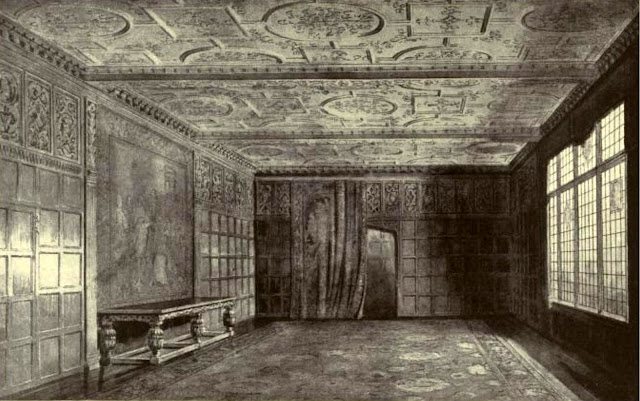
None of that is in the architectural record. The imported English rooms and the building of the mansion are well documented; the ordinary Tuesdays are not. They survive, when they survive at all, in eight inches of newsprint. The Minnesota Historical Society’s digital newspaper hub is where a surprising amount of this house’s domestic life still sits, waiting to be read.
Come and stand in the room
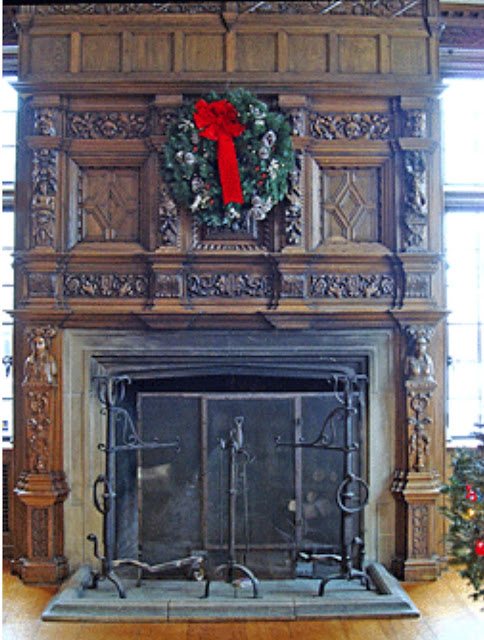
The hall where the family gathered that afternoon is still here, and so is most of what they were standing under. You can read more about the Pillsbury family and the history of the mansion, or come and see it: guided mansion tours run year-round, and planning your visit takes about a minute.
More from the archive in our History Journal — including where the Pillsbury daughters went to college and what it took to run this house in its first decade.
Keep reading: if you are planning your own visit, here is the best time of year to tour a Minneapolis mansion.
Keep reading: What Was on the Top Floor of the Pillsbury Mansion?