
What Was a 1929 Wedding Inside the Pillsbury Mansion Like?
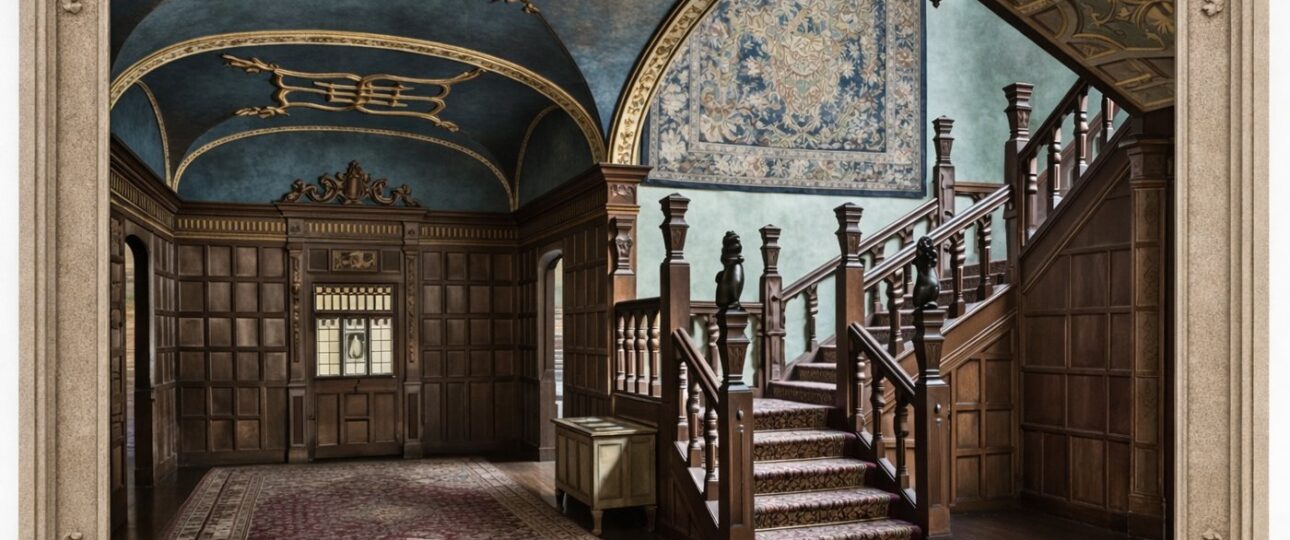
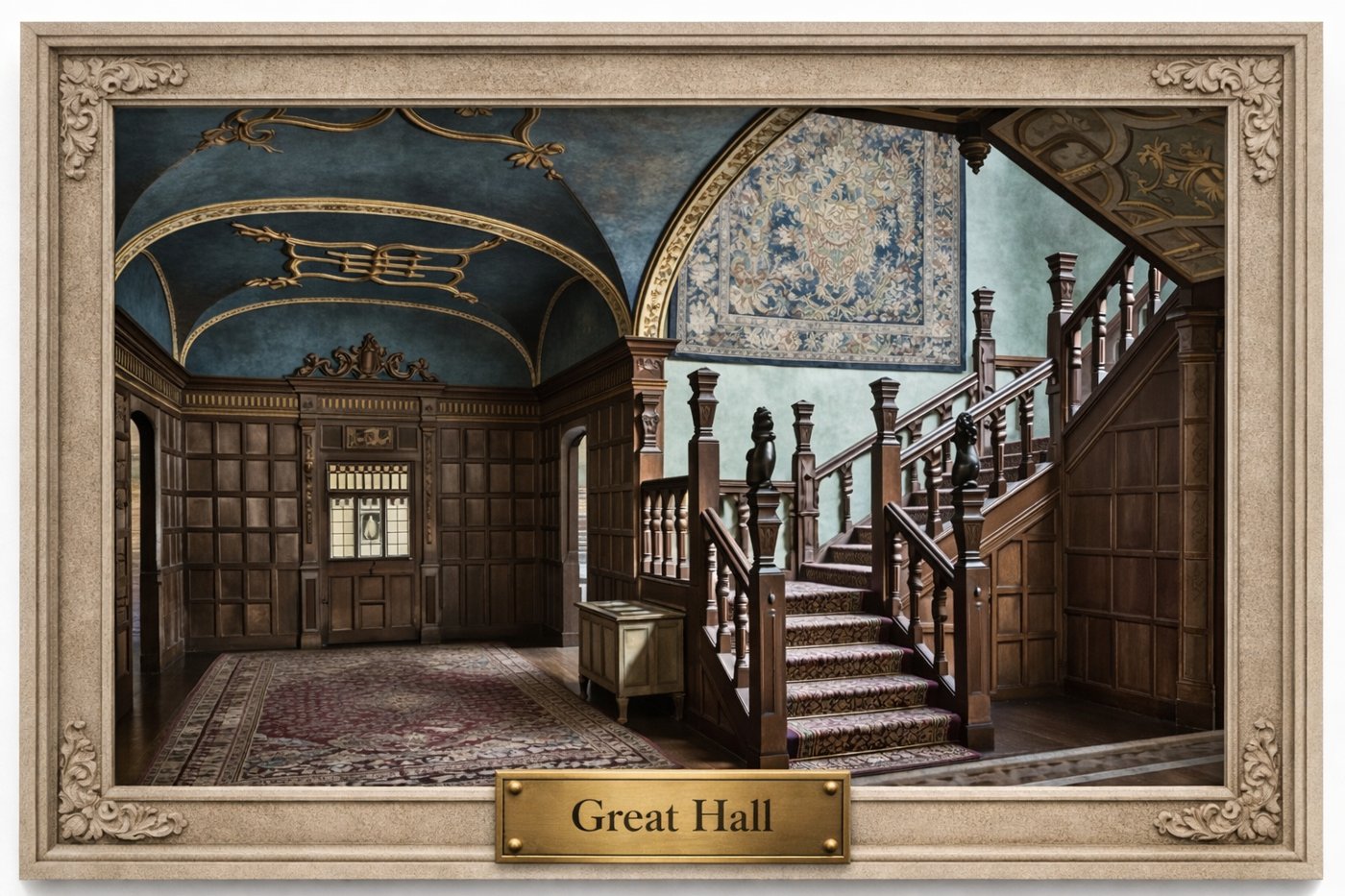
On a Saturday afternoon in December 1929, several hundred people walked into 100 East Twenty-second Street and found the great hall of the Pillsbury Mansion turned into a chapel. Ferns had been banked into a tangle of greenery. Smilax ran overhead. Cathedral candles stood in candelabra and on tall standards, and white calla lilies were massed around an improvised altar. At four o’clock, Mary Stinson Pillsbury was married there to Oswald Bates Lord of New York.
The Minneapolis Journal covered it the next morning under the headline “Miss Mary Pillsbury Bride of Oswald Lord in Brilliant Setting.” It is one of the most detailed accounts we have of the mansion being used as the family actually used it — not as a museum piece, but as a house that could absorb a few hundred guests on a winter afternoon.
The date was not an accident
Mary chose the seventh of December. Her parents, Charles Stinson Pillsbury and Nellie Pendleton Winston, had been married on December 7, 1901. To make the point unmistakable, the processional was the Coronation March from Meyerbeer’s Le Prophète — the same music that had been played at her parents’ wedding twenty-eight years earlier. Her father escorted her to the altar while it played.
It is a small thing, and it tells you a great deal about how this family thought about continuity. The house itself was barely fifteen years old in 1929, but it had been built to look four hundred, out of rooms and panelling brought over from England. Getting married inside it on your parents’ anniversary is of a piece with that instinct.
Why the great hall worked
The Journal’s reporter noticed something that anyone who walks into the room still notices: “The architectural lines of the great hall, with its high-vaulted ceiling, lent itself unusually well as a background for the nuptial ceremony.” The decorators leaned into it rather than fighting it. Greenery overhead, candles at height, and the vaulted ceiling doing the work a church nave would normally do.
An orchestra of eight musicians from the Minneapolis Symphony played the pre-nuptial selections — Ganne’s “Extase,” the Bach-Gounod “Ave Maria,” a Rubinstein “Romance,” Bizet’s “Agnus Dei,” and Rubinstein’s “Kammenoi-Ostrow.” Rt. Rev. Monsignor J. M. Cleary read the service. The recessional was the “Lohengrin” march.
The detail we like best is the staging. Shortly before the processional, the ushers stretched white satin ribbons from the foot of the winding stairs, through the great hall, to the altar — making an aisle out of a house that does not have one. Ten of them did it, including two of the groom’s brothers and the bride’s brother, Philip W. Pillsbury, who would later run the company.
The dress, and the two sisters
Mary wore a Patou gown of ivory white panne velvet, cut on severe princess lines with close-fitting sleeves, and a train that ran six yards from the waist and was bordered in old Brussels point lace. Her veil was rose point applique, held in a close cap by orange blossoms. She carried white orchids, gardenias and white bouvardia. Arthur Lord was his brother’s best man.
Her only attendants were her two sisters, Katharine Stevens Pillsbury and Helen Winston Pillsbury, who carried Talisman roses. Both of them turn up elsewhere in this journal — Katharine, along with Mary, would survive the sinking of the SS Mohawk just over five years later.
Then the whole house was used
An informal reception followed, and supper was served. The Journal walked the reader through the flowers room by room, which is as close as we get to a floor plan of the evening: white chrysanthemums and candles in old English silver in the dining room, with lilies of the valley set into the deep windows and the wedding cake standing in a mound of white blossoms; ivory white chrysanthemums throughout the great hall; American Beauty roses in the drawing room; and deep pink Matchless roses in the living rooms on the second floor.

Four rooms, four different flowers, three floors in use. It is a useful corrective to the idea of a Gilded Age mansion as a set of formal rooms nobody entered. On December 7, 1929, every one of them had a job.
And then she left
The couple honeymooned in the south and in Havana, and settled in New York City. Mary Pillsbury Lord went on to a public life that had nothing to do with Minneapolis society pages — war relief work, and eventually succeeding Eleanor Roosevelt as the United States representative to the United Nations Commission on Human Rights. The 1929 wedding notice, read now, is the last moment she appears in the record as purely a daughter of this house.
The great hall is still there, still vaulted, still the first room you walk into. More of the History Journal covers how it was assembled and where its oak came from. If you would rather see it than read about it, the mansion is open for guided tours and dining as the Pillsbury Club — details and hours are on Plan Your Visit, and the tours themselves are listed under Experiences and Tours. Reservations are required in advance.
Source: The Minneapolis Journal, Sunday, December 8, 1929, page 27, “Miss Mary Pillsbury Bride of Oswald Lord in Brilliant Setting.” Background on the family and the building of the house: The Pillsbury Family and Building the Mansion. The mansion has been on the National Register of Historic Places since 1974 — see the National Register. Historic Minneapolis newspapers are searchable through the Minnesota Historical Society, and the milling city the Pillsburys built is the subject of the Mill City Museum.
Keep reading: Where Did the Pillsbury Daughters Go to College?