
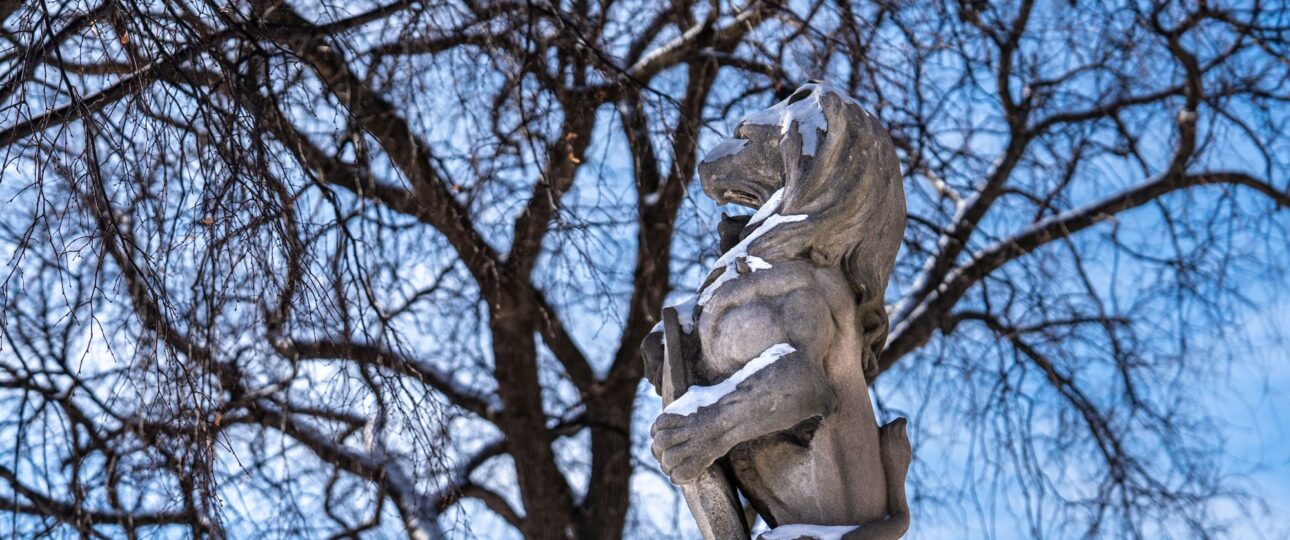
Who Carved the Stone Lions at the Pillsbury Mansion’s Door?
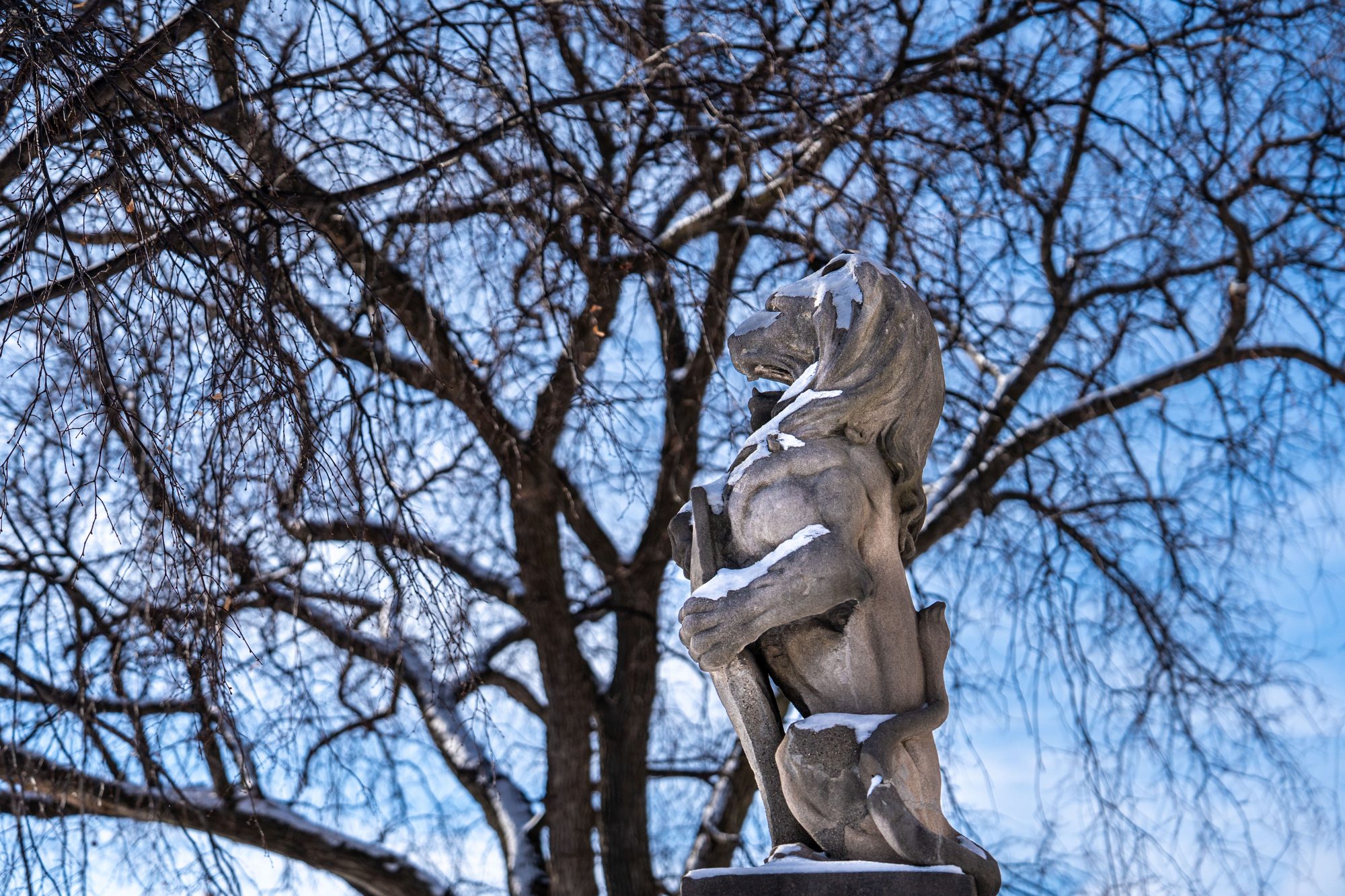
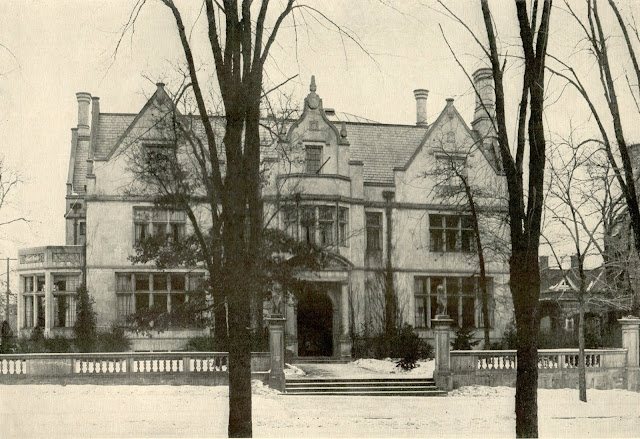
Walk up to the door at 100 East 22nd Street and two stone lions watch you do it. Guests ask about them more than almost anything else on the outside of the building, and the answer turns out to be far better than “a stonemason.”
The lions were carved by Charles S. Wells — a Scottish-born sculptor who, before he ever set foot in Minneapolis, had worked in the studios of two of the most celebrated sculptors in America.
From Glasgow to the Art Students League
Wells was born in Glasgow on June 24, 1872, and came to the United States at fourteen, in 1886 or 1887. He trained at the Pratt Institute School of Art in Brooklyn, at the Art Students League of New York, at the National Academy of Design, and finally at the École des Beaux-Arts in Paris in 1902–03. His papers are held at the Minnesota Historical Society, and they are the reason we can say any of this with confidence.
He worked for Karl Bitter — and for Augustus Saint-Gaudens
From 1893 to 1898 Wells was one of Karl Bitter’s assistants. In Bitter’s studio he worked on decorative elements for George Vanderbilt’s Biltmore, on exterior carvings for the Philadelphia railroad station, on the statues adorning the Triumphal Bridge at the 1901 Pan-American Exposition, and on figures for the 1904 St. Louis World’s Fair.
Then, from 1901 to 1902, he was employed by Augustus Saint-Gaudens — arguably the finest American sculptor of the age — assisting on the equestrian statue of General Sherman and on decorative features for the Boston Public Library. A photograph survives in his papers of Saint-Gaudens and his assistants, Wells among them, standing in front of the plaster cast of the Sherman.
He also enlarged sketches for Henry Merwin Shrady, built scale models for the architectural firm of Carrère and Hastings, and in 1909 worked with George Julian Zolnay in St. Louis on a commemorative relief of the 1904 World’s Fair. This was not a local craftsman. This was a man from the centre of the American Beaux-Arts world.
Why he was in Minneapolis at all
Wells came to Minneapolis in 1910 to make exterior details and interior carvings for St. Mark’s Episcopal Church. He stayed. In 1912 he joined the faculty of the Minneapolis School of Art, teaching sculpture and drawing until 1914, when he left to make the fountain and ornamental details for Gateway Park. He returned to the school in 1918 and taught there until 1931.
Those same years — 1912 to 1915 — he was supervising work on the Thomas Lowry Memorial for Karl Bitter and, after Bitter’s death, for Bitter’s estate. Which means the man who carved our lions and the man who finished the monument to the streetcar king of Minneapolis are the same person, working on both at once.
What exactly did he carve here?
Here the sources do not quite agree, and we are going to leave the seam showing rather than pick a side.
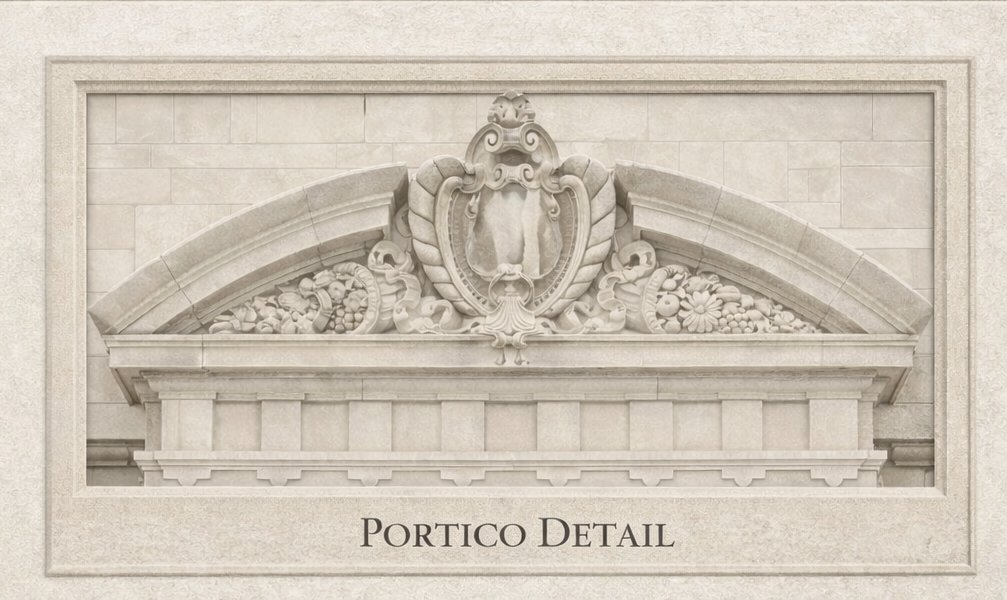
Our own archive draws on a Star Tribune report of September 1913, which credits Wells with the Bedford-stone lions for the entry pillars and with the portico and the parapet friezes — the whole carved programme of Edwin Hewitt’s exterior. The Minnesota Historical Society’s finding aid, written from Wells’s own papers, is narrower: among his Minneapolis works it names “lions for the gateposts of the Charles S. Pillsbury residence,” and nothing else on this house.
Both can be true. A finding aid lists what the collection documents, not everything a man made. But if you want the claim that is beyond argument, it is the lions — and the Society holds Wells’s clay model of them to prove it.
The rest of his Minneapolis
Once you know his name you start seeing him around the city. Wells carved the portal of the Phi Gamma Delta fraternity house, monuments at Lakewood Cemetery, a relief portrait of the physician Martha G. Ripley for the State Capitol, and a relief of Carl B. Storrs for the Minneapolis Public Library. Further afield he made a memorial to superintendent Anna T. Lincoln for Carleton College and a bust of the chemist Harry Snyder for Cornell.
There is one more entry in his papers that we enjoy disproportionately: a clay model of a garden wall fountain for the residence of George B. Clifford. Minneapolis in these years was a small world, and the same few hands kept turning up in it.
Later life took him away from sculpture. He ran his own school for a year or two, headed the Fort Wayne Art School in Indiana until it closed in 1934, came back to Minnesota to conduct psychological research at the State Training Center for Boys in Red Wing, and finished his working life directing a community art centre in Minneapolis under the WPA Federal Art Project, teaching until he retired in 1941. He died on May 13, 1956, aged 83.
Come and look at them properly
The mansion is listed on the National Register of Historic Places, and the lions have been sitting through Minneapolis winters at the front door since before the house was finished. You can read more about how the mansion was built and about the English rooms inside it, or see the whole thing in person on one of our guided mansion tours. Plan your visit — and give the lions a nod on your way past.
Keep reading: Do You Need a Reservation to Visit the Pillsbury Club in Minneapolis?