
Why Was a Teenager Filming Phantom of the Opera at the Pillsbury Mansion in 1970?
On a Sunday in August 1970, readers of the Star Tribune opened the paper to a photograph of a caped figure climbing a great carved staircase in the half-dark, under a wall sconce, with a shadow thrown up behind him the size of a building. The headline read “The Phantom Rides Again.” The first line read: Lon Chaney lives!
The staircase was ours. The Phantom was fourteen years old.
A ninth-grader with a camera
The paper explained it plainly enough. The resurrection came “in the form of a slightly altered production of the Phantom of the Opera, written, directed and starred in by Peter Hill, 14, a 9th grader at Clinton Junior High School.” He also edited it. The photo caption calls him, wonderfully, the sometime monster.
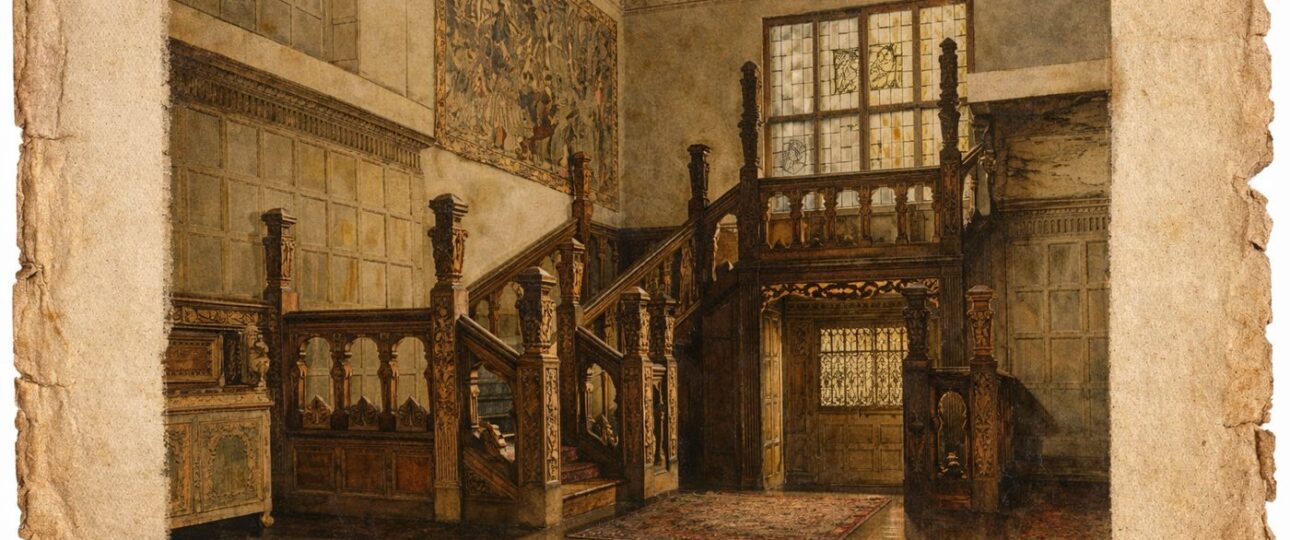
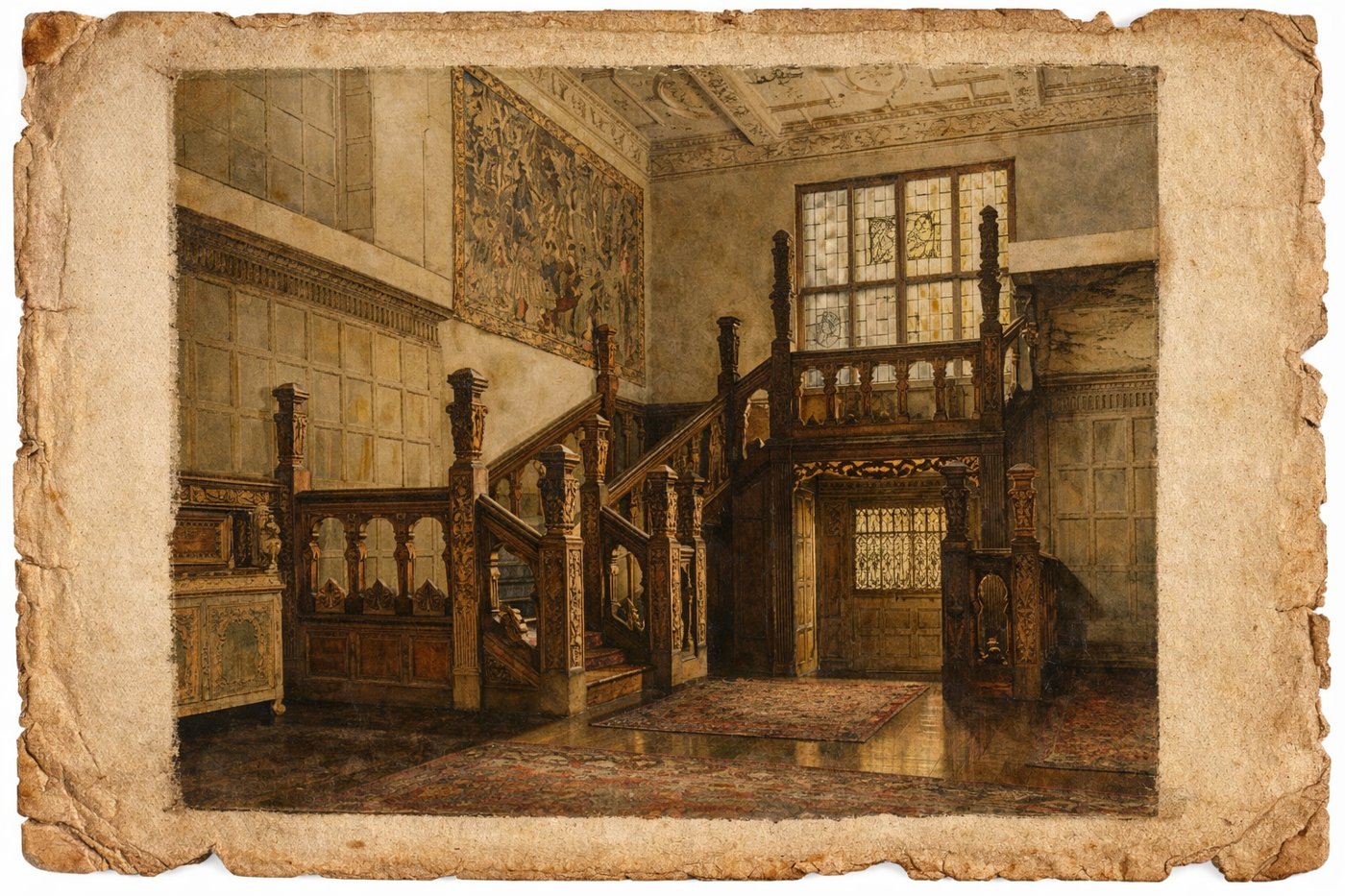
He was remaking a film he would only have known from television — the 1925 silent Phantom of the Opera with Lon Chaney, a late-show staple in the era before home video. And he shot it in a Tudor-revival mansion on East Twenty-second Street that happened to have exactly the staircase the story wanted.
Why a public school was making films in a mansion
This is the part that turns a charming anecdote into actual history. Peter Hill was not trespassing and he was not a guest. He was a student in a filmmaking class run by Minneapolis Public Schools, and the class met in this house.
It had started that January, and its original purpose was not enrichment. According to the teacher, Marlys Skelton, the class was created “as a vehicle to reach dropouts.” It worked well enough that the school system folded it into the regular curriculum — but it deliberately kept two features of the original design: dropouts could still enroll, and the class was held outside a school building. It was held at the old Pillsbury house.
That was the point. A teenager who had already decided that school buildings were not for him could still walk through the door of a mansion.
“It’s surprising what kinds of movies different people make”
Skelton’s own words in the article are worth keeping. She called it “a very nice thing for the school system to do.” She thought the course was valuable for teenagers who had difficulty communicating, because it gave them a creative outlet. And on what the students actually produced: “We make all kinds of movies, and it’s surprising what kinds of movies different people make.”
Every student cut their own film at the end of the course. “These kids are very serious about their films,” she said.
The mansion’s quietest decade
We have written a great deal about this house at its two loudest moments: the years when the Pillsburys built it and filled it with centuries-old English interiors, and the years when its future was fought over and it was finally recognised as a landmark. The decades in between get less attention, because institutional occupancy rarely makes the papers.
This clipping is a small correction to that. In 1970 the house was long out of family hands and well into its institutional life — and one of the things going on inside it was a public school teaching teenagers to write, shoot and edit their own movies, in a room with a four-hundred-year-old staircase in it.
The staircase as a film set
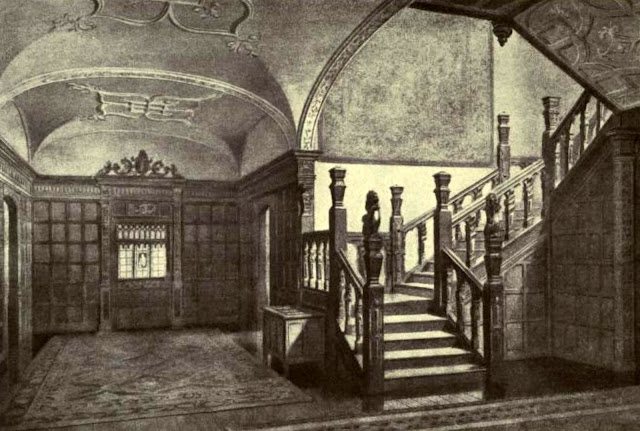
It is easy to see why he chose it. The great stair is the most theatrical object in the building: deep carved oak, heavy newels, a turn that lets a figure appear at the top before anyone below sees him coming. It was assembled from panelling and joinery imported from an English house and installed here as a piece of stage-setting in its own right — a Gilded Age fortune buying a Jacobean interior wholesale.
Which means that in 1970 a fourteen-year-old from south Minneapolis used, as a horror-film set, woodwork that had been bought precisely because it looked like the past. He was not misusing the house. He was the first person in years to use it for exactly what it was designed to do.
Where to go looking yourself
The clipping we have quoted here is from the Star Tribune of Sunday, August 16, 1970. If you want to dig through Minnesota newspapers the same way, the Minnesota Historical Society’s newspaper collections are the place to start, and the Mill City Museum will fill in the milling fortune that paid for the staircase in the first place. The house’s landmark status is recorded through the National Register of Historic Places.
More of the mansion’s story is in our History Journal. And if you would like to stand on the staircase yourself — no cape required, though we would not stop you — the house is open for guided tours. Details, hours and reservations are on Plan Your Visit.
Keep reading: What was the Pillsbury Mansion’s amusement room used for in 1918?