What Was the Washburn Memorial Orphan Asylum? How a Rival Flour Miller’s Will Built a Minneapolis Orphanage
Everyone who tours the Pillsbury Mansion hears about the flour fortune that built it. Fewer people hear about what the family’s great rival across the river did with its fortune. When Cadwallader C. Washburn died in 1882, his will set aside money for an orphanage, and an institution that began as a brick building near 50th and Nicollet is still working with Minneapolis children today.
Who was Cadwallader Washburn, and why does he belong in a Pillsbury story?
Washburn was the miller behind the Washburn Crosby Company, the firm that competed with the Pillsburys for the title of Minneapolis’s leading flour maker. Washburn Center for Children’s detailed agency history traces the milling side of the story: he bought land on the west bank and water power rights at St. Anthony Falls in 1855, built the Washburn “A” Mill in 1874, and formed his partnership with John Crosby in 1877. In 1880 his flour won a gold medal at the Millers International Exhibition in Cincinnati, and “Gold Medal Flour” became the brand name about two months later.
If you want the full rivalry, our post on the Pillsburys’ rivals across the river tells it. The two families also shared the Minneapolis skyline, and a neighborhood: Cadwallader’s younger brother, William D. Washburn, built Fair Oaks, the lost mansion we describe in our post on the palace that named the park.
What did the 1878 mill explosion have to do with the orphanage?
On May 2, 1878, an explosion at the Washburn “A” Mill killed 14 employees. The agency history says Washburn responded by establishing a fund for the bereaved families, and the organization’s own website says he founded the orphanage after a mill explosion left several children orphaned. Our post on the Great Mill Disaster of 1878 covers the disaster itself and how it shaped the Pillsbury story.
How did the Washburn Memorial Orphan Asylum begin?
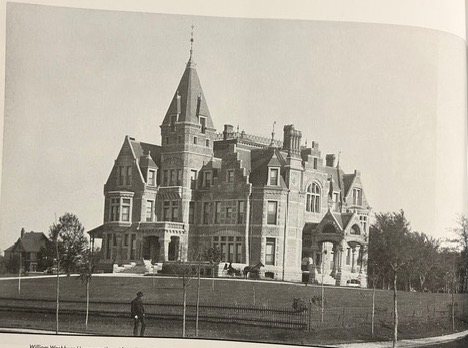
Washburn died on May 14, 1882. According to the agency history, his will left $375,000 for founding and endowing the Washburn Memorial Orphan Asylum, and a neighborhood history on Patch gives the same figure and says the bequest honored his mother. The first Board of Trustees met in 1883, and its first task was erecting the building at 50th and Nicollet. The Patch article places the site between 49th and 50th streets along Nicollet Avenue and notes that the landscape architect Horace Cleveland platted the surrounding lots. Neither source names an architect.
The first children were admitted on Nov. 16, 1886: eight boys and one girl, according to the agency history. By 1895 the orphanage housed 122 children, its peak. In 1907 the board recommended reducing the population to 50 boys and 50 girls to cut expenses.
When did the orphanage close? The sources do not agree
Here the record is messy, and we would rather show you the mess than pick a winner. The agency history says that in 1920 the board resolved to admit no more children and sold the building and site to the City of Minneapolis, and it notes that Ramsey Junior High now occupies the site. The organization’s About Us page says the orphanage closed in 1924. The Patch article says the building was demolished in 1929 and describes a 43-year history that cared for more than 900 children. A plausible reading is that admissions ended first, the home wound down over the following years, and demolition came last, but none of the sources says so outright.
What became of the Washburn name?
The agency did not disappear when the orphanage did. The agency history says it ran as the Washburn Foster Home Placement Agency from 1929 to 1949, then became a children’s mental health clinic. It was renamed the Washburn Memorial Clinic in 1950, the Washburn Child Guidance Center in 1968, and Washburn Center for Children in 2007. A new center opened in December 2014 after a $24.5 million campaign.
It is a quiet footnote to a loud rivalry. Two Minneapolis milling dynasties spent decades racing each other for the world’s flour trade, and the orphanage Washburn’s will funded became a children’s organization that outlived his mills. To see how the Pillsburys built, visit the Mill City Museum for the milling story and then plan a visit to the Pillsbury Club for the mansion, or browse our Pillsbury Company history page for the rest of the flour story.
Want to see the house up close? Explore tours and experiences at the Pillsbury Club.
Keep reading: Where Did the Walrond Family Live? Bradfield House in Devon and the Family Behind the Pillsbury Mansion’s Marriage Fireplace