
What Did a Pre-Renovation Survey Find in the Pillsbury Mansion’s Paint and Plaster? Lead, No Asbestos and a Boiler-Room Caution
Every old house keeps a record of the people who painted it. In the Charles S. Pillsbury Mansion, that record runs through more than a century of plaster, trim and window frames. In February 2024, before a major restoration began, a licensed Minnesota inspector and lead risk assessor spent a day testing the house, and the report that followed reads like a quiet biography of its surfaces. Here is what it found, and what it did not.
What kind of survey was it?
The report calls itself a limited pre-renovation survey. It describes the building as a four-story home, counting the basement, on an urban lot. The inspectors tested on Feb. 23, 2024, and the report is dated Feb. 28. The scope was deliberately narrow: areas already touched by water intrusion or other damage, where a surface had already suffered a cosmetic or minor structural change. Only damaged areas were sampled, and no destructive or intrusive testing was performed elsewhere. That matters when you read the results: they describe the places the team looked, not a guarantee about every inch of the house.
Was there asbestos in the Pillsbury Mansion?
In the materials tested, no. The team took 23 samples, grouped by material, age and appearance, and the laboratory found no asbestos in any of them. There was one caution. Pipe wrap, the insulation on the pipes, was visible in the basement furnace and boiler room but was not sampled, and the report says to assume it contains asbestos until it is specifically tested. In other words, a clean result for the samples taken, and a flagged unknown in the mechanical room.
Where did the survey find lead paint?
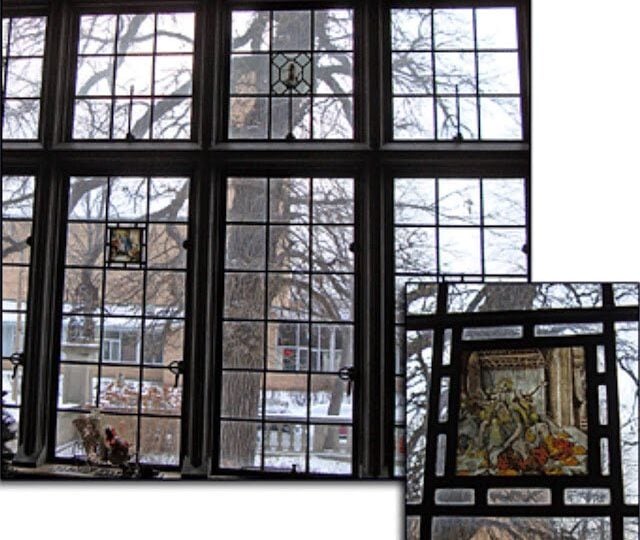
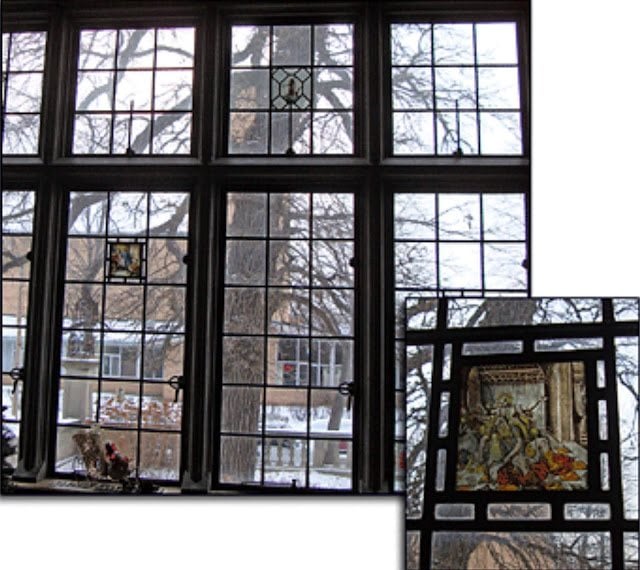
Lead-based paint turned up throughout the house. The team used an X-ray fluorescence analyzer on 179 painted surfaces, a handheld device that reads the paint without scraping it away. Lead was present on plaster walls and ceilings, including some that are wallpapered; on metal windows, door casings and trim in brown and white; on wood windows, sills and casings in white and blue; on wood doors and casings in white; on baseboards, wall trim, built-in cabinetry, cabinet trim and fireplace mantels in white; and on white ceramic tile.
That is not surprising. The EPA notes that a home built before 1978 is more likely to have lead-based paint, and this house was built in the 1910s. The report also adds a sober caveat: surfaces reported as negative were below the testing threshold of 1 milligram per square centimeter, so lead may still be present at lower levels.
What did the report recommend?
The advice is practical. Paint chips and dust debris were present on the floors in some areas, and the report says that debris should be treated as a lead hazard. All painted surfaces should be treated as if they contain lead unless specifically tested. Lead-safe work practices should be followed if any lead paint is disturbed. Cleaning up lead dust and re-painting to stabilize a surface are interim measures, but paint removal, replacing building components, encapsulation and enclosure are abatement measures that must be done by a Minnesota-licensed lead abatement contractor, with disposable suits, plastic sheeting to isolate the work area, HEPA-filtered air handlers, and clearance wipe-samples afterward. Federal rules point the same way: the EPA’s Renovation, Repair and Painting program requires certified, trained firms for paid work that disturbs painted surfaces in pre-1978 homes.
Why this belongs in the story of the house
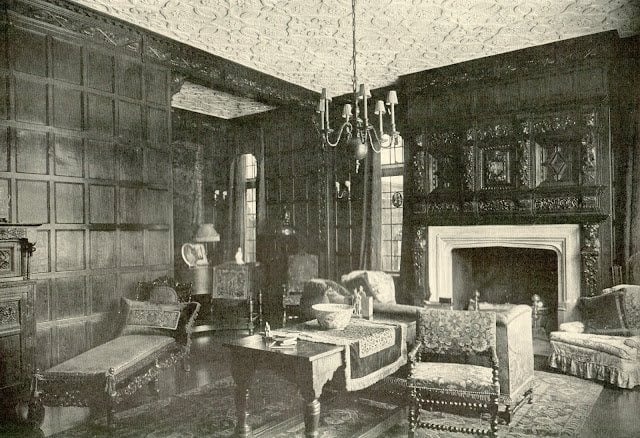
Restoring a landmark means working carefully around the original materials, whether that is hand-carved English oak, historic glass or a century of paint. Earlier chapters of this journal have followed the engineers: one on what they found above the skylight and another on what sits behind the limestone. A third piece explains the rules that govern every change to the house. This survey is the quieter companion to all of them. It is about what the walls were coated in, and how a preservation team plans to handle it safely. For the building’s larger story, start with Building the Mansion.
See the house for yourself
The mansion is now the Pillsbury Club, and you can see its restored rooms on a guided visit. Explore experiences and tours or plan your visit to reserve. Staying overnight? Our sister property 300 Clifton is a historic mansion B&B in Loring Park, and Minneapolis Trolley Tours departs from the Club.
Keep reading: How Do You Vent a Commercial Kitchen in a National Register Mansion? Grease Duct, Make-Up Air and a Window Panel