
What Does ‘Gilded Age’ Mean, and Why Does Minneapolis Have a Gilded Age Mansion Tour?
“Gilded Age” is the name on the ticket for the mansion tour that leaves from the Pillsbury Club, and guests ask about it more than you’d think — usually somewhere between the second cocktail and the trolley pulling up outside. The short version: it’s a phrase coined as a joke, applied to the decades when American fortunes were made faster than they could be spent, and Minneapolis had its own version of it built out of flour, lumber and grain. Here’s what the words mean, why they fit this city, and what the Gilded Age Mansion Tour actually shows you.
Where the phrase comes from
The term is Mark Twain’s. In 1873 he and Charles Dudley Warner published a satirical novel called The Gilded Age: A Tale of Today, about speculators, land schemes and Washington corruption, and the title stuck to the era. The joke is in the word: something gilded is not golden all the way through — it is a thin layer of gold over cheaper metal. The glitter was real; so was what it covered. Britannica pins the term to the 1870s, and most histories stretch it to the turn of the century; either way it is the age of the railroad barons, the first skyscrapers and the great private houses.

What Minneapolis’s Gilded Age was made of
Newport’s gilded money came from railroads and shipping; New York’s from banking. Minneapolis’s came from three things you can still see from the trolley window. First, flour: the mills at St. Anthony Falls made this “Mill City,” the story told today at the Mill City Museum, and the Pillsbury and Washburn fortunes built the houses on East 22nd Street and around Washburn-Fair Oaks. Second, lumber: the Carpenter and McKnight houses on the route were paid for by white pine coming down the Mississippi. Third, grain and what carried it — elevators, milling machinery, the wholesale grocers who fed the city. The tour’s route list reads like a ledger of the period: a door-and-sash business, a grocery that became Supervalu, a grain-elevator company, a hardware wholesaler, a newspaper. If you like the money side of the story, What Happened to the Pillsbury Company? follows the flour fortune to its end.
An honest footnote: this house is technically later than the Gilded Age
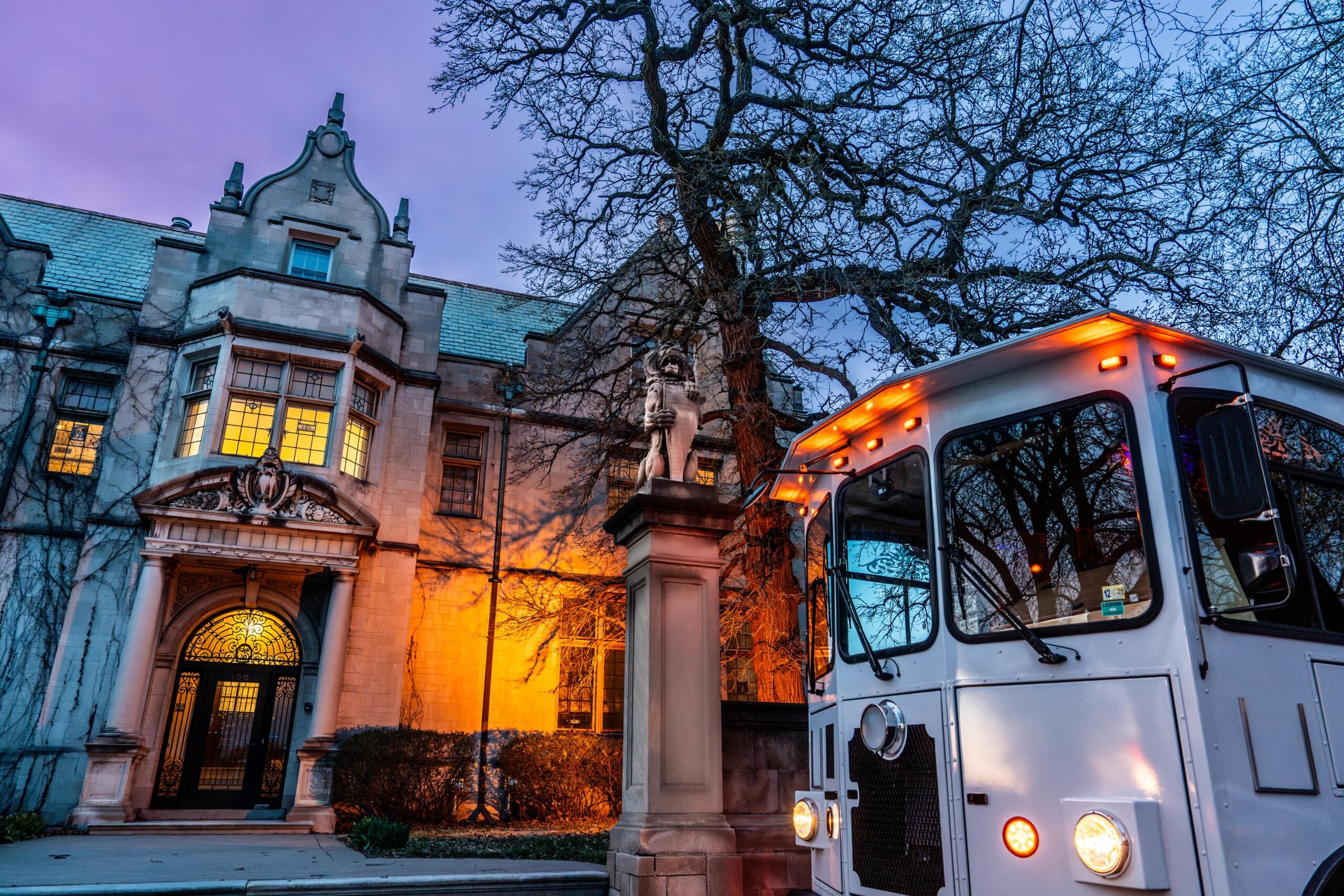
Strictly speaking, the Charles S. Pillsbury mansion the tour departs from was built after the Gilded Age had ended — construction resumed in 1912 on a house begun years earlier, and the family was living here by 1916. The houses on the route span roughly 1883 to 1920, so what you are really seeing is the whole arc: the Richardsonian Romanesque piles of the 1880s, the Renaissance Revival houses of the 1900s, and the English Gothic of this one, built with fortunes the Gilded Age created but in the taste of the generation that inherited them. The name on the tour is shorthand for “the era of the great houses,” and it is the phrase people search for, so we use it — but the history is a little more interesting than the label. How the earlier houses were bought and lost is in the History Journal, starting with the four mansions rescued in 1969.
What the Gilded Age Mansion Tour actually does
You board a vintage trolley here at the Pillsbury Club, 100 East 22nd Street, and ride a route of more than a dozen named houses — Loring Park’s Clifton Avenue and Harmon Place, the LaSalle and Stevens Avenue blocks around the Club, the mansions of Park Avenue, and the Mount Curve houses on Lowry Hill — with the guide telling you who built each one, what they did for a living and which architect they hired. The tour’s own description says it “marvels at these Minneapolis mansions from the outside, and from the inside,” and the route includes the Eugene J. Carpenter house at 300 Clifton, part of the Pillsbury Club Collection — the mansion on the route you can tour and then sleep in. Which houses open their doors and which are private is the subject of Which Gilded Age Mansions in Minneapolis Can You Actually Tour Inside?, and the tour-then-stay version is in Can You Tour a Minneapolis Mansion and Then Sleep in One?
How to make an evening of it
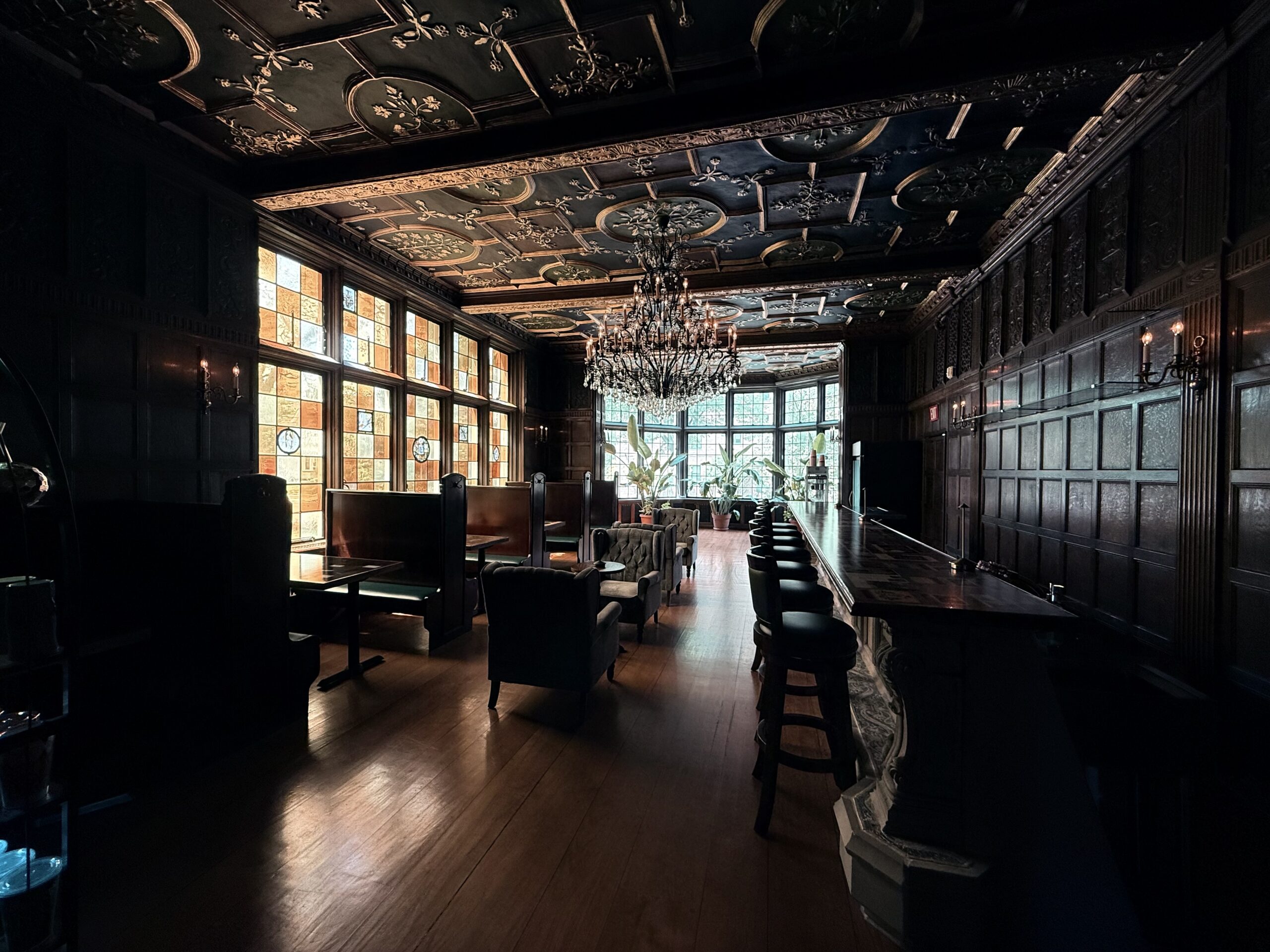
Because the tour starts and ends inside the Club, it fits naturally around a drink or a meal. Arrive early — the Club is a private, members-style club open to guests with a reservation, so book ahead — and have a cocktail in the speakeasy-style bar under the amber stained glass before you board; the dining room is there for afterwards. Complimentary parking is across the street, and the practical details of getting here are in How Do You Get to the Pillsbury Club, and Where Do You Park? If you want to know when the houses look their best, When Is the Best Time of Year to Tour a Minneapolis Mansion? makes the case for every season.
Book the tour
Now you know what the name means, come see what it looks like. Reserve seats on the Gilded Age Mansion Tour, browse the other trolley tours and Club experiences on Experiences & Tours, and make a reservation to come in early on Plan Your Visit. For the deeper history of the house you are standing in, the History Journal has it — the Pillsbury Mansion is on the National Register of Historic Places, and the journal explains why.
Keep reading: which Rotherwas room stayed in England, according to a May 1913 Manchester newspaper.
Keep reading: Where should a bachelorette party go in Minneapolis? A night out at the Pillsbury Club