
Did the Pillsbury Children Spend Their Summers at Lake Minnetonka?
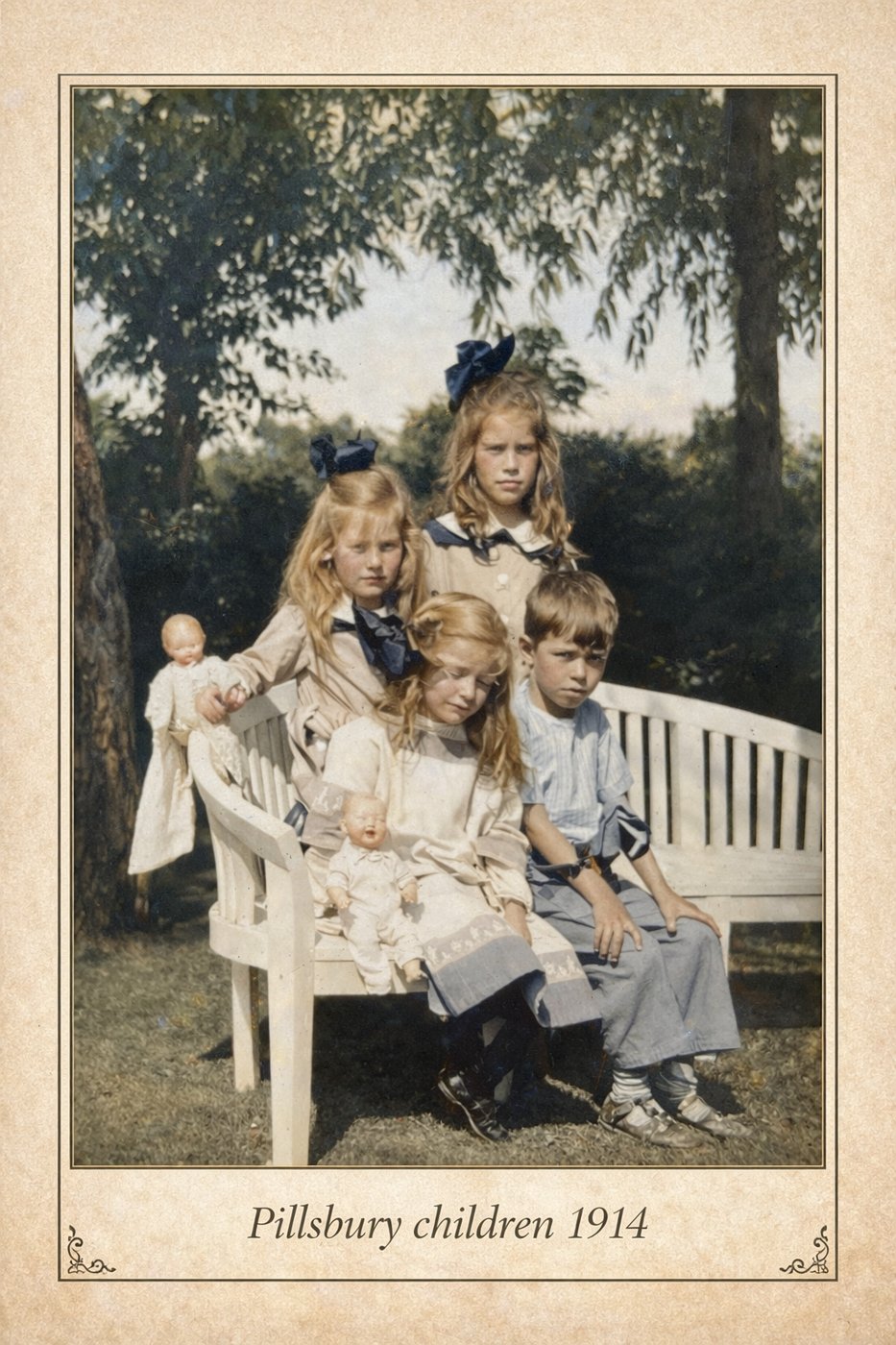
A snapshot in the Pillsbury family’s own photo collection is labeled, in handwriting on the mat, simply “Wayzata, Minnesota.” Four children stand around a stone sundial in a garden: two girls in white dresses with hair bows, a younger girl, and a boy in a dark suit. Someone has written names beneath two of them — “Katharine Pillsbury” and “great uncle Phil Pillsbury” — identifying them as children of Charles S. Pillsbury, the man who would go on to build the English Gothic Revival mansion at 100 East 22nd Street.
Who’s in the photograph
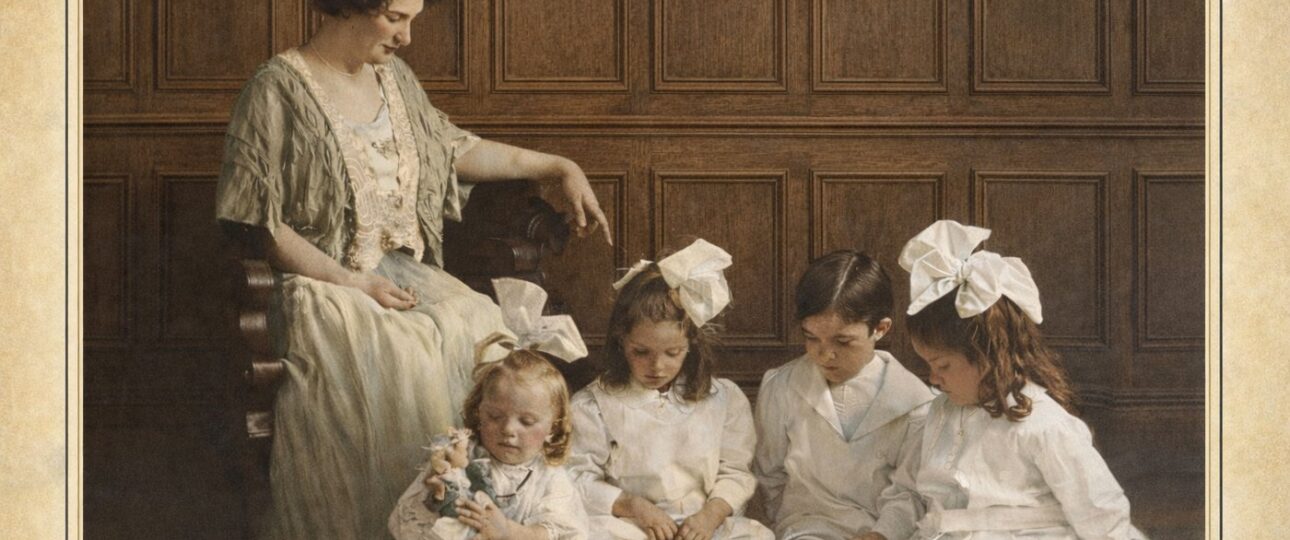
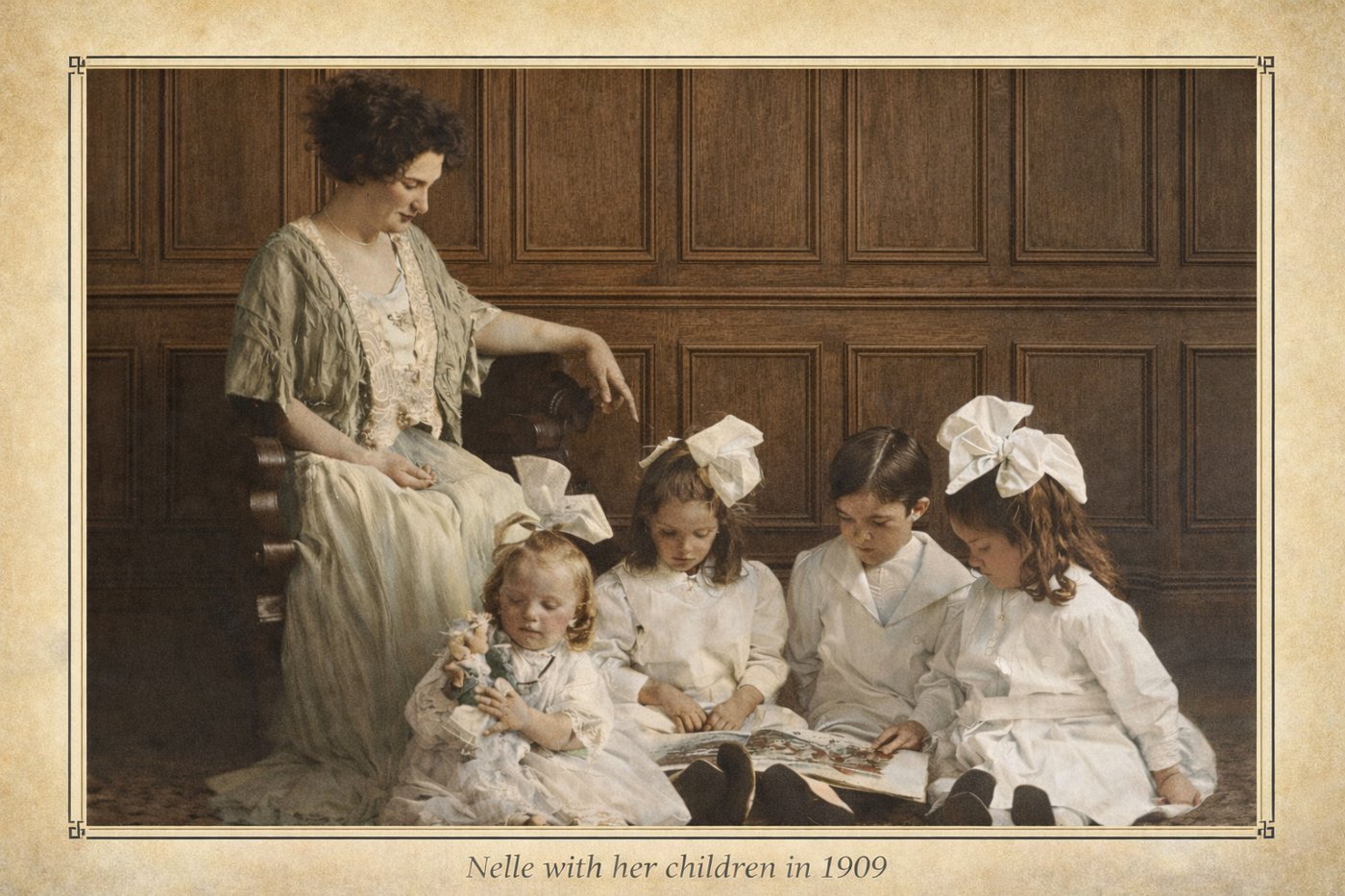
Katharine Pillsbury and Philip Pillsbury both grew up to be well documented elsewhere in this family’s story. Katharine married in Paris at the American Cathedral in May 1930; Philip became known in the family flour business as its master miller. And in 1909 — in a photograph already in the mansion’s own archive, taken years before ground was broken on East 22nd Street — their mother, Helen “Nelle” Pillsbury, sat for a portrait with four of her children in white dresses and hair bows: the same small group that turns up again, a little older, standing around a garden sundial at Wayzata.
The Wayzata photograph itself carries no date, so it isn’t possible to say for certain whether it was taken before or after the mansion’s completion in 1914. What it does confirm is a habit common to nearly every prominent Minneapolis family of the era: getting out of the city for the summer, to the lake seventeen miles to the west.
Why Lake Minnetonka
By the 1880s, Lake Minnetonka was Minnesota’s premier resort destination. Excelsior, Wayzata and Deephaven had grown up around the shoreline after the Civil War, and by 1885 the lake supported thirty-three hotels charging a dollar to three dollars a night. Three grand hotels dominated the scene — the Hotel St. Louis (1879), the Hotel Lafayette (1882) and the Lake Park Hotel (1884) — with electric lights, hot water and telegraph service, and a guest list that at times included former presidents Chester Arthur and Ulysses S. Grant, according to the Minnesota Historical Society’s account of the lake’s hotel era. Three separate railroad lines and a network of steamboats connected the lake to Minneapolis and St. Paul, making a day trip or a whole summer equally easy.
That resort era didn’t last. The Hotel Lafayette burned in 1897 and the Hotel St. Louis followed in 1907, and as the automobile made the lake reachable in an afternoon rather than a train timetable, wealthy Minneapolis families increasingly built or rented their own places on the water instead of booking hotel rooms by the week. Wayzata itself grew up as one of the lake’s original shoreline towns. The Wayzata snapshot, whenever it was actually taken, fits that later, more private pattern — a garden, a formal sundial, a family outing rather than a hotel veranda.
What we don’t know
The family’s own photo collection identifies two of the four Wayzata children with confidence and leaves the other two unlabeled — almost certainly Katharine’s sisters, though the caption doesn’t say so. Nor does anything in the file say whether the Pillsburys owned a cottage at Wayzata, rented one for the season, or were simply visiting for the day. Absent a deed record, a newspaper society note or a second photograph with more detail, the honest answer is that the snapshot documents a summer outing, not a confirmed summer home — and it’s better to leave it there than to invent a lake house that may never have existed.
The bigger picture
What the photograph adds to the mansion’s story is texture: proof that the children who would later be photographed in the mansion’s rooms, who would marry in Paris and run flour mills and sit for a Town & Country photographer, spent at least one summer afternoon exactly like any other Minneapolis child of the period — squinting at a camera in their good clothes next to a garden sundial, a long way from the mansion that would make their name a household one.
Read more about the mansion’s early family in our post on who “Nelle” Pillsbury was, and see the mansion for yourself on a guided tour — every tour includes stories the family photo albums don’t put on the wall.
Keep reading: What Do Two Snapshots of the Pillsbury Mansion’s First Winters Show Us?.