
Was a Pillsbury Daughter Trapped in the 1960 Ethiopian Coup? What Mary Pillsbury Lord’s Obituaries Recorded
Yes. Two newspapers said so on the same Sunday, and neither one made it up. When Mary Pillsbury Lord died at her home in New York on Friday, July 21, 1978, the Minneapolis Tribune and the Washington Post both ran her obituary on July 23. Both told the story the family biography on this site tells, of the daughter of the Charles S. Pillsbury Mansion who took Eleanor Roosevelt’s seat at the United Nations. But each also recorded a few things the polished version leaves out. The strangest of them is a hotel room in Addis Ababa.
“Trapped in an Ethiopian hotel room during a revolt”
The Tribune’s version, on page 9B under the headline “Mary Pillsbury Lord, 73, dies in New York,” is a single paragraph. “She was involved first-hand in fighting several times,” it says. “In 1960, while a U.N. delegate, Mrs. Lord was trapped in a Ethiopian hotel room during a revolt against Emperor Haile Selassie.” The Post adds the detail that makes it a story. She was in Addis Ababa for a United Nations seminar on the participation of women in public life when the coup began. “A hole was blown in the wall of her room one night and the hotel became a battleground for a time,” the Post wrote. “She was trapped two days in the crossfire but escaped unscathed.”
The dates line up. The UN’s Addis Ababa seminar on women in public life ran from December 12 to 23, 1960. On December 13, while the emperor was abroad, a dissident wing of the army led by the Imperial Bodyguard seized control of the capital; loyalist forces dislodged them only after a sharp engagement, and by December 17 the capital was back in the emperor’s hands. A fifty-six-year-old American delegate who had grown up behind the oak of 100 East 22nd Street spent two of those days on the floor of a hotel room with a hole in the wall. Neither paper names the hotel, and we have found no account in her own words, so that is where the record stops.
A book called “Exit Backward, Bowing”
“With the advice and dissent of Mary Pillsbury Lord”
Both obituaries mention a book. In 1970 Mary and her husband, Oswald B. Lord, published Exit Backward, Bowing, a collection of anecdotes from their travels in more than a hundred countries. The Tribune’s typesetter rendered the title as “Exit Backwards Bowing”; the Post gave the byline, which is the best part: “by Oswald B. Lord with the advice and dissent of Mary Pillsbury Lord.” The title is presumably the old rule of court etiquette for leaving a monarch’s presence without turning your back, which a woman who had sat across from emperors, presidents and prime ministers for two decades would have had occasion to practise. First editions still turn up in the antiquarian trade, which is more than can be said for most memoirs of 1970.
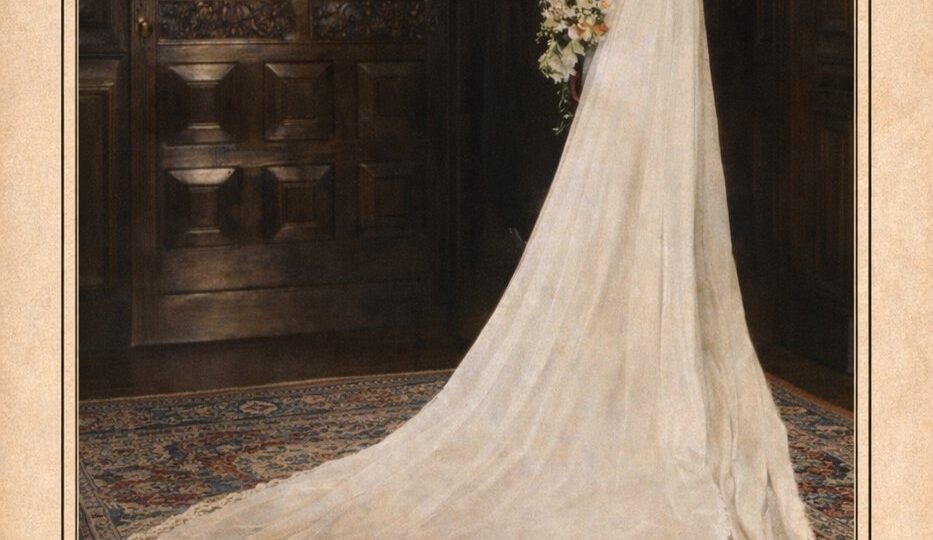
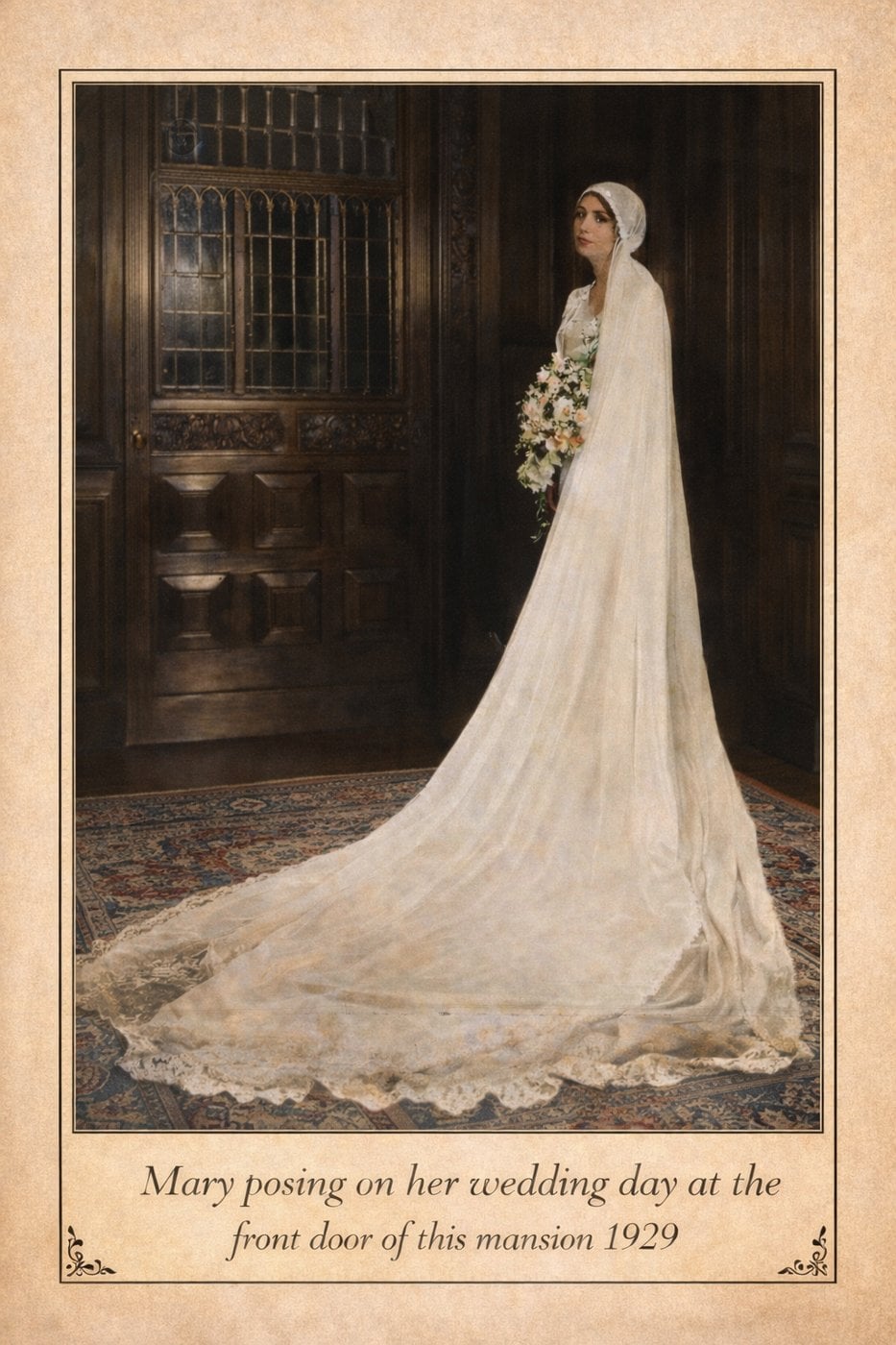
Oswald Lord is described in the Tribune as a vice president of Galey and Lord Textile Co., “a division of Burlington Industries,” and in the Post as a partner in the cotton textile firm of Galey & Lord. He was the New Yorker Mary married at the front door of this house in December 1929, the wedding we have written about before. They kept homes in Stamford, Connecticut, and New York City.
What else the obituaries add to the record
The Post confirms a detail we had left out of our account of her war years for lack of a source: she “served in several civil defense posts in New York City in the early 1940s,” and the Tribune calls her “an assistant Civil Defense director” during the war. In 1948, General Omar N. Bradley gave her a citation and an official ribbon for that civil-defence work. The Post also records that she was an original leader of “Citizens for Eisenhower” in 1952, that she recruited airline hostesses as campaign workers on her flights between states, and that her appointment to the Commission on Human Rights was confirmed by Congress without opposition.
After the UN, both papers agree, she chaired Governor Nelson Rockefeller’s Committee on the Education and Employment of Women in New York. The Post adds that she served as a U.S. observer with NATO and on the Atlantic Council during the 1960s, and that she became an outspoken supporter of American involvement in Southeast Asia, a founder in 1971 of a citizens’ group that backed the Nixon administration’s foreign policy. The Tribune puts it more simply: “during the late ’60s, following her U.N. jobs, Mrs. Lord traveled to Vietnam several times on behalf of the U.S. State Department.” Until she fell ill nine months before her death, she was still active with the International Rescue Committee, the refugee organisation she had served as board president.
“Not the cooking kind of person”
Each paper, as obituaries of Pillsbury women tended to, introduced her through her grandfather: a granddaughter of Charles A. Pillsbury, founder of the Pillsbury Co., and a sister of Philip W. Pillsbury, its former president and chairman. The Post let her answer that. Although she was a Pillsbury, it noted, “she once admitted that she was ‘not the cooking kind of person.'” It also quoted her explanation for a life of committee rooms and crossfire, given after Smith College and Phi Beta Kappa: if one’s intellectual interests have been stimulated at college, she said, one cannot settle into a life of “lying in bed until noon and worrying about nothing but the dinner party that’s coming off.”
Memorial services were held on the Wednesday after her death at St. Bartholomew’s Church in Manhattan. She was survived by her husband, by her sons Winston, then president of the Council on Foreign Relations, and Charles, and by five grandchildren. The house she grew up in had by then spent nearly three decades as a Lutheran seminary, nine years under the Minneapolis Society of Fine Arts, and in 1978 was passing into the hands of the advertising agency Carmichael Lynch, a chain of stewards told on the owners page.
The Pillsbury Mansion is at 100 East 22nd Street, and the rooms Mary grew up in are open for guided tours and for dinner. See experiences and tours or plan your visit, and read more of the family in the History Journal.
Keep reading: Why Did the Lutheran Seminary Leave the Pillsbury Mansion? A 1966 Front Page Explains the Seven-Building Campus It Outgrew