

What Did Mary Pillsbury Lord Do During the Second World War?
Most accounts of Mary Stinson Pillsbury Lord begin in 1953, when President Eisenhower handed her the United Nations seat Eleanor Roosevelt was vacating. That is the headline, and we have written about it. But it is not where the public life began. A decade earlier, the daughter of this house spent the Second World War persuading American women to put on a uniform — and then went to see for herself how they were being treated.
From a Minneapolis doorway to the war effort
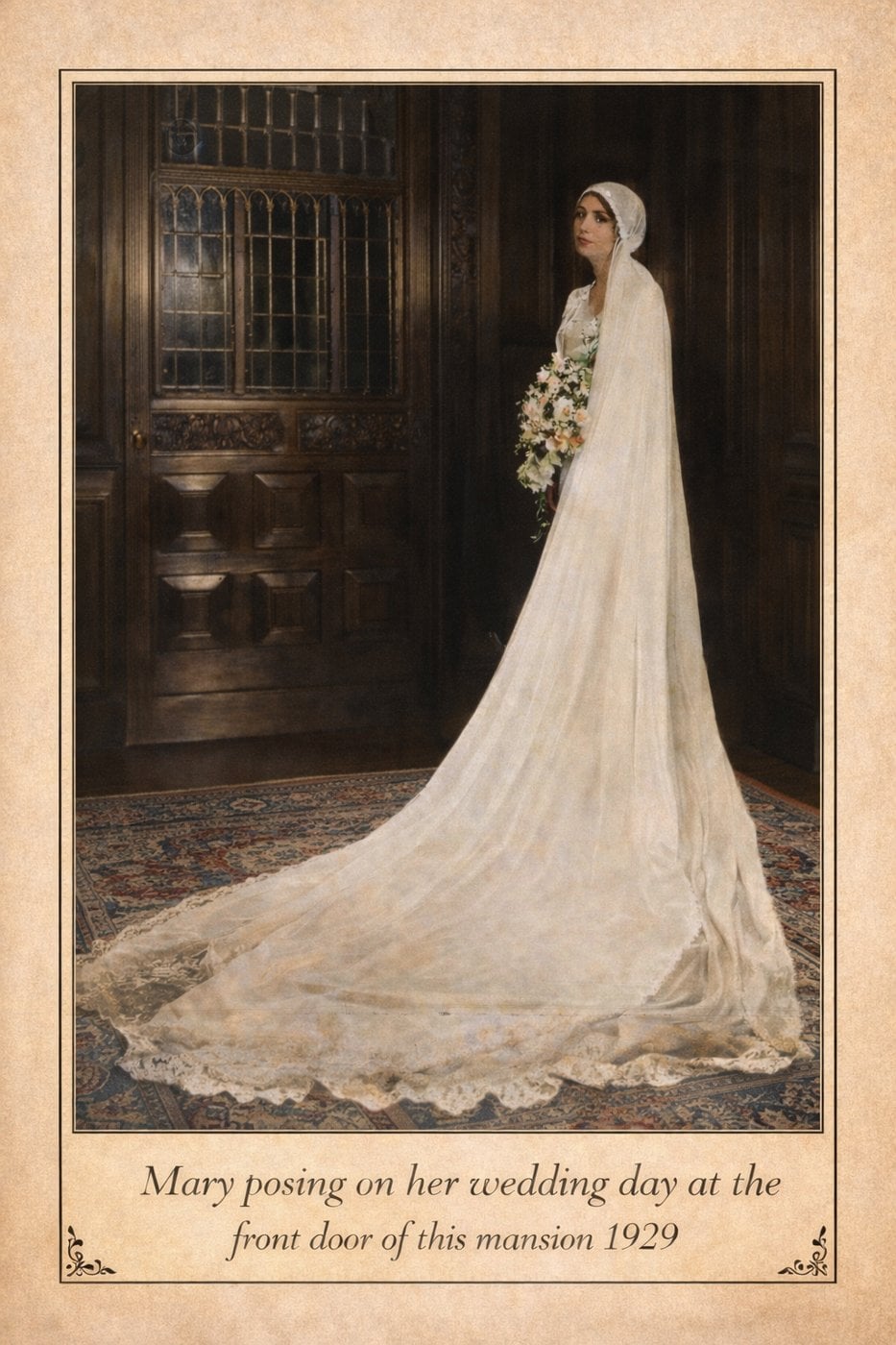
Mary was born in 1904 and grew up in the Charles S. Pillsbury Mansion on East 22nd Street, among the imported English oak and centuries-old glass her parents had assembled through the London dealer Charles Duveen. She married at the front door of this house in 1929, beneath the armorial crest the sculptor Charles Wells had cut into the stone.
By the time America entered the war she was living in New York, and the habit of public service was long established — it traced back to volunteer work she had done during the First World War, when she was still a child in Minneapolis. When the second war came she took an official role, serving as an assistant regional director in the Office of Civilian Defense.
Chairing the civilian committee behind the Women’s Army Corps
Her most consequential wartime post came in 1944, when she was appointed chairman of the National Civilian Advisory Committee of the Women’s Army Corps. The papers documenting her career are held at Harvard’s Schlesinger Library, and its finding aid for the collection sets out the shape of the job.
It is worth pausing on what that committee was for. The WAC was a new institution and an awkward one for the Army — women in uniform, in numbers, doing work the service had never before asked of them. Recruiting was persistently difficult, and a whispering campaign about the character of women who enlisted did real damage. A civilian advisory committee existed to give the corps standing with the public that an Army press release could not buy. Mary Pillsbury Lord’s name, her position and her willingness to travel were the assets.
The corps she was recruiting for had itself only recently become part of the Army proper. It began in 1942 as the Women’s Army Auxiliary Corps — attached to the Army rather than in it — and converted to full component status as the Women’s Army Corps in 1943, a change that brought its members regular pay, rank and benefits.
Going to look for herself
What separates her from a figurehead is that she went. Rather than chairing meetings in Washington, she toured WAC installations across Europe and the Middle East, studying what the women posted there actually needed and reporting back. It is the same instinct that would define the rest of her life. In 1948, as founding chairman of the U.S. Committee for UNICEF, she toured a wrecked Europe inspecting homes, schools, hospitals and orphanages, gathered what she had seen into a report called Consider These Children, and presented it to President Truman at the White House. The Truman Library keeps her in its records from those years.
Go and see, then say what you saw. It is not a complicated method. It is simply one that very few people in her position bothered with.
What the war years led to
The sequence matters. Civilian Defense, then the WAC committee, then UNICEF, then the Human Rights Commission seat in 1953, which she held for eight years, with two further turns as a United States delegate to the General Assembly in 1958 and 1960. When she stepped down in 1961 she took the chair of the New York Governor’s Committee on the Education and Employment of Women. Every one of those posts is downstream of the war work.
Her Star Tribune obituary in July 1978 identified her, as obituaries of Pillsbury women tended to, by her grandfather: “She was a granddaughter of Charles A. Pillsbury, founder of the Pillsbury Co.” True enough. It is also the least interesting fact about her.
The instinct carried into the next generation: her son Winston Lord went on to the Council on Foreign Relations and a United States ambassadorship. Her sisters have their own chapters here too — including the night three Pillsbury daughters survived the sinking of the SS Mohawk.
The house she started from
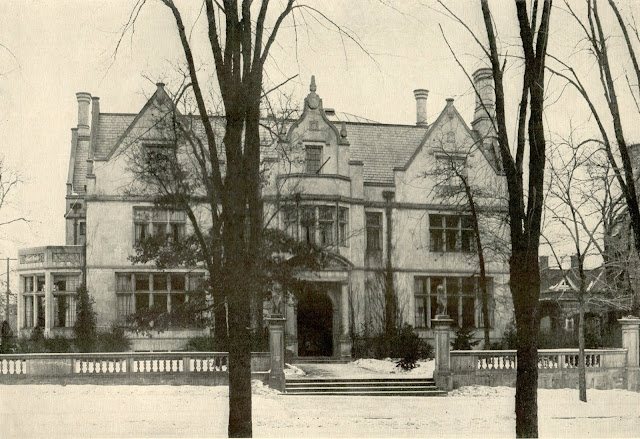
The mansion is still here, on the National Register of Historic Places since 1974, and it is now the Pillsbury Club. The oak-panelled rooms Mary grew up in are the rooms guests sit in today. You can read more about her in her own chapter of the house history, or about her parents and siblings in The Pillsbury Family. For the Minneapolis milling world that paid for all of it, the Minnesota Historical Society’s Mill City Museum is the place to start.
If you would rather see the front door she was married at, guided mansion tours run year round — details are on experiences and tours, and practical information is on plan your visit.
Keep reading: Why Are There Two Copies of the Pillsbury Mansion’s Front Elevation?