
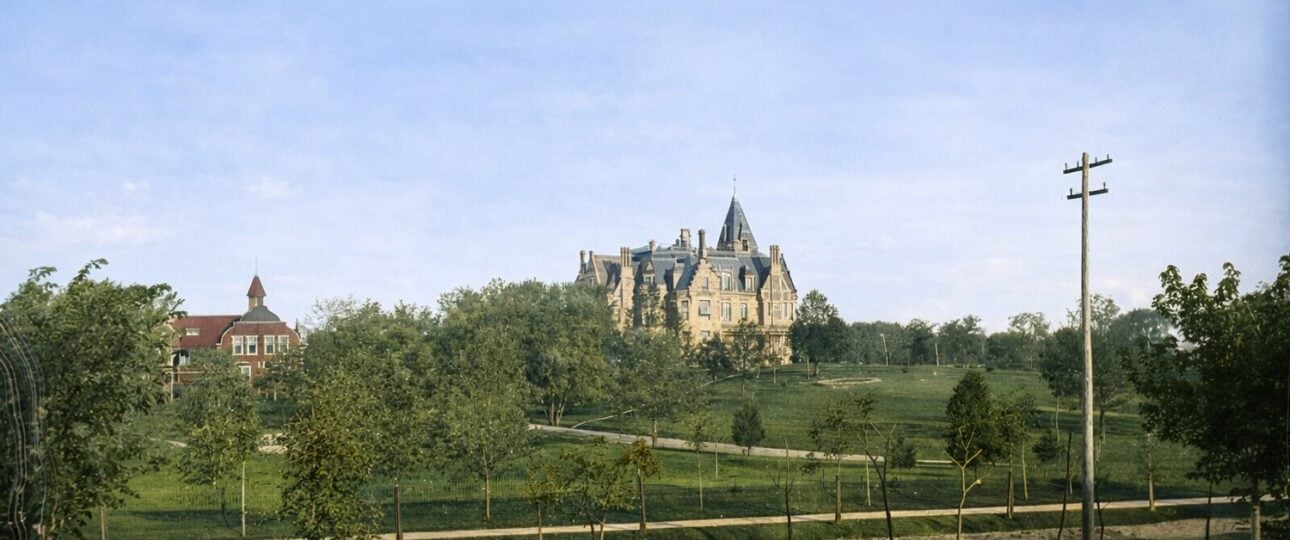
Who Built the Other Houses in the Pillsbury Mansion’s National Register District? Farrington, Gale and Merrill, as a 1977 Form Describes Them
When the Charles S. Pillsbury Mansion is described as part of a National Register “mansion district,” it is easy to picture only the house with the lions at the gate. The district was bigger than that. A 1977 nomination form, prepared by Charles W. Nelson of the Minnesota Historical Society, lists seven buildings around Washburn-Fair Oaks Park. Four we have already met in this journal. This post is about the other three: the Luther Farrington, Edward Gale and Eugene Merrill houses.
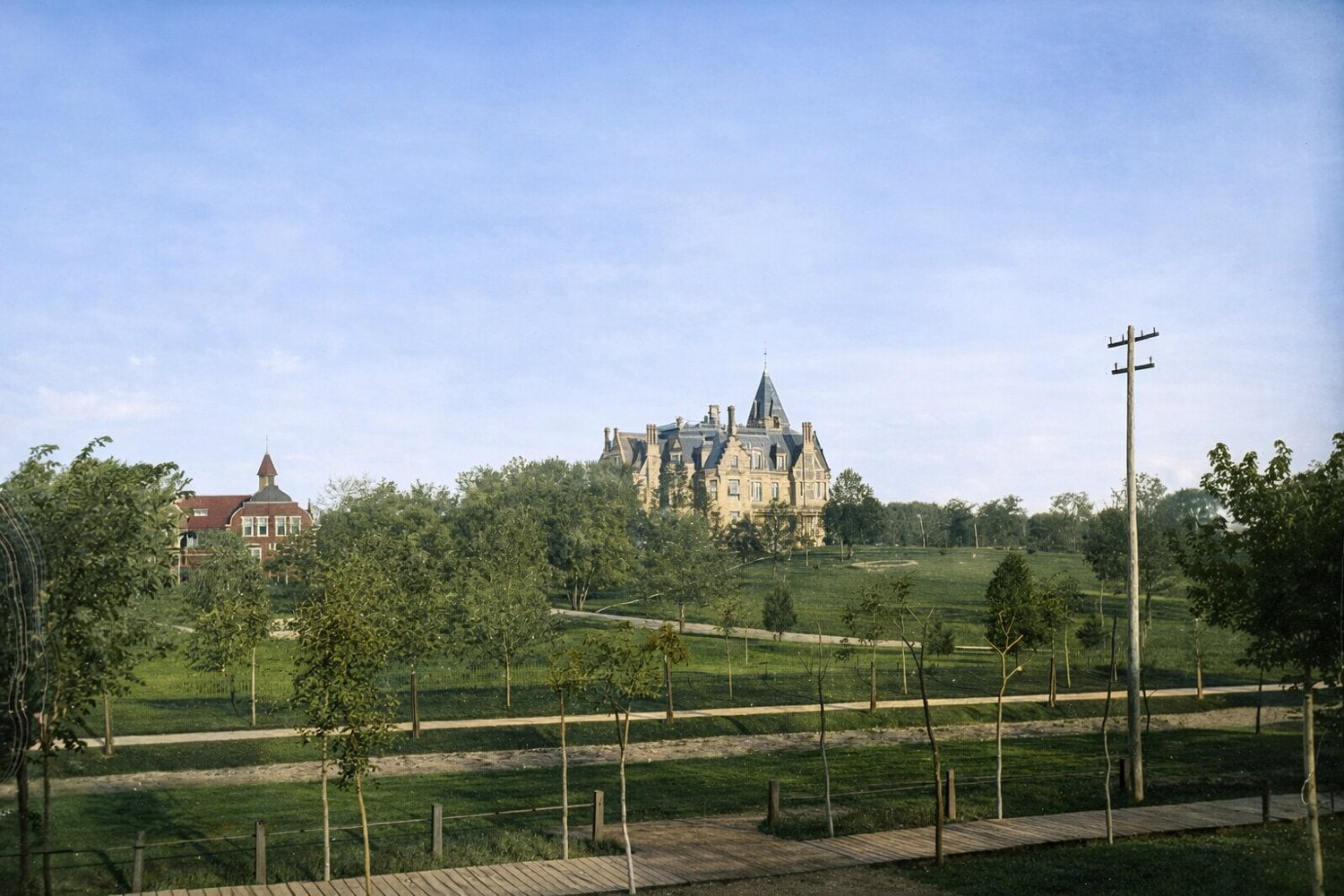
What does the 1977 form say the district is?
The form, which the National Park Service hosts as a scanned PDF, describes the district as “a significant concentration of residences built at the turn of the century,” homes of the city’s second generation of prominent businessmen. It cites a period of 1884 to 1912. By its count, four of the seven designs are by William Channing Whitney, two by Ernest Kennedy and one, the Pillsbury Mansion, by Hewitt and Brown.
One housekeeping note on dates. The form is from 1977, and Wikipedia’s district article gives a listing date of February 17, 1978, while the Club’s own history pages say 1974. We have left each source’s date as it stands. The National Register is the federal government’s official list of places considered worth preserving, and the form is the paperwork that made the case.
Who built the Luther Farrington House at 2100 Stevens Avenue?
According to the form, the Farrington House dates to 1906 and was designed by Whitney in Georgian Revival style, in brick, at a recorded cost of $19,000. It has a dormered gambrel roof, end chimneys and a formal entrance portico, and a rear addition was made in 1931. Luther H. Farrington was a wholesale grocery man who worked as a clerk, buyer and treasurer for several companies. The Minneapolis Hearing Society bought the house in 1960. Wikipedia’s district article gives no construction date for it, so 1906 rests on the form alone.
What is the Edward Gale House at 2115 Stevens Avenue?
The Gale House is the one closest in spirit to the Pillsbury Mansion’s own era, and the form is candid about its date. No building permit survives, so it estimates 1912 because Gale appears at the address in the 1913 city directory. Kennedy designed it in Renaissance Revival style in buff Bedford limestone, with a columned entry portico and balustraded balcony, full-storey round-arched windows on the 22nd Street side, and a hipped roof hidden behind a stone balustrade.
Edward C. Gale was a Harvard Law graduate who practiced in Minneapolis and married Sarah Pillsbury in 1892, so this was a Pillsbury family house too. It stayed a single-family home until 1943, when the American Association of University Women bought it, and a one-storey rear addition followed in 1962. We have written about Gale and his neighbors before in Who Were the Pillsbury Mansion’s Neighbours on Washburn Hill in 1913?
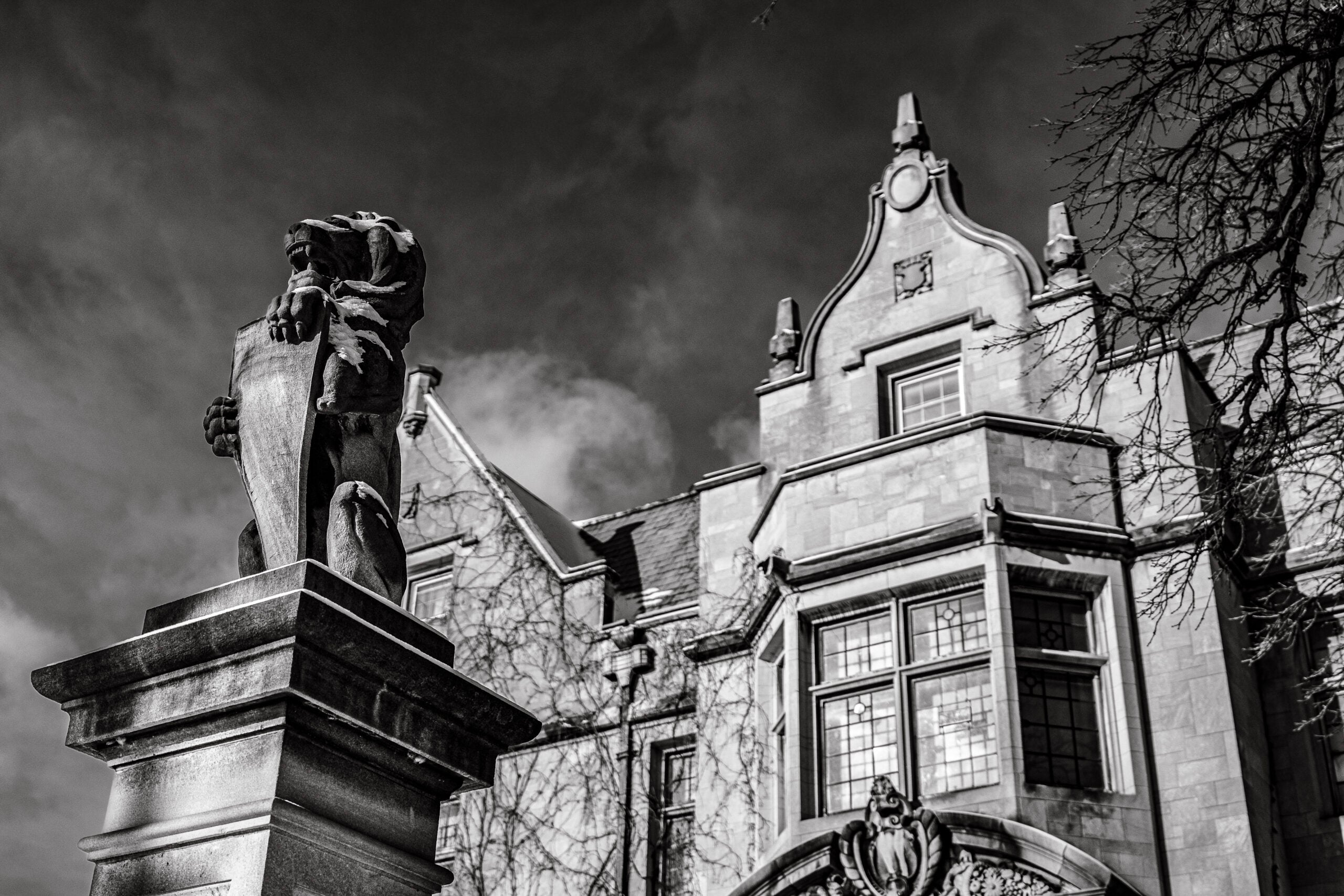
Why is the Eugene Merrill House at 2116 Second Avenue South the oldest?
Merrill’s house is the district’s elder statesman. The form dates it to 1884, designed by Whitney when he was in partnership with James C. Plant, built by A.C. Robinson and Company for a recorded $10,000. It is red sandstone with a rusticated basement, a recessed entry, a slate roof and a three-storey polygonal tower with crenellations and a spire-like roof. The form calls the style French Renaissance or Chateauesque; Wikipedia’s district article calls it Richardsonian Romanesque. Both sources agree on the 1884 date.
Eugene A. Merrill was a lawyer who came to Minneapolis in 1875 and later founded the Minnesota Loan and Trust Company. By the time of the form, his house had been a single-family home until the early 1950s, then a rest home, then an art gallery in 1973 and 1974, then rental property. Those were the form’s descriptions in 1977, so check current use before you plan a visit.
How does this fit the story of the lost mansions?
The form also notes that the first-generation mansions nearby were mostly razed between 1900 and 1937, including the Washburn mansion in 1924 and the Morrison “Villa Rosa” in 1911; our own decade-by-decade ledger gives 1910 for Villa Rosa, and we have left that difference as it is. For how four of these houses were rescued together, see Which Four Minneapolis Mansions Were Saved From the Wrecking Ball? and the wider story on The Owners page.
Can you see the Pillsbury Mansion yourself?
You can step inside the house at the center of the district. Plan a tour or visit and check Plan Your Visit for hours and reservations, then take a slow walk around the park to find its neighbors.