
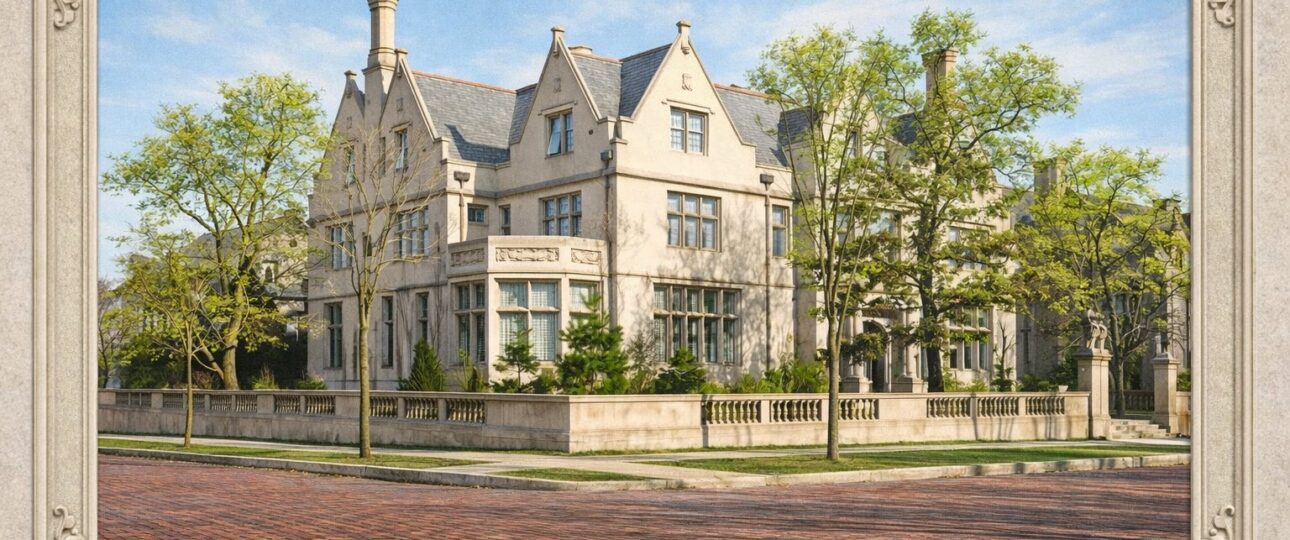
What Do Two Snapshots of the Pillsbury Mansion’s First Winters Show Us?
Two snapshots in the Pillsbury family’s own photo collection show the mansion at 100 East 22nd Street not as the mature, ivy-softened landmark it is today, but as a brand-new house still finding its footing in a Minneapolis winter. Neither photograph is captioned or dated, but the evidence in the frame — young, burlap-wrapped evergreens still small enough to disappear under a snowdrift, stonework with none of the weathering visible in later pictures — points to the estate’s earliest winters, not long after construction wrapped up in 1916.
A Woman at the Entry Loggia
In the first photograph, a woman in a long black coat with a fur collar and a matching cloche hat stands at the mansion’s arched entry loggia, hands tucked into a muff. Snow is banked waist-high along the terrace wall, and two small evergreens — planted close to the house and still wrapped for winter — are nearly buried. Behind her, the wrought-iron entry gate and the carved stone piers are instantly recognizable; this is the same Gothic Revival stonework that still frames the mansion’s front door today, just newer, sharper-edged, and less weathered by a century of Minnesota winters.
Two Girls on a Snowbank
The second photograph is livelier: two young girls in matching dark coats, hats, and white stockings stand on top of a snowbank piled nearly to the sill of one of the mansion’s leaded bay windows. A second house is just visible in the background, a reminder that this stretch of 22nd Street was, even then, a block of substantial neighbors rather than a single isolated estate. Whoever framed the shot clearly wanted the height of that snowbank in the picture — it very nearly swallows both girls up to their knees, a reminder that Minneapolis winters a century ago were, by the state’s own long-term snowfall records, every bit as serious as they are now.
Both photographs come from the same family collection that gave us the Wayzata summer snapshots identifying Katharine Pillsbury as a girl. Neither of these winter pictures carries a caption naming who’s in frame, so we’re not going to guess — but they were kept together with photos that are identified, and they show the same house, which is enough to place them confidently in the mansion’s own story.
A New House’s First Winters
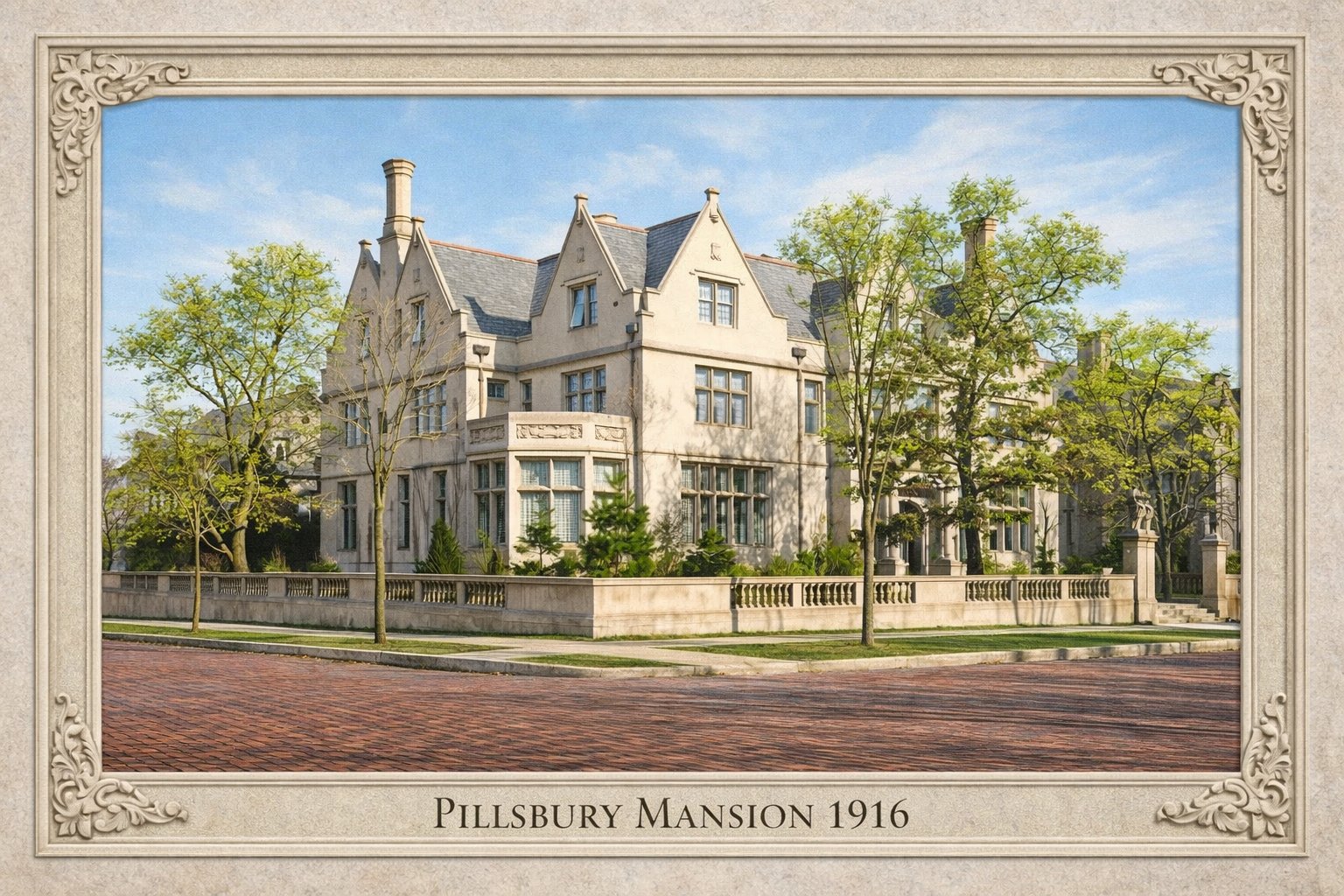
What’s most striking, looking at these photos next to the mansion today, is how young everything still looks. The stone hasn’t weathered, the plantings are small and staked, and the whole property has the slightly stiff, unsettled look of a place that hasn’t yet had time to grow into itself. Architects Hewitt & Brown finished the house in 1916 in the English Gothic Revival style, importing centuries-old English interiors to fill it — but the landscaping, unlike the interiors, couldn’t be bought pre-aged. It had to be planted, staked through its first winters, and left to grow, the same evergreens that tower over the property now.
Step inside today and the contrast is immediate — the same walls that stood behind those snowbanks now hold century-old English oak panelling that was already old when the mansion was new.
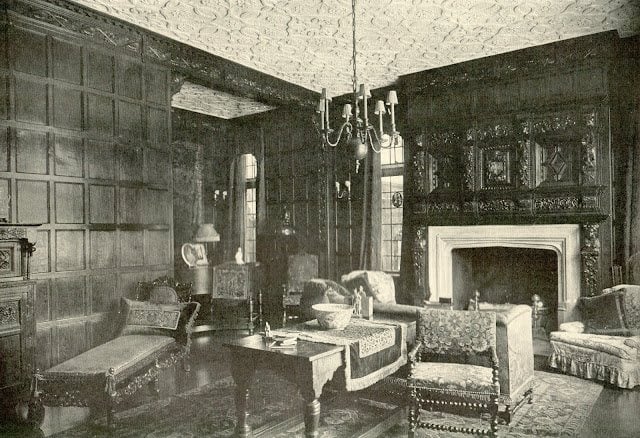
If you’d like to see that stonework and those interiors in person, year-round guided tours of the mansion are available — check current tour times and booking on our Experiences & Tours page, or read more about the house’s construction on Building the Mansion.
Keep reading: What Did the College of Arms Find When It Read the Coat of Arms on the Pillsbury Mansion’s Fireplace?